
MEDIUM: FEMME – 8 – ABORTION (PART 2)

Charlotte and Naty continue their discussion of abortion and reproductive justice internationally in the wake of the repeal of Roe v Wade in this much delayed second segment of three.

Topics include : vegetables souls, the AMA, the progressive era, 70s Australia, the Bruenigs, dirtbag left media, Joe Biden, the democrats, Dorothy Roberts, New Zealand, disobedience, community and care, doulas, travel, Judge Dredd, decriminilization, insect graveyards, eugenics, American exceptionalism, Japan, Margaret Sanger, data surveillance, Guttmacher union, Catholicism, the green tide in Latin America, doctors, Roe v wade, state laws, Margaret Sanger, Clarence Thomas, the supreme court, as well as orgs to donate to.

Visit our Patreon page here: https://www.patreon.com/MoLsuperstructure

Music: “Yum” from “This Would Be Funny If It Were Happening To Anyone But Me” EP by flirting.
http://flirtingfullstop.bandcamp.com
Twitter: @actualflirting
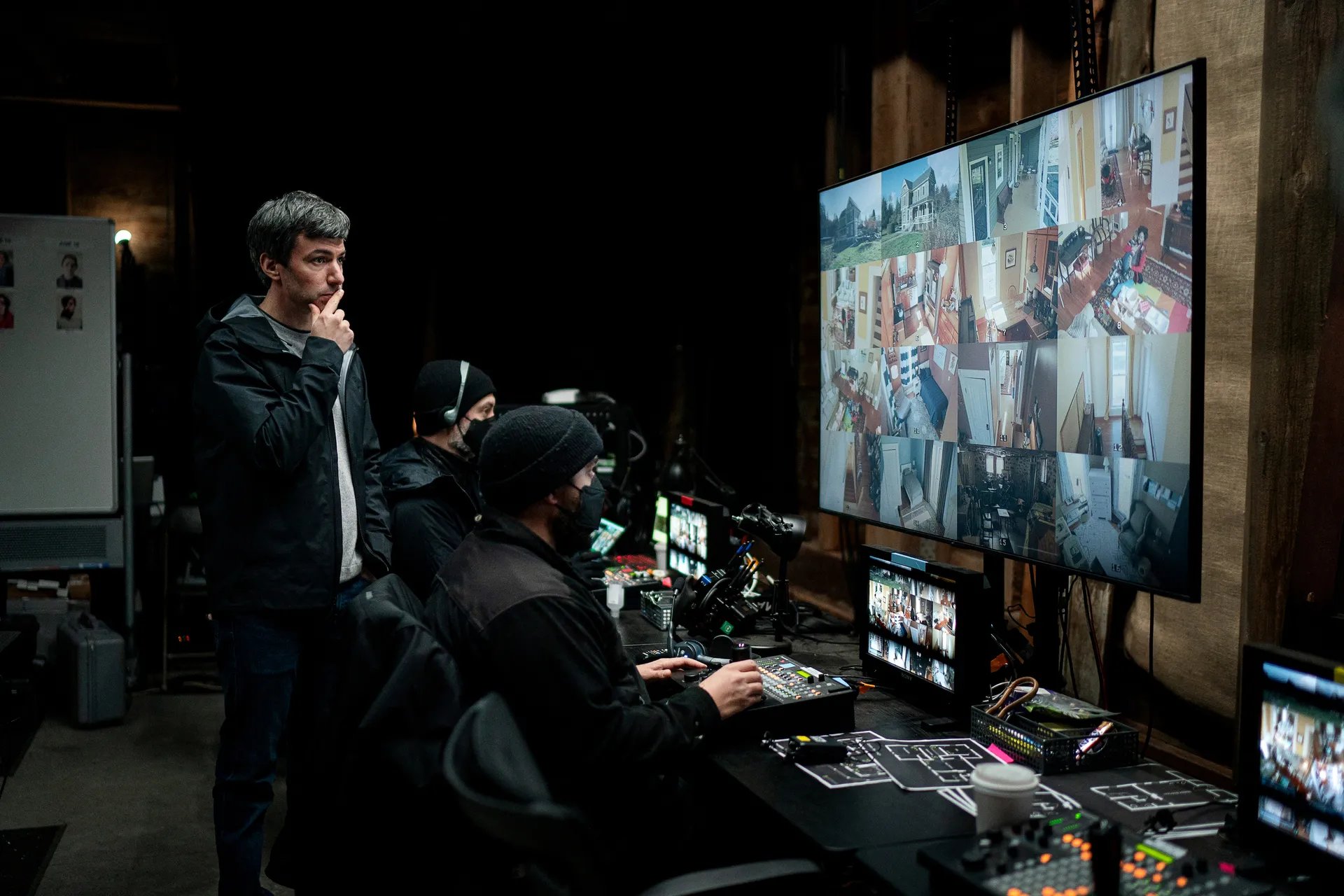
Political Economy of ‘The Rehearsal’ (New Transcript!)

Cohosts Charlotte Tavan (@moltopopulare) and Will Beaman (@agoingaccount) discuss the reflexive and imaginative political economy of Nathan Fielder’s HBO series, The Rehearsal. The show points towards an apophatic ethics of social provisioning, presenting an ambiguous portrait of care, production, and human agency. This portrait remains irreducibly and collective, in excess of the powers and intentions that constitute social belonging.

Transcript: Mike Lewis

Visit our Patreon page here: https://www.patreon.com/MoLsuperstructure

Transcript

Will Beaman  00:00

Hey everyone, this is Will Beaman from Superstructure podcast and Money On The Left Editorial Collective. And I have with me my Money On The Left collaborator Charlotte Tavan.

Charlotte Tavan  00:24

Hi! Hi Will, good morning.

Will Beaman  00:27

Good morning. Yeah, it is. That’s very nice of you. Because it is morning for me, and I think it’s almost midnight for you.

Charlotte Tavan  00:37

Yeah, but I had a nice nap. So I’m letting you have priority because I feel worse for you.

Will Beaman  00:43

There’s like a sliver of the day that we’re both awake. And yet somehow we do find a lot of time to talk.

Charlotte Tavan  00:52

Yeah, we’ve attempted this recording a lot of times.

Will Beaman  00:58

So for listeners who are wondering why this is going so well, that’s actually no accident because we have rehearsed this exact Zoom call 13 times.

Charlotte Tavan  01:14

In different rooms of the house…

Will Beaman  01:17

With actors playing both of us. And the reason for this joke is that we’re talking about The Rehearsal.

Charlotte Tavan  01:30

Yeah. Nathan Fielder’s The Rehearsal.

Will Beaman  01:33

It’s a fascinating show, and several people have reached out to us since the show started, being like, “I hope that you’re going to do something about this, because this is like the most Money On The Left show ever.”

Charlotte Tavan  01:49

Oh, I didn’t know that. That’s so cool. That makes sense.

Will Beaman  01:51

Yeah. I exaggerated a little bit. I’ve had it twice. Two people have reached out. Okay.

Charlotte Tavan  01:58

That’s awesome.

Will Beaman  01:59

Yeah. And that’s half of the people that I know really. So.

Charlotte Tavan  02:03

Yeah.

Will Beaman  02:05

Yeah. And everyone else on Twitter is just a part of my rehearsal, like an unwilling member.

Charlotte Tavan  02:13

Yeah.

Will Beaman  02:15

But anyway…

Charlotte Tavan  02:16

You’re just things to me. You’re just little things in the computer.

Will Beaman  02:21

Yeah, exactly.

Charlotte Tavan  02:23

Part of my master plan.

Will Beaman  02:24

You’re all extras in my show. So let’s back up and talk about what this show is. I guess. Yeah. Like to contextualize it. Start with maybe like, who is Nathan Fielder? And what is Nathan For You? Which is the show that kind of comes before this? Because I think that in a lot of ways, The Rehearsal is commenting on Nathan For You. And I’ve seen a bunch of Nathan For You. But I think that you’re the resident Nathan Fielder scholar here.

Charlotte Tavan  03:06

Thank you.

Will Beaman  03:08

And I say that because I hope that he hears this and reaches out to you.

Charlotte Tavan  03:15

That would shake me to my core.

Will Beaman  03:22

I wasn’t sure if when Nathan reached out to me…

Charlotte Tavan  03:29

Yeah, exactly. I do love Nathan Fielder, though.

Will Beaman  03:35

Yeah, so who is Nathan Fielder?

Charlotte Tavan  03:37

So I actually had practice explaining this to somebody at a pub last night. So I think it’s gonna go well. So he’s a comedian from Toronto, Canada, who…I think he started off doing a lot of — he’s one of those people who, if you look on his YouTube channel, he’s kind of just kept everything up there for the past 15 years. And you can see that he’s been actually quite prolific and hard working for a long time. But he has this drive to make content constantly. Although he did have a bit of a break. But yeah, so his first show that he kind of hit it big with was called Nathan For You, which was a comedy program that was essentially a reality TV show format in which he gives advice to failing businesses, in and around LA, on how to succeed. As this character is him but like an exaggerated version of his own certain characteristics. He has an awkwardness and, you know, people are always wondering, like, “is he acting?” but yeah, it’s like a version of him. And he gives these businesses ridiculous advice, playing this straight man the whole time, and they think it’s a real reality TV show. They go along with it, and they end up doing and saying stupid things. And it’s really, really, really funny. But yeah, that show went for about four seasons and got bigger and bigger, and the budget just kept on getting bigger and bigger. And he just kept on attempting more and more ridiculous stunts, including commenting on the media itself and experimenting in ways that he could manipulate the media for business. Stuff like that.

Will Beaman  05:36

Yeah, so he’s very, I guess we could say, reflexive and perhaps neurotic about the medium itself, that he is kind of acting within.  And I think that there’s a parallel that we could draw here between something that happened earlier in the 20th century, with reference to, I mean, really, with a lot of experimental genres of film. But I think that what this borrows from, particularly, in the kind of category of experimentation is a documentary form that was responding to the kind of mainstream documentary forms of its day, which is Cinéma vérité. French for “cinema truth.” Basically, the idea of Cinéma vérité was the fact that a documentary was being created and wasn’t hidden from the characters or from the audience. Everything was above board and self aware. And, in a way, all of the paradoxical questions of that self awareness were like very heavy themes in it. So these questions that Nathan will bring up about “what is a reality show?”, basically are, I think, going to interact with the reality show form in a similar way. And a lot of the signatures of the reality show form, in particular the confessionals, actually do come from this longer history of vérité documentaries where people will stare directly into the camera, and the camera is supposed to be us. And that kind of implicates or raises the question of, how do we relate to the characters? Right, and how do we relate to this show as a production?

Charlotte Tavan  05:51

Yeah. Yeah. And Nathan is super aware of this, about how the medium forms the themes and experience of the viewer and how we see everything. It’s not just the content he’s creating, but how he’s just super, super aware of that and reflexive about that. And he’s always talking about it…Nathan For You is supposed to be like a sillier show than The Rehearsal, which we’ll go on to discuss, but yeah he’s super in tune with that, I feel.

Will Beaman  08:35

Yeah, absolutely. And so like you said, Nathan For You gets more self-reflective and more meta commentary on its own forms. The problems and paradoxes and questions of what it means to be making a show like that, because I think a lot of people responded by saying that the show is exploitative or…

Charlotte Tavan  09:05

Mean.

Will Beaman  09:05

Yeah, that it’s mean.

Charlotte Tavan  09:08

Which it kind of is. I love it but, yeah.

Will Beaman  09:09

Yeah, I mean, there is some of that for sure. And I think that one of his responses in Nathan For You that then also gets picked up in The Rehearsal and kind of different ways: in Nathan For You, he plays a very cringy version of himself where I think he’s at least implicating himself in whatever kind of embarrassment there is. But it’s an open question of does that cancel out the kind of dickish-ness of the form, right? And I think that, yeah, that kind of increasing self-reflexiveness, it sort of hits its peak at this episode, the last episode of Nathan For You: Finding Frances, which you’ve seen a bunch of times. So, maybe we can…how does that go and how does it end? Because I think that that actually provides some continuity, then, for where The Rehearsal picks up.

Charlotte Tavan  10:03

So, “Finding Frances” was like a feature length special that was the final episode of Nathan For You in which one of the actors from–and this is really interesting, because it’s not a new guy–he takes one of the actors that he took the piss out of, in an earlier episode, who played like a Bill Gates impersonator that was meant to drum up popularity for a business. And he was really, really funny. So basically, Nathan got him back on the show, and apparently the premise is that he and Bill were recording, like DVD commentary, and then Bill Heath, the subject of “Finding Frances” has started talking about his high school sweetheart, who he has always been in love with and has never, ever forgotten about and swore that she’d loved him till she like till her grave, I think was the line. So Nathan is like, you know, maybe I should like, give a little back. How about like, I take this, like, nice old man Bill and I use all of the money and resources that I have at my disposal, which he specifically says, to help him find his high school sweetheart. Like, what better use of my money and time. And so they kind of go on this journey together, “Finding Frances”, his high school sweetheart, and in typical Nathan Fielder fashion, he complicates everything. And there’s just layers upon layers of tricks and lies. And he has to pretend that they’re filming a sequel to the film “Mud” in a high school to get access to their archives. Yeah, he makes Bill Heath pretend he’s from the town of Dumas, and puts on a fake high school reunion and stuff like that. As the show goes on, Nathan starts to realize that he’s being lied to, do you know what I mean?

Will Beaman  12:48

Mhm.

Charlotte Tavan  12:49

It’s almost like he, being continually accused of manipulation and lying and exploitation, but then it starts to become apparent that Bill Heath is not being completely honest with him. And Nathan doesn’t have full control over where this project is going. And there are points where he’s just like, “I literally don’t know what I’m doing here. We’ve just been filming random things for a week. Like zoos and trees and stuff.”

Will Beaman  13:21

Yeah, and this is so interesting because I feel like one of these complications here is that Bill has his own life and his own agenda. And yet at the same time, he is and everybody is being enlisted into this TV show. Right? For Nathan. And there’s a kind of an interesting, I guess what you could call, there’s a kind of meta continuity here, across all of these kinds of different worlds, that people have that sort of deviate and then come back to each other, right? Where even thinking about who Bill is and what he discovers that his wife, he finds out, has been married. Or not his wife, sorry, his…

Charlotte Tavan  14:26

His fantasy wife. He did want to propose to her, they do rehearse that.

Will Beaman  14:31

Yeah. And so this fantasy is part of Bill’s interior world, but it can actually be blown up to huge significance in this medium. But, yeah, he finds that his fantasy wife, high school sweetheart, has been married, has had a bunch of kids, has kind of been out living her own life, and then the whole time she’s also been a character in his story. Right? And he’s a character in Nathan’s story. But I think, as we’re getting at with Nathan not having full control over this, it’s not just like a Russian nesting doll with Nathan’s story at the peak of it.

Charlotte Tavan  15:23

Yeah.

Will Beaman  15:24

Where, ultimately, there’s one master director. I think that part of how this is working in conjunction with that vérité style of implicating yourself in the world, is that the director of Nathan For You, and these kinds of problems and paradoxes of control and controlling people and exploiting people, aren’t inherently one directional. Right? They go across all of these different directions.

Charlotte Tavan  16:02

And like Bill Heath is an actor. I think that’s significant as well.

Will Beaman  16:06

Yeah, totally. So with this continuity across–and The Rehearsal will call these, basically, rehearsals. Right? But we could say in the case of Nathan For You, these continuities and discontinuities across episodes as to who is a character and who is not. You have these characters who come back. There’s a sense with Nathan situating himself, and all of these characters in our world, where he’s a documentary or a TV show maker, right. It’s sort of like, what is continuing if it’s not an episode, per se, but it is nevertheless something that is very social, right? And he continues to be caught up in these people’s lives, even when he’s not working.

Charlotte Tavan  17:12

Yeah, like Macy is a good example of that in that show, as well, in “Finding Frances.” Initially, he hires an escort to help Bill rehearse for meeting his fantasy high school sweetheart, but Nathan just ends up like, that becomes a relationship and dynamic in and of itself. It also has that like, she’s working, she’s an escort, he’s paying in cash, but at the same time, she’s part of the story on the show, but then she has her own other dynamics going on. And then like, why is this even part of the show? Like, yeah, it’s interesting.

Will Beaman  17:58

It’s really interesting. And I think that that is, one of the most, that part especially feels a lot like The Rehearsal. And so, maybe then jumping from Nathan For You to The Rehearsal. I think like Nathan For You, The Rehearsal, he sort of is starting from the same character, right? Where he is somebody who has a budget and a TV show to help people with real life problems. But instead of struggling businesses, the scope is just kind of life in general. Which is quite interesting. So I mean, how would you contrast Nathan For You with The Rehearsal? Or maybe how does The Rehearsal go further?

Charlotte Tavan  18:58

Well, I mean, the character Nathan is changed in The Rehearsal. I feel like that starts happening in “Finding Frances”: he kind of presents himself as like, Okay, now this is me being earnest. Like he’s still the same Nathan, but he’s being earnest and being more vulnerable, I guess.

Will Beaman  19:21

Yeah. There’s such an earnestness about it. And part of it, I think, is that there’s a kind of behind the scenes deconstruction of how the show is even being made in the first place where it almost at times feels like a documentary about its own making. A little bit where he’s like, you see him with all these computer monitors watching things that have been recorded or watching things that are being acted out at the same time. Part of the nature of this is that his character is a little bit more voyeuristic than, at least at first, there’s a separation between him and his clients, I guess where his clients are all preparing for difficult conversations or difficult life events. And the premise, basically, is that he, with his unlimited HBO budget, will create down to the detail, like absolute models and replicas of that situation and stage endless, what he calls rehearsals for that moment, with an actor playing whoever the characters need to talk to. And all along the way, he sort of is like the voice in the characters’ ears a little bit during the rehearsals. He’s not supposed to be part of The Rehearsal in the way that a director is not supposed to be part of a film, necessarily, but then of course, what we’re watching, he is a part of.

Charlotte Tavan  21:16

Yeah, he’s like a part of it. But again, he’s constantly reflexive about how he is part of it.

Will Beaman  21:24

Right

Charlotte Tavan  21:24

And constantly fucking up and then like saying, “Oh, I fucked up.” Which is something he kind of started doing in Nathan For You, as well. The example I always think about is the dumb Starbucks episode where he tries to help a failing coffee shop by saying, “let’s just imitate Starbucks.” And then he just ends up running a fake Starbucks for no reason. And then at the end, he’s kind of like, “Oh, I just realized that I got a bit caught up in myself here.” And like, “I’m sorry, bye.”

Will Beaman  22:05

Yeah, and that’s spoiler alert, I guess, for anybody who’s listening. Sorry, this came a little bit late into the episode, but, there will be spoilers. Because that sort of is the arc of The Rehearsal, in a way, where all of these rehearsals kind of continue and they compound on each other. And at one point, I think it’s episode three, they start to overlap with each other where he has multiple rehearsals going on at once. One of them is for this woman, Angela, whose original purpose was she wanted to see what it’s like to be a mother, and so they planned for over the course of several months to simulate a fake house and do child rearing. At first with an actor, but then the actor leaves. And then it ends. So Nathan steps in to play the father role, as well as the director role.

Charlotte Tavan  23:25

Although, was that guy an actor?

Will Beaman  23:30

Are any of them actors?

Charlotte Tavan  23:32

Yeah we don’t know. But he was enlisted via a dating app.

Will Beaman  23:37

No, you’re right. Yeah, yeah, yeah. No, totally. These are linguistic ambiguities, I say, covering my ass.

Charlotte Tavan  23:48

Yeah. They’re all actors.

Will Beaman  23:52

Because yeah, in the context of the show, they’re all actors. But then also, part of what’s going on here is that there’s some way where this kind of social anxiety and nervousness about your performance doesn’t have a starting and stopping point that’s clear, right? Like where Nathan will sometimes be director or sometimes an actor in the, like, relative to the show and the scene that he’s performing, he’ll insert himself in the scene sometimes as an actor, but regardless, his acting never stops. And it becomes very interesting when there’s multiple rehearsals, and he’s acting in one of them, because that sort of begins to resemble a work life balance, where he has his day job, which is this rehearsal that he’s not acting in, and then his home life. What’s the difference between being at home and being at work? While at home, it’s your own rehearsal versus when you’re at work it’s someone else’s rehearsal. Right? It’s this idea, and I think we’ll get into this: it sort of is playing with the boundaries between work and leisure in a way that I think is familiarizing these as being as hard and set as we think of them being. Anyway, we’ll get into that, because I think that acting is like a very interesting figure for this. But first, I guess, I want to take a step back and just talk about what’s been written about The Rehearsal so far. Because in preparing for this episode, obviously, one of the places to start besides watching the show is sampling all of the articles that have been written about it. And there have been a whole bunch, and I think we only really want to talk about a few, but I think that these are emblematic of the range that we saw. Yeah. So do you want to start with the first one?

Charlotte Tavan  26:21

Okay, so this is kind of on the super, super critical, shitty end of the…

Will Beaman  26:32

Yeah, this guy hates the show.

Charlotte Tavan  26:34

This guy really hates the show, and we’re not entirely sure that he watched the whole show, either.

Will Beaman  26:40

It definitely seems at points like, the first few episodes were viewed, and then there’s a kind of a hand wavy thing at the end that’s like, and for the rest of the show. And it’s after Episode Two, and it’s one sentence at the end.

Charlotte Tavan  26:57

Totally. So the title is, Richard Brody: “The Cruel and Arrogant Gaze of Nathan Fielder’s The Rehearsal,” which I think you know, that gives you an idea of like…

Will Beaman  27:12

The entire thesis…

Charlotte Tavan  27:16

And that’s like, basically what it says. “As a filmmaker, Fielder displays interest, not in any physical process unfolding over time…

Will Beaman  27:25

Which is exactly what TV is supposed to be about: capturing a physical process unfolding in time. That’s actually like a funny…that sounds like a very experimental documentary form.

Charlotte Tavan  27:41

Yeah, I know. Just real time, like a CCTV camera.

Will Beaman  27:47

Like city symphonies or something. Yeah.

Charlotte Tavan  27:50

But yeah…

Will Beaman  27:51

You wrote in parentheses “what does this mean?”

Charlotte Tavan  27:56

That was my main comment. Yeah, “he revels in his own thoughts as he tailors the conditions of his subjects’ lives to fit his storytelling.” Which again, did you watch the show? Like, that’s just the opposite of what is happening in the show, I feel. Can I read another?

Will Beaman  28:17

Yeah, please, let’s jump around and get a real sampling.

Charlotte Tavan  28:25

This is my favorite bit. So this guy seems to have like, a.) an idea that this TV show is supposed to be a documentary. Like an actual very serious inquiry. Which it is, but like…

Will Beaman  28:45

It definitely can be read as a documentary, but I think he means it in like, he’s looking at like…

Charlotte Tavan  28:52

David Attenborough, right?

Will Beaman  28:52

Like, the most expository mode of documentary.

Charlotte Tavan  28:56

Yeah.

Will Beaman  28:56

And then being like, “this show is messing up at being a documentary.”

Charlotte Tavan  29:03

Yeah, exactly. My really specific and strange idea of what a documentary should be and how I want to be made to think about things. This is an example of that, “Angela presents herself as a devout Christian. She displays an obsession with the dangers of satanic cults and gives voice to some remarkable conspiracy theories regarding the power of the devil in daily life. Yet his gimlet-eyed dubiousness about these ideas remains retentive and incurious, without any probing of causes and sources, and without the scathing political satire of Borat and subsequent movie films.”

Will Beaman  29:49

I’ll admit this is no Borat.

Charlotte Tavan  29:55

It’s definitely no Borat 2.

Will Beaman  30:03

Jesus Christ. Yeah, I mean, I don’t know, he’s seething. Like he hates it so much.

Charlotte Tavan  30:10

Really angry.

Will Beaman  30:11

Gimlet-eyed dubiousness. Well, I just looked up what gimlet means, and it’s an eye with a piercing stare. So that sounded less like, I don’t know…

Charlotte Tavan  30:26

Gimlet sounds like a goblin. Like a little Goblin.

Will Beaman  30:31

His beady little eyes.

Charlotte Tavan  30:36

But it’s still, yeah, it’s not very nice anyway.

Will Beaman  30:41

Yeah. And, you know, we should say that, I think, at a very superficial level, he’s drawing on a theme in film studies which is the potential violence and sadism of the camera. And not just of the camera, but of the voice of the film. And this is a problem that cinéma vérité documentaries are very concerned with. You can contrast it at the extreme end with like a Ken Burns documentary where you have this kind of voice of God narration that it’s very clear what the preferred reading of the film is. And really, I think that there’s a way to talk about cinema history in general that is sort of wrestling with, you know, not to be precious or exaggerate about it, but like, the trauma of being hit over the head again, and again, with like a very codified way of making films where it’s supposed to be very, very clear and unambiguous what you’re supposed to think. So in the documentary form, that’s, you know, Ken Burns “In the Civil War…” But also, you can think back to classical Hollywood, right? Where what kind of forms is the kind of best practices in Hollywood that are then enforced by codes and regulations, and the kind of monopolistic structure of the industry that kind of gets broken in the 60s when people have handheld cameras, and they can kind of go off on their own and do, well, cinéma vérité documentaries, among other things. But all of these conventions were about, they would say, hand holding and making it legible and accessible to the audience, right? Audiences aren’t supposed to be confused by what they’re watching. It’s supposed to be very clear who’s a good guy, who’s a bad guy. The voice of the film is very unambiguous.

Charlotte Tavan  33:11

By leaving it ambiguous, you open it up to the devil or something.

Will Beaman  33:16

Well, right. And it’s so funny that you say that, because this really becomes kind of codified and kind of stuck this way during the Prohibition era. So there really is a moralistic and like Christian language around. Yeah, like, especially thinking of these city centers where, what are these lower and middle class people watching? There’s an anxiety that they’re going to be corrupted or something like that.

Charlotte Tavan  33:51

We were talking about criticisms of Euphoria before as being like that.

Will Beaman  34:00

Yeah.

Charlotte Tavan  34:03

“Gimlet-eyed dubiousness.”

Will Beaman  34:08

That gimlet-eyed bitch! But, yeah, right. There was a New Yorker review. It’s always The New Yorker. This is also The New Yorker that we’re reading from. I don’t think it was…this one is Richard Brody. But I think the last one was Naomi Fry who also has a Nathan For You review that we’re not going to read because this one is just kind of more cartoonish-ly mean. But, yeah. I mean, she takes issue with Euphoria being like, “I can’t tell what the motivations of these characters are, so they messed up. So I hate that.” There is kind of that impulse here a little bit like, “I don’t know, he’s just letting things unfold rather than telling you.”

Charlotte Tavan  35:11

Yeah, but then he also complains that he’s telling you what to think via the voiceover

Will Beaman  35:16

Yeah that in doing so, it is the ultimate in exploitation.

Charlotte Tavan  35:23

Yeah. Yeah. Just like taking issue with him not like trying to explore Angela’s Christian fundamentalist beliefs in a serious way. And that is just so funny.

Will Beaman  35:39

Yeah, I mean, it really does become such a theme. And actually, like, I think that she has one of the best lines in the series, which you see this at the beginning of one of the days in the house, where she’s praying, and she says something like, “God, you are guiding this rehearsal. It’s not Nathan. It’s not any of us, it’s you.”

Charlotte Tavan  36:13

“And let Nathan know that no matter what happens, it’s you in the end that’s guiding this,” and like, yeah.

Will Beaman  36:19

Yeah. And, obviously, I’m sure she means this in the kind of Christian fundamentalist way. But I do think that there’s kind of a, I think, from the point of view of Nathan, including it in the show, there is like a mystical borderline theological argument that is being made here about no rehearsal, or no action or no camera can fully dictate everything in the world.

Charlotte Tavan  36:59

Yeah.

Will Beaman  37:00

Or you could think of this with, I mean, this language of Nathan’s cruel and arrogant gaze. The spectatorial gaze is like superficially drawing on this idea of the cinematic male gaze.

Charlotte Tavan  37:18

As opposed to Borat.

Will Beaman  37:22

Yeah, Borat, which is the people’s gaze. Oh, my God, actually Borat as like shitty faux populism in contrast to this is really funny to think about. That he would say that Borat is, it’s being directly subversive in some way where this is like, “what is Nathan doing?”  “It’s not even clear who he hates.” That’s the main question. Yeah so this history of thinking about and criticizing the dominant preferred reading in a film, and how different elements of film form conspire to foist that on you, the viewer, is like a long running theme in film theory. In a past episode, even, we’ve talked about an article about the cinematic male gaze by Laura Mulvey, and this gets picked up by bell hooks. Sort of the argument, also, is that this is reinforcing a kind of spectatorial gaze that’s biased in the favor of the cinematic gaze, which is a patriarchal gaze, right? So the spectatorial position is male coded. And in a certain way, it’s meant to shore up an anxious masculinity, that in order to feel the full degrees of its freedom and independence and ability to do whatever it wants, needs to make a show of manipulating and punishing and objectifying whatever’s on screen. And certainly, I would say that that’s being taken up as an anxiety in the show. But I do think that this article is drawing on it very superficially. It seemed very much in danger of saying the essence of a camera and the essence of a gaze, is this, like, phallic penetration or something. And I don’t think that that’s, you know, I mean, both Mulvey and especially bell hooks, also write about counter gazes, and other viewing positions. And these can be articulated as being like a counter phallic gaze, or something, and there definitely is…I feel like that’s a very RadFem reading of it. But there also is just a kind of a re-situating the gaze in a world of gazes, right? And these don’t have to, you know, maybe there’s a different relationship to viewing than mastery in the first place.

Charlotte Tavan  37:47

Yeah, yeah. It’s one of those shows where once you finish the whole thing, and then you realize that you didn’t even have mastery over how you were even spectating it in the first place, I feel. I rewatched it, and there were moments in it that I feel like have to be intentional, or regardless, there were moments in it where I was, like, having seen the last episode, now rewatching this I have so many different feelings about it. I mean, you kind of get that with a lot of that kind of media, but like, yeah. Spoiler alert, the final episode about this kid who didn’t have a dad or a father figure in his life ends up like forming a real bond with him and doesn’t really seem to actually understand the concept of acting or realness, or fakeness. And gets upset and feels abandoned. And Nathan kind of has to reject this child, in a way, or in the way that the child wants, and they’re just like…

Will Beaman  41:33

Right, yeah, that’s really well put.

Charlotte Tavan  41:35

When you really watch it after having seen what it’s like, you watch scenes and you see that child before he becomes more of a serious subject in the final episode. Because this child is one of the child actors that is hired to play Angela’s son.

Will Beaman  41:55

Yeah, there’s like a rotating cast of 12 child actors throughout this whole arc.

Charlotte Tavan  42:00

There are like hundreds. Well, there’s like dozens. There’s babies to teenagers to adults.

Will Beaman  42:13

There’s a funny parallel there with the dumb Starbucks episode where the premise of the dumb Starbucks episode of Nathan For You that you know, “we couldn’t copy Starbucks, unless this was categorized as a parody. So technically, this is a museum.” And I feel like there’s a similar, playful, like, Huh, that’s a legal problem that’s getting in the way of life. And in this case, it’s literally child labor laws. Allowing a child actor to perform in four hour increments, which means that for every single day, he has to have like six kid actors.

Charlotte Tavan  43:01

Yeah, he’s got like, a fake baby, like a robot baby that goes from a certain time that babies can’t work past that he controls the robot baby. And then he hires a guy to sit up all night and press a button to make the baby cry that would mirror the crying of a real baby, I think, that they’re also observing. It’s crazy. It’s so good. But yeah.

Will Beaman  43:29

Yeah, and this is a different temporality and like a different rhythm, but it almost does kind of remind me of, I mean, Nathan, literally is an employer, or at least he’s questioning whether he’s an employer, right? He’s like, what does it mean to be an employer in the same way? Like, what does it mean to be a director? What does it mean to be an actor? But employers, if you zoom out, maybe not, maybe they don’t switch actors or, you know, switch employees, like three times a day. But, you know, obviously, people move around from job to job. And institutions nevertheless continue to continue to last, right? So, if you were to look at any other business, which I think is a central theme here, is the production of a TV show is kind of analogized to all forms of production, and kind of all societal forms. And so, in the context of something that’s not a TV show, we kind of expect that all institutions are run in an ongoing way by a whole host of people who come and go. This is another example of, like, it’s sped up and that makes it funny. But there are a lot of these kinds of uncanny semblances that I think are really interesting. Yeah. It’s like the fake bar that he builds in the first episode, he actually just opens and runs as a bar in the end.  Yeah.

Charlotte Tavan  44:24

In a building and then creates a little tunnel and puts signage out, and the public just walk in and start drinking in this bar that is just running now like.

Will Beaman  45:27

Yeah, so I think we wanted to take kind of a Goldilocks approach here where, you know, this article  was too mean. And we’ll get to the one that was just right. Not really just right. But like, to the edge of, then, where I think we want to step in.

Charlotte Tavan  45:45

Pretty good.

Will Beaman  45:46

Step in pretty good, yeah. To use another HBO phrase. I’m sorry to the listeners for us. Yeah. So this next article, this was in Vulture, and it’s titled, “Nathan Fielder’s Dazzling, Horrifying Trial Run of Reality” is by Kathryn VanArendonk. So this review, unlike the last one, at least sees that something self reflective is going on here that’s not just a kind of enlisting other people in his own kind of cruel gaze, or whatever. But still, this is like a pretty negative review where she writes “By episode four, when Fielder turns the whole thing into an unending spiral of self consciousness,  The Rehearsal starts to look like a stunning display of narcissism more than anything else. It is solipsism disguised as its opposite. How could that not be repellent?” And then later, she says, “but there is at least one level on which The Rehearsal is unquestionably commenting on something beyond the strange recesses of Fielder’s mind. Everything Fielder does is an unadorned version of how all reality TV works. We’re uncomfortable because we can see the mechanics of it, but nothing is actually different. People consent to play along with the production, often built as a social experiment for their possible game. Participants of Love is Blind, don’t know how they’ll be edited. Real Housewives give their consent, but how much power do they have to say no once their lives are warped by the franchise? People on The Circle sign up knowing they’ll be manipulated. Does that make the manipulation okay?” And I think that this is already miles ahead of the last article in a lot of ways. Because I do think that this resemblance is really important. And she’s definitely picking up on something in the show.

Charlotte Tavan  48:11

And yeah, and that was even the same in Nathan For You, he’s trying to expose the real mechanics behind television all the time. That’s part of what’s so fun about it to watch, as well.

Will Beaman  48:27

Yeah, and I think that your description of the “Finding Frances” episode, I think, gets this across really well that these problems of power and control over how this will go and consent and like all of these things, they don’t just start and stop in a very clean way with the director. Right? Because in that show, Nathan realizes that he’s being lied to.

Charlotte Tavan  49:06

Totally, Yeah.

Will Beaman  49:08

And he feels manipulated in some way. But I don’t think that the point is to just flatten and level it and say that, “Well, we’re all manipulating each other. So everyone’s a sinner,” you know, our infinite Liz Brunig rejoinder.

Charlotte Tavan  49:27

No, and Nathan never says that either. He doesn’t really pose himself as a victim either in these sins. Not that I really like that language. But yeah, he’s just saying this is happening. And he’s always making a point of showing people calling him a liar. And you know how he responds to that.

Will Beaman  49:53

Yeah, he’s fixated on how inescapable that danger feels.

Charlotte Tavan  49:58

Yeah.

Will Beaman  49:58

I think. And that is sort of the structure of the show, a little bit, is trying out every possible variation or way that something could go and then realizing that even then, you really don’t know.

Charlotte Tavan  50:17

I find that sentence like…”Real Housewives give their consent, but how much power do they have to say no once their lives are warped by the franchise?” It’s like, I see what they’re saying, and some reality TV shows are quite harmful to people. But what does that mean? Like no one has the power to say no when their lives are warped by anything in that way.

Will Beaman  50:44

Right. Exactly. Exactly. And that is sort of, I think, why this goes beyond just reality TV. And I think that he’s showing us not only how all reality TV works, but also I think how all institutions and life work.

Charlotte Tavan  51:09

Yeah. He’s literally going like, Oh my God, did I permanently emotionally damage a child?

Will Beaman  51:20

Yeah. Which then is him basically being a parent? Right?

Charlotte Tavan  51:26

Yeah, exactly.

Will Beaman  51:27

Concerned about whether or not, you know, did I just mess up?

Charlotte Tavan  51:33

I think that’s what the Real Housewives thing reminds me of. That’s like, as a parent, I’d find sentences like that chillin like shit happens, basically.

Will Beaman  51:48

Yeah, and I mean, God knows, it’s easy for parents to wring their hands about, you know, did I make the right choice? And life choices, if you’re a parent, become charged with people depending on you directly. But I think that there’s a way where that is being sort of extended, in all these kinds of heterogeneous ways to not just being a parent, but being a friend. Being an employee. Being like, both in and out of what we normally think of as this kind of hard distinction between work and leisure, where you are either on your own time, so it’s self care, right, and everything originates from you. Or, you’re alienated from that, and instead, you exist solely for your boss, instead. And I don’t think that in this show…I think that that’s being complicated, rather than refuted fully, right. Because, in a certain way, there’s nothing but anxiety about these power disparities, so it’s sort of the opposite of saying that they don’t matter. It’s like, actually, it’s the only thing that matters, it’s all we can think about. But it goes so much in that direction, that this awareness of power disparities and responsibility for how you will warp other people’s lives or impact other people, continues well beyond any one rehearsal, right? Even when you’re alone, and you’re reflecting, there’s a way where that reflection is a social reflection, right? You’re reflecting on how you are in your life with other people, right? I don’t think that we have a form of going through life that’s not minimally self aware, and self reflexive.

Charlotte Tavan  54:17

Which is acting, as well. I feel like.

Will Beaman  54:22

Yeah, totally.

Charlotte Tavan  54:25

Socially aware of what you’re doing, and in relation to the context and scenario, like that’s everything that we do, really.

Will Beaman  54:36

Yeah, totally. Yeah. And so like, is acting just anxiety? Or at least it’s an anxious action. Right? We can…like it’s interesting even though these words are so kind of similar, but one is more open ended and the other is more narrow.

Charlotte Tavan  54:57

Yeah, it’s just like having concern.

Will Beaman  54:59

Yeah, yeah, having concern, and there’s a sense of like, obviously, we resent having concerns that were not given to us in a fair way. You know, I used to have a job that I hated. I resented being concerned about all the stupid shit that I had to be concerned about throughout the day. But that’s different, I think, from resenting the fact of having to be concerned with things in the first place. But I do think that, certainly within like, a lot of leftist political traditions, you know, we’re Money On The Left, so we think about these kinds of things there. There certainly is a tradition of seeing that dependence and that concern as if it comes before individual consent in some way, then that means it’s reducible to violence. And that means that it’s bad, right? Or at least the benchmark, the ideal situation, is no one has to be concerned about anyone else unless they decide, oh, it would be fun to care about others. Whereas, I think that what you’re articulating about acting here, as this kind of ongoing reflection of yourself in the world, precedes caring about any particular thing, right? It precedes any one rehearsal.

Charlotte Tavan  56:44

I just like the quote in this article, which is like, “The Rehearsal starts to look like a stunning display of narcissism more than anything else. It is solipsism disguised as its opposite.” Like, I just think that that’s so the wrong way around.

Will Beaman  57:02

Yeah.

Charlotte Tavan  57:03

Like, it’s completely the flip of that. It’s like a reflection disguised as narcissistic solipsism. Do you know what I mean? For comedic effect, occasionally, because it is also, you know, designed to make you laugh and be self-deprecating.

Will Beaman  57:23

Yeah, it’s not just that this is the inside of Nathan’s mind. It also, by analogy, is the inside of a lot of people’s minds, or at least these are kind of the problems.

Charlotte Tavan  57:35

Alright, so, the next article, and this is the not-just-right, but like pretty good.

Will Beaman  57:43

Yeah. Right. Which is as good as we can get from rehearsing.

Charlotte Tavan  57:47

Yeah, yeah, exactly. And this is by Alissa Wilkinson, and it’s called “What Nathan Fielder’s The Rehearsal Says About Us.” And so this article, kind of drawing on the work of Jewish philosopher called Martin Buber who worked with these concepts called “I-it” and “I-Thou”. Basically getting to the heart of subjectivities, how we experience the world versus like our relationship with things in the world. What can the media do with that? She’s kind of making the argument. Do you want to explain the concepts of I-it and I-Thou?

Will Beaman  58:32

Yeah, well, we can read the paragraph. You don’t have to reinvent the wheel.

Charlotte Tavan  58:41

Yeah, thank you.

Will Beaman  58:43

Okay, now we’re recording. Yeah, so Alissa Wilkinson writes, “Buber — a not-so-incidentally Jewish philosopher” just as Nathan is also a Jewish philosopher, on our reading, too. “is probably best known for his work I and Thou, which has exerted tremendous influence on 20th-century thinkers and which marries existentialism and theology. I have to oversimplify to a fault here, but in essence, Buber says human experience is embodied in two pairs of words: “I-it” and “I-Thou.” These distinguish between the way we experience the world and the way we enter into relationships in it. (In his framework, this all eventually points toward God.)” Which is, I think, also hinted at in this show.

Charlotte Tavan  59:36

Yeah, this is something I’m only thinking about now that we’re recording this, but yeah, the show is very theological.

Will Beaman  59:44

Yeah. And it’s theological in a way that’s very, like multiple religions. I think that he’s, and not in a way that is like flattening, that is like so materializing theology that the questions don’t even matter and it’s all just like a completely horizontal plane of like cultures or something. Because I think that he’s also teasing out how these different, you could say, religious voices are kind of, you know, that are in dialogue and like a fraught dialogue are kind of approaching similar questions. But yeah, so she writes, “A layer of human existence takes place in what he terms “I-it,” which is how I experience everything that I can observe and describe and put into a category in the world: the aforementioned tree, the aforementioned barista, and quite possibly people in my life as well. They are objects that I experience as a means to my own end. I look at it. I project onto it my feelings, my assumptions, the things I am sure I know about them. I am, literally, objectifying them.” In some ways, I think, this is just the same argument as that first article, right? The I-it thing, which is “The Cruel and Arrogant Gaze of Nathan Fielder’s The Rehearsal.” Where just the act of putting a camera on something is this kind of looking, and…

Charlotte Tavan  1:01:31

Pure exploitation and…

Will Beaman  1:01:34

Yeah, objectification. But she seems to kind of distinguish between that and another way of relating which, according to this philosopher is I-thou, and she seems to associate that with in person relationships that have the complexity of intimacy, and all of these things that a camera can’t possibly capture. So she writes, “Then there is the “I-Thou” layer, which is when I have a relationship with not an object, but another subject — an entity that isn’t there to fulfill my objectives and goals, but into whom I am asked to invest myself. This requires intimacy, mutuality, openness, and, yes, empathy. To put it in Jamison’s terms, it is where the border between you and I may be crossed, where we can no longer project onto one another because our relationship is dynamic, allowing for each of us to defy categorization and be who we are. You are whatever category you identify with, but that is not all you are.” And, I mean, on on the one hand, this sounds a lot better, and I think what we want to say, but it strikes me as a bit odd that, as we’ll see, she kind of goes through and basically identifies the show as just showing a bunch of I-it relationships that fail to meet that kind of higher level of I-thou. And I guess it’s odd to me, because it’s not like when you’re hanging out with somebody in person, you have that kind of full mastery or identification with them as a subject, either, right?

Charlotte Tavan  1:03:29

No, or even the people that you know the best, people project onto you and yeah.

Will Beaman  1:03:36

So I think what we want to get at here, and I think our reading of the show, is that that kind of projection, on the one hand, is unavoidable. But on the other hand, it doesn’t necessarily lead to this kind of stupid objectification. And you would think that she was getting here because at the end, she says, “you are whatever category you identify with, but that is not all you are.” Right? That there can be multiple layers of projected meanings and categories and things like that. But I think that she’s thinking in terms of some kind of absolute immediate subjectivity. That is not abstract because it’s a little bit like it’s an agreement between two parties. You know, that’s like, doesn’t involve a camera or like a third party infrastructure or anything like that. Doesn’t involve a pre existing system of categories and languages and stuff. It’s just two people who see and understand each other kind of perfectly. And it’s just odd to me, because I don’t think that that really…

Charlotte Tavan  1:04:59

Oh, yeah. I’ve got so many relationships like that. I’m next level, we don’t even talk anymore. We just like to look into each other’s eyes.

Will Beaman  1:05:13

Yeah, well to avoid that, we close our eyes and just touch our brains. It’s a little bit like AirDrop, except it’s purely from the base biological.

Charlotte Tavan  1:05:32

Yeah.

Will Beaman  1:05:33

Yeah. So to substantiate that characterization of the rest of the article, she writes about Nathan’s attempts to try to understand people’s emotions and what makes them tick, she writes, “But all he manages to do is look at them as fitting into categories that he can relate to through another category. Director and actor. Co-parent and co-parent. Teacher and student. Daddy and Adam. Mommy and Remy.” And it’s especially odd to me that mommy and Remy is the last one because I know a lot of parent-child relationships in person that are Mommy and Remy.

Charlotte Tavan  1:06:18

Yeah, the thing is everyone’s like, “Oh, he tries to do this, but he fails.” But I think the point is that to achieve I-thou and stuff, all it is, is trying. Do you know what I mean?

Will Beaman  1:06:33

Yes, exactly.

Charlotte Tavan  1:06:34

All it is, is like what we’ve discussed about what is the definition of acting: it’s just being conscious about and having concern for another person’s subjectivities. Do you know what I mean? It’s not something you achieve. It’s not something that you can achieve. It’s just something that you try to achieve because that is how we make human social connections?

Will Beaman  1:07:01

Yeah, it’s something you take responsibility for trying to do, right, which is what I version is not doing, right. That’s not taking responsibility for trying, that’s just kind of the illusion of complete mastery. Right, which then needs to be violently shored up through the male gaze and blah, blah, blah. And so getting to the end of the article, then she writes: “I hate to say the thesis of The Rehearsal is to escape screens and touch grass a little more, but I don’t think it’s not. Nathan looks at us in the poster, but he isn’t looking at us; he’s looking at a camera. And we’re looking at a picture on a screen. He can’t see us; we can’t see him. It’s when the I-it transmutes to I-Thou that real emotions start to flow. “Could it be,” he says aloud in the finale, “that the path to forgiveness lies in someone else’s eyes?” And it just is odd. Again, it’s odd, because I feel like she clearly is getting an I-Thou identification out of the show. This is absolutely like she’s speaking to what his kind of complicated intentions might be, but then also beyond what the intentions are, whether or not they’re failing or succeeding, right, which is exactly what I-It doesn’t do. Right. It’s that, like you said, trying, right, that kind of contemplation.

Charlotte Tavan  1:08:44

And that’s all he does in the show. That’s like, the entire point of the show. It’s like, he’s constantly changing his mind, changing categorizations, learning new things about himself that he impacts, you know, learning new things by himself that he realizes are changing. Like the way he does his projects.

Will Beaman  1:09:06

Yeah, and she’s right how she focuses on it being very negative, right? Like, he is showing, in a way, a process of failure in the sense of ruling out, you know, “well, that didn’t work. I’m gonna try this. Oh, but then I thought of this other thing that created a problem. So we had to hire another actor.” And this kind of increasingly complicated provisioning structure that has to keep being elaborated. But I think one of our central theses about the show is that maybe we can move now from the reviews to really get into, is that that negative approach isn’t just like a nihilistic like everything is meaningless kind of thing. Because, I mean, just, I feel like this can even, in some sense, just be empirical. Right? Like a lot of people derived a lot of meaning from this. Right? Like, it’s not really like a process of failure. Or if it is, it’s that failure fails. Right?

Charlotte Tavan  1:10:25

Yeah.

Will Beaman  1:10:27

People talk about language failing. But the thing is it also fails to fail completely. Right? Like there always is still an effort there that’s part of the world, right? And is additive in some way.

Charlotte Tavan  1:10:45

Yeah. And even if he fails an original goal, he creates a new goal. So it’s like…

Will Beaman  1:10:49

Yeah, right. Which in a certain way, I think is this kind of complicated relationship to infrastructures and rehearsals and this ambiguous question of who are the rehearsals for, right? Because we have, on the one hand, a replica of a restaurant or something where he will replay the same night over and over and over again, towards the specific end. But what does the restaurant do? Right, a restaurant opens at the same time every day, has the same peak hours, and kind of rehearses the same night over and over again. But it’s not towards a specific end. Or you could say it mediates a lot of people bringing their own specific ends into it. Which is this kind of idea of infrastructure without a kind of a positive object necessarily, that it exists solely for. Sometimes care is just an open ended question of infrastructure.

Charlotte Tavan  1:12:01

Yeah. And then it fills itself in a way like people came into the bar.

Will Beaman  1:12:08

Right, exactly. And they all came from different places, right. And they’re coming and going to do different things. And, yeah, and all of that.

Charlotte Tavan  1:12:18

If you build them, they will come.

Will Beaman  1:12:20

I mean, it is sort of, like…

Charlotte Tavan  1:12:22

That’s not great business advice, but like, you know…

Will Beaman  1:12:25

Well, he doesn’t make a lot of Craigslist ads, doesn’t he? Isn’t that sort of what the show is doing? Yeah, and the show itself is an invitation for us, I think, to watch it a certain way. We can watch it in the I-it way and be like, “oh, this is just pure sadism watching people be objectified by a camera” and “this is just like watching Jackass” or something, but we also are invited to take the show seriously, at the same time, right? Like, if you build something ambiguous with a lot of different layers of meaning, people will kind of play around in that.

Charlotte Tavan  1:13:19

Oh, yeah, and I’ve definitely seen some responses on Twitter that I feel are enjoying it on a different level. I’m not saying it’s lower, I’m just saying it’s different.

Will Beaman  1:13:32

“Oh, look at that one. She’s so stupid. Oh, wow look at that. She’s doesn’t even know she’s on a TV show.” That’s my gawking onlooker voice. But yeah, so maybe to frame the kind of different themes that we want to get into. I think I really want to just spell out this negative approach of ruling out a bunch of things without positing a specific point. Right, which I think is where that article kind of falls short, in my opinion. Because there’s not a specific thing that the rehearsals are for, or there’s not a specific read on a character or there’s not like a specific object, that must mean that the rehearsals are showing that no matter how much you try, it’s meaningless.

Charlotte Tavan  1:14:45

Yeah, like he didn’t go in with some idea of what TV should be or what relationships should be. He just went with it and decided to find out. Which is not nihilistic. It’s like exploratory.

Will Beaman  1:15:08

Right, that’s such a good word. Yeah. And so tying this to an earlier Money On The Left content, especially from our collaborator, Scott Ferguson, has talked a lot about the negative or apophatic mode. Apophatic being kind of a theological corollary of negative as he’s using it. But so basically, this idea of a negative or apophatic mode of criticism is, you know, this gets contrasted with basically a positive or theological kind of corollary of this is cataphatic tradition, which is about basically stating positive truths. Right. So the show is about this. Whereas the negative method is more just about showing what it’s not over and over again, and sort of, in philosophy, I mean, the kind of very classic example of somebody who performs a negative methodology would be Socrates, right? Who likes to have these long conversations with people where he pretends that he doesn’t know what he’s talking about and he just asks them questions that show that they don’t know what they’re talking about.

Charlotte Tavan  1:16:29

Like Nathan

Will Beaman  1:16:30

Literally like Nathan.

Charlotte Tavan  1:16:31

Like he literally does that in his early shows. Do you know what I mean?

Will Beaman  1:16:35

Totally.

Charlotte Tavan  1:16:35

He’s just like, “oh, so like, you drink your grandson’s piss? Okay.”

Will Beaman  1:16:41

Yeah, that’s so funny. Because probably there was like a half hour of build up to where that would make sense in the show to like, ask somebody.

Charlotte Tavan  1:16:52

Yeah.

Will Beaman  1:16:56

But like, that’s what Socrates does, though. Like, 30 minutes into a dialogue, people are like, “I guess fish do live in the water.” And it’s like, “but do not ducks also live in water?” Whatever. But yeah, so like one reading of what Socrates is doing, which some of his contemporaries found really annoying, and they actually put him to death because he was so annoying. So there’s something to this probably. But he gets parodied by Aristophanes in this dialogue, The Clouds, as like, basically just this nihilistic troll who is just asking a bunch of dumb questions and coming up with increasingly stupid answers for no reason other than just basically because he’s a grifter. That actually is what the argument against him is that he’s corrupting the young men of Athens. Right?

Charlotte Tavan  1:18:04

He’s a huckster!

Will Beaman  1:18:04

Yeah, he has followers that he’s fooling with his non-positive dialogues.

Charlotte Tavan  1:18:05

He’s like a 4chan Moderator.

Will Beaman  1:18:05

Jesus Christ. But yeah, whereas I think the idea for us, and certainly, without getting into Socrates, because that really was just like a throwaway example, but there’s a lot of different traditions that read different things into him. But for us, I think we want to say that, okay, yes, there’s not some kind of positive truth that the dialogues are leading to, but there is a sort of truth that he’s kind of playing out by showing that it can’t be named directly, right? Or maybe, if you can point to it, it can only be by analogy. And I think that one of the things that we want to say, which is going to come out in a lot of the different themes that we talk about in this show is that Nathan’s constant undermining his own premises, and adding things, and stuff like that, is building towards and especially as we get to Episode Six, it really does build towards some really deep truths. I’m thinking of this conversation that he has with this child’s mother because the child actor was in the show, and he worries that the child was taking the show too seriously, and he’s asking the mom “but how do you know that the kid will be okay?” And she kind of gives us sort of a negative or like, not positive answer. Right? Which is just a kind of a “I just know,” and it’s sort of like “I have to know,” right? Because that’s what being a parent is.

Charlotte Tavan  1:20:15

I just find anyone who feels that show is nihilistic, I just find it hard to believe that they watched the final episode to be honest. It really becomes so earnest and he does state some positives, like, because he does, he says, “forgiveness is in the eyes of somebody else.”

Will Beaman  1:20:33

Yeah.

Charlotte Tavan  1:20:33

Like, he is trying to find meaning. That’s like, really obvious to me. I don’t know.

Will Beaman  1:20:39

Yeah. And interestingly, “forgiveness is in the eyes of somebody else” is like him saying, “I don’t know what forgiveness is.”

Charlotte Tavan  1:20:47

Exactly, yeah. It’s in the eyes of everyone.

Will Beaman  1:20:51

Like, he’s positing something that’s not positive. Right? It’s a risk, right? It’s like a risk that you have to take, because, ultimately, it’s not fully in your hands, right? Whether you’ll be forgiven, whether the kid will turn out okay, whether the rehearsal will go well.

Charlotte Tavan  1:21:12

Whether the claw takes your pants off and exposes you to a bunch of children…

Will Beaman  1:21:17

While a police officer stands by ready to arrest you, making you officially a child molester. But yeah, let’s talk about that kind of arc, maybe? Yeah. So the first thing that I think I wanted to talk about is this distinction between work and leisure that is kind of blurred in the show. And in The Rehearsal, it’s kind of interesting, also, going back to this idea of acting as being a sort of, like, middle position between working and not working. Right? You see in the show that Nathan’s internal monologue and his, I guess, external acting continues across all these different settings, and across all these different roles. So it’ll be, “cut. the scene is over.” And then we follow Nathan into the editing room, where he walks into a room that’s full of a bunch of people, and he’s all anxious, and he’s trying to manage a social situation, right?

Charlotte Tavan  1:22:33

He’s got that laptop in the sling thing that everyone seems to be kind of just like…in a lot of the articles I’ve seen, they’ve used the image of him standing in a busy room full of people with the laptop strapped to his chest thing, you know what I mean? Like, so they’re trying to like, I think visually, they’re making the argument like he’s the puppet master kind of guy. That’s something they’ve really focused on rather than like the other people. Do you know what I mean?

Will Beaman  1:23:12

Yeah, totally.

Charlotte Tavan  1:23:15

They’re ignoring the agent…all of the articles just are ignoring them, he’s trying to draw attention to the infrastructure of the show and the production and stuff. And I feel like a lot of the reviews just kind of ignore that. And they’re thinking about TV the wrong way. I don’t know.

Will Beaman  1:23:30

Yeah, well, and walking around like a group of people with a laptop strapped to your chest, it is a little bit like a parody exaggeration of how we use our phones a little bit too. Right? Where it sort of is this halfway position between, it’s not quite a phone, because it’s bigger than that. And we’re associating it with him working. And it also is a little bit like what’s he working on? He’s working on these like neurotic flowcharts that he’s scrolling through during the conversation and stuff like that. But, yeah, so I don’t know, I think it’s on the one hand, it’s taking the phone more seriously, as an…

Charlotte Tavan  1:24:17

Yeah, thinking about that, like, if that was just him with a phone it would look completely different. Different vibe.

Will Beaman  1:24:21

Right. Yeah. Which I think in a certain way, this is getting us a little bit at like, you could look at this a different way and see, like a very common critique of neoliberalism, right, which is that you’re always on. You’re always having to, you know, monitor social media, monitor your LinkedIn, gather credentials, and use apps 24/7. And so you’re kind of being controlled that way. And in a way that’s true. Obviously, like there is something to that. But I also think that this is an extension of his kind of neurotic process of self reflection, which is a social process, right? There’s no just full interiority in this show. Interiority is always, how should I act? Right? Or how did that go? It’s not even grounded in anything particular, it just is kind of engaged in the world.

Charlotte Tavan  1:25:28

This bit of the article that’s like “Nathan (if not Fielder himself) spends almost all of The Rehearsal flopping around trying to feel and experience the world in a real way.” That’s like, what all of us are doing.

Will Beaman  1:25:40

Yeah, right.

Charlotte Tavan  1:25:41

Like that’s literally the best you can do.

Will Beaman  1:25:46

Yeah, in a certain way, right. Like he is showing a kind of feeling of falseness, or an authenticity that we can all relate to.

Charlotte Tavan  1:26:00

Yeah, it doesn’t feel like we’re not experiencing the world in the right way. Like, with enough joy or emotion.

Will Beaman  1:26:08

And whatever that phrase that you read, like, flopping around the world aimlessly or whatever, like, that’s me, like, I think I totally am, yeah. Like a fish on the deck of a boat constantly.

Charlotte Tavan  1:26:21

Like a goldfish Pokemon.

Will Beaman  1:26:26

Seaking. No, Magikarp!

Charlotte Tavan  1:26:28

Magikarp, yeah! bloop bloop Yeah.

Will Beaman  1:26:37

So yeah, Nathan has this internal monologue. And kind of external acting that the monologue is related to, and that is never off, right? And that’s a common criticism of neoliberalism. And in some way, I think that what neoliberalism gets critiqued for, I think that that also is kind of like he is being critical of it, right? Like, he’s showing that this kind of need to manage everything, even though it is sort of what we’re all always doing all the time. It doesn’t need to be anxious.  Like, it doesn’t need to be as anxious as it is. I don’t know, I feel like a part of this, that we haven’t talked about, is that there’s a coming of age theme here. The show, as it goes on, of course, is like passing all these milestones in his own kind of development. And, at one point, he has his parents come, and he’s practicing being a parent, and he’s learning and he’s learning acting from kids. And he’s learning parenting from other people, right. From other actors.

Charlotte Tavan  1:28:06

He’s reflecting on his previous serious relationship as well.

Will Beaman  1:28:11

Yeah. And I think it’s interesting that scene in the last episode, or that problem in the last episode, where it’s unclear whether the child fully understands that this is a performance and that Nathan is not really his dad, and Nathan worries that that’s going to be exploitative. Right? Like, that’s a coming of age moment for the child. But also what that coming of age moment is, is teaching the child what acting is. In a certain way, that’s what adulthood is, right? Is acting. And this kind of neurotic, like, I feel like there must have been times, also, where people told Nathan that like, you need to grow up or something. Right. When he gets ringed out by that actress who plays his rehearsal co parent or something. And she’s like, you know, “you’re never gonna feel anything that’s real…This is just what you do all day?”

Charlotte Tavan  1:29:15

The one who pretended to be Angela, yeah, yeah. That was harsh, yeah.

Will Beaman  1:29:25

So there’s this ambiguous question of work and leisure, and is he really acting? Is he not acting? But then there’s also these ambiguities as to, whether or not he’s acting, who is he acting for? Right, like, is he the director? Or is he in someone else’s rehearsal when he’s in his own rehearsal? There’s like a, I’m trying to think of some kind of examples of like, I do think it’s not fully clear exactly like, it’s not like there’s just a director at the top of everything where he is the puppet master or something. Because he is also like the client of the show.

Charlotte Tavan  1:30:21

Totally. I think the “Finding Frances” episode kind of brings that up because he’s kind of like going along with somebody else’s project.

Will Beaman  1:30:33

Yeah, that’s the perfect example. Yeah.

Charlotte Tavan  1:30:36

Yeah, he wasn’t like pulling the strings there. I mean, it was obviously to a degree, but a lot of it was just like being passive.

Will Beaman  1:30:46

To the degree that we all are, and maybe this can get us into this question of money, and just kind of how the show treats money, right? Because at first glance, it doesn’t seem like it’s really a show about money, except kind of implicitly, I would argue in a lot of ways. But one of them is that a lot of memes that you see online about the show are like me if I had Nathan Fielder’s budget…

Charlotte Tavan  1:31:15

Oh, yeah. And he knows. He comments, he makes jokes about his huge budget. Like it’s a thing.

Will Beaman  1:31:25

I’m reminded, also, of that plotline in the first episode where he has like a fake blog called thrifty boy that’s all about “here are free things that you can do in the city,” and there actually is a whole team behind that blog, right? But the blog also ends up organizing a free meeting that happens in a park between two characters. A meeting that happens at a bar. Basically not totally free activities. But like, as he says, thrifty, right? And activities that are paid for by somebody, in the sense of like, if you meet somebody at a park, there are people who are paid to maintain the park.

Charlotte Tavan  1:32:20

Yeah.

Will Beaman  1:32:22

If you meet somebody at a bar, that bar was built. And it costs a lot more money to build it than your drinks cost. And so there’s this kind of interesting way in which, on the one hand, to be thrifty is to be using infrastructures that cost a lot of money to do right, but they’re infrastructures that didn’t cost you money, specifically.

Charlotte Tavan  1:32:53

Well, that’s like the whole joke about Nathan For You, as well. Do you know what I mean? He’s like, “Oh, we’re gonna make your business money.” But then all of his solutions actually cost like a shit ton of somebody else’s money. Like usually sometimes his or do you know what I mean? You know what’s a really funny example of that? So an episode in Nathan For You is probably like one of my favorite ones, which is the tax rebate collection scheme episode, which is where he has this idea to make this this independent petrol station money by saying “oh, we’re the lowest gas prices in America, but like put after rebate in the fine print.”

Will Beaman  1:33:41

Right.

Charlotte Tavan  1:33:42

And then, to collect the rebate, you have to go through this insane process where you have to mail it, and the only mailbox is at the top of this nearby mountain, and you have to hike up it, and it’s like an overnight trip, and he tells all these riddles and stuff. And then it’s like, he expects nobody to take the rebate, but then like, I think like four people end up staying overnight. And he keeps on having interviews with them, like reality shows style, where it has a confessional, but then underneath will have their name and then “rebate collection amount,” and they’re all like spending 24 hours of their lives trying to get back like $11 or something. But what happens is like, it kind of turns into like a divorce counseling session. Do you know what I mean? Like, he’s created this infrastructure. And it just got filled…it’s these people just talking about their relationships and bonding, and then the next day he’s like, “there never was a rebate. This was just like bonding.” And they were all like, “yeah, that’s what we thought.” We were just in it for lifelong friendships, but there’s something to that. All of this money created this infrastructure that looks useless. The joke is like, obviously this is not saving money in that sense, because they’re all like, spending 24 hours of their lives trying to get back like 14 or 11 dollars or whatever. It’s not like going to work for the business, obviously, because nobody’s going to facilitate that on a constant basis. But it still ended up serving a purpose for people that isn’t usually, formally accounted for in that way.

Will Beaman  1:35:49

Yeah, absolutely. And I mean, even just taking that back to just the MMT kind of main point that gets made, right, is that money, in its most bare form, just as credit that’s created out of nothing: it’s not profitable. Right? Like, it’s not actually about making a profit. Credit is a gift, right? You just mark something on the paper, and you say, “here you go.” And so in a way, even though we do have all of these neoliberal governments that want to push austerity, and so they insist that every piece of infrastructure has to somehow make money in order to justify existing or something like that. I mean, when you take a wider view, it’s so kind of, I mean, that’s just like the misanthropic person that you know, who’s like trying to nickel and dime arbitrarily about, “well, I, you know, I’m not gonna help clean this, because, you know, an hour ago, I did this other thing.” That, like, maybe is true, but it’s also there’s a way in which it’s subjective, right, and it’s missing a lot of ongoing social dependence anyway that it’s already nested within. So you can have infrastructure that’s made not particularly to make money, right, it just costs money. And it just costs money in order to be funny. But then, also, you don’t know what it’s being used for, necessarily, right. So like, there’s an intention, but then you can’t actually police what people talk about in your cafe, or like, what role it plays in people’s lives.

Charlotte Tavan  1:37:58

Totally. Like, for example, this is like a public square around where I live, well in like a more gentrified neighborhood. And it’s like, supposed to be like a piazza style square, but like, all these young people use it for skateboarding. And then some people are angry about that, they’re like, “this is public money. I don’t want it to be used for skateboarding.” But it’s like, that is what it’s being used for, right? And “that doesn’t help our property prices, that doesn’t help our, like, you know…”

Will Beaman  1:38:32

Yeah. And it becomes a little bit similar to copyright sorts of arguments that people make. That’s like, “well, that’s so similar to something that I did where my intention wasn’t for it to be used or for it to inspire you to do something derivative of it, or something like that,” But, actually, to use something or consume something or whatever, right. Like, that’s no straightforward thing, right? There’s an element of kind of creative imitation of what you’re supposed to do with it, that is also a little bit freestyling and what you want to do with it, as well. Which, if we’re talking about political economy, right, like, it’s the whole issue with “use values” for things is that these are, just in terms of the semiotics and stuff, these things have multiple purposes and meanings and the sign can be interpreted in a lot of different ways and go into a lot of different things. And then on the other hand, you can have, like in the first episode of The Rehearsal, Nathan wants to get…what’s the name of the character in that first episode, the trivia guy?

Charlotte Tavan  1:40:05

Kor. Like K-O-R.

Will Beaman  1:40:09

Right, right. I remember that. Yeah. Or yeah, like in the first episode, Nathan is trying to teach Kor, his client, the answers in this trivia game without Kor knowing that that’s what he’s doing. And so there’s this whole thing where Nathan is arranging these hangouts and walks in the park and using all this mix between infrastructure, and then also paid actors who are like plants around who will feed him information, you know, randomly tell him where the world’s tallest building is. And like that kind of thing. It’s this ambiguous thing where Nathan has multiple intentions for the outing. Right? And Kor doesn’t necessarily know any of them. And he certainly doesn’t know that he’s being fed answers, right. And Nathan is taking a little bit of a risk there. But that’s also a risk that is kind of an unavoidable risk, right? Like, in the sense that you never know what someone else’s wants or intentions are when you go to hang out with them. Or like there’s all kinds of ways in which that ambiguity of like, if we’re hanging out and there’s two people and one of them is like, “Oh, is this a date?” And the other person isn’t sure that that’s a date, right? Like, that’s a similar kind of anxiety?

Charlotte Tavan  1:41:44

Yeah, totally.

Will Beaman  1:41:48

And it’s not like dishonesty isn’t implicated as a potential problem there, right? Like, it could be that this was supposed to be a date, and one person is gaslighting the other person. Or it could be that this was very clearly not a date. And one person is trying to project that onto the situation. Should probably have named that one first so I don’t sound like an incel. And then yes, sometimes it’s not a date.

Charlotte Tavan  1:42:23

Mostly, you get friend-zoned.

Will Beaman  1:42:33

But yeah, there’s this kind of constant question of is Kor able to fully consent to being in Nathan’s show? Is he in Nathan’s show when they’re just going on these walks? Is he in Nathan’s show when they’re off the clock or whatever? And ultimately, who’s paying for it? Right? Who’s footing the bill? And all of these are questions that have a lot of different answers, depending on how you look at them. Right? Like, the money is coming from a lot of different places. There’s something that people are trying to get out of being on the show that will kind of give them what money can give them. Right, which is kind of access to the world in a certain way. Yeah. So like, there’s all these moments where it’s not clear exactly like whose production is this necessarily?

Charlotte Tavan  1:43:35

Yeah, the word production, it’s interesting in this and it’s like a big theme. I think it’s a big theme in all of his shows, like, just in the obvious way, which is that he’s always talking about behind the scenes or not so behind the scenes, like production, right? It’s being played, who is doing what we’re, what infrastructure is there, but then also like, yeah, like, who is producing the show?

Will Beaman  1:44:03

Right there political economy questions of production, too.

Charlotte Tavan  1:44:07

Like production, as kind of creative or monetary provisioning, which is like not being done by Nathan, necessarily.

Will Beaman  1:44:20

Right? It’s including Nathan, but it’s also including all these other infrastructures that like, if acting as a middle position between working and just kind of free time or interior reflection or something like that. I feel like this broader sense of production that includes both paid actors and people who are walking by and parks that just happens to be created and like all of these things, we’re getting at something that’s a little, again, less positive and more apophatic society as production. Right? And like as a kind of a microcosm of just heterogeneity, right? Like, you know, different jobs and non jobs and actors and directors and you know, everybody walking around being a director and an actor and some people not knowing each other. And it’s in that context, with all of these different registers of production, that that experience of acting continues. Right, like Nathan is acting as a director, and he’s acting as an actor, and he’s acting as the editor.

Charlotte Tavan  1:45:48

He’s taking actions and making decisions.

Will Beaman  1:45:53

Yeah, and that acting versus actions is so kind of interesting, too, because I feel like when we talk about actions, we’re thinking about, like, doing a thing, right? In like, such a specific, it’s like a physics metaphor.

Charlotte Tavan  1:46:08

Yeah.

Will Beaman  1:46:09

Like a force pushing something. Like that metaphor for a will being exercised. But when we talk about acting, instead of taking action, acting is much more passive and ambiguous than that.

Charlotte Tavan  1:46:26

Yeah.

Will Beaman  1:46:27

Like, it’s not just reducible to somebody exerting their will. Right?

Charlotte Tavan  1:46:33

“Action this memo!”

Will Beaman  1:46:38

Yeah, because there’s a bigger question that acting involves, which is, how am I going to exert my will? If we even do want to stick with that language of exerting a will. That still has to be decided and given form and…

Charlotte Tavan  1:46:57

And usually by other people, as well.

Will Beaman  1:46:59

Yeah, by a whole production, right. Like, that’s a collective effort.]

Charlotte Tavan  1:47:03

Yeah.

Will Beaman  1:47:05

In all these ways, yeah. And so similarly, I think that there’s a narrow political economy definition of production that’s like what happens in the workplace. And then we kind of expand that more with like, okay, and then we also talk about social reproduction, although often social reproduction is framed as kind of what happens at home to reproduce the workplace.

Charlotte Tavan  1:47:35

Exactly.

Will Beaman  1:47:36

Where everything is still kind of centering primary production, and then kind of the secondary appendages or something like that.

Charlotte Tavan  1:47:43

Yeah. Or concepts like unproductive labor, which is, again, it’s so reductive.

Will Beaman  1:47:48

Yeah, right. It’s that question of: productive towards what? And in this show, it’s unclear what things are being productive towards because everybody has different goals, and they don’t know where it’s gonna go. And so I think that maybe the richer definitions of production, you already brought up audio and video production, which I think is really important here because the timing isn’t clear. Like when you’re watching a TV show, you don’t know when it was edited. The acting you do see, but you don’t see the process of what was cut out, when it was cut, what’s on the B-roll. There’s all this stuff that happens off screen, and not just off screen, but you don’t even know when it happens. I feel like the temporal ambiguity and murkiness of “when did things happen?” Just as it unfolds, it implicates more and more things from longer and longer times ago, and like for more and more distant places, and it’s dizzying, and it’s overwhelming, right? But again, following this negative kind of apophatic method, the point is not to come to a positive answer of when was this produced?

Charlotte Tavan  1:49:22

Yeah, like in the last episode of Nathan For You “Finding Frances”, it opens with him doing the DVD commentary for the previous episodes of the show, in this like, behind the scenes way. Yeah.

Will Beaman  1:49:38

Right. Totally. Yeah. And he’s always keeping that layer alive and ambiguous in the show where that layer of editing and of him being a showrunner talking about the show that he’s making right now. Where it’s not really clear. Like in film studies, we’ll say what is the diegesis of the film, like the world of the film that the characters live in, as opposed to the world that we live in. So a diegetic soundtrack would be a soundtrack that actually is playing from a radio in the frame, whereas an actual soundtrack that we hear would not be that. And so he’s implicating the show in our world by talking to us in the world that is not of the show, right? Like he’s talking to us during the production process. And I mean, maybe one definition of what the diegesis of a show is it’s like, the diegesis is not the production process in its fullest sense, I guess. But even then it’s kind of an unstable term, right? Because acting is also part of a production process, even if it’s like, the real thing, or whatever. Anyway, TV shows aren’t our real life, that’s not an interesting thing for me to come to, I guess.

Charlotte Tavan  1:51:20

Lots of people are very interested in that with Nathan For You, though, like, if you go on message boards, everyone is very concerned about how real elements of it were, who is acting, who is not acting, and stuff. l think that does speak to how open he leaves those questions.

Will Beaman  1:51:43

Totally, yeah. And then I guess another meaning of production is like a theater, right? Like, there’s a theater meaning of production that is, I would say, a little bit like that audio video thing, in the sense that a theatrical production includes what’s on stage and what’s off stage. Right? Like, if you say, I saw the production of something, you’re not just talking about, like, I saw a bunch of scenes. You’re talking about “I saw an orchestration of this play,” right? And there’s also a way where in theater, and certainly there are theater genres and traditions…you think of like, The Rocky Horror Picture Show where the audience is part of the production in a way that they really kind of call attention to, right? Where there’s kind of calling and response and that kind of thing. But here also, I feel like there’s all kinds of ways where we, as an audience, are part of the show, too, a little bit. Because certainly in this reality show form, the characters are anxious about how they will look to us?

Charlotte Tavan  1:53:16

Yeah. And he’s anxious about, yeah, how he looks to us. He’s constantly, it’s like he’s defending himself to the audience, or like, trying to explain his motivations to the audience constantly.

Will Beaman  1:53:31

Yeah, it’s like a long confessional. It’s like production in this very broad sense of the word that’s irreducible to the will of the director or the will of a boss, right? Because it kind of refers to everything a little bit. Even if it’s not referring to everything in a flat way, like we’re all on the clock, and we can never leave or something like that. In a certain way, it’s like nothing but everybody not being quite on the clock. Right? Where he’s anxious is, you know, “I wasn’t sure if she was really here for the show, or just to be on vacation.” Right? There’s an anxiety that people can never actually fully be at work. And maybe that’s a good thing, right? Yeah, these are all really kind of open questions.

Charlotte Tavan  1:54:32

Yeah. Like, he’s like attempting to survey her at certain points, but, you know, realizes that it’s kind of pointless.

Will Beaman  1:54:41

Right. Which is then of course ironic because all that we’re doing as audience members is surveilling her.

Charlotte Tavan  1:54:48

Yeah.

Will Beaman  1:54:49

And surveilling him and surveilling everything. And he’s in the world surveilling people too, right? I think it’s interesting that he’s a spectator in the frame a lot of times, watching a conversation play out and then interjecting. Yeah, I feel like we’ve said a lot and this might be a good place to start wrapping up. I’m not sure how we want to like…

Charlotte Tavan  1:55:17

Well, I think we can just leave it open a la Nathan Fielder.

Will Beaman  1:55:21

Ooo, I like that. Yeah. Let’s leave this open. That concludes today’s rehearsal.

Charlotte Tavan  1:55:28

Yeah. Thank you so much.

Will Beaman  1:55:31

Thank you.

Charlotte Tavan  1:55:32

This has been such a fun project. And also we love you Nathan, if you ever hear this.

Internet for the People with Ben Tarnoff

Money on the Left is joined by Ben Tarnoff—tech worker, writer, and cofounder of Logic Magazine—about his book Internet for the People: The Fight for Our Digital Future (Verso Books, 2022). In his book, Tarnoff provides a comprehensive history and a critical topology of this thing we have come to know, love, hate, swear off, get on, and grow bored of: the Internet. Throughout our conversation, Tarnoff displaces the haphazard history of the Internet that circulates often-unquestioned in our foggy collective memories, helping us to see more clearly how the Internet came to be “so broken.” Tarnoff refuses to accept privatization or the profit motive as given or inevitable. Instead, he evaluates the history of privatization and profiteering from the perspective of public provisioning. He does so, moreover, in order to advocate for heterogeneous public alternatives and cooperative futures. Ultimately, Tarnoff fashions a vision for the future of the Internet as a de-privatized, public space for collective flourishing, which is to say, an “Internet for the People.”

Visit our Patreon page here: https://www.patreon.com/MoLsuperstructure

Music by Nahneen Kula: www.nahneenkula.com

Transcript

The following was transcribed by Mercedes Ohlen and has been lightly edited for clarity.

Scott Ferguson: Ben Tarnoff, welcome to Money on the Left.

Ben Tarnoff: Scott, thanks so much for having me.

Scott Ferguson: We’ve asked you to join us today to discuss your recently published book, Internet for the People: The Fight for Our Digital Future (Verso, 2022). The bulk of the book tells a synoptic, critical history of the internet: How it came to be, and how it came to be–as you note–so broken. 

You tell this story in an unexpected way. You not only eschew the fallen redemption narratives of Web3 and blockchain libertarianism, you also proceed with a set of assumptions and values that very much complement the approach to public money politics at Money on the Left. Specifically, your project refuses to accept privatization or the profit motive as given or inevitable. Instead, you evaluate the history of privatization and profiteering from the perspective of public provisioning while advocating for heterogeneous public alternatives and cooperative futures. To start us off, how would you characterize most hegemonic histories of the internet today? What do they tend to overlook or get wrong? How does your approach substantially differ? And why does this matter for building what you call an internet for the people?

Ben Tarnoff: It’s an interesting question, Scott, because I’m not sure there is a hegemonic story about where the internet comes from, if I had to think about it. I think there are pieces of the story that the person on the street would know. I think folks are vaguely familiar with the idea that the internet came out of US military research. I think the more recent history of the internet, the rise of Google, Facebook, Uber and so on, may be familiar to them depending on how old they are. 

But I’m not sure there is a hegemonic story about how all those things fit together, that there is a continuous single narrative of the internet’s creation, its development, its commercialization. There is some good scholarly work on these subjects, which I draw on in the book. But I really have thought of my intervention as not so much telling people what they get wrong about the story of the internet but giving them that story for the first time (in many cases) or at least the story as a single story, knitting together some of the bits and pieces they may have floating around, half-remembered in their head, trying to bring it all together into a story with a beginning, middle and end.

Scott Ferguson: Perhaps to clarify what I was up to with that initial question: I think that floating, underarticulated narrative or bits of narrative that are around I tend to associate with some sense that the government and the military were involved at the beginning, but then this almost tabula rasa, where the web became a libertine, freely associating, extra-legal, extra-political utopia. And then Web 2.0 comes along, and these major corporations take over and ruin that utopia. And then that licenses a certain hegemonic project today, which is trying to imagine a Web3 that is returning to that wild west utopia, but now with private property laws and more order. That’s what I had in mind, which maybe isn’t the totally hegemonic, or the full story, or not everybody believes that. But I guess that’s what I was gesturing towards.

Ben Tarnoff: I think there’s a generational aspect here: Folks who remember the web of the 1990s in some form are likely to hold the types of views that you describe, Scott. I would characterize it as a form of internet nostalgia. I talk a bit about internet nostalgia in the book, and I think it’s important to note that nostalgia has been a component of how people have experienced the internet from the very beginning. People have felt nostalgic for the internet of the mid-1980s, the early 1990s. All of us feel nostalgic for some era of the internet and I happen to be of the age where I do feel nostalgic for the so-called “Open Web” of the 1990s, the world of GeoCities and so on.

In the book, I try to treat nostalgia fairly because there is something real there. There is an accurate perception of the fact that the internet has changed quite dramatically. And I think we could say, in some ways for the worse. But it also can give us a somewhat distorted view of how the different periods of the internet fit together. For instance, to take the era of the so-called “open web”: we still have the open web. In fact, the openness of the web is what has facilitated the rise of the so-called platforms. Google, to take an example, is able to sprinkle its advertising software throughout the web precisely because the web is open. So, the open parts of the open web are what make the closed parts closed, if that makes sense. The open and the closed exist, if you like, in a dialectical relationship with one another. This is a left podcast so I can say words like dialectical. I want to encourage us to take that view of internet nostalgia where again, I don’t want to be dismissive or condescending to people who have these views because I have my own private set of longings for a different internet, but they don’t always give us a complete picture of how these different things fit together.

I should also say that any project to build a better internet, which is partly what motivated the decision to write this book, my commitment to that project, can’t go in reverse. There is no way to reverse the privatization of the internet, for instance. What we need to do is to come up with a creative reimagining of the internet that takes it forward, we can’t simply put the gears in reverse as much as we might like to.

William Saas: I want to sit with that for just a second. I think the argument that there is no reversal of the privatization of the internet–that’s a very profound observation that may be troubling for some listeners. I want to ask you to expand on that. One might imagine a world where the internet goes down, and there’s some kind of catastrophe. Is there not a clean slate? There’s no reversing the privatization? Maybe you can unpack that for us a little bit more? 

Ben Tarnoff: What I mean by that is that privatization created the modern internet and that process was a creative process. It wasn’t simply a matter of enclosure. Enclosure is a metaphor that is very popular among Marxists, among those on the left, and has been increasingly applied to digital spaces, and there may be contexts in which it’s appropriate. But it would not be accurate to say, precisely, that the private sector enclosed the internet, which had formerly been a commons, which would suggest that all we need to do is to break down the fences erected by those bad landowners, as in rural England, and reclaim the commons for ourselves. 

 That’s not what happens. Of course, the internet, as I’m sure we’ll discuss, was created by the public sector, specifically by the US military, and its development would not have been possible without billions of dollars of public money. And indeed, the private sector did take over the internet without paying the public sector any compensation. However, it didn’t simply inherit it and keep it as it is, because what it was taking over was essentially an academic research network. It was relatively small by today’s standards. It was relatively unusable by today’s standards.

It had to be quite significantly developed and crucially, it had to be renovated for the purpose of profit maximization. Privatization is not simply this passive process whereby public assets pass into private hands and that’s that. In the case of the internet, privatization is a creative process. It involves remaking the internet into what we have today. So that’s what I mean when I say we can’t simply reverse that process because the internet as it exists today is a product of that process. Something, I think, more imaginative, is required.

Scott Ferguson: Before we dive into the details of the history of the internet you tell, would you mind first sketching out the structure or topology of the contemporary internet, as you do in your book, I think it’d be really helpful, especially for our less tech-savvy listeners to sketch this out and define some of the key terms you unpack in the book such as “stack,” pipes” and “platforms.”

Ben Tarnoff: The “stack” is a metaphor that would be familiar to folks who are in the world of computer science or software engineering, it’s a very common metaphor in the worlds of computing and networking. And in particular, it’s applied frequently to the internet. Now, my take on the “stack” is a bit reductive, it’s a simplified schema of the “stack.” I split the “stack” into two layers. A “stack” is really just a set of layers piled on top of one another, like a house, you can think of the floors in a house. 

In my simplified schema, I’m talking about two layers: what I call the “pipes,” which is basically the physical infrastructure of the internet, the fiber optic cables, the routers that are required to get a packet of data from one place to another. And here the companies involved are firms like Verizon and AT&T–internet service providers–as well as companies that operate the deeper networks of the internet. And then when we move up the “stack,” we get to a different layer, which is inhabited by what people often call the “platforms.” I take issue with that term, which is a bit of pedantry we can get into later if you like, but this is essentially the application layer of the internet. This is where the apps and the sites are. This is where we experience the internet. 

Splitting the internet into two helps organize my book, it’s literally the two sections of my book. But there’s also a chronological story implied here, because my book is mostly about not just how the internet was created but how it was privatized. And privatization begins at the bottom of the “stack” with the “pipes” and then it moves up the “stack” to the application layer. There’s a spatial metaphor, which helps us understand how the internet fits together. But there’s also a historical aspect because privatization ascends from the bottom to the top of the “stack.”

William Saas: So where did it all begin? How did this thing we call the internet get started? Where was the first pipe laid? And what does it look like at the outset? And if we could think also about the original vision, values and ideals behind the internet at its origins.

Ben Tarnoff: To talk about where the internet comes from, we probably have to say very briefly what the internet is. We discussed the “stack,” which gives us an architectural overview of the internet, but it doesn’t give us the ontology, so to speak, it doesn’t really give us what is the internet. The internet is fundamentally a language. It’s a language that lets different computer networks talk to one another, and thus interconnect to form a network of networks. What this means specifically is that the internet is a protocol, a set of protocols. And a protocol is basically a bunch of rules for how computers should communicate. 

The very first internet protocol was created by US military researchers in the mid-1970s. And through a series of experiments, they figure out that this internet protocol is capable of stitching together different networks from around the world into a single network of networks. And why this matters, why they’re doing it–the military pretext for these experiments–is to project computing power from the United States into the battlefield. 

Now, what does that mean more specifically? What it means is that there are large mainframes, million-dollar machines, very heavy, very expensive computers, located in places like northern Virginia, that are capable of running computationally intensive programs of the kind that might be useful to soldiers who are deployed in places like Vietnam. The vision is that those soldiers who are deployed in places like Vietnam could have a small, less powerful computer in their Jeep, for instance, and communicate wirelessly with that mainframe in northern Virginia through the internet protocol and maybe get some output from an application that helps them gain an upper hand on the battlefield. 

That’s the vision for the internet. That’s why it gets funded by the Pentagon’s R&D arm, DARPA [Defense Advanced Research Projects Agency]. Now that’s not actually what the internet is used for. Once they have this protocol, the Pentagon realizes that it could be useful for interconnecting various computer networks they have within the Department of Defense. They have various computer networks, and it would be useful for various reasons for these networks to be able to communicate with one another, and they use this new internet protocol to do so. Over the course of the 1980s, the internet goes from being a protocol to a place. It actually begins to describe a distinct set of networks that have been interconnected with the internet protocol, which in turn becomes the internet protocols. 

By the early 1990s, the federal government continues to control the internet. But it’s passed from military to civilian hands. By the early 1990s, the National Science Foundation, which is a federal agency tasked with supporting basic research, controls the internet. In particular, it controls the main backbone, which is really the main artery of the internet at that time, something called NSFNET. In the early to mid-1990s, the National Science Foundation takes steps to rapidly and comprehensively privatize these “pipes” of the internet. 

It’s important to note that privatization was the plan all along, the federal government never had any intention of running the internet indefinitely. But the timetable gets moved up because there’s so much demand–unexpected demand–by people who want to get online. At the time, the internet is mostly for academic researchers. But things like the rise of the World Wide Web, the rise of graphical web browsing, is making the internet more popular. So, demand is soaring, capacity is limited, and the National Science Foundation feels that privatization has to happen sooner rather than later in order to stimulate the type of private investment that would be needed to create capacity to meet that expanded demand.

The crucial date is April 1995, at which point the National Science Foundation terminates its backbone, the NSFNET, and the private sector takes over. Crucially, this takeover happens with no compensation, with no conditions, with no enduring public or non-commercial foothold in the new internet. In other words, privatization of the “pipes” in the 1990s takes a particularly extreme and comprehensive form. And this is really due to extensive industry influence over the process. Telecoms have a lot of money to make from the new internet, from selling access to it, and they don’t want any interference in their profit-making prerogative. 

There were alternative proposals floating around at the time, I talk about them in the book. There were always ideas of how the internet could be organized differently that would not have ceded the “pipes” so completely to the private sector. But crucially, no social movement existed to make those ideas active and to overcome industry opposition. This story is really what I tell in the first part of my book, because privatization was not an event, it was a process. And this is actually just the first part of the process. This is the privatization that begins at the bottom of the “stack” in the basement of the internet, if you like, with the “pipes.” The next piece of that story will be privatization moving up the “stack.”

Scott Ferguson: How would you situate this within the political and ideological climate of the United States in the 1980s and 1990s? I think of familiar stories about the rise of Reaganism and then Clintonism being a neoliberal re-articulation of the Democratic Party and its platform. What are those broader changes doing to shape privatization as a process of the internet?

Ben Tarnoff: The ideological backdrop here does matter. You have Clinton on the one hand, whose politics I think will be pretty well known to your listeners. And then Newt Gingrich’s Republicans in Congress. Gingrich, as some of your listeners may not know, actually had a turn as a poster boy of techno libertarianism. He was interviewed quite favorably in Wired magazine, presents himself as a forward-thinking cyber netizen… so many silly words from that era.

Scott Ferguson: We have no silly words. 

Ben Tarnoff: Nothing that will embarrass us in 20 years.

Scott Ferguson: We’re good. 

Ben Tarnoff: Ideologically, there’s a lot of alignment around the idea that the market is the best mechanism for organizing outcomes, that the private sector should lead not just in the realm of the internet, but in all realms of social life. And that certainly helps create the conditions for industry lobbying to be particularly effective, and to close down political space for alternatives to emerge. I think there is a confluence of factors that conspire to ensure that privatization takes a particularly extreme form.

William Saas: On your telling, it seems like this was almost inevitable, given the historical factors operative at the time. You’ve got Gingrich hanging out with Alvin Toffler and the fall of the Soviet Union and the Berlin Wall. We’re not going to claim this for the public–that’s communist and communism is over. It’s just in the air.

Ben Tarnoff: Absolutely. And I would add that one of the things that makes the fall of the Soviet Union so significant, is that it ends the justification, or an important justification for industrial policy through the Pentagon of the kind that had really laid the foundation for the internet. I mean, the internet is created by DARPA. DARPA, as the Pentagon’s R&D arm, is created in the aftermath of Sputnik, when the US policy-making class has a collective freakout and figures, they’re losing not just the space race but science and technology is falling behind the Soviets. So that demands significant federal investments in science. That rationale disappears after the collapse of the Soviet Union. So, for a number of reasons, privatization emerges in a particularly comprehensive form.

William Saas: I recently read with some students an essay by David Graeber called “Of Flying Cars and the Declining Rate of Profit.” His argument is basically we’ve stalled out technologically, we don’t have flying cars now because all the ambition, innovation, and he calls them “poetic technologies” are channeled into this bureaucratic state, you know, R&D for military reasons, and that seems to track here. But I wonder if in those early days, and as part of that early history of the internet that you are so familiar with, were there any internal debates, discussions, alternate imaginations about the kinds of applications for the internet in a non-martial direction? Maybe some more techno-utopian ideas? Or was it all like, “let’s outfit our boys on the frontlines with the information they need?”

Ben Tarnoff: Well I’d say utopian sentiments were part of the internet from the very start. The thing about the military justification for the internet is: that’s how they got the money. But a lot of the people who are actually developing the protocols and working on different aspects of the network were not motivated by the military pretext, they may in fact have had anti-war sentiments of their own.

Many of them, when you talk to them, they’re just scientists. They thought it would be a really cool thing to do, it’d be really impressive to get these different computer networks from all over the world to start talking to one another. There’s a gee-whiz aspect that’s very motivating, which is very familiar if you know scientists. Often, it’s just the kind of sense of wonder that is motivating.

Certainly, once the internet exists as a place, as a network of networks, it’s primarily used for email. It’s primarily used for mailing lists for people to argue with one another. It’s a kind of proto social media. People are getting flamed, I don’t know if “flaming” is still a current term, or if that just become everyday internet, it’s become too normalized to even merit its own term. Certainly, when we think of the creation of online worlds, of virtual communities where people socialize with one another, that happens initially through email. Email predates the internet. Email is actually invented on ARPANET, which is an important computer network created by the Pentagon as a predecessor to the internet and one of the networks that gets linked into this network of networks. 

It’s important to note that, while the initial justification was military because they were getting money from the Pentagon, what it’s used for is basically social. The internet emerges as a social medium from the start. And in fact, the social aspect of the internet is what has endured most today. I mean, the internet of 2022 looks nothing like the internet of 1985, in terms of how you would use it, in terms of the applications, in terms of who is using it. But that social quality, that it’s being used by people to connect with one another, has endured.

Scott Ferguson: So maybe we can circle back to the story of the 90s: privatization and the turn toward the profit motive. I don’t know if you want to talk a little bit more about the privatization of the “pipes” and then the rise of the “platforms” in more detail, maybe getting into some of these flagship companies like eBay, Amazon, Google, Facebook, and more.

Ben Tarnoff: April 1995 was the date that I had mentioned earlier. And this is, again, the date at which the National Science Foundation terminates its backbone and the private sector essentially takes over the “pipes” of the internet. 1995 is important for other reasons as well, because it’s the year that the dot-com boom launches. So ’95 is the year that Netscape has its explosive IPO. Netscape, for folks who might be a bit younger–imagine not knowing what Netscape is! But in fact, there are people who don’t know Netscape. So, Netscape was the creator of the first popular graphical web browser, Netscape Navigator, and it has this very exciting IPO, in the summer of 1995. 1995 is also the year that amazon.com opens for business. And in subsequent years, tens of thousands of startups are founded, billions of dollars flow into internet companies. 

All these folks are trying to figure out, how do you make money not just from selling people access to the internet because that’s what the companies down the stack are doing. That’s what the internet service providers are doing. But how do you make money from what people do once they get online? In other words, how do you monetize not access but activity? And this turns out to be pretty challenging. 

The dot-com boom is mostly a story of companies struggling to find profitability. One company that does manage to be very profitable from the beginning is eBay, initially called auction web. I spend some time looking at eBay in the book, because to my mind, it is a really interesting example of all of the elements that would go into what we later think of as the “platform” being expressed in a primitive form in eBay in the mid-1990s. 

What are those elements? Well, eBay is a middleman. It facilitates interactions, in particular between buyers and sellers. It is a sovereign in the sense that it writes the rules for those interactions, it doesn’t just sit back and say, “you guys connect and figure it out,” it has to be intimately involved in how people connect. So, there’s a governance element that’s really important. The third piece is that it’s a maker and beneficiary of network effects. The more people interact on eBay, the more valuable eBay becomes to everyone. These are the three elements that, to my mind, distinguish eBay and help eBay leverage this social quality of the internet that we’ve been discussing, which has been a very important part of the internet from the beginning. It helps leverage the socialness of the internet and turn it towards commercial ends. 

I talk about eBay as the first community market. People are brought together in a type of community, and, particularly at the beginning, eBay uses that rhetoric very explicitly, but under the sign of capital, for the purpose of commerce. And this innovation–the creation of the community market through those three elements I described earlier–is very profitable. At a time when dot-coms are taking on a lot of venture funding, but in fact, losing a lot of money, eBay is printing money. 

As we all know, the dot-com boom collapses in 2000, 2001. Out of the ruins of that era, the so-called platforms–the big firms that still dominate the internet–begin to build these complex computational systems. Post-2001, that’s when we really see the rise of Google, the founding of Facebook, the founding of Uber, the rise of Amazon, and so on. This is when these various empires of the modern internet consolidate, and they do so, in my view, by applying the same patterns that eBay had developed as early as the mid-1990s. In most cases, that influence is not direct or conscious. But nonetheless, the building blocks of the modern platform were really discovered by eBay in the mid-1990s. 

The one piece that platforms add to the recipe, if you like, is that they are also manufacturers and monetizers of data. Data is actually the most crucial piece of the puzzle for them. If we think about those elements of the community market that I discussed before, what’s most important is that this is a space for interactions. What the so-called platforms do, what I call the online malls, ensure that all of these interactions that are happening, that are transpiring within the walls of their enclosure, if you like, are occasions for manufacturing data, and then this data can in turn be monetized in a variety of ways. 

I think the broad outlines of that story are quite familiar to people in the context of online advertising. Everything you do on Facebook creates data, which in turn can be used for the purpose of selling ads. But it’s important to note the data can be monetized in a variety of different ways. So that’s ultimately, in my view, how privatization gets pushed up the stack, they try and they fail with the dot-com period, but then they finally succeed in the aftermath of the dot-com bust with the platforms.

William Saas: If the metaphor of enclosure doesn’t work to capture the process we’re describing, are there any other metaphors that you could supply us with to help us understand? I think it does sound like a bit of enclosure but I get what you’re saying also–it’s not like there was a commons that was enclosed, it’s more complicated than that. Do we have any abstraction to encapsulate that metaphorically?

Ben Tarnoff: First a note on clarifying the term enclosure. I had just used the word enclosure in my last response, which you may have noticed, and by that I simply mean a structure with four walls. I think then there’s also the Marxist use of enclosure, which is from the Enclosure Acts in Marx’s study of primitive accumulation of a commons that is enclosed. And I think that suggests that there is something within the fence that we can reclaim, if we could only tear the fence down. That’s what I would object to, in the case of the internet. 

Marx also has this distinction between the formal and the real subsumption of labor by capital, which is the distinction between the process whereby capital inherits a labor process without reorganizing it. For instance, let’s say a subsistence farmer becomes a wage laborer, but still works on a farm. Now, he’s been absorbed into the wage relation, he no longer produces for his own consumption, he earns a wage and uses that wage to buy the necessities of life. But the way in which he works has not changed. This is what Marx would call “formal subsumption.” Now, let’s imagine a little further along: The farm is expanded, it’s mechanized, it’s industrialized, and the way in which our wage laborer works is completely transformed. He’s no longer using the same practices that he did as a subsistence farmer, he’s now a cog in a much bigger, industrialized agriculture machine. This is what Marx would call the real subsumption of labor by capital. 

I use that distinction to talk about the internet in the sense that in 1995, when the private sector takes over the “pipes,” the private sector inherits a network, a network of networks, that has not been organized around the principle of profit maximization. Something that was created by the US government, that was developed mostly by research scientists for their own use. At that point, you have formal subsumption. But what has to occur in the subsequent years and decades is the very difficult process of real subsumption: this network of networks, this research network built by scientists has to be remodeled, reorganized for the purpose of profit maximization. And this is ultimately what I think the platforms achieve. This is their legacy: managing to unlock the profit potential of the internet by reorganizing it.

Scott Ferguson: I also think your metaphor of the mall, which I think you borrow from somebody else in the book, but this trope of imagining, the “platforms” as online malls. It’s absurd to imagine a mall as an enclosure in the historical sense of English law. There wasn’t, there’s no “pre-mall”, that then a private corporation takes over. I think that’s one thing to hold on to here.

William Saas: I wonder if there was any internal struggle at the NSF that you were able to uncover or discover about just saying, “okay, here, take this thing that we’ve built and go crazy.” I know that we talked about the spirit of the times being distinctly and acutely neoliberal. But were there any opposing viewpoints from the NSF that you could discover to what actually happened?

Ben Tarnoff: Within the NSF, there was an alternative proposal that I discussed in the book that was embodied in a Senate Bill put forward by Senator Daniel Inouye of Hawaii, which would have created what advocacy groups at the time called a “public lane” on the information superhighway (“information superhighway” being the preferred metaphor at the time for the internet). And this bill would have done a number of things such as forcing telecoms to reserve up to 20% of their network capacity for non-commercial uses, which would have been granted specifically to nonprofit organizations like libraries. 

Broadly, Inouye’s bill, and the organization around it that was pushing for it, looked to the legacy of public media for inspiration. If radio and television could have spectrum set aside for public non-commercial uses, why can’t we do the same with the internet. Of course, public media has always been very weak in the United States, compared to other advanced capitalist countries. But nonetheless, that was an important piece of inspiration.

This bill–I don’t have to tell you–doesn’t get passed, and this idea doesn’t go anywhere. But nonetheless, there were alternative proposals at the time and that’s something I try to emphasize in the book: It wasn’t inevitable the way it went. But it was a question of the balance of forces. And there simply was not a social movement, at the time, that would have politicized this issue and made it legible to masses of people. The internet is still fairly obscure at the time and it would have been hard to have built a movement around the internet. But nonetheless, this is how privatization takes such an extreme form: Not the absence of alternative ideas, but the absence of enough social power to make those ideas active in the face of the opposition of the capitalist class.

Scott Ferguson: Now that we have a stronger sense of how the internet was publicly provisioned, and then multiply privatized in a processual way, it seems like we’re pretty well posed to discuss some of the more exciting democratic and public alternatives you promote in your book.

But before we get into some of those details, I want to make our listeners aware of the fact that you importantly couch what you are calling “an internet for the people” within broader political struggles, as part of the political struggle for the provisioning of food and housing and health care and public financing. Can you talk a little bit about that larger framing? You don’t just offer a narrow politics of the internet, you have a much more nested sense of where we are and how this fits into the broader political order today.

Ben Tarnoff: I tried not to do too much of that in the book because I wanted to try to keep the lens as narrowly focused on the internet as possible. But inevitably, the problem with writing about the internet is that the internet is entangled with everything. So other things start to creep in. 

I think I also want to give a sense of what’s at stake. Discussions about the internet are often quite dry and quite technical. I wanted to try to make the point that what’s at stake is the possibility of democracy without putting it too grandly. We live in a profoundly undemocratic society. And what I mean by a democracy, and this is a definition that I go into in the book, is the ability for people to rule themselves. For people to rule themselves, they need to have certain things available to them. In other words, as I say in the book, freedom isn’t free. If we want to lead self-determined lives, we need access to resources that enable us to do so. You can’t rule yourself, you can’t lead a self-determined life if you’re hungry. If you don’t have a roof over your head. If you’re bankrupt from medical bills.

Similarly, the internet has become an indispensable precondition of participation in social, economic, cultural and civic life. We saw this in the early days of the COVID pandemic, people needed to get online to apply for unemployment insurance, and we had to work from home, their kids needed to attend school from home. And that helps bring into view the stakes of the social crisis around connectivity in the United States. The United States has absolutely abysmal broadband. We pay on average higher monthly costs in the United States for broadband than our equivalents in Asia or Europe. We rank fourteenth in connection speeds–below Hungary and Thailand. And most astonishingly, in 2018, Microsoft researchers determined that 162 million Americans do not access the internet broadband speeds, which is about half the country. We could talk about these statistics in the dry language of the digital divide, and so on. 

But I think we need to elevate our rhetoric and talk about democracy. If people don’t have access to the resources, they need to lead a self-determined life, they can’t exercise self-rule. The ability to exercise self-rule at a personal level is intimately bound up with the ability to exercise self-rule collectively. In other words, the reason that people don’t have access to the resources they need to lead self-determined lives is because certain political choices have been made about how those resources are distributed. And those are choices that those people don’t have an opportunity to participate in.

To my mind, this is the other essential ingredient of a democratic society: Giving people not just the resources they need to lead self-determined lives, but the opportunity to participate in the decisions that most affect them. And those are the guiding principles for my project of how to create a more democratic internet. And it has implications, different implications, we should say, at different parts of the “stack.” It means something different at the “pipes” than at the “platforms.” But nonetheless, these are the principles that I think can guide us, not just in building a more democratic internet, but in building a more democratic society.

William Saas: Let’s talk about some of the proposals that you engage with in the book for doing just that: For creating and recovering the internet as a channel technology with a series of “pipes” and “platforms” we can use to advance democracy. 

These proposals include, but aren’t limited to, creating public and cooperatively owned networks on the model of ongoing experiments in Chattanooga (Tennessee), and rural South Dakota, supporting decentralized open source models of social networking, such as the Mastodon Project, and using public libraries and post offices–I like this one–as local administrative hubs for social networking and journalism across the United States. Can you take us on a brief tour through these alternate horizons for the internet, and perhaps tell our listeners how we might or how they might get involved with such efforts?

Ben Tarnoff: My term for the political project to build a better internet is deprivatization. And deprivatization aims at creating an internet where people and not profit rule, that’s the North Star. What does that mean in practice? It means developing models of public and cooperative ownership that can shrink the space of the market, diminish the power of the profit motive and encode practices and principles of democratic control. In the book, I look at a number of experiments that are, in my view, putting those ideas into practice that represent–even if it’s on a small scale–deprivatization in action. 

One example, which you indicated, is the Community Network. Community Network is a publicly or cooperatively owned broadband network that could be owned, for instance, by a municipality or by the members themselves. More than 900 communities in the United States are currently served by community networks. These networks tend to provide better service at lower cost than their corporate counterparts because they don’t exist to enrich shareholders with stock buybacks and dividends like the big firms such as Verizon, they’re able to prioritize social goals like universal connectivity. 

Crucially–this is the piece that I find most promising–they are able to give users an opportunity to participate in decisions around how infrastructure is developed and deployed. I see community networks as the main protagonist in deprivatizing the pipes of the internet–not the only one because we can’t simply have a series of local networks. That’s not what the internet is, the internet is composed of networks at various scales. But nonetheless, community networks, I think, are the most promising form deprivatization can take at that layer of the internet. 

When we move up the stack to the realm of the so-called platforms, the situation becomes more complex, the path to deprivatization here is less linear because we’re immediately encountering creatures of a greater complexity and greater diversity. Facebook, Uber and Amazon: These are creatures of much greater technical sophistication than ISPs down the “stack.” And they’re more different from one another than ISPs are from one another. So inevitably, how we deprivatize these different sectors will depend a lot on what we’re actually talking about. As a result, the experiments are somewhat less mature.

As you mentioned, I allude to experiments that are ongoing among a number of different communities, such as the decentralized web community, and projects like Mastodon, which aim to create decentralized social media networks, which in turn could enable something like a cooperatively owned and cooperatively moderated social media site, which interconnects freely with other sites. There’s also the platform cooperativism community. This is a group of people who are interested in trying to create worker-owned and -operated app-based services. What would a cooperative alternative to Uber look like, for instance? These experiments are quite limited, we have to say, I think we have to acknowledge their limitations and also acknowledge that they are, in most cases, modeled on corporate counterparts. If you use something like Mastodon, it looks a lot like Twitter. Inevitably, these are the first draft of what a deprivatized application layer might look like. 

To go further, I think we’re going to need a lot more experiments. And in particular, we’re going to need public investment to create spaces of imagination where ordinary people can come in, get connected to the resources and the expertise they need to build the online services that are capable of meeting their needs. This latter part about imagination is where I place most of my faith in the book. I know it can sound a bit wishy-washy and a bit open ended. But I think if we think of imagination not as something a solitary genius does alone in their room, but rather a collective embodied process of experimentation that necessarily requires resources and investment, I think we can get a bit closer to creating the type of process that will eventually result in a deprivatized internet.

Scott Ferguson: To circle back to something you said before, this definition of “platforms.” We’ve been using it in this conversation, just heuristically, normatively, but you also noted that you had a critique of “platform” as a concept, as a term, and the way that it frames our understanding of the world. I want to give you an opportunity to flesh that out.

Ben Tarnoff: You’ll notice I’ve been doing annoying things like saying “so-called platforms,” trying to always put quote marks around “platforms.” I should say in general, the terms and metaphors we use to talk about technology we’ve mostly inherited from the tech firms themselves. And that’s a problem, because we’re operating on enemy territory, if you like. “Platform,” I think, is a good example of a metaphor that does a lot of strategic work for the firms themselves. It suggests neutrality, it suggests openness, and a certain kind of levelness. They have an interest in presenting themselves this way in presenting themselves as not, in fact, intimately involved in organizing and governing our online life, but rather being a neutral receptacle for it. 

Rather than “platform” I use the term “online mall” because to my mind, the best way to understand the systems that these firms create is: They operate like the online equivalents of shopping malls. They are spaces of commerce that incorporate an aspect of a public square. They’re spaces where all sorts of different interactions can transpire. Interactions between buyers and sellers, social interactions. If you’re an American teenager in the suburbs, you probably spend a lot of your social life in a shopping mall. Similarly, online malls can be quite a social space. 

Whatever these interactions are, they are all organized around the manufacture and monetization of data, which we discussed earlier. But data is the essential ingredient and motivating purpose of the online mall. Moving away from the spatial metaphor of a train platform, let’s say, the horizontal line, into a cube, into something that you’re trapped inside of and you can’t get out of. I think that’s much closer to the experience we have of these computational systems.

William Saas: There’s not even a Cinnabon, what a crummy deal. Going along these lines, I think there were some other phrases and words and concepts we use that I would like to maybe plumb just a bit more. We at Money on the Left have been committed to everything you’re talking about doing and specifically around, well, imagination. Advocacy for expanding our horizons–not just on the individual level, in a long office, talking about these things in an academic way. But collective imagination and building in common with each other. 

We don’t have what it seems like the platforms, the corporations, the eBays, the Googles, the Netflixes have, which is the profit motive. I think that this is something that we come up against, in terms of left politics, left organization, there’s a dearth of money, in terms of just piles of money just laying around to fund the movement. Whereas on the right, there are lots of more piles of money for reasons of the profit motive, and the people who have that money are engaged in the business and market activity that leads to profit.

I was thinking, the cooperative motive, the social motive, the poetic motive, I don’t know, if we can devise or think about or just riff and imagine, collectively, we three right now, what that motive could be and how could it be sufficient to, to motivate us, our listeners, people? To say, okay, I have all these bills I have to pay. But what’s more important is building a collective new, imaginative, cooperative internet. I’m going to eschew this profit motive, I’m going to go for the new internet motive. Let’s dream.

Ben Tarnoff: I think you have to politicize people’s relationship to technology. I think you have to help clarify that there are political stakes to these different technical artifacts that surround their lives. And I actually think that conversation has gotten a lot easier in the last few years, because broadly, that awareness is actually there. It gets politicized in different directions, more successfully often by the right than the left. But the idea that Facebook is not some neutral arbiter, some kind of neutral communications platform that you just throw ideas on to but is actively involved in shaping and organizing our online lives with consequences that can be socially disruptive–that’s an idea with very broad currency, it’s nearly common sense. 

That creates an opening. I think from there, you have to make people feel as if their well-being, and even their sense of themselves, is wrapped up with this project. I think that’s how you get people to participate in any project of social transformation, whether it’s joining the union, whether it’s joining a political organization, whatever kind of political work you’re asking them to do. I think they need to feel as if their sense of self and their material interests are bound up in that project. 

I don’t mean to suggest that we should define interests in a simplified way, because I think people often will also have an interest in living in a fairer, more solidaristic world. Interest does not simply have to mean the kind of rational actor definition of interest. In fact, people have a lot of complex and contradictory interests. And it’s the work of organizers to try to give certain interests greater prominence. Interests are, let’s say, another terrain of class struggle. But I think we can make a distinction between a moral as opposed to a material view of how change happens. Which is not to say that morality isn’t useful or justified. There’s certainly some polemic in my book that draws on morality–morality can be useful in organizing projects. Of course, a sense of outrage can be very useful. 

But morality doesn’t change the world. I think this is an observation that I would draw from the work of Marx. Marx uses a lot of moral language, he can be a great moralist, but he recognizes that moral exhortation is not a force for social transformation. It can be a useful agitating tactic. But at the end of the day, in order to bring masses of people into some kind of transformative project, you need to make them feel–you need to make them see–as if their material interests are served by that project, however you are defining those interests.

William Saas: Maybe by sharing our experiences of how we came to see those things as important to our material interests as well.

Ben Tarnoff: Right. And the process of social transformation, I think, involves and entails self-transformation. Part of making the case to somebody about why they should join the union is appealing to one set of interests over another: They have an interest in not getting fired, there’s a risk involved. They may have an interest in maintaining certain hierarchies in the workplace that benefit them. But then they have other interests as well in the context of a union campaign and interests–maybe in job security, in more clarity around job progression. And also, certain solidaristic interests–in being a good co-worker, in taking care of one another. So inevitably, this conversation about which interests should be given prominence and which interests should be downplayed, or de-emphasized, involves a process of personal transformation as well.

Scott Ferguson: To close us out, I was wondering if you could put this book in the context of a lot of the other work that you do. You’re an accomplished author, you’ve published essays, you’ve published many, many books. And you’re also co-founder and writer at Logic magazine. Can you give us a breezy tour through your broader horizon of work and where this fits in?

Ben Tarnoff: I’m trying to think of how to make it breezy.

Scott Ferguson: Or belabored!

Ben Tarnoff: I could certainly make it belabored, that won’t be hard at all! I’m someone who works in the tech industry, I’m someone who thinks about the relationship between technology and society. And I think most of my writing and editing and intellectual projects flow from that concern. But I’m also someone who’s getting bored of the internet. Technology is such a useful way for thinking about power but then it’s easy to get stuck in different threads of it. I find that I have to keep re-centering myself and try to figure out: What am I really interested in? 

Because I don’t want to become just an expert on the internet. Not that there’s anything wrong with that. But I think my interest in the internet is an expression of my interest in how power is organized in society. I remember doing an event with the great Astra Taylor once. She said something to the effect of “I’m not interested in technology, I’m interested in power. But the reality is that if you care about power today, you have to care about technology.” And I don’t think that’s entirely accurate for me, because I do really love technical details and technical complexity. But at the end of the day, as a writer and editor, what is most important to me is the stakes, the consequences: Who’s going to be affected, whose lives will be changed through the use of these technologies? And I think that’s what guides me rather than a more specific interest in this or that technology.

Scott Ferguson: Thanks so much for coming, Ben Tarnoff, everybody should go out and get your book. Highly recommended!

Ben Tarnoff: Thanks so much. Thanks for having me.

William Saas: When you said you were bored of the internet, you reminded me of the Le Tigre song “Get Off the Internet.” As a kind of left politics, at the turn of the century, the idea of getting off the internet …

Ben Tarnoff: We lost. 

William Saas: We have, I mean, we’re bored, where do you go? You were bored of it. I thought that could go a couple of ways. I think a lot of us are bored with it, angry at it, or frustrated or befuddled by it but feel like we have no choice but to participate and stay on the internet. A little bonus question here if you have anything to say about “get off the internet” politics?

Ben Tarnoff: It’s something I struggle with, I wrote a book about the internet because I love the internet. I vividly remember the first time I used the internet in 1994. I was in the Oregon Museum of Science and Industry, which is in Portland, Oregon, right on the river. It’s a lovely museum. And I would have been maybe nine years old. I was wandering around this museum with my mom and I was looking for astronaut stuff–rockets, space shuttles, astronaut ice cream. And we stumbled across a room full of computers: the computer lab. And these are enormous (by our standards) computers–big towers, huge CRT monitors.

And I sit down at one of them. We’re informed that these are connected to something called the internet, which I had not heard of. I must have brought up Yahoo! or whatever was available at the time for finding websites on the internet–this being, of course, before the rise of the modern search engine. I start looking up information about Star Trek and start learning about precisely how many millimeters the width of the starship Enterprise’s wings are. Information about halls and phasers and how many torpedoes are loaded–all sorts of nerdy stuff that I felt I needed to know. I was just exhilarated. There was so much information about Star Trek on the web in 1994, as you can imagine. 

William Saas: I think that’s all there was actually! 

Ben Tarnoff: That could have been! It was probably mostly Star Trek information. I fell in love with the internet and spent much of my childhood online, in online communities. If I didn’t love the internet, I couldn’t write a book about it. But it’s something I struggle with because increasingly the rest of the world has caught up to where I was, as a kid and I don’t think it’s been a constructive development. It was seen as somewhat antisocial, even pathological, although my parents permitted it for me to just spend all my time on the internet all day. 

Now this is what we all do anyway because we have it with us in our pocket and because it mediates so much of our lives. Lives that formerly had many offline components have been absorbed into the internet. It is something I wonder about and struggle with. I try to avoid taking a moralizing tone because I remember how life-giving the internet was to me as an isolated kid–that was actually the world where I felt most comfortable, and I think there’s still a lot of kids who feel that way. I wouldn’t want to take that away from them. But there’s something lost when the offline world has become so emaciated, so emptied out that, we can’t even get offline I don’t know. But now I also listen to myself and I sound like I’m pushing 40. Maybe I don’t have the right perspective on this anymore.

* Thanks to the Money on the Left production teamWilliam Saas (audio editor), Mercedes Ohlen (transcription), & Meghan Saas (graphic art)