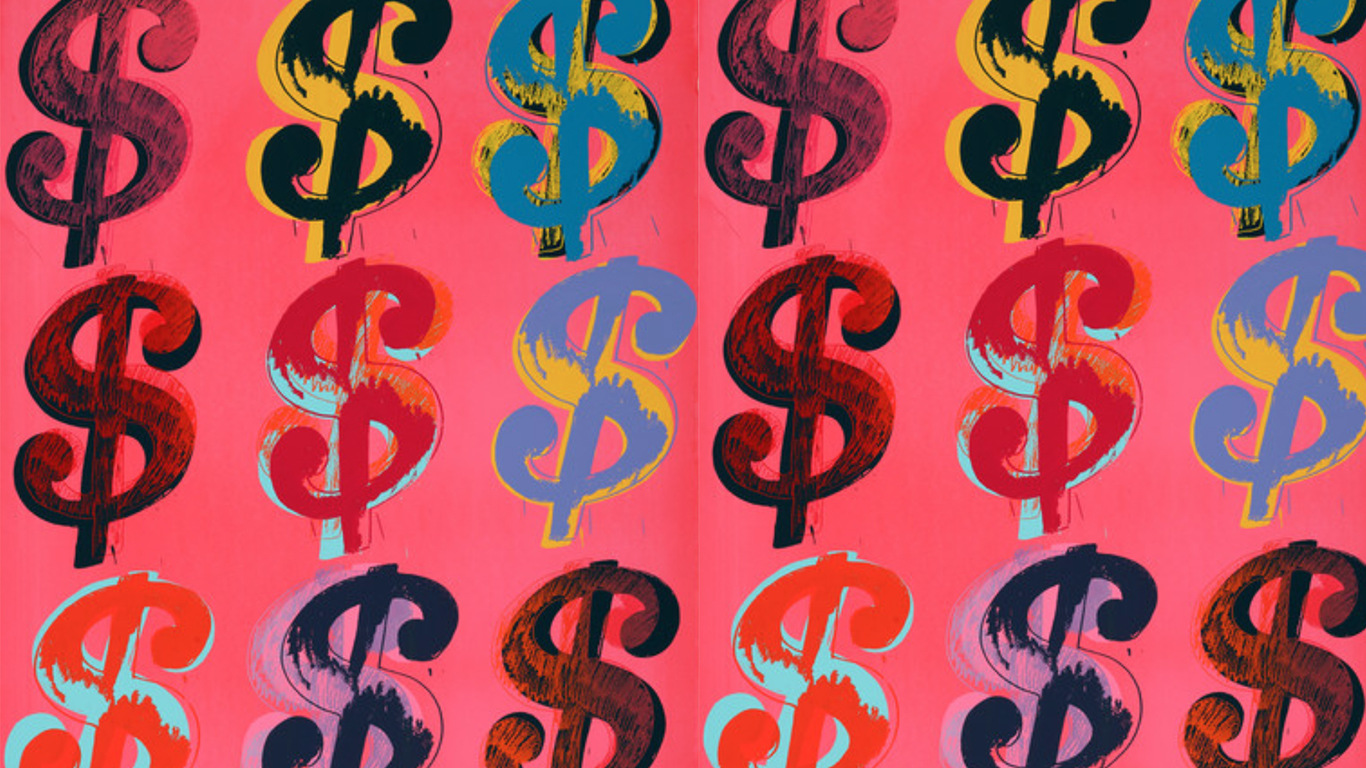
Introducing: The Seattle Loop

We are thrilled to share a sneak peek at the Seattle Loop, a fiscal strategy for generating public money for urgent needs in and beyond the city of Seattle.

The Strategy: By establishing a municipal bank, Seattle can purchase its own debt and “loop” the interest back to the city instead of to private creditors. In addition to providing residents with low-cost banking and financial services, the Seattle Loop simultaneously empowers myriad additional circuits of desperately needed public provisions–from social housing and municipal grocery stores to green jobs and a thriving arts scene.

See here for a more extensive discussion of the Seattle Loop.

Join the Movement: A growing movement is arising across the city of Seattle to make the Loop a reality. To join up and stay informed, please send an email to theseattleloop@gmail.com.

Click or swipe below to explore the animated pamphlet.

To print this pamphlet, download the front + back pages.

A Dvar Torah on the Subject of Democratic Public Finance

By Anna Minsky

The following speech was read on March 28th at a progressive New York City synagogue, a guest sermon by one of the congregants. In the Jewish tradition, each week we read one part (a “parsha”) of the Torah (the first five books of the bible) aloud in Hebrew. Then someone, often a Rabbi, offers “words of Torah” (dvar Torah or drash). At this synagogue at least, the idea is to use the text as a jumping off point. There is no presumption that the text is true or just, only that it is worth discussing.  The terms haShem (literally, the name) and The One are used here in lieu of “G-d” to convey that such a thing is too big to be known or personified.

Shabat shalom.

Obligation. Honor. Reckoning. Redemption. These are all words that have both a moral meaning and a money meaning.

Today’s Torah reading comes from Parshat Tzav.  Tzav means oblige. It has the same root as mitzvah. s/ Tzav is an absolutely *riveting* passage that goes back over how to perform five different ritual offerings that were already described in last week’s parsha, but this time with more attention to the role of the priest. But seriously, Parshat Tzav must be important because it is a list of instructions and Torah means instruction. The ritual for each offering begins with, zot torat ha: now this is the torah of… And, more-or-less, the description of each offering is punctuated with, kadosh kedushim hu: it is a holiest holy portion, referring to the part of the offering that goes to the priest.

So, this is the Torah of Obligation. What do we owe to haShem and what do we owe to each other? In the text, we owe a shlamim offering. It could be from the herd or the flock or a goat. We owe a minhah offering. It must be grain, with salt, oil, and frankincense, but no leavening. And, significantly, we are told the exact amount to bring each morning and evening, and we are instructed that the priests get to eat a part of it. These two offerings and the olah offering are considered obligatory.  In contrast, the last two offerings, the hattat and asham, are accrued based on your behavior.  More about those later.

In late temple times the instructions in the Torah about obligations to The One likely shaped the local economy more than obligations to the state. Roman authorities were content with minimal tribute, and their local governors were mostly unstable. Meanwhile, the Torah had already been entrenched for centuries. There was even a sacred currency that could be used for offerings and tithes. People likely took the Torah instructions seriously, but paid a priest to make offerings, rather than literally bringing a tenth of an efa of grain in the morning and another tenth of an efa in the evening. They saw their relationship with haShem as transactional.

Kadosh kedushim hu. It is a holiest holy portion.

Now this is the Torah of Honor.  So, what do you think? Is it impure to owe money? Is it a sin not to repay a debt?

It is no secret that cartels and bullies use debt as a pretext for violence and cruelty. For example, in 2014 credit agencies downgraded Puerto Rico’s bonds, forcing them to pay off their debts by reducing services and pensions, that is by reducing care for the people who live there.  There is no honor in paying off a debt if it is a cause for neglect. But also families and friends use debt as a pretext for companionship. I am in the debt of this community for creating a meal train when I was sick, and that’s a good thing because it makes me want to sign up for a meal train for someone else. The difference between cruelty and connection has to do with who keeps the ledger. If we think of money as a thing that can be hoarded that might prompt us to be cruel. But if we think of money only as an abstraction, that might prompt us to use it to coordinate care.

Kadosh kedushim hu. It is a holiest holy portion.

Now, this is the Torah of Reckoning. Is it possible that one origin of money was in temple ledgers?  For example, the temple might record that Linda hadn’t brought a shlamim offering. Perhaps, also, Carol wants some of Linda’s saplings to plant a vineyard.  She could say to Linda, give me a few saplings, and I will promise to bring a shlamim offering to the temple on your behalf. Linda could then bring that promissory note to the temple, and they could record that the obligation of the shlamim offering had been switched from Linda to Carol.  All of a sudden, we essentially have paper money, and what makes it possible is the ledger that is being maintained by the temple. So the verses about how a shlamim offering could be from the herd, the flock, or a goat could be interpreted as important material information about exchange values that allow for the coordinated distribution of resources within a community of friends and neighbors. Although we no longer make offerings at the temple, Parshat Tzav is still relevant because we still coordinate the distribution of resources. And to give an honest reckoning, we do it badly.

Thinking about our relationships with The One and among ourselves as something transactional might feel yucky, but I would offer that we can reject the fake morality pedaled by banks that it is honorable to “honor” a debt incurred to a usurer. We *can* organize transactions around caring.

Kadosh kedushim hu. It is a holiest holy portion.

And finally, this is the Torah of Redemption. I am going to spend the remainder of this drash talking about Democratic Public Finance, an idea I’ve been learning about from the Money on the Left editorial collective. Today is the perfect day to talk about it, not just because of Parshat Tzav, *but also* because today is No Kings Day, *and also* the state budget is due on Wednesday.

I think we’re all on the same page that when the President claims the unilateral right not to spend funds that Congress has appropriated, that is King behavior and we won’t stand for it.  But I also want you to think about this unitary executive theory of money, not as a departure from, but a continuation of the austerity framework of our much-too-powerful governor, Kathy Hochul, who says that we can’t “afford” to invest in renewable energy.  Just as we shouldn’t let the president be the arbiter of when money can be spent, so too, we should not let the banks, traders, and hedge fund managers be the arbiters.

Under the current regime corporate banks, and not democratically elected local governments, have the power to create credit.  What kind of democracy is that?  Kathy Hochul claims that money is a scarce private resource, but Democratic Public Finance thinks of money as just a way to coordinate the distribution of resources and capacities.  If there is enough food in New York City to feed every person in New York City, then it is simply not the case that we can’t afford to feed everyone. If there are enough people to shovel the snow, then it is simply not the case that we can’t afford to have the sidewalks passable for people in wheelchairs.  If it is physically possible to build solar and wind farms and a pipeline to bring hydropower from Quebec, how can we afford *not* to do these things? All we, as a multiracial small-d democratic city and state, have to do is ask what we wish to accomplish together and then take control of the ledger to credit the people who step up to do the accomplishing. For example, one way to do this would be to issue literal credits that could be redeemed to pay taxes or obtain food from state-run groceries.

Another idea from democratic public finance is to borrow money from people rather than banks. Instead of donating money to centrist democrats to defeat MAGA, we could invest our money in arts programs, libraries, and parks in New York City, Cincinnati, Seattle and Tulsa, expanding blue cities so that people can live in them free from cars and guns, and organize together to take back their state legislatures.

These are policy ideas we could advocate for. If you are interested in taking some smaller first steps together, I am always looking for study partners, and maybe we could consider writing a joint letter to the mayor or governor, or starting some inventive crediting systems within our own community, perhaps for kids or teen assistants.

I said I would return to the hattat and asham offerings. These are offerings you would make if you needed purification or to atone for a sin. The implication is that you had incurred some debt for impurity or, perhaps, cruelty. It is not wrong to have a debt, but it is wrong to usurp the ledger.  The premise of Parshat Tzav is that haShem controls the ledger, but post-temple, I think that we all should control the ledger, democratically.

What’s more, while it might seem like Parshat Tzav is just instructions for the priests, let’s not forget Parshat Yitro, where we read v’atem t’hiyuli mamlechet cohanim: we should be a *nation* of priests. 

On top of Parshat Tzav, no kings, and an impending state budget deadline, today we observe Shabbat haGadol, the last shabbat before Pesach, the holiday of redemption. To redeem is literally to acquire something by paying off a debt, perhaps by making a hattat or asham offering.

But I say redemption is meaningless if we are not a nation of priests, if we do not wield the ledger to distribute our labor and resources to care for one another.

Kadosh kedushim hu. It is a holiest holy portion.

Good Shabbos.

* The featured image above features an ancient silver Shekel of Tyre from the Second Temple period dated 64/3 BC.

** Watch Anna Minsky read her remarks here:

Reparative Internationalism

Toward an International Democratic Public Finance Framework

By Will Beaman

The liberal international order faces a crisis of legitimacy, and the struggle to define its aftermath is already being organized through competing visions of global order. In the present turn, the far right has seized that terrain to stage a false choice: either accept imperial internationalism or retreat into nationalist rivalry.

This essay develops the Democratic Public Finance (DPF) framework into the domain of foreign policy and international economic governance. Reparative internationalism names the political horizon of that extension. DPF begins from a simple premise: public money and fiscal authority should be organized to expand democratic participation and shared capacity rather than to enforce artificial scarcity or market discipline.

The international monetary system makes this premise unavoidable. Nowhere is the tension between democratic participation and financial hierarchy more visible than in the global institutions that govern liquidity, development, and employment across borders.

This also requires a broader understanding of economic democracy and internationalism than political economy often supplies. Economic democracy is too often reduced to questions of workplace control, redistribution, and ownership, while international solidarity is not yet joined to the kinds of public design and institutional coordination that would support democratic repair and reconstruction in the present. A Democratic Public Finance approach insists that institutions of money, credit, and employment are central to both.

Even where strands of political economy have under-theorized money, credit, and employment as constitutive of economic democracy, or the role of internationalist architecture in liberation struggles, these questions remain open. They belong to a heterogeneous problem space shaped by developmental economics, mid-century postcolonial thought, and the 1974 call for a New International Economic Order. That declaration, advanced by newly independent states, demanded structural changes to trade, finance, technology transfer, and development governance. These questions stand alongside more recent decolonial monetary and macroeconomic work, including Fadhel Kaboub’s analyses of postcolonial economic relations and advocacy for political and climate reparations and Ndongo Samba Sylla’s critiques of monetary imperialism and neoliberalism’s colonial roots. What is more, Kaboub and Sylla join Andrés Arauz in calling for forms of regional monetary solidarity across Africa and Latin America. Democratic Public Finance revives and recomposes these longstanding questions through a focus on international public design and interoperability: the construction of institutions that widen fiscal space, coordinate liquidity, and secure full employment across borders without reinstalling the nation-state or any imperial power as the singular anchor of economic order.

What appears as an external constraint is often already an effect of how cross-border obligations are organized, recognized, and supported. International architecture, in that sense, is not a downstream consequence of discrete political achievements. It is part of the contested infrastructure through which those achievements become possible, legible, or durable in the first place.

These questions remain live today in debates over what happens when countries must use up their stocks of dollars and other widely accepted reserve assets to pay for imports, service debts, and steady their currencies. When that cushion runs down, governments face mounting pressure. They may be forced to cut spending, suppress demand, or seek outside support on punitive terms simply to keep external payments flowing.

When countries struggle to secure the dollars they need for imports, debt service, and other external payments, the resulting instability should not be mistaken for a self-moving market process. It reflects an international monetary architecture in which dollar support is selectively provisioned rather than organized around democratic participation or fiscal space. That selectivity is not incidental. It is an imperial design logic that recasts questions of public monetary design as matters of U.S. charity and benevolence and, in the present authoritarian turn, is increasingly restaged as a pageantry of opening and closing windows of solidarity and support according to loyalty and fealty.

The consequences then appear in the specific exchanges through which domestic money is traded against dollars, in the pricing of imports, and in the servicing of foreign debts. Governments and central banks then try to keep those arrangements from breaking down by using up their dollar holdings, keeping domestic currencies from falling further against the dollar, making borrowing more expensive, or taking other steps to resist the reorganization of claims in favor of dollar-denominated assets and to preserve the payment relationships on which imports, debts, and public responsibilities depend. These are defensive responses to terms that are rendered legible as neutral, ordinary, and unavoidable, while making other ways of organizing support, obligation, and participation across borders harder to name and sustain.

Too often, these dilemmas are staged as a choice between insulated national monetary autonomy and permanent exposure to external discipline. International Democratic Public Finance begins elsewhere. It treats those pressures not as fixed conditions within which each country must fight for survival, but as symptoms of a global monetary architecture organized around hierarchy, scarcity, and competitive vulnerability.

For decades, the dominant vision of international order presented itself as a framework for shared prosperity, development, and stability. In practice, however, liberal internationalism organized economic life across borders through hierarchically structured financial and trade institutions, which repeatedly treated austerity, privatization, and unemployment as the price of participation for countries facing external payment pressures.

As faith in this institutional order has eroded, the far right has offered its own alternative: nationalist competition among strong states, each seeking advantage in a world of strategic rivalry.

Neither model addresses the underlying problem. Liberal internationalism preserves hierarchical financial arrangements that restrict fiscal space for most of the world. Nationalist internationalism abandons cooperation altogether and risks normalizing economic fragmentation and geopolitical conflict.

What is needed instead is a different framework for international economic governance—one grounded not in hierarchy or withdrawal but in participation.

A reparative foreign policy therefore requires more than a change in diplomatic posture. It requires treating the international monetary system itself as a site of democratic public finance rather than as an instrument of imperial hierarchy.

I. Authority as Participation

A reparative international architecture begins by reframing how authority operates. In the prevailing international order, authority is exercised through hierarchy: a small number of powerful states and financial centers shape the conditions under which other societies must govern their economies.

The alternative is participation. Participation does not simply redistribute power within an existing hierarchy. It reorganizes the institutions through which economic life is governed so that societies can participate in shaping the economic conditions that govern their lives.

This shift has a certain experimental quality. Participation is not merely a new map of who belongs within an existing order. It is a world-making practice through which democratic capacity is built across borders.

A participatory international architecture continues the unfinished work of decolonization by changing the institutional conditions under which political and economic decisions are made. Instead of requiring countries to navigate rules designed elsewhere and enforced through external discipline, it creates institutions through which societies can participate in shaping the economic and financial environment that governs them.

In this sense, decolonization is not only a political project but a monetary one: it requires transforming the institutions that govern liquidity, credit, and employment so that they expand democratic participation rather than enforce financial hierarchy.

For Democratic Public Finance, foreign policy therefore begins with the institutions that govern money, liquidity, and fiscal space across borders.

Internationalism, in this sense, means organizing the institutions of money, credit, and employment so that societies can participate in shaping the economic conditions that govern their lives.

Anti-imperialism, correspondingly, means building institutions that prevent any power from monopolizing the monetary and financial conditions under which other societies must govern their economic lives. What these debates too often share is a survivalist baseline: a picture of self-enclosed political units forced to defend themselves within a hostile monetary environment rather than participate in designing the institutions that govern that environment in the first place.

II. The Monetary Question

Countries pursuing ambitious domestic programs are often forced into austerity, unemployment, privatization, or political retreat not because those outcomes are economically inevitable, but because access to dollars and reserve assets remains scarce, hierarchical, and politically managed.

International Democratic Public Finance does not treat externally denominated debt as a settled social fact. Even the most sophisticated MMT discussion has often treated foreign-currency debt as a stable marker on a spectrum of sovereignty, agency or capacity, as though “externality” were simply there to be measured. But what counts as external denomination is itself conditioned by an ongoing order of collective design: by the legal, financial, administrative, and discursive arrangements through which receivability, refinancing, reserve practice, enforcement, and public support are organized across borders and rendered durable as common sense. The topology is therefore the reverse of what it often seems. Sovereign refusal, denomination, or imposition does not stand prior to international monetary design. It is itself organized through that design. The issue, then, is not simply what degree of room for maneuver a country possesses in advance. It is how the international monetary order organizes the terms on which its obligations will count, travel, and be supported.

This is why the dollar’s global role cannot be treated as neutral—and certainly not as a foundation for democratic renewal. When access to dollars and other widely accepted reserve assets is concentrated at the top of the system, fiscal space everywhere becomes organized around imperial asymmetries. In the current order, that fragility is often resolved through austerity: governments are told to cut spending, suppress wages, privatize assets, or tolerate unemployment in order to regain access to the external means of payment they need for imports, debt service, and exchange-rate support.

Reforming this system requires expanding the institutional mechanisms through which countries can gain access to the external means of payment they need when they face dollar shortages and other external payment pressures, without sacrificing domestic democratic priorities.

One concrete example already exists in the network of central bank swap lines that the Federal Reserve extended during the global financial crisis and again during the pandemic. These facilities stabilized global financial markets by allowing foreign central banks to access dollars when they faced payment shortages. Yet access to these lines remains restricted to a small group of privileged partners.

A reparative international architecture would expand such mechanisms and place them within multilateral institutions so that access to the external means of payment countries need is not a discretionary tool of imperial power but a normal feature of global economic governance.

Other paths point in a similar direction. In Africa and Latin America, regional monetary proposals associated with thinkers such as Ndongo Samba Sylla and Andrés Arauz have emphasized currency cooperation, regional clearing, and solidarity-based reserve arrangements as ways to reduce dependence on hierarchical dollar mediation. These efforts underscore that reparative internationalism need not mean a more benevolent top-down order. It can also mean building interoperable institutions below and across the current hierarchy.

Such reforms would not eliminate international inequality overnight. But they would reduce the ability of financial hierarchy to discipline democratic governments pursuing full employment in an inclusive way.

III. Employment, Industrial Strategy, and Participation

Debates about development strategy often frame employment as a byproduct of industrialization. According to this view, jobs should emerge naturally from successful sectors and industries institutionally positioned to attract investment and external demand.

A participatory framework reverses that priority. Employment is not merely an outcome of economic strategy; it is a condition of democratic participation.

This does not mean abandoning industrial policy. It means recognizing that industrialization can proceed under different background conditions. One option is to organize economic life around unemployment as a disciplinary mechanism, forcing workers and communities to compete for access to livelihood and public standing. Another is to establish employment as a public commitment, ensuring that participation in economic life is not contingent on meeting a narrow test of market usefulness.

That distinction matters because unemployment is not simply an economic shortfall. It is also a way of sorting people into more and less legitimate forms of social contribution. A participatory framework rejects that sorting function. It insists that industrial transformation should widen the terms on which people can appear as contributors to public life, rather than narrowing them around one dominant image of usefulness.

Economic democracy, in this sense, means organizing the institutions of money, credit, and employment so that participation in public life does not depend on meeting a narrow test of market usefulness.

Full employment has long functioned as a public aspiration, especially in the postwar period, when mass unemployment came to be seen as incompatible with democratic legitimacy. But over time the concept was narrowed. In much mainstream economic theory, full employment no longer means that everyone who wants to work can do so. It names a moving threshold consistent with a certain tolerated level of unemployment, often justified through concepts such as the Non-Accelerating Inflation Rate of Unemployment. Under that definition, full employment becomes a vague macroeconomic target rather than an institutional obligation.

This narrowing is often defended through the language of inflation. Inflation is treated not only as a technical problem of prices but as a signal that participation has exceeded its proper bounds: that wages are rising too quickly, that public spending has become excessive, or that “make-work” has replaced disciplined production. In this way, inflation discourse helps naturalize a background level of unemployment as a necessary restraint on social excess. It also organizes distinctions between forms of labor that are recognized as productive and those that are cast as marginal, redundant, or improperly supported—distinctions that have long been entangled with judgments about skill, disability, and social worth.

Democratic renewal has to reject those logics more fundamentally. When unemployment is treated as the necessary price of order, and inflation as evidence of improper public spending or socially excessive participation, the ground is laid for harsher distinctions between worthy and unworthy labor, disciplined and undisciplined populations, productive and burdensome life. Those distinctions do not mechanically produce fascism, but they help make fascist categories newly legible. A democratic politics of full employment cannot simply soften those judgments at the margins. It has to reorganize the terms on which participation, contribution, and public support are recognized in the first place.

A participatory framework rejects that narrowing. Full employment is not simply a desirable aggregate outcome. It is a democratic commitment that requires institutions capable of creating work when private markets do not. It also reframes the problem of inflation, not as a reason to withhold participation, but as a question of how to organize spending, production, and pricing so that expanded participation can be sustained without reproducing the categories of excess and exclusion that authoritarian politics exploits.

A job guarantee is one way of giving that commitment concrete form. It is a public commitment to provide employment to anyone who wants to work, rather than leaving access to livelihood to the disciplinary terms of the market. It belongs to a longer history of demands for democratic inclusion, civil rights, and public responsibility for livelihood. Its importance here is not only programmatic but conceptual: it names a form of full employment that refuses to treat access to work as a privilege allocated through unemployment, exclusion, or externally imposed scarcity.

This commitment should not be confined within national borders. In the current international order, even the effort to secure full employment is constrained by dollar dependence and external payment hierarchies. If unemployment is treated as an acceptable adjustment mechanism in the global economy, the result will be recurring cycles of austerity, migration crises, and political instability.

A reparative international architecture must therefore treat full employment as a shared global objective. Job guarantees provide one way to institutionalize that commitment. By establishing employment as a right rather than a privilege, they ensure that industrial transformation occurs within a framework of participation rather than exclusion.

IV. Beyond Benevolence

This framework is not a call for American benevolence. A system in which the United States occasionally extends support while retaining the power to withdraw it would simply reproduce the exceptional and discretionary character of imperial governance.

The goal instead is to embed access to external means of payment, balance-of-payments support, and employment commitments within international institutions. Balance-of-payments support here means securing and stabilizing access to the international currencies needed to meet external payment obligations without slashing jobs, wages, or public spending. This matters in part because currencies are never singular or self-enclosed objects. As I have argued elsewhere, “the dollar itself is not a coherent entity. It is already a choreography: a composite of coins, notes, deposits, reserves, and credit instruments—issued across the balance sheets of banks, treasuries, courts, and municipal governments, each with their own histories, idioms, and institutional rhythms. It has never been a single thing.”

One existing coordinate for thinking through that transition is the IMF’s Special Drawing Rights (SDRs). Created and allocated by the IMF, SDRs are an international reserve asset—a potential claim on widely usable member currencies—that can widen access to external means of payment without reducing support to bilateral favor or market punishment. They do not solve the problem on their own, but they point toward forms of international monetary coordination less dependent on unilateral U.S. discretion and more compatible with a reparative architecture.

Balance-of-payments support from the United States to postcolonial countries could be a step in that direction. But it should be understood as transitional—part of a broader effort to embed these responsibilities in multilateral frameworks that prevent any single state from monopolizing the conditions of global economic governance.

Nor does reparative internationalism require Americans to endure economic hardship as a form of reparation. On the contrary, it requires domestic fiscal policy in the United States itself to be organized around full employment and job guarantees. A country that manages its own economy through unemployment and scarcity cannot credibly support a more participatory global order.

The issue is not simply that support has too often been distributed cruelly rather than kindly. It is that support itself has been organized as an instrument of selective favor rather than as an ordinary condition of international participation. In the present authoritarian turn, that selectivity becomes more theatrical–and more spectacularly brutal–but it is not new.

The aim is not sacrifice but an order in which coordination is institutionally secured: a world in which societies can pursue democratic economic strategies without being disciplined by external financial constraints.

V. Practicing Reparative Internationalism in the Present

Progressive lawmakers do not need to command international institutions in order to begin advancing this framework. The present already offers ways to begin institutionalizing it.

Part of that work is rhetorical. It involves recognizing people, places, and forms of labor as public capacities where dominant policy language still treats them as fiscal burdens or economic costs, while refusing the assumption that unemployment, migration, or underdevelopment represent excess human lives to be managed through discipline. Even before institutions change, political language can begin to reorganize what counts as value, capacity, and participation.

Part of the work is domestic and programmatic. Public employment initiatives, care infrastructure, green development, debt relief, and other DPF-style policies do more than address local needs. They rehearse a governing logic in which public money is used to widen participation and build collective capacity. They help establish that full employment is not a fantasy or a slogan, but an institutional obligation.

Part of the work is transitional and international. Progressive lawmakers can support debt restructuring, oppose austerity conditionality, advocate for expanded swap lines, and back reforms that give other countries greater room to pursue inclusive social provisioning. These measures fall short of a fully reparative architecture. But they help soften the ground for one by weakening the idea that global order must be organized through scarcity, punishment, and hierarchy.

Because these hierarchies are continuously organized rather than simply inherited, they can be contested in the present through rhetoric, program design, and transitional institutional demands.

Reparative internationalism, then, is not only a future arrangement at the level of global institutions. It is an inter-temporal practice of recognizing capacity where others see cost, widening participation where others impose discipline, and advancing reforms that loosen the grip of hierarchical finance.

VI. Conclusion

The crises of the twenty-first century—financial instability, climate change, migration, and geopolitical fragmentation—cannot be addressed through a return to the institutions and assumptions of the late twentieth century.

What is required instead is a reparative internationalism centered on participation.

This means building and revising institutions to widen fiscal and democratic space rather than restricting it through austerity and external payment discipline. It means refusing to predicate participation in public life on a narrow test of economic usefulness. And it means treating participation as a world-making practice through which democratic capacity is built across borders.

The point is not merely to redistribute capacity within a fixed world order, but to reorganize the terms on which capacities, obligations, and claims come to count at all.

The goal is not a world organized around hierarchy or benevolent patronage, but one in which societies can participate in shaping the economic conditions that govern their lives.

In that sense, reparative internationalism names the unfinished institutional work of decolonization: a world organized around democratic participation.

Animal Spirits and Public Promises: Phantom Beavers and the Politics of Monetary Design

By Rob Hawkes

There is a spectre haunting Nigel Farage. The spectre of a beaver.

On 11 March 2026, the Bank of England announced that, following a public consultation, its next series of banknotes will feature images of the UK’s wildlife in place of historical figures, which have adorned our currency since the 1970s.

Mr. Farage was quick to describe this move as “absolutely crackers” (and, of course, “woke”) in a social media video which begins with a triumphant hailing of “our great British banknotes” and their images of “giant figures like Winston Churchill.” Soon, however, his tone shifts to one of ridicule: “And yet, they’re proposing that we replace people like him with a picture of a beaver. No I’m not making it up, this is actually what they’re proposing.” The Reform UK leader has never been one to let the truth get in the way of a good bit of faux outrage, but, if his “I’m not making it up” wasn’t enough of a clue that the facts might have undergone some stretching, a brief check of the BoE’s press release confirms that the “specific wildlife” the public would like to see depicted on the currency has yet to be determined via a further consultation process. Mr Farage, it seems, has conjured a phantom beaver.

One can only speculate as to why this particular animal spirit haunts Farage’s paranoid imagination but, considering Reform UK’s deep commitment to women’s rights, it is surely a mere accident that his mind landed on a word with a history in misogynistic slang. There is no knowing, either, why the thought of losing Jane Austen, JMW Turner, or Alan Turing from the “great British banknote” has not proved quite so distressing, either to our political leaders (Kemi Badenoch is also very cross), or to the BBC Question Time audience member who saw the replacement of Churchill as “surrendering to the radical left wing.” One of the panelists, the broadcaster Kay Burley, responded: “I think as long as we’ve got enough of them in our pockets at the end of the week, I don’t really care what’s on the back of my banknote.” Indeed, from the point of view of mainstream economics, which sees money as a politically-neutral medium of exchange, the material and aesthetic properties of monetary tokens are of no consequence. However, while we can question the motives underlying this week’s eruption of “anti-woke” anger, the questions of monetary design this episode opens up are anything but trivial.

As Alfred Mitchell Innes wrote in 1913, money is “credit and nothing but credit.” Indeed, in a powerful sense, Churchill, Austen, Turner, and Turing are all the posthumous recipients of public credit in the form of recognition, celebration, citation, and acknowledgement via the visual design of the existing £5, £10, £20, and £50 notes. In Turing’s case, in particular, this credit is also an act of reparation following the violence he endured at the hands of the British state in his lifetime. As well as bearing images of Churchill, Austen, Turner, and Turing, our banknotes announce that they “promise to pay.” And yet, this public promise also encompasses a commitment to redeem, to receive, to acknowledge, and to accept. In broader terms, the UK’s monetary system as a whole recognises the contributions of those who serve the public purpose – from health, to education, to social care – in the form of public credit.

As one of the world’s most nature-depleted countries, you could argue that the UK now owes far more to its wildlife than to its revered historical figures. And yet, the panic over the removal of Churchill points to the ingrained logic of austerity at the centre of British politics today. Acknowledging our past need not come at the expense of provisioning the future, but for Farage and those who share his worldview, these will always appear as zero-sum trade-offs. Despite living in one of the world’s richest countries, we are told, there is not enough to go round – someone must be left out, whether it’s animals vs. dead politicians or hungry children vs. cold pensioners, we’re always in a world of either/or and never both/and. Thus, striving for ecological sustainability and renewal, averting climate breakdown and arresting species loss, or meeting the needs of those our society marginalises (including migrants, people of colour, LGBTQIA+ communities, women, and disabled people), are imagined to be achievable only as a consequence of someone else’s suffering. However, as we at Money on the Left have been arguing in our work on Democratic Public Finance, while systemic exclusion is baked into the present logic of monetary design, this is not and has never been inevitable – we can design another, more inclusive and sustainable system just as we can redesign our banknotes.

Farage’s phantom beaver betrays an even deeper fear of democratic inclusion. As a thought experiment, let us imagine for a moment that a twenty-first century political leader might deliberately and unsubtly choose to imply that Churchill, the warlike epitome of masculine strength and defiance, was to be replaced by a euphemism long used to belittle and sexualise women. Might this indicate a wider hostility to women’s inclusion in the political and public spheres? Might the lack of comparable concern over the loss of a woman writer, an artist, or a gay man from the “great British banknote” also be telling? The BoE made the decision to feature wildlife on its new notes after an extensive public consultation. This was a more democratic choice than could ever have been arrived at had the Bank simply asked Nigel Farage what he might consider too “woke” or asked the man in the Question Time audience what would count as “surrendering to the radical left wing.” As we saw in the aftermath of the recent Gorton and Denton by-election, which saw Farage’s party’s candidate Matt Goodwin losing to the Greens’ Hannah Spencer, Reform UK’s instinct is to blame the public when it makes a decision it doesn’t like. By contrast, Democratic Public Finance invites everyone to join the conversation, not just about who or what we recognise and celebrate in the visual design of our currency, but how the monetary system itself functions, which people, places, and causes truly deserve public credit, and how acknowledging our shared past need never be pitted against our ability to build a better, more just, inclusive and sustainable future.

As Robyn Ollett and I wrote for Money on the Left last August, “the stories we tell about our communities and the people that build them are intimately bound up with the way we account for them in monetary terms.” We have since launched the Where Credit’s Due project in Middlesbrough with the aim of building intersectional solidarity and fostering conversations about monetary design in both visual and systemic senses. We began with a screening of Maren Poitras’s 2023 documentary Finding the Money – in which Lua K. Yuille observes that: “If money is natural, who has the money is natural as well” – and followed this with a series of workshops at Middlesbrough’s Dorman Museum, where our participants have experimented with designs for their own “Dorman Dollars” (see the image above). As these events have explored, neither the aesthetics nor the politics of monetary design are natural or inevitable. In place of the orthodox story, which tells us that the suffering of marginalised people and neglected places is necessary and that austerity’s exclusionary logic is the mark of responsible government, we have been learning how to tell new stories of money’s creative potential. In place of the phantom of inclusion-as-zero-sum-competition and the fear of democracy that haunts Nigel Farage, we offer Democratic Public Finance’s vision of ecosocial justice, which refuses to imagine false binary oppositions between wildlife and people, between men and women, or between the past and the future.

The Ontology of the Monetary Image: Référance and Reconstruction

By Will Beaman

Money is often introduced in critical theory as a problem. It appears as the medium that makes unlike things commensurable by reducing them to sameness, the abstraction that removes social life from the conditions that give it substance, or the sign that circulates by displacing the relations on which it depends. In one register, this is the Marxist account of commodity abstraction and estrangement. More specifically, it is the tendency within Marxist political economy to identify money with the value-form, and the value-form with a mystifying equivalence that becomes socially real and destructive. In another register, money becomes part of a deconstructive account of debt, mediation, and the impossibility of meanings or values ever being wholly self-identical. What these approaches share is the claim that money is bound up with failed identity: either it asserts an equivalence that does not in fact exist, or it reveals that equivalence never fully holds. Money is therefore treated either as a false identity or as a site of identity’s failure.

I want to start from a different premise. Money does not need to be understood first as the positing of identity. Commensuration is not exhausted by equivalence in the strongest sense, and credit should not be understood only as false unification or as a relation whose non-identity appears primarily as failure or guilt. Money is better understood as a practice of open public reference. At its most basic level, it stages comparison without requiring identity. By reference I do not mean only precise signification. References can also sample and remix, compare partially, cite selectively, echo playfully, or suggest likeness without exhausting what they carry forward. What matters here is a public act of relating—one that makes coordination, valuation, and obligation possible without discovering a pre-given sameness beneath them. The question, then, is not whether money imposes identity on a heterogeneous world, but what kind of reference money is.

Marxist criticism is most useful when it shows how capitalist monetary forms narrow what can count as socially intelligible. When labor appears only as wage labor, when production appears only through profitability, and when public capacity appears as fixed, money becomes a disciplinary medium. But it is not enough to say that capital captures money and thereby generates socially real abstractions. That still risks treating reification as the basic ontology of money rather than as one historically powerful monetary idiom. What appears here as private value or abstract equivalence is better understood as a genre of reference—a way of organizing relations that presents its own ratios as self-grounding while treating the conditions of issuance and receivability as if they were already settled. Even in these privational forms, money is not ontologically private. It remains a contested public utility, and the terms on which claims are issued, received, and made to count are never fully removed from political struggle.

A similar point can be made about deconstructive accounts of debt and mediation. These traditions are right to insist that identity does not close. Debt is never just a neutral balancing of accounts but is bound up with obligation, memory, punishment, and the effort to make a claim hold over time. More generally, settlement never arrives in a final and self-contained form, because any act of meaning or repayment depends on signs, conventions, and contexts that exceed it. Derrida’s term différance combines difference and deferral to name this condition: meaning is never simply present all at once in a self-identical form. A word becomes intelligible through its differences from other words, through traces of prior use, and through its repeatability across contexts. What appears self-grounding or immediately given is therefore mediated. Applied to economic life, the point is that a price does not contain the full reality of the good it prices, and a wage does not contain the full reality of the labor it measures. Monetary signs are in no objective sense equal to the world they organize. If one begins from identity or presence, non-coincidence appears as différance.

If différance clarifies the mediated conditions of signification, we might use référance to clarify the mediated conditions of reference. Derrida’s altered spelling marks a difference that is visible in writing but not audible in speech, making the temporal discontinuity of signification legible at the level of the word itself. Référance transvalues that gesture. It marks not only the non-presence of meaning, but the inscribability of claims across the spacing of currency issuance and uptake. Just as writing happens here and reading happens there, issuance happens here and receivability is negotiated there as a reversible stagecraft rather than a closed transfer. Rather than starting from identity and its failure, référance begins from relations that are non-identical from the start and do not require identity as their ground. If one begins instead from analogy and provision, from a shared problem that referential coordination across non-identity helps organize and contest, the same field appears as référance. The inadequacy of identity is the site of différance; non-identical relation is the site of référance. These do not necessarily name different empirical objects. They name different descriptions of the same mediated field. Référance names an open public reference: a way of suggesting likeness and holding claims together without discovering a final identity beneath them. Money, on this account, is not the successful representation of a prior economic reality, and it is not merely the symptom of a constitutive lack. It is a partial articulation of the social world as countable and revisable.

In monetary life, référance works through analogy: a way of holding heterogeneous things in accountable relation without making them identical. Analogy here does not mean approximation to a fixed norm. It means that likeness can be suggested and coordinated without being gathered into identity. A wage does not make labor the same thing as money. A price does not make a good identical with a number. A budget line does not make a public need identical with its accounting expression. Identity fails, but coordination still takes place.

The reparations movement offers a political example. A cash payment may form part of reparations for slavery without being identical to reparations or exhausting their meaning. Indeed, reparations are possible in part because money is not exhausted by any punctual scene of settlement. Its non-identity makes it intertemporally inscribable as a medium of repair, capable of carrying past harms, present claims, and future obligations in relation. The relation is not merely metaphorical or supplementary. It is analogical. Payment participates in a broader project of repair that can also take juridical, institutional, pedagogical, and aesthetic forms. This is part of how reparations remain durable across changing media and struggles: not because the claim is reducible to one self-identical demand, but because it can be carried forward across different scenes of reference. Reparations, in this sense, name an open historical and political problem-space rather than a single settled form.

Existing monetary forms often conceal the work of reference. We might think of this in terms similar to the continuity system in cinema. Continuity editing does not literally create seamless space-time. It produces continuity as an effect while hiding the cuts, conventions, and labor that make it possible. Some monetary forms work in the same way. They stage commensurability as a simple fact and obscure the referential work by which non-identical terms are brought into relation. What appears as neutral equivalence is often the product of historically specific conventions that present themselves as natural.

For that reason, reconstruction matters as much as critique. Reconstruction begins not from failed closure but from non-identical relation. Monetary institutions are never complete, never innocent, and never outside power. But they are not simply illusions waiting to be exposed. They are infrastructures through which claims become receivable, contestable, and revisable. To reference is also to cite: to carry something forward and make it count within a shared scene of recognition. Credit clarifies the connection. To credit is not only to finance but also to acknowledge, attribute, and extend receivability in monetary terms.

The historical period of Reconstruction after the U.S. Civil War extends the reparations analogy. In that moment, the terms under which social life could count within public institutions were reorganized. New images were put forward in which labor appeared as employable beyond the plantation. Citizenship appeared as enfranchisable across race. Land appeared as redistributable rather than fixed within the slaveholding order. Credit appeared as more issuable to newly recognized participants in public life. Black participation appeared as precious and indispensable to public life. None of these predicates produced stable identities, and all were violently contested. Yet they established new relations through which claims could be made and received within a multiracial democracy. Reconstruction therefore names not only a historical period but a problem of reference: how heterogeneous lives can be sustained together within shared institutions without collapsing their differences into a single form.

The political economic question is therefore what kinds of open public references monetary forms establish, and whether they do so reflexively or under the cover of objectivity. A reconstructive critique of money asks who may issue, who may count, what may be valued, which obligations are recognized, and which forms of life are treated as worthy of support. The task is to reconstruct money as accountable relation rather than failed identity.

Fiscal Chronotopes: #ZcavengerHunt, the Zetro Card, and the New Finance Franchise

By Will Beaman

This essay is lightly adapted from a talk delivered at the 2026 American Comparative Literature Association conference. It contributes to a growing body of endogenous money theorization that we at Money on the Left call Democratic Public Finance (DPF). DPF begins from the distributed and publicly mediated character of political-economic life, approaching money, credit, and accounting as contested infrastructures that are at once citational and coordinative. My contribution to that project here concerns the conditions of legibility for political-economic imaginaries.

Fiscal practices and counter-practices unfold within spatial and temporal genres that rehearse what feels like a “realistic” order of operations: where money is imagined to come from and what must happen for it to name and remunerate social capacities. In those genres, design questions are often staged as discoverable facts about economic reality that necessarily constrain politics. But they can also be staged additively, so that public spending expands who and what can count. At stake throughout is how public money is imagined and how public obligation is organized.

One familiar name for this problem in endogenous money discourse is the finance franchise: the idea that monetary power is extended through licensed issuers and delegated circuits. That mapping matters, but it can mislead when it encourages us to treat monetary agency as primarily top-down. My wager is that the finance franchise is also organized from the middle, through durable genres and rehearsals that make monetary agency legible in public life. The franchise, in other words, is not only a legal architecture. It is also a genre environment that trains what public agency can look like and when it can count. Borrowing from Mikhail Bakhtin, I call these patterned organizations fiscal chronotopes: time-space forms through which a world becomes legible as a sequence of events, obligations, and thresholds.

A key feature of these chronotopes is that they are often polyvocal. The same practice can remain stable while supporting more than one coherent reading. That is one reason fiscal forms travel across heterogeneous publics. It also means analysis cannot treat perception as passive reception, as if fiscal reality simply presents itself and we merely record it. What is often called “fiscal reality,” including in MMT and endogenous money discourse, is too often treated as a stable object waiting to be revealed. Here I treat it instead as reversible stagecraft: a field of gestures and formats that can sustain more than one stable reading and that trains what becomes legible as responsibility and what becomes actionable, or receivable, as public obligation.

Duck-Rabbits and Fiscal Reality

We can think about this with the famous duck-rabbit optical illusion. The drawing can be seen either as a duck facing left or a rabbit facing right. The same lines support two incompatible but equally stable readings, and that is precisely why the image circulates. Gestalt phenomenology took this as evidence that perception is not passive reception but active organization. What we see depends on both figure and orientation. The duck-rabbit shows that the same object can support different gestalt wholes without collapsing into incoherence.

That claim matters here for two reasons. First, it helps describe a dynamic that shapes the present: an inherited neoliberal temporality of passive administration amid crisis can be flipped into open authoritarian bullying without becoming identical to it. Neoliberal governance has long rehearsed a fiscal chronotope in which government is staged as the administration of scarcity. Capacity appears fixed, and the acquisition of scarce funds takes the form of a hostage negotiation in which the rich and powerful must be satisfied before money can be spent legitimately. In that chronotope, the destruction of infrastructure and capacity – austerity, underemployment, deferred maintenance – is moralized as a settlement required to keep the public books balanced.

Authoritarian politics plays off that form. It preserves the scarcity framing and the hostage structure, but converts the earlier posture of impotence before “the market” into a spectacle of punishment and reward. The “winners and losers” of globalization become something closer to the “winners and losers” of The Apprentice. Where neoliberalism moralizes constraint as necessity, the shakedown celebrates it as domination and as proof of the exceptionality of Trump’s supporters. The two chronotopes therefore share recognizable features, which is part of what makes collaboration and institutional capture possible. But they organize those features into different narratives of agency and responsibility.

Second, the duck-rabbit offers a rule for reading the campaign practices I turn to next. Last summer, Mamdani’s campaign ran a citywide scavenger hunt called the #ZcavengerHunt and introduced the Zetro Card, a playful punchcard through which volunteer contributions became receivable for campaign merchandise. The question is not whether these practices are really fiscal governance in disguise. The point is that they can be participation formats and, at the same time, rehearsals of public credit and fiscal authority. They make participation legible, and they can later help make other kinds of fiscal action feel actionable. In that sense, they point toward a new finance franchise whose conditions of possibility are distributed and democratic: authority gathered and renewed through rehearsal rather than granted only from above.

With this in mind, I read #ZcavengerHunt and the Zetro Card as formats that organize fiscal time and space. They are not policy proposals in disguise, but participation devices whose polyvalence trains what counts as collective action and what later counts as legitimate public work. The point is not to decide whether they are “really” fiscal politics or “merely” campaign theater. It is to track what they make variously legible (and hence variously actionable), and how their multi-legibility lets them travel across heterogeneous publics without requiring doctrinal consensus.

The #ZcavengerHunt

I begin with #ZcavengerHunt, which composes a bounded public present, and then turn my attention to the Zetro Card as a more durable rhythm of participation and completion. In the #ZcavengerHunt on a warm day in August, people moved through a sequence of locations, following prompts posted in real time and showing up in large numbers. It was playful and conspicuously gamified, but it was also immediately recognizable as a campaign event: a way to generate momentum, attention, and contact.

The chronotopic question, though, is what kind of time and space the format composed, and what that composition made legible. #ZcavengerHunt organized routes and gathering points so that participation took a clear, shared shape. A city that often appears as dispersed constituencies and isolated commutes was briefly refigured as a coordinated circuit: a public moving through space together according to a posted order.

This helps explain why so many people on social media reached for the same comparison and said Mamdani had finally made “Pokemon Go to the Polls” happen in earnest. The comparison points to more than fun. It names the way a game can give political participation a navigable form, one that does not require prior expertise, ideological unity, or even a single reason for being there. You do not have to be converted to join. You just have to be able to read the next move and keep going.

Campaigns sit awkwardly within the dominant governance chronotope. They happen before governance, and much of their labor is volunteer-based, informal, and hard to count. In a genre environment that tends to recognize work only once it is officially authorized and paid, campaigning can become strangely unreal: “just politics,” “just vibes,” or “just messaging,” as if the labor of coordination does not count as labor.

#ZcavengerHunt pushes against that occlusion. It renders campaign labor legible as a visible, shared activity while remaining playful, and that playfulness matters because it lets participation count without first taking on solemnity. A scavenger hunt does not require participants to share the same inner narrative about why they are there; it requires only that they inhabit the same sequence. People can show up for different reasons and still cohere as a public. That is not a weakness but part of how democratic forms remain durable across heterogeneous readings.

#ZcavengerHunt is not public works in the sense of a municipal project. But it does rehearse public work by rendering coordination labor legible and staging completion as something a public can do together in the open. It rehearses turnout and GOTV, but also the broader premise that collective activity can be organized as an ordinary feature of public life rather than dismissed as a break from “real” administration. A related form appears in the more recent snow-shoveling mobilization: a public standard is set, capacity is scaled to meet it, and the work itself is the primary obligation rather than a revenue-constrained aspiration.

The Zetro Card

The Zetro Card began as a workaround. At one point in the campaign’s fundraising, election-law rules constrained the sale of campaign merchandise. The usual sequence could no longer operate in the same way. Rather than treat that constraint as a hard stop, the campaign invented another format for recognition and circulation. The Zetro Card is that format: a playful punchcard that volunteers receive at canvasses, phone banks, pop-ups, and other events, stamped for contributions and made receivable for campaign merchandise once enough stamps accumulate.

It is immediately recognizable as gamification, and it is partly that. But the origin story matters because it shows how quickly constraints become questions of form. The card does not arise from a neutral design space. It emerges within a rule-bound environment that forces the campaign to ask how value and recognition can keep moving when a familiar channel narrows. That is endogenous improvisation in miniature: a practical restaging of how participation can be honored under constraint.

As I suggested at the time in a joking-not-joking piece for Money on the Left, the punchcard format also invites expansion. It offers a way of thinking through how organizing labor might become legible as something closer to public work without pretending the campaign had already become the city. The Zetro Card’s meaning was flexible from the start. The same format reads equally well as merch logistics, volunteer morale, or a revisable experiment in how recognition might be formalized and scaled.

Where #ZcavengerHunt gave campaign mobilization the form of an attraction, the Zetro Card established form that can persist across time. Contributions that are otherwise informal and hard to count are gathered into a shared rhythm rather than fading back into the background as “just politics.” That continuity should not be confused with seamlessness. The card works because it is modular: it can absorb uneven moments of participation while preserving a stable form. Continuity, in this sense, is not the absence of interruption but the achievement of a repeated public rhythm.

If #ZcavengerHunt made campaigning legible as collective movement all at once, the Zetro Card makes it legible as ongoing work that can persist without constant spectacle. The duck-rabbit point holds here too. The card can be read straightforwardly as morale, retention, and branding. It can also be read as a rehearsal of public credit in miniature because it stages a relationship among contribution, recognition, and redemption. Those readings do not cancel each other. Its political usefulness depends on remaining legible in both registers at once.

From Campaigning to Governing

What this adds to the campaign-versus-governance question is not a fantasy of immediate substitution but a shift in genre. The Zetro Card treats participation as something that can carry forward and return as recognition over time. It offers a small but suggestive model of how collective capacities get named and taken up through repeatable formats. When the scene shifts to snow shoveling as paid public work organized around an accessibility standard, the register changes. But the underlying wager remains familiar: the work comes first as an obligation we can name, and the question of coordination follows from that obligation rather than preempting it.

Many commentators described #ZcavengerHunt and the Zetro Card as Mamdani’s way of responding to fascist terror with fun and levity, and that is true enough. But fun and levity are chronotopic. They organize political time differently from the rhythm of fiscal and political crisis that has dominated neoliberal governance and returned in Trump’s threats and shakedowns. Within dominant fiscal chronotopes, crisis appears as something that suspends public obligation rather than reinforcing it.

The campaign practices matter because they elaborate a different, more democratic public chronotope. #ZcavengerHunt exemplifies an event whose form is nonetheless repeatable, while the Zetro Card extends that same participatory logic into a more continuous sequence of recognition and coordination. In both cases, levity is not a retreat from politics but an effect of agency: a way of making collective capacity feel present and repeatable under conditions designed to make agency feel foreclosed. If neoliberal and MAGA temporalities narrow the field of action, these practices widen it by building forms in which people can act together without waiting for permission in advance.

That framing also helps clarify why the shift from campaign to governance is not a clean break. The same administration can operate in more than one chronotopic tense at once because it inherits institutions and media habits that keep staging money as if it originates in private pockets and enters public life only through reluctant concession. In the early months of Mamdani’s term, that tension has been visible in real time. Libraries were cut recently in the name of efficiency, a recognizably neoliberal move that treats capacity as fixed and management as the art of trimming. Last weekend, by contrast, snow-shoveling capacity was dramatically scaled up around a clear public standard of sidewalk accessibility. The public messaging around recruiting shovelers had its own playful, mobilizing energy, closer in spirit to the campaign experiments than to the dour genre of austerity.

The snow-shoveling episode matters because it puts a different orientation on display. Productive capacity appears here as a political variable rather than a ceiling. The public standard comes first — accessibility as constitutive of public space — and labor is then scaled to meet it. Operationally, the cash management and accounting settlement for that expansion happens afterward through ongoing negotiation and coordination. That, too, can be read in duck-rabbit fashion. In a familiar neoliberal reading, belated settlement is framed as debt that must be “paid back,” as if the city has put extra shoveling on a public credit card that will eventually come due. But belated settlement also makes something else visible: once scale becomes adjustable in order to meet a standard, the question “how are you going to pay for it?” is already being treated as a design question rather than an external veto on what counts as an obligation.

That is the fork in the road these campaign rehearsals help make visible. One path translates public need back into scarcity management, with the destruction of capacity repeatedly framed as responsibility. The other treats care capacity and employment as public ends and treats settlement as an ongoing political task rather than using it to delay action. Fiscal chronotopes are the genre environments in which those paths become legible in the first place, where some sequences of permission and closure feel natural and others do not. The wager behind these playful practices is that changing what a public can recognize is often the first step toward changing what it can do, and that democratic public finance, especially amid open sabotage and non-cooperation from the federal government, depends on rehearsing alternative temporalities and keeping them publicly legible.

Out of the Shadows: Public Banking for Municipal Finance

By Tyler Suksawat & Scott Ferguson

Editor’s Note: The following essay, originally published on March 3, 2026, offers a foundational theoretical framework for what has since been concretized as The Seattle Loop. The Seattle Loop is a fiscal strategy that utilizes municipal banking to purchase city debt, “looping” interest payments back into public provisions like social housing and green jobs. While this piece was written prior to our specific pivot toward the Seattle-based organizing effort, it articulates the core logic of public credit and municipal finance that underpins the current project.

In a recent essay, we advanced a proposal for sub-federal governments to sell municipal bonds to their own public banks. We took the city as our primary point of departure, but the same lessons are applicable to U.S. counties and states. Establishing a public bank that regularly purchases municipal debt, we argued, would not only significantly expand a city’s fiscal capacity to support its communities and environs, but also reclaim regional public finance from a parasitical and punishing bond market. 

Since the publication of our essay, some commentators have criticized the proposal for involving city finance in so-called shadow banking, precisely because it places public credit creation outside traditional private capital markets. Such concerns are rooted in a legitimate wariness toward the unregulated and often fragile credit structures that trigger financial crises. However, this criticism fails to distinguish between speculative private ventures and institutionalized provisioning by the municipal public purse. Indeed, such a critique mistakes the absence of private middlemen for a lack of financial oversight and security. Our plan, by contrast, replaces the opaque and volatile shadows of private intermediation with a transparent, public-facing mechanism anchored in the enduring fiscal authority of the city government.

Today, municipal finance remains trapped in an exploitative and convoluted cycle. When a city issues debt, it is immediately subjected to a gauntlet of private intermediaries: banks underwrite the bonds, rating agencies perform a gatekeeping function via risk assessment, and institutional investors claim interest as a form of social rent. Crucially, these investors are often not traditional depository banks, but rather volatile non-bank entities such as money market mutual funds and hedge funds, which treat municipal bonds as liquid shadow money to be leveraged for short-term gain. As it stands, then, the public purse is already precariously entangled in shadow banking, with municipal debt serving as a primary asset for the volatile and uninsured money markets that dominate the status quo. Every stage of this process, meanwhile, is governed by a “fiscal discipline” that prioritizes private profit over public need. Thus, far from a stable, above-board process, the current municipal model represents an architecture of austerity that embeds the public interest within the murky, predatory, and destabilizing mechanisms of market-based finance.

Our proposal replaces the fragility of the shadow market with an architecture of public provisioning. Before we turn to the specific mechanisms of financial stability, we must first establish the basic institutional design. We propose a publicly owned institution with chartered banking powers–including direct access to the Federal Reserve’s discount window–that allows the city to bypass the private gauntlet and recapture its own credit. Under this arrangement, the interest generated by municipal debt is no longer captured as social rent; instead, it is credited back to the issuer’s general fund. While both the private market and our public model acknowledge that credit is fundamentally elastic, the divergence lies in who controls and benefits from that elasticity. By internalizing debt service and neutralizing the power of rating agencies, our proposal transforms the financial model from an extractive regime into a regenerative one.

This formalization—grounding municipal debt finance in a chartered public bank, regulated oversight, and direct access to central bank liquidity—moves our model firmly into the light of the regulated banking system. If critics wish to argue about the risks of aggressive credit expansion or the blurring of fiscal and monetary lines, those are legitimate debates over localized monetary and credit governance. But to label a chartered, transparently regulated public utility as “shadow banking” is a category error. Our plan does not evade regulation; it institutionalizes public purpose through it.

Regarding the safety of deposits, public ownership is no barrier to FDIC insurance. A state-chartered public bank meeting standard capital and supervisory requirements can qualify for federal backing. However, even in the absence of the FDIC, the Bank of North Dakota provides a proven roadmap: deposits can be backed by the full faith and credit of the municipal government itself. In this architecture, deposit safety is a design constraint managed through robust capital buffers and strict regulatory adherence, rather than an impossibility.

In this context, the risk of default on deposits is a feature of any bank lacking sufficient capital or insurance. Critics often raise the specter of “portfolio concentration,” but a public bank purchasing its own city’s bonds is simply internalizing fiscal risk. This shifts the concern from “depositor loss” to the broader question of municipal insolvency–a condition that, in our schema, is mitigated by the bank’s ability to coordinate with the city’s broader fiscal agenda. We address concentration not through the fickle discipline of the bond market, but through diversified asset management and the elimination of capitalist underwriting.

The most powerful engine of this model is its mandated retention and concerted utilization of public deposits, serving as a foundation for proactive public provisioning. By directing city payrolls, vendor payments, contractor accounts, and the collection of taxes, fines, fees, and even utility payments (as seen in Seattle) through the public bank, we create a massive, stable foundation of liquidity to be deployed for the common good. This capacity becomes particularly transformative when paired with a local Job Guarantee program. The bank provides the strong accounting infrastructure for such a program, ensuring that municipal payrolls for public works are settled within the public’s own credit circuit to build and sustain community wealth. Consequently, the interest payments that currently “leave” the city as social rent are instead retained, further expanding the city’s financial system and its capacity to support collective wellbeing with every cycle.

Finally, we must correct a persistent metallic-standard myth: the idea that a bank’s ability to purchase bonds is constrained 1:1 by its existing deposits. As any modern banker knows, loans create deposits. Banks expand their balance sheets first and manage reserves afterward. The true constraints on our model, then, are not “available deposits,” but rather regulatory capital ratios and liquidity coverage rules. We acknowledge these constraints and embrace them. Our goal is not to evade regulation, but to use the inherent elasticity of credit to activate municipal democracy and provision the public good.

Contesting the End of India’s Job Guarantee with Khush Vachhrajani

For over twenty years, India’s national rural jobs program provided a legal right to work for over 265 million people–the majority of them women–serving as a vital lifeline against poverty and a global model for social security. Tragically, however, that lifeline is now being cut.

In this episode, we speak with Khush Vachhrajani, writer and national coordinator at the Social Accountability Forum for Action and Research in India, about his recent article in The Wire, “How to Kill a Golden Goose: MGNREGA Repeal Reveals More than it Hides.” Vachhrajani contextualizes the sudden 2026 demise of the Mahatma Gandhi National Rural Employment Guarantee Act (MGNREGA) and its replacement by the new Viksit Bharat–Guarantee for Rozgar and Ajeevika Mission (VB-G RAM G). As he explains, this shift effectively “kills the golden goose” for millions of rural workers by replacing a demand-driven legal guarantee with arbitrary budget caps and centralized control. We discuss the neoliberal money politics behind this move: a calculated transition from a rights-based framework that empowered workers to a supply-led scheme that prioritizes fiscal austerity over human dignity.

Still, our dialog is not merely a post-mortem of a fallen policy. From the “Save MGNREGA” nationwide agitations to defiant resolutions passed in thousands of Gram Sabhas, the people of India are actively fighting to reclaim their right to work. This episode explores both the devastating effects of the repeal and the growing movement of workers, unions, and activists who refuse to let this Golden Goose go quietly, proving that the struggle for democratic accountability is far from over.

Visit our Patreon page here: https://www.patreon.com/MoLsuperstructure

Music by Nahneen Kula: www.nahneenkula.com

Transcript

This transcript has been edited for readability.

William Saas

Khush Vachhrajani, welcome to Money on the Left.

Khush Vachhrajani

Thank you so much. Delighted to be here.

William Saas

Could you start by just telling us a little bit about your background and what brought you to the kind of questions that you’re asking in your most recent research, which you’re producing through your position at the Social Accountability Forum for Action and Research, or SAFAR, and sharing on your Substack?

Khush Vachhrajani

Sure. So, I’m from India. I’m from this city called Ahmedabad, which is in the western state of Gujarat. That’s also where the Prime Minister comes from, so, I think it has gone on the maps because of that. But it’s also the state where Gandhi was born and a very long part of his life after coming back from South Africa, when he started his journey in India, began from the state that I come from. I studied in a school that was sort of built on the foundation of some of the principles that Gandhi himself sort of taught us as a society. I currently work with a collective called the Social Accountability Forum for Action and Research.

We are a group who’s just interested in making democracy work on a day to day basis for the most marginalized. We don’t see democracy as just an election-to-election arrangement, but also in terms of a person’s right to be heard, a person’s right to grievance, a person’s right to participate in the smallest decision making that affects the person or the society as a whole.

The work also is sort of anchored in some of these democratic principles. Apart from that, I love to read. I have been a follower of many of the progressive ideas that you all have sort of built over a period of time on Money on the Left and also have learned immensely from the writing, and the guests who have come here which has also sort of shaped a very core part of my own politics around money, around looking at monetary design. I enjoy music. I enjoy sports, and I have a lovely dog who’s going to turn five years old this year, and her name is Estelle. And that’s it. That’s more or less about me.

Scott Ferguson

That’s great. Can you maybe talk a little bit about some of your experience? You also studied in the United States and worked in the United States for a little bit.

Khush Vachhrajani

I did, so I did my master’s in public affairs. In the US, I was at Brown University in 2019 and 20. So my education was over when the pandemic sort of kicked in. During my time in the US, I also spent three months working in Houston, in the Mayor’s Office of Complete Communities, which was an initiative largely to identify and then work towards supporting under-resourced and historically underrepresented communities in Houston. My task was to sort of look at the habitability question in one of those communities called Gulfton, where I learned a lot around some of the challenges that the United States also face in terms of the politics of, at times, immigration, challenges around creating a safer environment for many of the people who come to the United States with a lot of ambition or aspirations, and sometimes also out of desperation.

So, I had a great time working with the mayor’s office and also sort of learnt a great deal about what are some of the day-to-days of the immigrants who live in Houston and how a mayor could support them through that administration. So, yeah. Before that, I was also sort of engaged in working with governments and civil society in India.

My education built on my lived experiences in India and sharpened my imagination, I would say, as well as my ability to contribute to some of these things that sort of affect the lives of people.

Scott Ferguson

What occasions this conversation today is the publication of an article that you wrote titled “How to Kill a Golden Goose: MGNREGA Repeal Reveals More Than It Hides,” and it was published in a publication called The Wire. It’s essentially criticizing and diagnosing the radical curtailment and maybe even demise of this public works program that’s been around for decades, since the 90s, I believe, in India.

It’s a terrible situation, but we found that your analysis and your framing of the argument to be really thorough and quite inspiring, despite the fact that it’s such a tragic situation, precisely because you frame these politics as a politics of not just money, but monetary design.

So I don’t know where you’d like to start. We could potentially start by talking about the nature of this program. Some people who listen to this show might be aware of this program, but, probably a lot aren’t. So maybe we can just start with, where did this program come from? Where did it arise? Maybe the happy part of the story before we get to its dismantling, very recently.

Khush Vachhrajani

Right. The more hopeful part, I would say. These state backed public employment programs have been around in different parts of India since the 80s and the 90s, largely framed around Social Security for rural workers in absence of decent agricultural work, but more so as a protection against famine or any sort of climate crisis which might affect the agricultural work itself.

So whenever there was absence of work due to these kinds of scenarios, the government would come in and they would focus on largely rural public works, which can be done through manual workers. Against that kind of work, they would provide them wages for sustenance. So these kinds of programs have been around in India since the 80s and 90s in some parts.

And the experiences of those programs became a backbone for a broader advocacy in India, especially after the 1990s, where India sort of liberalized, opened up its economy, adopted the neoliberal, market-based framework in the economy, which brought in a lot of resources, finances and money to a very, very small section of society in a sense.

But the precarity in rural areas amongst workers, especially manual workers, agricultural workers, construction workers, deepened over the entire decade. So in the late 90s and early 2000s, the experiences of these public works programs in other parts of India sort of became a central piece of argument that India needs a federal job guarantee kind of a framework.

It was also sort of demanded or was framed as a program, or a demand, as a state’s obligation to its people. It was articulated as people’s right to work within the constitutional framework. It was framed as a sort of politics of money that the people are deeply interested in and which sort of breaks away from the neoliberal framework that the state was pushing, in a sense.

So, in 2005, after the advocacy of about 7 to 8 years, the Mahatma Gandhi National Rural Employment Guarantee Act came about. So MGNREGA is what it is called, in a shorter sense, or sometimes in India, we also call it NREGA. So, NREGA was sort of conceptualized with this vision that every single person who wants to work can get work under this program.

There will be wage parity amongst men and women. Again, it was a breakthrough at that time. The government sort of decided a particular floor at which people are to be paid and that the floor will be revised every year based on inflation. So it’s sort of created a progressive framework which was rooted in creating a public option for employment.

While it was demanded to be a program which is running throughout the year, the government sort of enacted this law where each household will get work for up to 100 days a year. So instead of every person, it was like one person per household for 100 days. And, in terms of its design, if there are four people in a household who are above 18 – the working age – let’s say, for example, then all four people would be a part of, what was called, a job card.

Amongst those 100 people, anybody could come out and work. So it was again like 100 days per household. That’s how the program was shaped. In addition to creating this public employment option, it also created, as I said, a wage floor which was equal for men and women.

It also sort of provided 10 rights to the workers themselves; to each and every one of them will have a job card, they can go and demand work at any time, they will get work within five kilometers of their radius, they will get certain facilities at the worksite, they will get paid within 15 days of completing work, they will have the power to audit the kind of work that is happening around them (etc.). It was a very, very progressive legislation which was fought for by people’s campaigns and struggles for almost a decade. So that was basically the foundation of how the law came about. When it was passed in the parliament in 2005, it was passed unanimously, across all party lines, across all different political ideologies.

It was passed with a very emphatic belief that this is creating a right to livelihood or at least a path for people to claim the right to livelihood, but also with sort of an understanding that within the new liberal economic framework, this is the least a country could do for its people, which is sort of a public option at a particular rate for just 100 days a year.

So that has always been there and that is also something that I address in my article that this has never really been a revolutionary program the way that we all want, but it was still fundamental as a cornerstone in people’s politics in India.

Scott Ferguson

Was it restricted to rural areas or did it also operate in urban areas?

Khush Vachhrajani

It was restricted to rural areas, which would be about almost 70% of India. So it’s still pretty universal in that sense. What emerged after all these years of NREGA being operationalized is also that, during Covid, there were several urban employment guarantee programs, which were designed and launched in urban areas as well by different state governments.

In 2023, my neighboring state, Rajasthan, enacted an urban employment guarantee law itself, which mandated 125 days of urban employment on very similar lines of NREGA . So that is also one of the contributions, which I don’t really talk about in the article that has come out, but this is definitely something that I’m writing in my next piece reflecting on these kinds of effects that NREGA has had in the political imagination of Indian society as well.

Scott Ferguson

What’s your sense of the kind of work that has gone on in the auspices of this program, that I would assume is pretty various? There’s not just one type of employment. Do you have a sense of the variety of work?

Khush Vachhrajani

Absolutely. So another beautiful part of the design of the law, since it was fought for by a people’s movement and struggle which sort of informed the overall design, every local unit in India – that local unit in rural areas is called a Gram Panchayat, you can also sort of understand that it’s GP – every GP has to first think about all kinds of work that they can do under NREGA.

So it is not a top down design. It sort of stems from the most decentralized local unit, and each Gram Panchayat is supposed to create, what we call as basket of works, at least 2.5 times the demand that may exist in the local area. So they have to make sure that they are able to imagine and they’re able to create enough work in their area so that they are able to meet demands up to two and a half times, which is quite great. The works that we’ve seen in India has varied a lot also because of the kind of geographies that have been we have seen in the northeastern part of India, which is very, very remote, with very deep forests and hills where this program has been used to build pathways for people living in the valleys to come up on the main road and get connected to the public transportation system in the southern part of India or even in the western part of India where the droughts are very, very common. We’ve seen this program creating step wells in villages, which is sort of a local traditional mechanism of storing rainwater. In the northern part of India, there are mountains in the Himalayas which are prone to landslides. We have seen this program creating a more ecologically sound infrastructure that is needed for the local community to not only commute, but also to sort of earn a livelihood.

Another aspect of the program has also been that different kinds of people can access the program. So if, let’s say, I’m a person with a disability, then the program design allows me to work either in my own backyard or in my house, and it will be counted under the NREGA. If I come from an historically marginalized community, which in India we call scheduled tribes and, the scheduled castes (Dalits).

So if I come from the Scheduled Castes or Scheduled Tribes, I can work up to 200 days. Sorry, actually, 150 days in a year. If I am a person with disabilities, I can work up to 200 days a year. So all these progressive thoughts of who’s working, where they are working, and who is sort of making claims, is rooted in the design of the program.

There is enough documentation, a lot of writing, and several documentaries which have also been able to record the range of work that NREGA has been able to create. Even in the program design, they are all called assets. The NREGA has been building assets and not just work because these are all rural social infrastructure which is aiding the economic, political, social lives of people.

It’s been quite extraordinary in my experience, I have seen this operate in multiple geographies, multiple parts of India. I have also worked at a NREGA site during my experience in Rajasthan. These are all manual works. Imagine they are creating a small canal to make sure that the water flows smoothly between farms sometimes. In popular opinion writing, all these works are sort of termed as low skill works. Okay, but anybody who has worked in NREGA would be able to say  how highly skilled these works are. It’s not easy to both design and plan and then dig a stepwell. It’s not easy to build roads. 

Scott Ferguson

I don’t know how to do that.

Khush Vachhrajani

Exactly, exactly. Right. All these works are sort of termed as low skill, manual works, but I always term them as manual works which are building social, political, economic, architecture in many of these villages.

William Saas

So I don’t know if you’ve attended any meetings of the GP’s, or if they are documented in these documentaries, which I am absolutely excited to take a look at later, but do you have a sense for what those meetings are like? It strikes me that they’re probably more than just getting together and writing down a list of tasks to complete, but might end up being more expressive of community values and, as you say, social relations at the same time as they are about identifying work to do. Can you just provide any kind of overall broad or personal description of what goes on at these things?

00;21;59;12 – 00;22;26;18

Khush Vachhrajani

Absolutely. These meetings, at the GP levels, are called Gram Sabha, which are basically convenings at the village level, in translation, and all the decisions which pertain to the GP or the village or the local unit are supposed to be taken only in Gram Sabha.

So it is like a general body of all the voting members of a GP. Right. From deciding what kind of work that needs to be done to the kind of money that will be needed to do this work, which, in the program, is called the Labor Budget. It is also developed in these Gram Sabha. To understand how these Gram Sabha work, and the picture that I’m going to sort of share is also how a Gram Sabha is really well organized, right, or is very well planned because like all other democratic functions, it is also a function of how active the voter is, how much power are they exercising as citizens of the Gram Sabha. There will always be vested interests. There will always be attempts toward the participation of people. But in some of these most thriving Gram Sabha that I have seen or many of us have seen, it takes place in layers.

First and foremost, there is a caste layer in India. India is a very deeply caste society, where the caste hierarchies govern many of these social relations, power struggles, control over resources and MGNREGA plans for these kinds of things. So if, let’s say, a well has to be built or a tree plantation has to be done to develop a garden, for example, which area would it take place in the village? Which are the communities that would benefit out of it? All these conversations are quite central to these discussions in Gram Sabha. So the first layer that these Gram Sabha try to facilitate, again these Gram Sabha, which are organized with an intent to make many of these things work, is to unpack what are the needs of different groups and communities within that village, wherever they are located and situated in terms of infrastructure.

The second layer that it unpacks is the layer of gender. I have said in my article that more than 50% of these workers are women workers. They are the ones who are in the villages. They are raising kids. They’re taking care of elderly parents. They are taking care of the farmlands. They are the ones who have not really migrated out of the villages to urban areas for work. So, the gender layers are very important in these kinds of conversations and the kind of infrastructure that women might need. Most of the time, the way Indian villages are organized is the responsibility of fetching water.

If I do not have access to piped drinking water or water for domestic chores, it falls on women. So where a well will be built or where the location or the site of a step well or even a canal depends on how women participate in these Gram Sabha. And then the third very, very critical layer comes as to what are the social needs of a community?

Does a school need, let’s say, a toilet or a playground or, does a hospital require a boundary wall sometimes, or a library requires a bit of renovation or a person wants to build, let’s say, a cowshed, or a small poultry kind of a mechanism to earn a livelihood. So these are the conversations that also take place in Gram Sabha and based on all these engagements the basket of work is developed. Based on the basket of work, then the Legal Budget is prepared. How much money will be required in the form of wages to execute the work? What will be the material cost?

How much of this material would we need to build all the assets under the NREGA for that year. So that is how these Gram Sabha sort of function and, again, we have also seen these Gram Sabha as places for deep contestation amongst the community sometimes. 

So in India, the person who’s elected and who’s the chair of the Gram Sabha is called Sarpanch, who is like the elected mayor of the GP. Mayor equivalent for a rural area. So it will also depend on the community where the Sarpanch comes from or if the Sarpanch is a woman or a man, if the Sarpanch is from the Dalit or the scheduled caste community, or if a Sarpanch is a graduate. All these things will sort of factor in how that Gram Sabha is being governed.

Then, in many areas where we have seen really transformational work happening or these really productive assets for people are being developed, there is also a role that the state has played in facilitating it. We have seen some really progressive bureaucrats, progressive governments, state governments especially facilitate these conversations in terms of providing more support to the village in bureaucratic functionaries, or on the role that they can play in facilitating this dialog between the elected members of the government and the general body, what are the kind of insights that they can provide, in terms of what might benefit the village in the long run vis a vis short term? So all these sort of permutations and combinations go into creating the basket of works which are then required for the Panchayats to submit under the NREGA program.

Scott Ferguson

So, we wouldn’t want to overly romanticize this program, because as you said, it’s, you know, in the context of a neoliberal era, it’s sort of the least that can be done. Yes. At the same time, I think it’s worth drawing out some of the radical potential here. I mean, I feel like you’re already talking about it, but I just kind of want to bring more meta language to it.

So we’ve got the context and the geopolitical context is neoliberalization. I mean, there’s lots of ways of describing what neoliberalization even means in the first place, but certainly a market ordered society where non-democratic, private allocation, is supposed to be the best, the most efficient, etc., etc..

The market is supposed to perform certain kinds of mechanisms that are dada dada da, and so on. All these basic questions about “who we are as a people,” “how do we organize and cooperate,” “how do we organize our labor,” “what is the mode of production,” “are there multiple modes of production,” “how should we go about this in the first place,” are just off the table. That’s the power of the neoliberal paradigm as a kind of, you know, radicalized reboot of the liberal paradigm. It seems like the jobs program in India really deeply contests that paradigm and offers an alternative, beginning not just with the kind of the democratic impulses in these local GP organizations and meetings, but also the way that these basic questions are being reposed from the bottom up once again. I mean, not just bottom up in terms of democratic participation, but bottom up ontological, conceptually. I think, so often neoliberal market logic presumes that if there are needs, the market meets them. And if the market isn’t meeting the need, it’s not a real need.

Khush Vachhrajani

Exactly.

Scott Ferguson

This is not new to anybody who’s familiar with any of the writings about public works programs and job guarantees. It’s not news to anybody who follows Modern Monetary Theory. Nevertheless, I think it’s worth really underscoring the way that this program just poses the question of: who are we to one another? What do we owe one another? How are we going to participate? And what are the needs of our community that are not de facto reduced to a reified neoliberal market?  I still teach Karl Marx all the time, for as many issues I have with Marx’s work nowadays, one of the fundamental questions he’s posing and what his critique of the alienation of labor is all about is not just, “oh, I’ve made something and my product has been yanked away from me by the owners of production,” but the very democratic question of how do we organize our labor together as a community? How do we even do that in the first place? And what should we be doing together? It seems like, again, not romanticizing it, but as an impulse this program has potential to pose that question in a very deep way.

00;33;14;15 – 00;34;06;23

Khush Vachhrajani

Absolutely. There was no better way of putting it than what you’ve already done, Scott, really. The program was in action for the last two decades and even a little bit before that, but in the last two decades, we have seen so many GPs, Panchayats, really understanding the democratic power that they have as a unit in the larger schemes of affair. Progressive, elected leaders of these Panchayats would make sure that their claim to democratic money is heightened and it is sort of demanded for. Even from civil society and progressive groups, they have sort of latched onto this program to unionize some of these workers who have been working under NREGA and not just workers, but also, there is a concept of a “mate”, the mate is basically a friend who’s just supposed to sort of supervise a work site so we can also call them a work site supervisor.

So there have been civil society groups and unions to sort of unionize these workers and the mate to demand for full implementation of the program in the community, to demand expansion of the basket of works in the community, to sort of innovate at times as to the kind of infrastructure and assets that can be built, and their relationship with the village itself. Many of these really macro imaginations and philosophies come together in a program like this in a very real sense. One thing that I also mentioned in my writing is how it shapes the relationship between a landlord or a contractor and the workers themselves. In absence of a program like this, my power to negotiate wages is very, very limited.

And in the Indian context, it has been documented quite well that before this program was introduced in the villages, irrespective of how good or bad it was being implemented in the village, the fact that this design existed automatically pushed rural wages a lot. It really shifted the conversation from working at almost slave wages to working at dignified wages.

If, let’s say, the rural wage is set at 100 for now, the shift that we saw in the earlier years was not a 101 or 105. It was huge. It was 150, 200 at times. So it shifted, and in the one, it also sort of set what workers were actually losing by this program not being in existence.

We have seen that throughout two decades, even in Panchayats, where this program has not really worked because of many reasons. With the government in power that we have today in India, the last 5 to 6 years have been really, really difficult. Actually, the last whole decade has been really difficult for this program. There have been budget cuts. There has been public mockery by the Prime Minister inside the parliament about this program, despite all the structural challenges, the loss of wages has not come down. The faith that people have on the ground about the potential that this program could have in their lives and in their environment has not really gone anywhere.

Yes, there has been disappointment that the program has not been implemented, but we saw it in Covid that when state governments really pushed from their sides to implement these programs, people were coming out demanding for work. People were coming out to think about the kind of infrastructure that they need during pandemic and after.

What you also articulated so well, and this is something that I’ve tried to even sort of hint at in my article and I’m not really sure if I have been successful at it, but political imagination of a common person, and most times, a woman living in a village in India, really changed, as to what is possible in their lives.

The women workers, even today, are coming together protesting against repeal of NREGA from all different parts of India. Not because they were very happy with this framework and they were all hunky-dory. But it is the faith in the design that this is their democratic right, this is their claim to democratic money, and it is their faith that if one day I have an equal power to operate in this economy, which otherwise is extremely unfair to me.

That, I feel, has been the crux of the last two decades of NREGA. With all its ebbs and flows, the people, every time when they were offered an imagination of a progressive, public, employment program or a job guarantee kind of a program, people latched on to it and they really made sure that it works, wherever it works.

00;39;48;07 – 00;40;32;01

William Saas

Just want to give us a pass for a bit of romanticization. I want to underscore and emphasize a bit more. The NREGA seems like a program out of time in a couple of ways. One is that it’s under appeal now, that’s the obvious one. But “out of time” in terms of the two decades, as you just described, are periods noted for their intensification of neoliberal logics rather than their lessening. As I’m hearing you narrate and reading your work, it becomes, I think, obvious why and from what trajectories this program would be challenged and undermined, but that it has taken so long to get there is remarkable and I think a testament to the people who make up the NREGA projects, that do the baskets of work. Before we get to the repeal, I feel like we’re almost there, but living in the romance just a little bit longer. Was there any kind of more cultural work, artistic work commissioned or called for in these meetings and identified in the baskets of work? So, public art, public music?

Khush Vachhrajani

Fantastic question and not really, but I’m very glad that this has come up. And a colleague of mine who might listen to this podcast would be really happy to listen to this question as he comes from a community… 

William Saas

What’s his name, let’s shout him out.

00;41;28;24 – 00;42;02;03

Khush Vachhrajani

Oh, yeah. His name is Paras, Paras Banjara. He comes from the community that traditionally has been the nomadic tribes in India. His whole identity is also of a cultural activist among many of the other hats that he wears. But, unfortunately, in this regard, the ambit of works are limited to manual works and not really art cultural in that sense.

But in 2022, if I am getting the year right, I think it was around 2022 or 2023 again, in the aftermath of the Covid pandemic in India, which was disastrous for many communities economically, and the communities were already recovering from a demonetization experience in 2016 that really terribly implemented tax reforms in 2017, which was then followed by a pandemic. So there was this long period of real economic distress. So Paras, along with some of the other friends in, again, the state of Rajasthan, who are all sort of cultural activists and who look at culture as commons, work with local traditional artisans who specialize in folk music and different folk instruments.

They advocated for a very similar public employment program, 100 days for Rural Artisans in Rajasthan. It was centered around folk musicians, and the design was again very, very similar, where it would provide a 100 day wage employment to all these rural artisans, wherever they are. The basket of works were kept very, very wide, but it ranged from teaching in a school to performing a government function or to sort of participate in these Gram Sabha as cultural artists and entertaining people and talking to people about their art forms. It was quite a broad ambit. Implementation of that program was very, very haphazard. But the imagination was there, and it was something that has been fought for by Paras and some of these groups for a very long time. These are all traditional art forms and, really very, very strong and almost culturally extinct practices of folk music that stem from years and years – and in my understanding – centuries of traveling around the world as gypsies or as nomadic tribes from which they’ve picked up all these different art forms and music, and they’ve sort of made it more Indian. In one of the conversations on culture as commons, we saw many of these come together to perform a very different version of a bagpipe, a very different version of drums, a very different version of a string based instrument in that sense.

So that imagination has been tried. Not very successful, but the state did try to push for something like that. I remember, I think, in the US there was something just after the Second World War, tried in Washington state, if I’m not wrong, a public arts program. I think it was one of those states in the US. So it just tried.

Scott Ferguson

So I have a question, which I guess, in my mind, both comes from a place of ignorance and insight. So I want to ask about the so-called informal economy in India, which I know nothing about. All I know is that people tell me that it’s a large informal economy and by this I take to mean that it is not being directly organized by the rupee.

My ignorance is, I just don’t know how this works because I don’t study it. I don’t live there. The maybe slightly more insightful part of this is the Money on the Left presumption in our analysis is that there’s no ultimate outside or absolute inside and outside between a formal monetary economy and what might lie beyond that. In fact, what we call informal economies themselves have their own forms of language and accounting and responsibility and capacitations.

We, at Money on the Left, tend to try to blur the distinction between the so-called formal and the so-called informal. But I’m wondering if A) is anything I’m saying just off, and B) especially since the program was not year round or if it worked year round, but for only 100 days, so it wasn’t full time, right? I guess that’s what I’m looking for. It, of course, must have interacted in complex ways with the so-called informal economy. Do you have any sense of how this played out?

00;47;30;23 – 00;47;57;00

Khush Vachhrajani

A limited sense. I would try and sort of put out what I feel, and my understanding and I think the more general understanding in India about an informal economy also sort of stems from the fact that more than 90% of the Indian workforce is engaged in informal work. And what we mean by that is also that that work is not on any contract.

They don’t really have an employer of any kind. There is no fixed salary that is credited to their account by the end of the week or the month. There is no Social Security and it’s almost always a daily wage earning. So if I am a construction worker in a city, I would just go stand in, what we call a “Labour Chowk”, or, let’s say, a corner in a neighborhood where all these workers would come, let’s say, around seven in the morning, eight in the morning, and they would be picked up by a contractor to, let’s say, fix somebodies house for the day and that would be their job, and they would earn from the day. The second day would be something new, a new task, with a new contractor, a new place.

Scott Ferguson

But they’d be paid in rupees?

00;48;50;23 – 00;49;24;19

Khush Vachhrajani

Yes. They will be paid in rupees. Most of these people would earn in cash, physical cash. There have been several policy decisions which have tried to get many of these workers to be a part of the formal banking systems, largely through direct payments to their accounts. But still a lot of the Indian informal workforce earns in physical cash.

That’s also because that’s how they spend on a day to day basis, with the emergence of fintech and again, a very, very deep neoliberal financialization of banking itself, where they are charged every time they take out money from the ATM, there is no way that they can afford to lose any more than sort of what they’re getting, which is also really, really very low.

So these are the kind of people that we generally imagine as informal workers and in rural areas, where the NREGA was implemented. Actually it is still implemented till March 31st. The informal economy would be implemented in multiple ways. There is, one, direct agricultural labor. So I could be a farmer but with a very, very small landholding.

So it would not be enough for me to sustain. So along with working on my own farm, I would also be working in somebody else’s farm on an hourly basis or task basis or a day to day basis and I would sort of get money based on that. Or I would be a landless farmer and I’m working as a laborer, either as a contractual laborer with a farmer and then I would be employed for the entire season. Sometimes it is also out of precarity of different kinds where I could be a landholding farmer sustaining myself, but, for any reason, my crop got destroyed or there was a drought and I have loans on me, so I’m not able to pay off those debts. So, I am forced to work as a local. A lot of rural work is also construction. So again, it’s like what I describe for a city, it is  very similar to what would also exist in a rural area, where I could go to a worksite in the morning, and I could work from morning to evening doing manual work, and I would be paid for that.

These are the kinds of ways in which the informal economy is sort of organized in villages. What NREGA did was just push how the engagement with the contractor would be. That contractor could be a person who is working in the worksite, or the contractor could be a farmer themselves or the landlord at times, in just helping them negotiate at what price the manual work would be offered.

Scott Ferguson

So let’s talk about the devastation of this program. I mean, I’m assuming there were reactionary forces who wanted to end it the whole time. I’m assuming that it gained traction, but how did this all play out?

00;52;22;10 – 00;52;48;28

Khush Vachhrajani

Yeah, the trauma, the trauma. So, as I said, when the current BJP (Bharatiya Janata Party) government came in power in 2014, the prime minister, in his very first speech in the parliament, made a huge public mockery of NREGA by saying it’s a program where there is no pothole, so people first would dig that pothole and then they would fill that pothole. It’s that kind of a program that has been running and, he also said that he would make sure that this program sort of survives long enough for people to remember how big a joke this has been in the Indian economy. That was sort of a proclamation of where the public policy would be geared towards, in one sense. The program, however, was not killed directly through a new law, like what we’ve seen now, but it was sort of dismantled structurally through three means from 2014 to 2025, when they got a new law in itself. It’s also quite interesting because to many of us, who have been looking at how the repeal came about, it caught us by surprise along with the swiftness with which it was done. And, even the parliamentary procedures around this new law was quite something for us to see. But, our analysis and understanding has been that over the last 11 years, the program has been dismantled slowly to a level where people, many of these Panchayats, have not really seen works opening for three or four seasons now.

So for them, the program has always been dead. So this new program coming in makes very little impact on NREGA. But coming back to how I think it was dismantled over the first 11 years were three ways. 1) A very, very big focus on introducing very modern digital technology infrastructure in a reality where there is no phone connection or there is no internet connection. They introduce things like, digital identity based payments. India has one of the largest biometric programs called Aadhaar. They made sure that every single worker’s bank account is linked to this digital ID card, which is called Aadhaar. It is just a biometric identity program, nothing else.

It was proclaimed as that. So each and every person is sort of tagged to this unique ID, and then the money would be transferred directly to their bank account instead of it first coming to the Panchayat, or the GP and then through the GP, then getting it in the form of cash. And it was sort of introduced as a means to curb corruption, reduce inefficiencies and to make the whole payment mechanism very transparent.

Again, there is an Indian reality that has been narrated ever since the Aadhaar was launched in 2008, there would be difficulties in matching names of people on one document to another document. There will be typing errors. There is not enough infrastructure on-ground to make sure that these things are rectified. Then it is forced, from top down, in a manner where if there is any error, my money would be stopped, then it’s a catastrophe. That is what happened. So when they introduced this, we call it ABPS, which is the Aadhaar Based Payment System, it led to many bank accounts where the money sort of never reached the worker because there was a problem with the name.

There was a name mismatch or there was a mismatch in the biometric. As I said, it’s a biometric program. So they have to go and make sure that they verify at the branch location in rural areas that they are the same people and any reasons that the biometric has failed. So that is another reason why, despite working, they would not get their money.

And thirdly, it also sort of created an architecture where we’ve seen cases where, like, I think in 2022 or 23, close to 60 to 70 million people were just not paid because of these kinds of inefficiencies. So this was one of the first things which was introduced. The second thing which was introduced then was a biometric based attendance system at worksites where every worker before beginning their work on a particular day would have to go in and make sure that they are at a geotagged worksite.

They would have to do the fingerprints and make sure they match what we called a “muster roll”, which is just like a list of all people who are going to work at the worksite. So basically this was a digital attendance mechanism date. The geolocation of the work site and the geolocation of that worker has to match to make sure that the worker is not sitting at the houses and getting paid for not doing the work.

All this sounds fantastic, but it is just not practical. There will be issues with geotagging and that is what we realized. The person who is doing the geotagging has, let’s say, geotagged the wrong work site. Workers have come to the right work site because they know in that area in the village where the work site is, and it would just not match. Or everything is okay, the work site is matched, it is geotagged correctly, the workers are at the correct site, but there is no internet, so they have to move 500m up and down. Then the moment they move, the work site goes beyond the geotag range. So, people would come to work, but they would not be able to start their work because the attendance is not marked.

So there are so many people who came to work, but they were just not able to work. And that also creates a huge disappointment and a disincentive for workers to make their way all the way to the work site.

Scott Ferguson

Real quick. A meta comment on what you’re saying here. In the States, we call this “death by a thousand cuts,” right? It was eroded from the inside before the big blow knocked it out. The main point I wanted to make here is that, it’s not just that the development and implementation and ongoing evolution of the program was a question of contestation over monetary design in both narrow and capacious senses of that term, but the counter forces, the reactionary forces, the contestation against the program was also a function of monetary design in multiple senses.

01;00;49;28 – 01;01;22;09

Khush Vachhrajani

Absolutely. You have got it absolutely right, that it is a death by a thousand cuts. This is something that we also have spoken about and written about quite a lot. One of the most insidious ways in which the program was killed was also around the democratization of money where the union government stopped paying state governments their dues.

The way this program is organized is that all the wage payments, 100% of the wage payments, come from the union government, who is the monetary sovereign government. And for all the material costs which are involved in any public work, 75% come from the union government, 25% comes from the state government. That has been a design that has been agreed upon which has been ruling since 2005.

But over the last seven, eight, nine years, we’ve continuously seen wages being withheld. So imagine workers are working on the ground and they’re just not being paid and the pressure is being felt by the state government and the state government doesn’t have the kind of money that is required to pay these wages. So if the wages are withheld, workers are not going to come to work. At the same point in time there is a provision for what is called a social audit in NREGA, which is basically going beyond the financial audit, but giving power to the Gram Sabha – the fundamental unit that is responsible for running this program – to also monitor how the program is being implemented, considering all these different parameters around how people are working with these worksites, how their experiences have been. Now, social audit has been a mechanism which has been fought for by people’s campaigns and struggles to ensure that people have a right to monitor the implementation of this program.

It is not left to a third party or the government to dictate how the program is to be functioning. The way it has been designed is, 0.5% of NREGA’s annual expenditure is earmarked for social audits. So the money has also been kept aside in the monetary design of this program. Then, in order to facilitate the social audit, each state has to create these social audit units, which are supposed to be independent autonomous bodies and that 0.5% of state’s total expenditure would come to them. Then they would make sure that they go to a  Gram Sabha, they prepare a team from the  Gram Sabha to then audit what has been happening.

So this has been an inbuilt mechanism for transparency and accountability within NREGA, which has been weaponized against different state governments where they have been told that “we are not going to release money to you because social audit reports have been terrible,” without understanding that when a social audit report is bad or whether it is sort of unearthing corruption, unearthing misuse of money, the department that is supposed to act on those findings and fix those gaps is supposed to be the rural development department.

It is not supposed to be these social audit units whose job it is to figure out what is happening, no. So even their money will be withheld, so the social audit units are left to dry and the states are also not getting money. This is something that we have documented systematically through our work as well, that there have been social audit units who have not received their dues for five, six years.

There have been state governments who have not received the wages of the workers who have worked in the state governments for several years. There have been court battles. The state of West Bengal went to the High Court of the state. They won. They went to the Supreme Court and the Supreme Court said that the government has to release the money.

But what I mean to say is, and this is something that also sometimes troubles me, that our understanding of what a monetarily sovereign government can do, this is actually a flip side of that. They’ve decided to not really provide that democratic money to the money users in their federal mechanisms. The state government was to compensate these autonomous independent units, they were supposed to be the checkers in the system in that sense.

All these things have been used systematically to kill the program when all these digital interventions that I spoke about earlier were also introduced under the name or under the guise of transparency and accountability. It was to say workers are not working at the worksite.

Hence we are sort of introducing this worksite monitoring mechanism. It is insane because there are more than 100 million workers across India who work at these worksites and India does not have the kind of technological sophistication, infrastructure, architecture to be able to facilitate any of these big tech interventions and these are also not just benign interventions thought to make the program work.

These are also data and a very strong market linked surveillance of testing certain hypotheses, like whether the biometric attendance system in general could work in a place like India with 100 million rural workers. They don’t want to introduce this system for rural workers. They want to introduce this for something else, but this is a proof of concept.

Can direct payments to bank accounts work and what are the kinds of complications? So how do we then design a structure for these high scale financial transactions which happen amongst the top 5% of Indian users today? India has something called UPI, Unified Payment Interface, which is this free and open source payments protocol for digital payments, which is sort of different from Venmo in that sense.

But this is also a kind of proof of concept for interventions like those which are deeply market linked, which are all financialization of finance. It’s been really terrible to see the kind of experimentations which have been done on these hundreds and millions of rural workers, whose daily earnings are peanuts even under a program like this.

What we heard last year was that they also want to do facial recognition technology through drones at these rural worksites. The amount of money that is being spent on these technological interventions vis-a-vis the amount of money that the simple rural or manual worker is earning, it is insane. It just doesn’t make sense in the traditional public policy cost benefit analysis framework.

It just doesn’t add up. Right? So whose interest it is serving, is something that I think has been fundamental to many of us. We’ve followed the evolution of these digital architectures that have been forced upon people where there is no Opt-Out option. If I demand that I want my wages in the form of physical cash, I just can’t.

It has to come to my bank account, right? This takes away the idea of a monetary design which is free, fair, and just, which is democratic in that sense. There is a little bit of a technicality to clarify.

So they’ve come up with this new law, which is called the VB GRAM G Law. It’s a very long, complicated, full form. So I’ll just cut it out and call it VB Gram G. So they, one, have legitimized all the digital technology architecture that they introduced to NREGA as part of law, which is crazy and which is scary and which is unacceptable by all means, because all these interventions, which they did earlier in the NREGA were just through circulars and guidelines, there was no legal legitimacy of any of these things. Now it has that. Second, it also has sort of passed the law but then not on-paper repealed NREGA.  There is confusion around whether both of these will coexist, not coexist and how it will sort of play out.

But in the new law, they’ll also sort of change the fiscal arrangement of the program. Instead of the Union government being responsible for 100% or wages, which is the majority of expenditure in the program, they’ve shifted that burden onto the states and they said that the entire expenditure will be borne by states and the Union government with the share of 60/40.

The state governments do not have that kind of money. There’s no way any of the state governments could actually shell out 40% of the expenditure. So it’s just impractical. There is no way this can be done. Another crucial aspect of the new law is that – earlier, as I said, the labor budgets or the budget for the program would emerge from bottom up through these discussions and deliberations in Gram Sabha and Gram Panchayat, which would feed into the state and then the Union government budget – now, they have said that the Union government arbitrarily determined based on “normative” parameters, how much the allocation for this program in the current state would be. What those normative parameters are, we don’t know. They’ve not really specified that.

Scott Ferguson

I just want to point out to the listeners that you put scare quotes around normative, when you said normative. You were not using it straightforwardly. 

01;12;26;01 – 01;13;01;02

Khush Vachhrajani

Absolutely. And anybody who reads the law multiple times, it would become more and more evident that some of these arrangements in the new law are insidious designs of killing federalism and sort of completely turning the monetary design upside down, making it extremely top down. As to why they would not specify what that normative allocation would be, they said that any state government or any local government, whatever program schemes they’re running on their own, can be merged with this new VB GRAM G law. There will be no consultation, no dialog with the state government on what they are okay with, what they are not okay with in terms of the arrangement or the normative allocation itself. If a state government wants to opt out of the mechanism, they either have to enact a law that is in line with the VB GRAM G law or better, or they completely let go of the money under the program. So even that 60% shared they can let go. 

One more thing, NREGA was a universal mandate. It was implemented universally across all GP’s. Anybody could ask for work anytime in the day. In the new law that they proposed, they have said that the Union government would notify the states and the districts in the sub-units where the program would be implemented. No consultation, no check-in, nothing with nothing.

It’s just like they will determine where all it will be implemented, and it’s also that they can change that each year. So there is a switch-on, switch-off clause. So today they can notify, let’s say there are five areas in XYZ states without consulting the XYZ states and putting the burden of spending 40% of that amount. Then next year they could very well be, “okay, XYZ States are done, no I’m going to move to ABC states. XYZ states are done and they have no power to really sort of claim the right of democratic money in that sense. So the way they have structured the new law is they will notify the area, they will notify the works, the state governments will have to spend 40% – there is no opting out of that – and I, as a union government, can notify, let’s say, all villages of a particular state, let’s say it’s an opposition ruled state, but normatively allocate only ₹1 to that state and say that, “okay, 60% will come through me, which is like 60 cents that would come from me, 40 cents you spend.”

Any expense that is over and above the normative allocation, the state has to spend. So now for all those villages where the Union government has notified work, the state will end up spending and there is no way it is implemented. So it is also to kill some of the politically opponent states financially, which is detrimental for the Indian economy.

It is not a matter of political preferences, but also the fiscal structure in the federal structure of the state itself.

Scott Ferguson

Well, you’ve begun to answer a question I had, but I’d like to pose it explicitly and have you contemplate it, which is: what you’re making clear, is that the new law didn’t end the program. It just crippled it. It created such new designs and strictures that it’s just now designed to fail.

But the question is, why didn’t they just get rid of it? Why didn’t they just pass a law that said, this is over?

01;17;10;20 – 01;17;35;19

Khush Vachhrajani

Because the political stakes are very high, I would say. What I was also describing earlier, even in areas where it has not been functioning or it has not been doing very well, or the democratically making has not really been at par with many of the other high performing states. The sentiment and the significance of the program has always been there.

To take away that absolute final thread that people are hanging on to in a very deeply unequal neoliberal economic framework would be a bit too much. It would be something that would be politically unacceptable and that is my reading. I could be partially wrong in this, but the reason why I feel that this is one of the major reasons is because they’ve got this new law with full intention to repeal NREGA.

The intention is not to change its nature. The intention is to repeal it, but they also want to repeal it in a gradual manner. So in the Union Budget, which was announced a couple of weeks back, we had allocated a little money for the new law as well as they have allocated some money for NREGA. Our understanding is that the money that is mandated is also for some of the spending expenditure under NREGA, but they’ve not really passed legislation in the Parliament saying that NREGA is over now and from April 1st, this new law begins. April 1st is the start of the financial year, so we have April 1st till March 31st. They’ve not yet made that clear. So our understanding is that they’re going to go along with both these laws sort of simultaneously existing while keeping state governments in limbo, because the state governments have no idea what are the notified areas in their states.

They don’t know the normative allocation. They don’t know how much they are supposed to budget from their own limited resources. So they’re going to continue that for a little while. And maybe in 6 to 8 months, then completely phased out NREGA. They would then implement the VB GRAM G Act, which practically would destroy fiscal federalism in India because there is no state government that is anyway close to even implementing a program like that. The amount of financial burden that the state governments would have is just enormous. In our understanding of monetary operation and how sort of public money works, it’s just not possible that the state governments are able to deliver on anything like this even remotely.

William Saas

The critical part of the story that you’re articulating is the big tech intervention, as you put it.

And this might be one place where we can learn the kind of cutting edge of the neoliberal playbook. These biometric systems, do you know if they’re intellectual property of private firms that have been licensed by the Indian government? Or are these state run software that are monitoring these work sites and doing precisely the opposite of what they’re supposed to do on the tin, which is to make things more efficient. Of course, they’re breaking these work sites.

01;22;28;24 – 01;23;13;07

Khush Vachhrajani

I think it’s a mix of both.That is why the Indian state has really been an interesting case study. How they’ve created a market of monetizable data of almost each individual or each citizen of India.The way Big Tech is functioning at the moment in a program like NREGA is private corporations working with the the Union government in developing and designing these software, they’re housed within the ministry of IT or what we call as National Informatics Centers as well. NIC, whose task was the digitalization age of Indian society. So these softwares are sort of housed within the NIC and they are the intellectual property of the state. What we don’t know enough of is how some of the data that is being generated through these softwares and actually it is that, none of these things are working because if you’ve seen the kind of images which have been uploaded on these digital attendance monitoring systems where people would just click like a photo of a cow or they’ll click a picture of an empty drawer and they just upload it and the ministry and the NIC don’t have the capacity to go through these millions of photographs which have populated. Right? So in that way, it’s also garbage in and garbage out.

But I think what they are trying to do – and this is a little bit of a leap of faith assumption – is attempt to understand what are the complexities of a biometric system that big tech needs to be aware about. There’s something that is being tested and trained across such a large mass of population that would sort of give a lot of information just on the design of the kind of infrastructure that has been set up and it will also start creating new forms of data of individuals who otherwise were completely out of this whole market economy. They were not making digital payments. They were not part of a formal banking system.

They were not part of the whole cellular revolution in one sense. They were not using mobile data. So a lot of things have happened in the last ten years where because these workers had to access more and more digital banking, they are forced to get on smartphones, they’re forced to buy data packs.

Their presence in this neoliberal economic system has been heightened almost by force and design and many of these things are linked to Aadhaar, it would also start generating very unique information about a very large set of population whose footprints otherwise were invisible in an economic sense. You might have actually heard this, they’re all called DPI, digital public infrastructures which have been sort of pushed by the Gates and the Fords and the Rockefellers of the world, who are part of the digital governance reform initiatives. Our whole understanding of the way DPI has come about in India is that it is very, very closely linked to the state-market nexus.

In one sense, it has not emerged organically from people or democratically through participation. It has been coerced through exercises of demonetization, exercises of linking bank accounts to the Aadhaar, transferring rural wages or subsidies or scholarships, all the public money only through digital banking. Earlier, India also had a very thriving post office system so if they wanted to digitize it, they couldn’t just very easily digitize post offices. A post office exists in every single village. Banks don’t exist in every single village, but this systematically clears the post office mechanism to pave ways for these banks and financial intermediaries to have access to biometric information, payments information, and attendance information in some sense even though it is not really useful.

It’s a design which is really screening of human rights violations, but also techno feudalism in a very concrete manner, which is now legitimized through a law like this, there will be rural stack of works. I don’t understand what that means, but the conversation of stacks and DPIs has become mainstream through this new act that has been passed.

Many of these reflections are also coming from a place where we, as a part of SAFAR, teach a course at National Law School, Bangalore, on digital technology, society and governance. Many of our conversations sort of revolve around the India stack, which is a payment infrastructure, the application infrastructure, and the identity infrastructure, that has been sort of promoted as the most ingenious thing that the Indian Government has done in decades.

But it’s also only to monetize data and information of common people at a very, very large scale in India but also outside India.

Scott Ferguson

So as we turn to wrap up this conversation, I guess I’d like to hear a little bit about current resistance, if there is any. Clearly you are resisting and clearly your organization is resisting, but I’m kind of curious to hear what’s the nature of resistance to this new law and the undermining of this program?

01;29;45;28 – 01;30;17;12

Khush Vachhrajani

The resistance is definitely there in areas where workers are organized. There have been protests, there have been sit-ins, there have been petitions to bureaucrats or to elected members, there have been district level convenings of workers, there have been long marches of workers in different parts of India. So the resistance is there for sure.

A belief is, that while it may take a bit of time, because of the size and the scale of the country and the complexity of the country, the resistance will start showing up more tangibly when the Panchayats or the local rural unit goes into election or the local district goes into election.

That is one way. The second is also that there are many progressive groups, associations and networks who have started advocacy with progressive state governments on creating an employment guarantee framework that is backed by state governments. How practical would that be considering the fiscal challenges that the state government would face. The attempt is to also try and imagine, collectively, how it can be done as an alternative to what the government is offering and also to build public consciousness around the limitations of this new law that is coming about.

It’s also an attempt at public education. Just yesterday, 12th of February, there was a total strike across the country, not just on the issue of NREGA but also on several other anti-labor, anti-worker legislations that had been passed by the Union government. Close to 300 million workers had come out on the streets to resist and protest, segmented in different parts and not really sort of gathered at one place.

But again, the news is out there and these resistances are going to build up, that is what my understanding is, and I am a bit hopeful, a bit optimistic about the medium and longer future of a program like this in the short run. I think because the program was so systematically dismantled and a counter narrative by the ruling government has already started spreading on the ground that the new program is going to give them 125 days instead of 100 days, there will be a phase where we will see in the short run, for lack of a better word, inaction from people on the ground or resistance of very minor scale, but nothing really tangible in that sense. But our understanding, while working with several movement campaigns has been that the inequality, the precarity, the status of falling household incomes, the debt levels, these are all growing so fast and it is all so acute that a void of a program like NREGA will be felt in very, very tangible terms. It will also be felt in cities, we assume. Women who are staying behind in villages, taking care of farms and cattle and the elderly, the children, in absence of a program which will employ 50% of those women, they really have no choice with their dignified livelihood for they to start migrating to cities in search of employment that is paying them their daily wages. That is yet to be seen.

The macroeconomic impact of the repeal of NREGA will be felt for a very long time. It is again, another piece that I’m sort of building towards. The austerity politics of this government over the last 11 years has now led us to a stage where the debt levels are alarmingly high, incomes are falling and wages have stagnated for the longest period in the history of the last 30 years or even in the history of Indian independence in that sense. So I think it’s all a very terrifying sign for the Indian economy. With public employment and, in all honesty, all of us have been even writing to the government, talking to the government, telling them that, if the aim was to just 125 days of work, that could have been done even within the NREGA form, they could have just amended the law, added 25 days more because the long standing demand for the last ten years have been that if you do 365 days of NREGA you increase the minimum floor wage from 200 to 500 rupees. All these conversations could have been taken into consideration. Looking at where the Indian economy stands today, it is very unfortunate to see that the government’s fiscal policies are very, very stagnant, I have written a couple of more articles actually that highlighted how the government in their public communication, has been constantly grappling with the fact that the industry or the market is not investing enough in the economy.

My whole point is, yes, because the sales are not happening. There is no demand. When there is no demand in a capitalist economy, nobody’s going to invest. There’ll be unemployment, there’ll be stagnation of wages and no matter what tinkering that they do through the monetary policy, it’s not going to work. It has to be done through a very, very strong fiscal policy, through fiscal stimulus, by putting money in people’s pockets, through wages to incomes, through pensions, through scholarships, so that they’re able to then save and spend in the economy.

But it seems that this is a very alien concept to the government in power, which has been taken over by the neoliberal economic thinkers who are caring more about the stock market than the lives and livelihoods of people.

William Saas

So no consumer demand, but a surplus of pictures of cows at work sites or around work sites.

Khush Vachhrajani

Yes.

William Saas

Useless garbage-in, garbage-out, data collected.

Khush Vachhrajani

Absolutely. And just between us, here’s a funny, funny anecdote. We had somebody come into our classroom for the course I mentioned in my earlier response. That person said that the total number of people who are employed in the federal department that oversees these technological interventions and whatever that is coming to them, is a grand total of two.

So it’s a grand total of two people in a ministry looking at the design, the development, the deployment, and what is coming out of these so-called technological master strokes. We know what the future holds. It’s unverifiable information, but I would not be surprised if it is true.

William Saas

Yeah, I can imagine a kind of absurd comedy-like novel written about those two bureaucrats in charge of the 100 million person program.

So your Substack, it’s called “The Lighthouse,” but it’s, also you can find it by going to moneypolitics.substack.com. Money politics, obviously, is a phrase that we’re very invested in and familiar with, and we’ve talked about your article “How to Kill a Golden Goose,” which engages particularly with the work of Jakob Feinig, and moral economists of money and monetary silencing.

Just a last question. On our way out the door, we, at Money on the Left, have been interested in and talking about complementary currencies in the development of alternative payment schemes. I’m ignorant also of the history of complementary currencies in India generally. But do you have any sense of any movement in that direction as a way of sort of filling the holes and addressing the gaps that are being created by the government?

Khush Vachhrajani

Not really. That is something that I’ve been thinking about as well. So I am not really aware of any such efforts. I would love to know more if there are people who are working on things like that. It’s also something that I think about in the times when fiscal federalism is under attack.

What is it that the state governments could do differently to sort of survive and sustain in such a hostile environment from a very dominant political force that is there to last? It’s something that even I need to learn more about. Again, Money on the Left has been something which has really shaped my thinking and it has really pushed my own imagination in the sense of being able to think about ideas like this. I look forward to reading more about works that are happening around unique currencies in the US and some of these other experiments which are happening in Europe, which has come up in both Superstructure and the podcast.

So, yeah, I keep my eyes open for things like these and I’m really, really curious to learn more as to what India can do or Indian states and society can do in terms of alternative currencies and just imagination of monetary design in general.

William Saas

Well, Khush Vachhrajani, thank you so much. This has been a wonderful conversation. We’re very, very glad to have had you on Money on the Left. Thank you.

Khush Vachhrajani

Thank you so much.

* Thank you to Zachary Nosbisch for the episode graphic, Nahneen Kula for the theme tune, and Thomas Chaplin for the transcript.