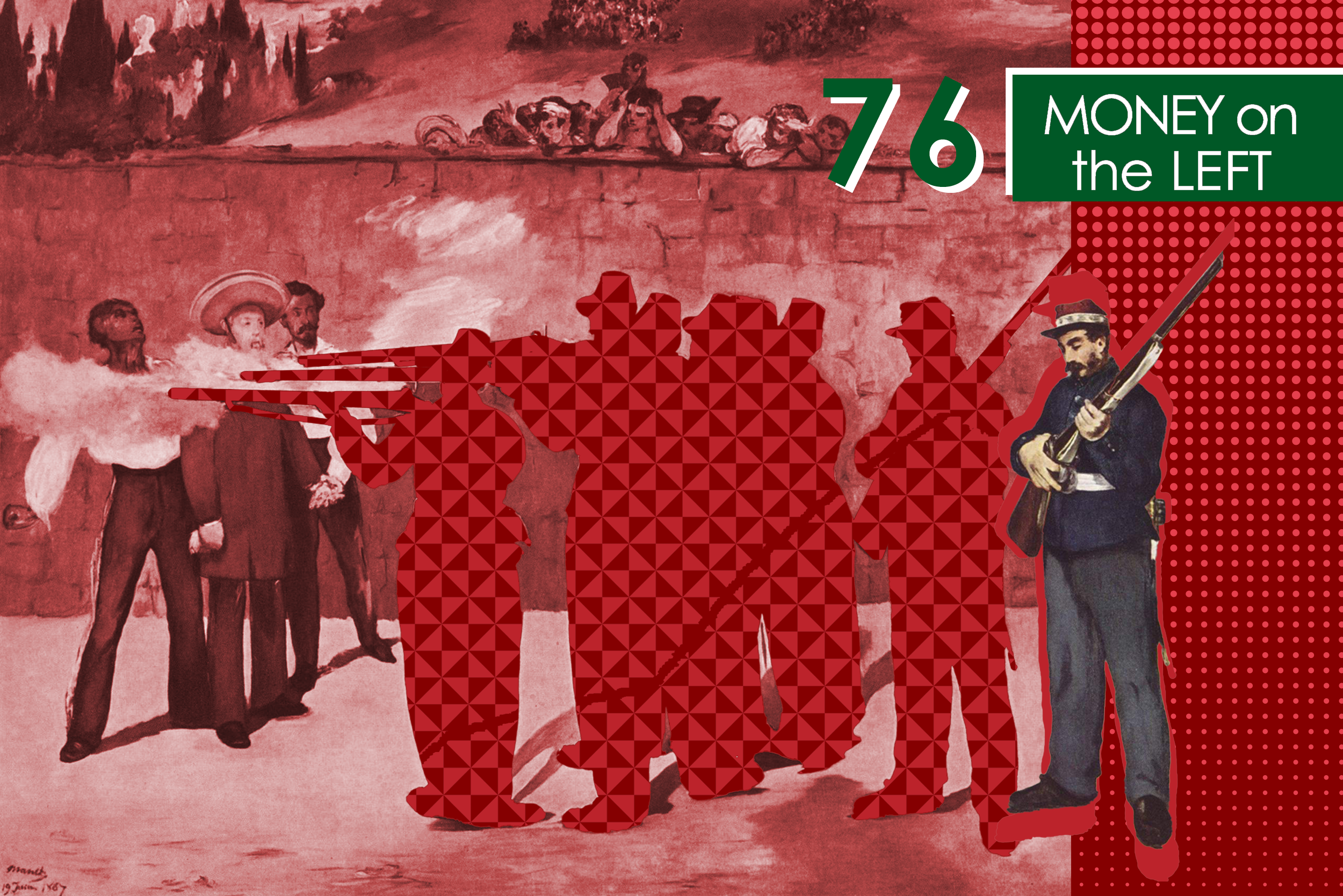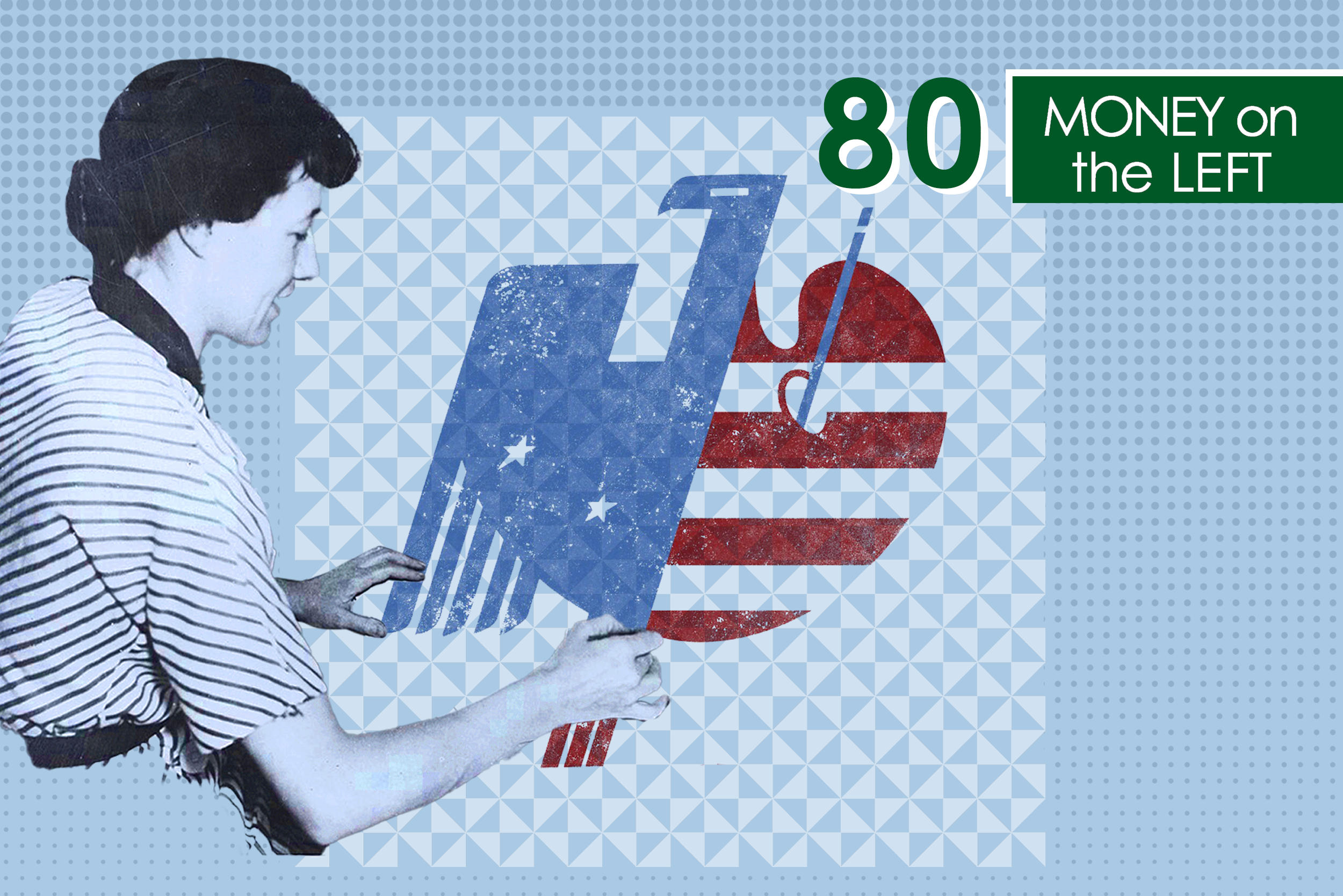
Women in the Federal Arts Project with Lauren Arrington

We speak with Lauren Arrington about her forthcoming book on women artists in the Federal Arts Project. The Great Depression rendered 140,000 women and girls across the United States homeless. In 1935, Franklin Delano Roosevelt founded the Works Progress Administration (WPA) that employed 8.5 million people over the course of eight years. Soon, the WPA instituted a landmark ruling forbidding sexual discrimination. As a result, between thirty and forty percent of newly hired artists on federal projects were women. This equity of opportunity enabled women to rise to positions of leadership and have access to resources that had a lasting effect on national institutions and on the history of art. In her book, Arrington challenges the popular memory of WPA art as a story of straight white men. Instead, she argues that the works of art that many women created under the Federal Arts Project made visible Black, immigrant, and women’s lives in a way that challenged segregationist, xenophobic, and sexist structures intrinsic in the nation’s institutions.

During our conversation, Arrington explores the extraordinary achievements and tribulations of New Deal women artists and administrators. Among them include Alice Neel, Gwendolyn Bennett, Augusta Savage, Georgette Seabrooke, Lenore Thomas, and Pablita Velarde. Along the way, we track how these women and the Federal Art Project more broadly came under fire from local and national government officials who attempted to censor or suppress their radical work, to fire them from their jobs or force their resignations from projects, and to investigate them for “un-American” activity. We contemplate the challenges of writing histories of lost and often deliberately destroyed archives. And we consider the lessons of women’s participation in the Federal Arts Project for the future politics of public arts provisioning.

Lauren Arrington is Chair and Professor of English at University of South Florida.

Visit our Patreon page here: https://www.patreon.com/MoLsuperstructure

Music by Nahneen Kula: www.nahneenkula.com

Transcript

This transcript has been edited for readability.

Scott Ferguson

Lauren Arrington, welcome to Money on the Left.

Lauren Arrington

Thanks. I’m so glad to be here with you.

Scott Ferguson

I am so happy to have you here with me. We’ve invited you on the show this month to talk to us about a book that you’ve just finished writing and is in production and is not out yet. It doesn’t even have a title yet, although you’ve told me you’re floating some ideas. It is about women artists, diverse women artists, who worked and contested, and variously participated in the shaping of the New Deal arts programs.

Before we get into our discussion about your new book, I want to invite you to tell our audience a little bit about yourself; your professional background, what discipline you’re in, the kind of research you’ve done up until this moment, before we turn to this particular book project.

Lauren Arrington

Sure.  I’m a Professor of English at the University of South Florida. I grew up in Florida and came back about two years ago after spending most of my career in the UK, and most recently in Ireland. I did my doctorate at Oxford University and then just ended up staying in the UK by various good fortunes.

My doctoral research — I only belatedly realized — kind of set me on the course of the common thread that runs through all of my books. I was working on the question of government funding of the Irish National Theater and the impact that that funding had on the theater’s productions. I started out my career as a literary scholar, focusing mostly on Irish literature and then British literature.

The big kind of monolith in Irish literary history was that there was no censorship of the theater in Ireland, that it was a free theater, unlike the theaters in Britain, which had censorship coming from the Lord Chamberlain’s office. But that didn’t make a lot of sense to me, because if you’re taking state money, particularly from a government like the early Irish one that has a really strong ideological program, surely, they’re going to want some measure of compliance in the kind of art you’re producing. Can there really be free art when you’re taking government money?

I investigated that question and was able to turn up some new archival sources and show that actually there were private compromises and even instances of self-censorship from some really big players like W. B. Yates, who was a director of the theater. He is best known as a poet and was also a playwright. That rewrote the question of how state funding and the arts worked in the early Irish state. After that, my second book was about an Irish socialist republican called Constance Markievicz. Her last name was a Polish name because she married a Polish artist that she met in Paris where they were both in art school. Her movements in art circles in Paris and London and Dublin are what mobilized her to the politics which she arrived at socialist republicanism.

I was really interested in, after writing that biography, staying in the field of life writing. My most recent book was a group biography of poets including Yates and Ezra Pound, who were living in Rapallo, Italy, during the early years of Mussolini’s regime. I was thinking about the question of fascist aesthetics, how fascism in Italy took a very aesthetic impetus.

It was very different to German National Socialism and the way that certain ideas, particularly ideas about the past, were recovered and represented in art and in Mussolini’s Italy. I was thinking about the way that those poets were influenced by those aesthetics that were coming through the regime and being, in many ways, interpreted by Ezra Pound.

Most people think Ezra Pound is fascist. He’s arrested by the Americans and has a famous trial in the US. He goes back to Italy as soon as he can, gives a fascist salute, famously, from the boat. But most people don’t think about the poets who are visiting him and in his circle as having any kind of fascist orientation.

I was thinking particularly about the ways that those aesthetics were encoded in poetry that we might not really see. That was my book, The Poets of Rapallo, which came out in 2021 during the pandemic. The pandemic is actually where I started thinking about this book that I’ve just finished, which is going to come out with St. Martin’s Press, which is a division of Macmillan, in late 2026.

Scott Ferguson

The through line seems fairly clear. You’ve been thinking about how state finance variously inflects aesthetic production and social life. It would seem very natural that you would turn to similar questions during the New Deal in the United States. But maybe you can talk to us a little bit more about what motivated you to make this particular turn.

I kept wondering, were you thinking about this during the end of Trump 1.0 or did that come after?

Lauren Arrington

It was actually after the project began — which is kind of strange now to think about, given what’s happening on or in our federal landscape — but the project actually began in a moment of optimism.

Scott Ferguson

That’s what I was wondering.

Lauren Arrington

Yeah. We were living in Ireland, where I had taken a job at a university. It was lockdown, which meant something very different in most of Europe to what it meant in the US, particularly in Florida, where there were very few pandemic restrictions. In Ireland, it was about two years of restriction on social life.

During the depths of the pandemic, we couldn’t leave our apartment except to go grocery shopping once a week, and everyone was permitted to take one walk a day, but you couldn’t go further than a mile from your house. It was a very dark psychic landscape that most of us were living in.

There was, of course, also a very real economic impact and the Irish state saw this.  Politicians started thinking about the concept of universal basic income, which of course has been circulating for a while. In particular, they were thinking about how a version of that could be applied to visual artists, performing artists and writers in Ireland because there had been an immediate and detrimental effect on performing arts and visual arts, particularly with exhibitions closed.

There were no gigs, no concerts, no pubs even to play in. Book buying went up slightly, but then new books often went under the radar because there couldn’t be the kinds of launches that bring the media attention that, particularly, emerging authors need. The Irish state began a pilot scheme for artists and writers to sort of fund a base level of income in a way to compensate for those losses of the pandemic.

I was seeing all this unfold, and I was thinking about the New Deal. Why is nobody talking about FDR?  This is the precedent here. I started reading and doing research on the New Deal from my laptop because there were no libraries open.

Everything that I kept reading was turning up the very same story, dry history, post office art, rural programs, which were important, but seemed to be the only story. We’re all hearing about the Farm Services Administration. We all know Dorothea Lange’s photographs, the Dust Bowl migration murals that are kind of glorifying this American colonialist expansion.

I started going deeper and deeper. I was like, this can’t be all there was. Then I started reading about the community arts projects and community art centers. I started finding names that I didn’t recognize and digging as far as I could into various archives wondering, “who are these people?”

There were a lot of women, particularly women of color, communist women, Native American women, who had been written out of the historical record.  I thought I really wanted to tell their stories and not just the story of the arts projects again. I didn’t want to write another doorstop book about the New Deal.

I wanted to write a book that was focused on the lives of these women and how, in the midst of the depression, they found ways to live as artists and to keep themselves creatively alive, and the role that the state played in making that kind of creativity possible.

Scott Ferguson

Maybe we can pull back to the beginning of the New Deal and the very idea about financing the arts. How did that come about? How was it shaped at first? How was it variously discriminatory toward women and people of color? And how did some of those broader contestations play out?

Lauren Arrington

Right. We all talk about FDR as the architect of the New Deal, but actually the architect was probably Harry Hopkins. He was who did the real idea generation, we might say, and as for this aspect of Roosevelt’s presidency, he was his right hand and top adviser. Hopkins had this vision for this kind of national structure.

He invited Holger Cahill, who was involved in the early Museum of Modern Art, to think through this process. Holger Cahill tapped a woman called Audrey McMahon, who had started a pilot project to help fund artists in New York, where there was, of course, a high concentration of artists for various reasons.

For one, the nature of New York as an arts and cultural hub, also, the Great Migration, which brought new energy into the city and new networks and new kinds of artistic production. Audrey McMahon had piloted this program for artists in New York. Holger Cahill knew about it, so he invited Audrey McMahon to come to DC and talk about the idea.

Out of those conversations emerged the Federal Arts Project. McMahon remained a key player because she was appointed as director of the Federal Arts Project for New York which means that she has probably the most powerful position in all of the federal arts project because of the volume of artists that she’s dealing with.

She’s also a woman torn between bureaucracy and passion. She has a real passion for art. She is involved in the art education at NYU, which is where she starts this pilot project. But she also is an administrator and is constrained by the bureaucracy with which she is presented. She always has to make her budget.

In doing that, she’s forced to make some pretty harsh cuts at key points to the federal arts projects that are handed down to her. The artists don’t see that. They don’t understand how she’s squeezed between an idea that actually originated with her, although she doesn’t really get the credit for it and the pressures that she’s under that are coming from DC.

The Artists Union actually pickets her offices, which comes together in order to defend the right of artists to have employment and fair working conditions, and they advocate for those rights under the New Deal. They come to picket McMahon’s office. She doesn’t know what to do. She gets angry, I think, because she doesn’t feel seen or understood.

Because she’s an administrator, she’s automatically vilified as, like, a department chair.

As soon as you become an administrator, you’re like a baddie, right? No matter your intentions. She doesn’t feel seen. She gets really angry at the artists, at their inability to understand the economic constraints.  That the budget isn’t bottomless, right? There are only so many funds. But she does make some pretty big missteps.

One of those is understanding the way that racism is inherent to the structures of the New Deal. Despite what they’re saying in DC, it has a racist structure of privilege encoded in it, and she cuts black jobs first. She participates in that. Black artists then form their own union, which is open to anybody, but it’s primarily black artists, in order to lobby for that reinstatement.

And they actually have some measure of success and get jobs reinstated early on in the project. Soon those are eventually cut as the project is pruned and ultimately decimated as we head into the Second World War.

Scott Ferguson

I think for a lot of people, we imagine that when we think about the New Deal arts projects, we think there were some photographs documenting poverty in the Dust Bowl. There was a lot of easel painting of the so-called “American scene,” which were potentially, not only ideologically conservative, but also aesthetically conservative; not pushing beyond perspectival conventions that had been around since the Renaissance.

 I think we also have a sense of a certain kind of paternalism, which of course was there and so were the American scene paintings. In this kind of paternalism, or “Well, we’re just funding some art, and everybody does what they’re supposed to do and then it’s over.”

Whereas what your project shows us is that it was improvised and contested and messy and involved all kinds of creative triumphs, as well as horrible, horrible decisions and problematic organizations. I think one of the many impulses in this book that I really picked up on, and I actually regret framing this book at the outset as being just about artists,

is thinking about people in leadership roles, whether they are literally artists who are taking up leadership roles or are just variously taking up these organizing roles, because without that work there would be no artwork. I’m so fascinated by potentially even thinking about the aesthetic dimensions of what it is to organize, to socially reproduce.

What does it mean to have a school that teaches children how to sculpt, how to do printmaking, how to write poetry or whatever it’s going to be? And I love that you’ve introduced this right away. You can’t separate it. This isn’t just a story of some solo artists. It’s a story of a whole improvised apparatus of administrators and artists, and sometimes people cross roles.

Lauren Arrington

Absolutely. That was one of the things that made this book so hard to write because, like I said, I didn’t want to write a doorstop history of the New Deal arts projects. The challenge was how to convey that sense of collectivity among a handful of artists whose careers I wanted to highlight, and I began thinking about it as a group biography.

Folks were asking me early on, “How is this a group biography?” “Did they know each other?” You know what I mean? Because it wasn’t like the Bloomsbury Group where there were geographical constraints and a common artistic purpose, the sense of starting something new together and a lot of direct collaboration between these artists.

When you’re an artist, most artists are kind of working on their own. I allowed that to get in my head a little bit. Then I realized that actually it is a group biography because the structures create the group.

Scott Ferguson

And the groups create the structures. One of the moments that I love is when you’re talking about as the Harlem Renaissance is dying down and the depression is kicking up, Harlem starts to kind of create these new spaces that were actually, in certain ways, more based on group solidarity and were less beholden to white rich patrons who very much put their stamp on what would count as representations of black life.

Lauren Arrington

Absolutely. There was a real desire in Harlem, particularly, to get away from that legacy of the Harlem Renaissance as being the product of white patronage and a desire to advocate for black artists to be in administrative roles. Charles Alston is an important collaborator with Augusta Savage in that regard. He has a group that is more like a group called the 306 group, and they meet in what was an old horse stable in Harlem and have political conversations and conversations about art and conversations about the economy and conversations about what power means now.

That’s where we see this push against McMahon, and against the Federal Arts Project to instate more black administrators who have better salaries and better opportunities and to eliminate that kind of glass ceiling. But we know that there are tensions there, too, between folks who rose to prominence under the old order and folks coming up with a new way of doing things.

Even in Harlem, we’re seeing those kinds of tensions between the old guard of the Harlem Renaissance and new visionaries like Augusta Savage. Several of these artists, like Pablita Velarde is another one of those artists who we could talk about, who has to face challenges from within her own local network as well as challenges from the government apparatus in order to do the work that she feels compelled to do.

Scott Ferguson

Yeah, let’s switch to her because that pushes us across the country, right? They’re in a very different scene with a different set of political legacies, constraints, entanglements, and horrors.

Lauren Arrington

Yeah, absolutely. Pablita Velarde was a pueblo woman who grew up just north of Santa Fe. She, like Augusta Savage, shows talent as an artist from a really young age, but is constrained by social convention in terms of the role that she should play. Women in Pueblo culture were not artists, they worked with textiles. They should not be visual artists. Pablita Velarde is sent to a boarding school in Santa Fe where she, because of an early iteration of the federal arts project, is introduced to mural painting. Through that she is mentored as an artist and through those connections that she makes at her school, she is tapped by the National Park Service to make art for Bandelier National Monument, which is a big national monument under the National Park Service. It is northwest of Santa Fe and just south of Los Alamos, where the CCC, the Civilian Conservation Corps, had started, making this national park, and they’re now building a visitor’s center, and they realized they need some art for the exhibits. So, she is sideways funded through the Federal Arts Project to make that art there. But again, she’s faced with constraints about what the Park Service believes Pueblo culture should look like and her own direct experience of growing up under Tewa culture in particular.

Scott Ferguson

You suggest in the book that a lot of the dictates from the white administrators is based on relatively old and problematic, ethnographic research. There’s also the interesting twist that there are certain rituals or aspects of Native American life that perhaps shouldn’t be depicted in public, if I’m remembering correctly. There’s all kinds of constraints and challenges that she’s negotiating.

Lauren Arrington

That’s right, that’s right. Even within Pueblo culture, which is very much a Spanish invention, from one way of colonization of what is now the American Southwest, there are different cultures. Pablita Velarde grew up on Santa Clara Pueblo, which is a settlement of a group of people descended from the Tewa people who were absorbed into a more hegemonic kind of Pueblo culture.

There were particular dances that were not supposed to be witnessed by women. There are other dances that should only be witnessed by members of that culture and not subject to tourists. Pablita Velarde is torn between portraying what she sees as these beautiful, celebratory parts of her culture and the cultural diktat that those are private moments.

The question over whether she should portray that actually comes when she’s further along in the Bandelier National Monument project, because early on she’s basically prescribed paintings that have been or gleaned by employees of the National Park Service from reading ethnographic research that doesn’t even relate to her culture. They’re just being absorbed and purported to be like Tewa Pueblo dances, Tewa Pueblo traditions.

They actually belong to completely different cultures altogether. There is just this hegemonic idea of what, quote, “Pueblo culture” is like. She starts to push against that, to add her own levels of detail, and then as she’s given more agency in the project, she starts to develop her own ideas for scenes that she would like to paint for the visitor’s center.

Scott Ferguson

This might be a nice opportunity to plunge into some aesthetic strategies and details. Your book is filled with beautiful readings of various artworks of various styles. Do you want to talk about Velarde’s particular kind of aesthetic strategies with reference to one or more works that you unpack in the book?

Lauren Arrington

Sure. I want to talk a little bit about my visit to the archive where the paintings are held. The paintings are in Tucson at the Western Archeological Conservation Center, which is a division of the National Park Service. It took months and months and months for me to get a visit arranged to the conservation center. 

Scott Ferguson

Why was that? Was that pandemic related or…?

Lauren Arrington

That was staffing related. So again, if we talk about federal resources, when I got there I realized the issue, and some really helpful archivists explained to me that there had been various furloughs. 

Scott Ferguson

Austere staffing.

Lauren Arrington

Exactly, austerity staffing. Meanwhile, their inboxes kept filling up, and so it was only when I picked up the phone right before I was getting ready to head off on my archive trips that I was able to get through.

They were so helpful once I was there. So helpful. But one of the restrictions of the archive is that there were a number of paintings that I could not take pictures of because there had been conversations with the Tribal Council that they should not be reproduced. 

Scott Ferguson

For what reason?

Lauren Arrington

The images depicted should not be witnessed by Anglo people, folks from outside of Pueblo culture. So those ideas that Velarde was working with when she was making the paintings persist with regard to certain paintings. Her paintings are very a flat style of painting, which – in art history – was contested because it was very much imposed in a way as a Santa Fe style of painting drawn from an ethnographic primitivist view of what art from the region historically looked like and a desire, in a way, to perpetuate a linear history of a particular art style. There was an art teacher called Dorothy Dunn, who taught at Santa Fe Indian School, where Velarde was, that schooled the children in this particular style of painting.

When we are thinking about Augusta Savage and the freedom that students had in her studio to experiment with clay, there’s a kind of an inverse situation in Santa Fe Indian School where we have a white art historian teaching “Native American art” to students from the pueblos in the surrounding region who been steeped in that culture for their entire lives.

It’s very prescriptive, this kind of Santa Fe style, but it takes off. It’s very popular. It has a market, and that’s one of the reasons that these artists were encouraged to perpetuate the style as well, because it’s sold to tourists and we see Velarde making an income for herself once she finishes school, by being able to sell this art.

Scott Ferguson

I want to make sure that we talk a little bit about the challenges of this archive, which I can let you explain, but it’s rather slim for political and historical reasons. Maybe talk a little bit about why the archive is so slim and what kinds of challenges that you’ve faced in researching and writing, and how you’ve tried to get around these absences.

Lauren Arrington

Yeah. If I had known this book was going to be so challenging to write, I like to think I would still have written it, but I am not so sure. And let me tell you, my next book is going to be about someone who has left thousands of pages of archives.

Scott Ferguson

Yes.

Lauren Arrington

I am tired from sleuthing. Writing about underrepresented artists, you have those challenges of there not being the funding structures in place, perceptions of value that mean that their archives have been preserved. Sometimes we know that’s because of economic status, and sometimes that is because of structural racism. Sometimes that is because of the politics of the artists themselves, or what parts of their lives that they were not comfortable having preserved.

I’m thinking particularly here about an artist called Lenore Thomas Straus. Lenore Thomas, as she was when she was working on the project, was commissioned to create a series of friezes for the first planned town in the United States called Green Belt, in Maryland, just outside of D.C. 

Scott Ferguson

A proto suburb.

Lauren Arrington

Exactly. You can read about this in the book, but basically the whole project of these green belt towns were segregationist and Lenore Thomas fought against that. The kinds of scenes that she wanted to depict in those friezes were anti-lynching and anti-lynching sculpture that is censored.

But in relation to her archive, what I’m thinking about is that Lenore Thomas was queer. She had a lover, Sally Ringe, who she lived with in Virginia and then in Maryland. She was also a communist. She had two huge black marks against her in terms of the McCarthy era. Lenore Thomas’s archive, which exists in the Greenbelt Museum, curated by a wonderful archivist, Megan Sharon Young, consists of mostly photographs. Not letters and not personal papers. Just photographs of her and photographs that she took of her work in Greenbelt.

When I was writing about Lenore, I wrote mostly from photographs in order to understand things like her perception of the world around her. I could contrast the photographs that she took with official photographs from the New Deal agencies in order to understand how she was contesting those racist hierarchies of power as they played out on the Greenbelt site.

Scott Ferguson

Yeah. Can you talk a little bit more about that? One of my many favorite parts of this book is when you’re contrasting. What’s the name of the photographer who uses angles in a very racialized way? You read her photography and argue how she is pushing against that. Can you spell out these details that are still a little fuzzy for me to remember.

Lauren Arrington

Yeah, sure. Carl Mydans is one of the main photographers on the Greenbelt site. He’s probably who you’re thinking about, but in the whole photographic section of the resettlement administration, as it was called, and the farm security administration where Dorothea Lange works, they were taught a particular photographic aesthetic that played to what you were talking about earlier in terms of this white, paternalistic, colonialist American dream.

Firstly, Greenbelt was not a segregated work site. There were white workers and black workers on the site, but they were captured doing very different kinds of labor and photographed in prejudicial ways. Mydans photographed these white workers often from a low angle. You see them against these like clear blue skies; you can intuit it’s blue even though they’re black and white. There are clear skies, and these almost three-quarter profile portraits presenting this heroic portrait of upstanding American laborers. Right? The black workers are photographed from a high angle. They’re photographed by Mydans, and he’s obviously standing on something, a ladder or a truck or something.

He’s pointing the camera down and so you see the tops of their heads. You literally see them against the dirt. It is the opposite image for these black workers. That is deliberate, as we know from Dorothea Lange’s recollections of how she was taught to take photographs, how she was told to take photographs, which she pushed against. We also see, when you contrast with Lenore Thomas’s photographs, which are very much on the level in every way, you see how those politics are conveyed in those kinds of images.

I spent time thinking about the photographs and thinking about how Lenore Thomas shows us what she thinks and what she believes when she can’t tell us in her archive.

Scott Ferguson

Speaking of form, I am curious, I’ve never written a trade press book. For our listeners.  ,we’re academics, we usually write academic monographs in a scholarly rhetoric or frame. Different fields and subfields have their own customs and standards, but we all write fairly similarly in this mode. A trade press book, however, is for a popular readership.

That mode of address is supposed to not be scholarly, and it’s supposed to be a little looser and warmer and not everything is footnoted. I’m wondering, what was it like composing in that more popular mode? What kind of challenges did you face?

Did you learn lessons about your own voice and its range?

Lauren Arrington

Well, I guess the first thing I’d want to respond to is what I think is a misconception that trade writing is not supposed to be scholarly, but I think that that informs some conceptions about scholarly writing and what it is supposed to be like. I respect writers, it is a hard thing to sit down and write.

No matter what genre you’re writing, props for doing it. The kind of writing that I’m interested in is writing that is enjoyable to read and writing that strives to convey quite complex ideas like we’ve been talking about in terms of the photographic aesthetics, in a way that appeals to readers, in a way that also teaches. It teaches in such a way that we’re communicating as peers to readers, who are picking up books and opening them and wanting to learn. Not feeling like there needs to be a distance in the diction or the structure between the writer and the reader. Rather, we’re meeting on the page in a way that I can bring my expertise and what I’ve learned and communicate it to a reader who maybe never even heard about the subject but is interested, using language that’s easy to understand, that takes its time in order to explain big concepts if we need to talk about big concepts, we’ll usually dwell on that rather than just throwing out a term and expecting immediate recognition and then moving on or digging right down into the deep stuff, but instead, actually slowing down and thinking about what things mean. That’s one of the most enjoyable things to me about the process of writing this book has been learning to slow down and sit with an image,, a painting, a photograph, a person, a place, and write about it in a way that brings it to life to someone who’s never seen it or been there or shows something new about it to someone to whom it’s quite familiar. I was lucky to have benefited from The Robert and Ina Caro Award from Biographers International Organization to support research for this project. Bob Caro is the hero, really, of this kind of writing. He’s the genius behind this kind of biographical writing.

He talks about when he was writing his multi-volume biography of Lyndon Johnson, of going to live in the Hill Country of Texas so that he could understand the landscape and the people and the frames of meaning that Johnson grew up under. I could not go and live in Santa Clara Pueblo for a few years with my family in order to write this book, but I could travel there. I stood in the landscape, right?

I thought about what it means and my whole frames of meaning changed as a result. Writing this book changed me because I thought, when I was sitting in Dublin digging up names of artists I thought were interesting, that nobody had heard of them. Pablita Velarde was one of them and then I got to New Mexico and she was everywhere.

People refer to her by her first name, like, “oh, Pablita,” and her paintings are in the state house and she’s on license plates, she’s everywhere. It’s like, well, how ignorant were we to presume that Pablita Velarde was an unknown? I think that writing a trade book also requires you to think about other experiences and lives removed from your own and what amazing knowledge readers will also be bringing to the subject.

Scott Ferguson

That’s lovely. I want to ask questions about lessons. Lessons for today. Lessons for tomorrow. I will say that we at Money on the Left have been long advocates for a federal job guarantee that would be financed by the federal government and provide living quality work for everyone and anyone who wants it and can contribute to their community and not be threatened by unemployment.

It would include all kinds of benefits along the way. We are certainly advocates for the Green New Deal, which is not on everyone’s lips right now in the middle of an authoritarian takeover of our federal government, but we remain advocates for it. We hold out the dream and the possibility for a publicly led employment society that is financing interesting, wonderful, creative and inspiring labor that would include aesthetic labor. Usually, at least in the context of the history of the United States, the New Deal is, for better and for worse, the model. It’s the template that you have to reckon with.

It’s the precedent that you have to look to and decide what’s worth saving and what’s worth recuperating. I find your book to be really inspiring for that problem, for that project, because it shakes up our frames of reference, to use the term that you’ve been using. It makes the challenge of going back to the New Deal feel fresh again, rather than kind of stale or, just dismissing it as if it was all just white supremacy and paternalism. Or the opposite: that it was socialism in America and we had finally done it. I don’t know who actually believes that. I’m wondering, what are some of the lessons that you’ve taken away or that were maybe tacit or implicit for what this means for a future of politics, of state financing, of the arts?

I will say that, one of the threads that I picked up on, that we talk a lot about when we talk about the politics of the job guarantee, is the way that publicly financed employment, especially guaranteed employment, which we know these projects were not guaranteed at all, but especially guaranteed employment can potentially free up laborers, including artists, to not only experiment, but to extract themselves from abusive situations, whether that’s an abusive partner or it’s a controlling, white patronage class.

That’s one thing, for example, that comes to mind that feels like an important lesson from the stories that you’re telling. What else do we take forward from this past?

Lauren Arrington

I think one of the things that we have to understand, which is very difficult for folks who are steeped in the American psyche, is that these things take time. It takes time to build sustainable infrastructures. That was one of the problems with the New Deal arts projects, that there was this massive expansion and then a contraction and the resentment that came with that, and then a little bit of expansion and then the whole thing was scrubbed, basically, because of a need to invest in the war economy and to pivot the arts to the war economy.

I think one of the issues that we have in the US is the four-year — hopefully, what is still a four-year presidential term — and this false binary of the political landscape being either Republican or Democrat.

The four-year turnover means that when do you have time to actually build a program.  FDR had too many terms, one would argue, and exercised too much presidential power. This is really the problem and not a solution. It’s not really a lesson, Scott. It’s a question of, how do you build a sustainable infrastructure if you need to have a turnover in leadership?

The answer is that you require agencies that are not politicized in order to make these programs happen. That was also one of the issues with the New Deal is that all these agencies were tied so closely to FDR’s presidency that they couldn’t exist without him and Hopkins at the helm.

That leads me to think about the NEH, the National Endowment for the Humanities, the National Endowment for the Arts, and lessons that we can take there about the need to protect these independent agencies from the executive office and the need to preserve them, constitutionally or otherwise, in order to have a solid platform for the long term projects.

I was reading back and as I was finishing the book, the cuts started coming. I was trying to finish it at the end of 2024, and it was a slog. Then the election happened, and the executive orders started coming down, and it just really mobilized me to finish this book quickly because it felt like it had a new object.

There was a new context that I was responding to, and it just so happened to line up, unfortunately. But anyway, what I wanted to say is that the NEH was encouraged by scientists who were depressed and frightened by the possibility of nuclear apocalypse and the belief that in a nuclear age, with the rapidity of scientific evolution and the threat that that brought to our existence. The humanities were crucial to preserving our morality, our ethics, our sense of why it matters, what our value is. I am skeptical about whether 50 years later from the congressional testimony of nuclear scientists advocating for the National Endowment of the Humanities, if scientists and humanists can still find commonality because we have become so siloed and so intent on our own individual projects and our disciplines, but also, as individuals we’ve become so individualistic. Can we see value outside of ourselves that was there at the New Deal?

That was there in the 50s. I have a measure of hope that we can get there again, but it requires us to maybe allow ourselves to experience these apocalyptic moments like we had with the pandemic. A time when suddenly things are stripped back and you realize what matters in your day to day, right?

The people around you, your health, your well-being, your mind, you know? With the constant treadmill of the consumer cycle, the workday, the targets, when do we have time to think about these things? I think there are a few lessons there. One is to take back from 2020 or 2021 and how, a few years ago, our existence was threatened then and the imagination that was required to bring us out of it and how we can recover that and allow that to stay with us. That as soon as we’re comfortable, we don’t go back to business as usual. Maybe we require these outside threats to our humanity in order to prioritize our cultures.

Scott Ferguson

That’s a beautiful way to end our conversation. Thank you so much for coming on Money on the Left and exploring your recent work with us.

Lauren Arrington

I really appreciate it, Scott. Thanks for having me on today.

* Thanks to the Money on the Left production team: William Saas (audio editor), Thomas Chaplin (transcription) & Robert Rusch (graphic art)
(Un)conditional Openness: Towards a Neochartalist Theory of Money and Trust

Money on the Left: History, Theory, Practice
Vol. 1, No. 1 (2025)

ISSN 2833-051X

(Un)conditional Openness: Towards a Neochartalist Theory of Money and Trust
By Rob Hawkes

Abstract

This article argues that the neochartalist perspective on money opens up new ways of understanding trust. While neochartalism has, on occasion, been interpreted as a departure from the view that trust underpins money, this article contends that, in emphasising money’s irreducible publicness, neochartalism supports a view of money as essentially trust-based. Highlighting the blurriness of the concept of trust via a theoretical analysis of a range of approaches to and definitions of the term, across a range of disciplines, I reject calculative, strategic, and transactional formulations in favour of an understanding of trust as a form of openness that is simultaneously conditional and unconditional. Considering trust in relation to the ideas of confidence, faith, dependency, and vulnerability, I affirm the radical vision of social inclusion towards which neochartalism’s rejection of the barter myth points and argue that it provides the basis for a new approach to the conceptualisation of trust itself.

Rob Hawkes is Senior Lecturer in English Studies at Teesside University, UK. He is author of Ford Madox Ford and the Misfit Moderns (Palgrave Macmillan, 2012), Past Chair of the British Association for Modernist Studies (BAMS), and a Fellow of the English Association. He is currently completing his second monograph, Literature, Money, and Trust, 1890-1990: Monetary Modernisms.

The Black University & Community Currencies

In this episode, Money on the Left shares audio from “The Black University & Community Currencies,” a public workshop convened by Professor Andrew J. Douglas at Morehouse College on April 25, 2025. This episode presents Part 1 of the workshop. It features an introduction by Professor Douglas and two panels. The first panel is titled “What is Public Money?” (Delman Coates, Scott Ferguson & Benjamin Wilson). The second asks: “What is the Uni Currency Proposal?” (Scott Ferguson & Benjamin Wilson). Money on the Left will release audio from Part 2 of the workshop within a few weeks’ time.

Description:

In the late 1960s, in the context of the Black Power movement and amid calls to develop Black Studies programs at many US colleges and universities, Black student activists and radical intellectuals sought to imagine a more revolutionary “Black University,” an institution or network of institutions dedicated entirely to Pan-African study and research. This workshop revisits the theory and vision of the Black University. It foregrounds questions of political economy—ranging from the theoretical critiques of capitalism and empire that inspired the Black University concept to more practical questions about financial viability and the “business model” of a revolutionary Black institution. And it considers how an emerging school of heterodox economic thinking—what has come to be known as Modern Money Theory—might inform a renewal of the Black University and its commitment to Black community building.

This comes at a time of great crisis in US higher education, especially at HBCUs. Students are unsustainably indebted, encouraged to think of their education as little more than a private economic transaction or “return on investment.” Schools, increasingly desperate for funding, are made to compete for private capital, often in ways that compromise their ability to serve even the nominally progressive aspects of their missions. Surrounding neighborhoods have become little more than sites of extraction, sources of low-wage labor and opportunities for land speculation, otherwise walled off from the very institutions they are made to sustain. More broadly, democratic questions about what kind of society the university is meant to serve or what kind of society we want an education for are rarely if ever addressed. Meanwhile, fascism’s dramatic resurgence is renewing questions about whether Black institutions can rely on even minimal support from white society. In many ways, we appear to face some of the very same conditions that inspired the vision of the Black University more than a half century ago.

What would it mean to renew the theory of the Black University? What are the challenges involved in building the Black University from within today’s HBCUs? How might we reimagine the financial architecture of the university and its commitment to surrounding communities? How might new thinking about public money and banking-heterodox ideas about credit creation, public investment, jobs programs and the mobilization of community resources inform such a reimagining? How might HBCUs experiment with the creation of complementary currencies? And does this new thinking go far enough, or does it reflect simply a recommitment to the structures of domination and exploitation imperial state projects, the logic of capital, the instruments of antiblack violence that the Black University concept was always meant to expose and challenge?

Below are artwork and “Credo” notes associated with the workshop, discussed by Professor Douglas during his introduction.

Transcript

This transcript has been edited for readability.

Andrew Douglas:

Good morning everyone. Welcome to our workshop on “The Black University and Community Currencies.” My name is Andrew Douglas. I’m a professor of Political Science. My department is one of the sponsors, as is the Andrew Young Center here at Morehouse. I want to thank the center’s lead director, Dr. Jann Adams, as well as the center’s administrative assistant, Ms. Kennedy Nash, without whom none of this would have been possible.

So you see the agenda here? We’ll move to our first panel shortly, and I will introduce speakers, as we work through the program. But I want to offer some general introductory remarks. In the late 1960s, in the context of the Black Power movement and amid calls to develop Black Studies programs at many U.S. colleges and universities, Black student activists and radical intellectuals sought to imagine a more revolutionary Black university.

They imagined an institution or network of institutions dedicated entirely to Pan-African research and community development. This workshop will revisit the theory and vision of the Black University. It will foreground questions of political economy, ranging from theoretical critiques of capitalism and empire that inspired the Black University Concept to more practical questions about financial viability and the business model of an independent black institution. And it will consider how an emerging school of economic thinking, what has come to be known as Modern Monetary Theory, might inform a renewal of the Black University and its commitment to Black community building. 

This comes at a time of great crisis in US higher education. Students are unsustainably indebted, encouraged to think of their education as little more than a private economic transaction or return on investment. Schools, increasingly desperate for funding, are made to compete for private capital, often in ways that compromise their ability to serve even the nominally progressive aspects of their missions. Surrounding neighborhoods have become little more than sites of extraction. Sources of low wage labor and opportunities for land speculation, otherwise walled off from the very institutions they are made to sustain.

More broadly, democratic questions about what kind of society the university is meant to serve, or what kind of society we want in education for, are rarely, if ever, addressed. Meanwhile, Fascism’s dramatic resurgence is renewing questions about whether black institutions can rely on even minimal support from white society. In many ways, we appear to face some of the very same conditions that inspired the vision of the black university more than a half century ago.

What would it mean to renew the theory of the Black University? What are the challenges involved in building the Black University from within today’s HBCU’s (Historically Black Colleges & Universities)? How might we reimagine the financial architecture of the university and its commitment to surrounding communities? How might new thinking about public money and banking, new ideas about credit creation, public investment, jobs, programs, and the mobilization of community resources inform such a reimagining?

How might HBCUs experiment with the creation of complementary recurrences? Does this new thinking go far enough? Or, does it reflect simply a recommitment to the structures of domination and exploitation, imperial state projects the logic of capital instruments of anti-Black violence that the Black University Concept was always meant to expose and challenge. 

The background image you see on our promotional flier here is a 1935 drawing by the artist Hale Woodruff. This is the facade of Salle Hall. Here are two more images: drawings by Hale Woodruff of Atlanta University and Spelman College. I came across these in the AUC archive. They got me thinking about the gated character of the campus, literally and figuratively, the relationships that our schools do and do not have with surrounding neighborhoods. So much of this is shaped by political economy, funding, revenue, employment practices.

HBCUs are an example of what economists call “anchor institutions.” A 2024 study found that HBCUs generate $16.5 billion annually in direct economic impact nationally. Collectively, they employ over 136,000 people for every job created on an HBCU campus. Another one and a half jobs. Off campus jobs are sustained by spending related to the institution. Historically, HBCUs have stood as bulwarks against successive waves of economic dislocation within Black neighborhoods.

They could do a whole lot more with more. But we need to reimagine what it means to fund and provision black schools and the surrounding communities to which they belong. What could we be doing or what should we be doing? If only we had the money? And what if, instead of trying to find the money, what if instead of raising tuition or borrowing at high interest rates or kowtowing to corporate donors, what if instead of trying to find the money, we begin to create our own money, our own investment or credit creation vehicles as means of mobilizing real resources on and around campus?

As our first two panels will explain, this workshop explores the prospects of public or endogenous money creation. We’ll explain that term as an alternative financial paradigm for HBCUs. How might black campuses experiment with the creation of complementary currencies? What would it mean to design new monetary communities in this context? From the conditions of currency issuance to the circuits of receive ability, to the relationships of trust that sustain any viable currency’s day to day operations?

How might monetary experimentation draw the campus into novel pedagogical exercises, whereby student staff and university vendors are taught to think critically and creatively about what money is, where it comes from, and what purposes it serves. And what difference might any of this make in the lives of those who live, learn, and labor on and around HBCU campuses? Our first three panels will work through these questions.

Our fourth panel features several students who enrolled in my class on philosophies of money, and they will discuss a classroom currency that we introduced this spring: what we’re calling the “credo” currency. When we get to that panel a little later in the program, I’ll say a little bit about the imagery on these notes that you see here.

So that’s about it. By way of introduction, just a couple of housekeeping items. One is that we want this to be interactive throughout. So even though we have a series of panels, folks are going to talk. Please feel free to raise hands with questions, comments, and I will facilitate open conversation as we move through.

We know that folks are going to be coming and going, to classes and so forth. We do have a lunch scheduled for 11:30. There’s coffee over there now. So if you want coffee, feel free to get up at any point and go over there. 

There are student sign-in sheets in the back. For those of you who are in my classes, or any class, you can put your name there and we’ll make sure your professors gets that. The other important component of this session is that it is being recorded. For a podcast called Money on the Left. So, if you have a question and don’t want to be identified, feel free to just ask anonymously. We can follow up with you afterwards if you have any concerns about any of your comments being recorded and published. 

Without further ado, we will turn to our first panel, which features three guests. Let me briefly introduce them, and then I’ll turn over the floor. First is Dr. Reverend Delman Coates. He is a graduate of Morehouse College, Harvard Divinity School, and Columbia University. He has served as the senior pastor of Mount Ennon Baptist Church in Clinton, Maryland since 2004. Under Coates’ his leadership, the congregation has grown to almost 9000 members and is one of the fastest growing congregations in the United States. Pastor Coates is founder and board chair of the Black Church Center for Justice and Equality. He is a member of the Morehouse College Board of Trustees, and a member of the Board of directors of the National Action Network. Importantly for our purposes, he is the founder of the Our Money campaign, an issue-based advocacy campaign that seeks to mainstream the academic insights of Modern Monetary Theory. He has been featured in, among other places, The New York Times, The Washington Post, CNN, MSNBC, and Essence magazine. He was also featured in a recent documentary film called Finding the Money, which I strongly encourage everyone to see. 

Scott Ferguson, seated in the center, is an associate professor of Film and Media Studies at the University of South Florida. He is also a research scholar at the Global Institute for Sustainable Prosperity. He is a co-host of the Money on the Left podcast. Ferguson has published in, among other outlets, Screen, Boundary 2 Online, Qui Parle, CounterPunch. Liminalities. Naked capitalism, Dollars & Sense, Radical Political Economy, Flassback Economics International, Critical Inquiry, Rebellion, and Contexto y acción. His book, Declarations of Dependence: Money, Aesthetics, and the Politics of Care, was published by the University of Nebraska Press in 2018.

Last but not least, Benjamin Wilson is an associate professor of Political Economy and chair of the Economics Department at Suny Cortland. He is a research fellow with the Global Institute for Sustainable Prosperity and an editor for Money on the Left. His authored and co-authored, writings have appeared in Forum for Social Economics, American Review of Political Economy, Money on the Left: History Theory, Practice, Willamette Law Review, Boundary 2 Online, Monthly Review Online, Public Seminar, and Academe. His edited volume, Care, Climate, and Debt: Transdisciplinary Problems and Possibilities, was published by Palgrave Macmillan in 2022. 

Without further ado, we’ll turn it over to our first three guests to talk about “What is Public Money?”

Rev. Delman Coates:

Good morning. Thank you, Professor Douglas. I’m just so thrilled and honored to be with you today as an alumnus of the college, as a member of the Board of Trustees, certainly as a former chapel assistant here, and to have my mentor right here in the front row. Really delighted to be on this panel with Scott and Benjamin. I actually look forward to gleaning more insights from them. But I want to thank you, Professor Douglas, for inviting us to this important conversation. 

I come to this conversation not as an economist, not as a political scientist, but as a historian of religion and a faith leader who started a campaign, out of our church called the Our Money Campaign, which is committed to mainstreaming the core insights of a school of economics known as Modern Monetary Theory. We’ve been going around the country mainstreaming these insights or sharing these insights with African-American faith and civil rights leaders, laypeople and the public. 

People wonder: what’s the intersection between Modern Monetary Theory and your work as a pastor? Well, my commitment to this work is born out of my commitment to economic justice as a pastor and to my academic study and the moral philosophy of money and economics found in the major world religions that view the unjust manipulation of the money mechanism as a root cause of evil in the world. 

There couldn’t be a more vital and important topic than the one that Professor Douglas has invited us to discuss today: public money. Because in the aftermath of the government’s response to the 2008 crisis, through the government’s intervention and response to the global public health pandemic, to the inability of Democrats under Biden–who held both chambers of Congress and the White House for the first time since the 60s and yet struggled to pass really meaningful, broad based, robust public policy–to the recent fiasco with the so-called Department of Government Efficiency (DOGE).

The public has seen firsthand the contradictions in the way that policymakers on both sides of the aisle minimize the role of government, public support, and public spending when it comes to priorities and infrastructure that would benefit the people. And yet, those same policymakers harnessed public support and public spending when it comes to bailouts and giving tax cuts to corporations and the rich.

So, I think the public is now poised and positioned for this conversation. It is essential now, so that well-informed actors in the Black faith and civil rights communities do not once again push the wrong answers to the right questions, which oftentimes tends to be some version of the neoliberal economic myth dipped in chocolate, which oftentimes, ends up exacerbating our challenges rather than helping them. I have in mind here some of the understandable protests against certain corporations. 

What we need is a massive reeducation project about the role of government that reaffirms, legitimizes, and embraces robust, responsible public spending in ways that eliminate involuntary unemployment, provide free public health care, free public colleges, real affordable housing in this country, and the abolition of student loan debt.

Some of you will remember Margaret Thatcher’s famous statement from 1983. Not just a few of us in this room will remember this. She said, “Let us never forget this fundamental truth: the state has no source of money other than the money that people earn themselves.” She went on to say, “If the state wishes to spend more, it can do so only by borrowing your savings or by taxing you more.” “There is no such thing as public money,” she ends. “There is only taxpayers’ money.” We must fight this presupposition because it is operative for both economic conservatives and liberals, and both sides are operating from this flawed point of departure. No one seems to challenge those who subscribe to this view.

Where exactly does the taxpayer get their money such that Thatcher could assert this as a fundamental truth? In reality, this so-called “fundamental truth” is a testament to the glaring blind spot in the public’s consciousness related to money creation. It seems obvious enough that in order for money to exist, someone must create it first. Surely Ms. Thatcher did not think it was taxpayers that create the money that they use to pay their taxes, as that would obviously be counterfeiting.

The irony is that we all know that money is key to the operations of our society, in our economy. Money makes the world go round. However, seldom do we think much about something as basic as “how is money created” and “what does this mean.” 

Money’s historical association with gold has created this lingering sense that you’re not supposed to be able to create money, or else it debases the money. But this fails to recognize that money creation is a routine and ubiquitous feature of the normal functioning of our economy. Rarely does it cause excessive inflation. While we often think that money creation is limited to the operations of the central bank itself, a public institution, it is more accurate to think of all federal spending–and bank lending for that matter–as essentially forms of public money creation.

Because of this, we are ultimately exercising our public power whenever we engage in public money creation. The “taxpayer myth”–or, the taxpayer money frame that we commonly hear about today–obscures the basic reality that a currency issuing government of the people does not need to raise money in order to spend it, and it never needs to default on its debts, so long as they are denominated in its own currency.

The confusion conveyed by the conventional tax payer myth frame or the house. The household frame is how we end up with Elon Musk taking a chainsaw to our public programs and how we end up with Joe Manchin blocking the Democrats agenda a few years ago because they’re afraid we’re going to go bankrupt as a nation.

Meanwhile, Donald Trump plans another multi-trillion dollar tax cut to the richest Americans. To close, the fundamental truth is that money itself is an accounting system, a public infrastructure that facilitates economic activity the way that roads and bridges facilitate transportation. If we are going to build a better, more just and hospitable world, we must properly understand the tools at our disposal, and we must harness those tools responsibly for a broad systemic change.

The challenges that we face today in our Historically Black Colleges and Universities and in our society, the challenges we face today when it comes to closing things like the racial wealth gap were not created because of where and how Black people spend their discretionary dollars or where they shop. They were created by government policy. Discourses such as taxpayer money obscure the public nature of money itself and undermine the legitimacy of creating the people’s money on behalf of the people.

So we must not lose sight of that reality: our ability to create money is the crown jewel of our public power. And what could be more legitimate than exercising that public power on a public behalf? I look forward to our discussion today.

Scott Ferguson: 

Hello, everybody. Thanks for inviting me. I’m really happy to be here. To start, I’ll extend Delman Coates’ reference to the so-called Department of Government Efficiency, the workings of Elon Musk and his band of white supremacist, misogynist, 20-something young people. I don’t know if everybody caught this part of the saga, but at a certain point, Elon Musk was in a podcast conversation with Ted Cruz and revealed the truth that he discovered when he was illegally, breaking into the offices of the Treasury and every other department that he wanted.

The big scandalous truth was that in the Treasury he found upwards of 12 to 13 computers that just create money out of thin air. On this view, this is an absolute scandal. But of course, for many of us in the Modern Monetary Theory world, we’re like, “yeah, uh we know this.” We we know this is how it works. This is no big scandal. 

Now, for my remarks. I helped co-found an organization called the Money on the Left Editorial Collective. We produce several podcasts. We have a publishing vertical, kind of like a blog. We have a budding academic journal. We put on conferences and events. And we advocate for multiple federal and local political, economic and cultural programs.

For instance, we advocate for a Federal Job Guarantee in the spirit of the Civil Rights struggles and the Black radical tradition. We advocate for a Green New Deal, reparations for black Americans, affordable housing, abolition of student loan debt, health care debt, and the list goes on. We put Modern Monetary Theory–what we sometimes refer to as the “public money paradigm” at the heart of our project. We stand for economic justice that is abundant, democratic, intersectional, and anti-imperia.M

The Modern Monetary Theory paradigm has been developed since the 1990s, largely at the University of Missouri, Kansas City, and a few other places around the United States and, and elsewhere in the world–Australia and the UK as well. Our central gambit is that this paradigm, which has emerged as a more, I would say, focused and narrow economics discourse, has tremendous implications for not just politics, which the Modern Monetary Theorists themselves realize, but also for thinking everything else in the world–about culture, about esthetics, about art, about popular media, about social movements, about social values. We argue that the way that Modern Monetary Theory, the public money paradigm, flips the script on our standard ways of thinking about money really changes the way we have to think about everything. 

As Dalman explained, the MMT paradigm says the private sector is not first. Entrepreneurs, whether they’re doing evil things or wonderful things, don’t come first. They don’t. They don’t spring up out of nature. It’s not that they simply have talent or a great idea, pitch it to the market, and then our economy blossoms into action. They do not engage in individual micro exchanges and transactions. And from there, we get a bubbling-up into a larger macro economy. The government does not sit on the side as a mere regulator, who that sometimes intervenes but sometimes doesn’t. Government is not broke, unable to afford to take care of the larger population. 

Instead, money comes from and has always come from centralized governments. This is as true in ancient Mesopotamian societies as it was for societies in the Middle Ages around the world, as it is for our society today.

Money is a public utility, as Delman has suggested. It is not just something that comes from government and is created by government. It is also designed by government. It is a legal technology in addition to a governmental technology. And because money is something that is created as a function of institutional design, currency issuers like the United States, like Japan, like many other countries around the world cannot run out of money.

There’s always enough money. We can always create money. We are always creating money for different purposes. The question is not where are we going to get the money? How are we going to afford reparations for Black Americans? How are we going to pay for canceling student loan debt? The question, rather, is: how are we going to make it?

What institutions are going to make it? Who’s going to be responsible for making it? Who’s going to be responsible for the production and social relations that result from that creation? Who’s going to hold those people accountable? These are real political questions. These are real cultural questions. These are real aesthetic questions. And they matter tremendously. 

But we need to get out of a zero sum paradigm in which we imagine that government doesn’t have any money. On the standard reasoning, in order for the government to attain money, it must tax from the private sector, where it supposedly is born. Or, it has to borrow from the private sector. 

To combat such thinking, Money on the Left expands upon MMT’s potent argument that money is not a private zero sum game but rather a boundless public utility. We apply this claim to really everything that we research. Then we’re always reaching out to other people–like potentially yourselves–to join us with your own researches, whether it’s academic or artistic or political. Let’s start to think through this problem anew. What would this all mean to approach our problems, our needs, our desires, our systemic injustices, our long time hopes and aspirations for a just future? What would it mean to start thinking about those questions from a radically non-zero-sum perspective? 

Now, this is not to say that we deny injustice. Injustice is everywhere. This is not to deny that monetary, political, economic, cultural, aesthetic institutions aren’t created according to zero sum principles. They are. And people and communities and institutions and organizations are forced into zero sum choices. And we think this is wildly unjust, as everyone else in this room I’m sure does. But our approach is to say the underlying conditions of possibility are not zero sum. We are getting reality wrong, we are cutting ourselves off at the feet, if we buy into the rhetoric and the imagination that says, “Well, we just couldn’t collect enough taxes this year. So, I guess the poor, the disenfranchised aren’t going to get enough help because we just couldn’t we couldn’t muster the votes to tax the rich to get their money back.” 

We also point out the perversity of pursuing justice from within the standard private, finite, zero-sum money paradigm. You know, there have been all kinds of calls for many decades to tax the rich. Bernie Sanders is, you know, a cool guy, a fellow traveler, right? He had actually had a Modern Monetary Theorist as one of his top advisors, but he didn’t always follow what that advisor advised. In any case, Bernie Sanders for years would advocate for a Wall Street tax on speculative transactions. And that sounds great, right? Make those rich bastards pay who are speculating with all of this money that none of us have.

And every time you’re going to make money speculating, we’re going to take some. We’re going to take a cut of that and we’re going to fund our schools, and we’re going to create smooth sidewalks and fix rundown neighborhoods, and we’re going to do things for the people. That sounds really great. Until you come to such a proposal from the vantage of the public money paradigm. What you realize then is that not only do you not need that Wall Street money, but you’re actually incentivizing it, because now your smooth sidewalks and your cleaned up neighborhoods and your money for education needs Wall Street reckless, unethical speculation to fund itself.

Let’s not do that. Let’s tax the rich because having rich people, having billionaires in our society is bad for democracy. It’s bad for the horizon of equality. It is bad for the manipulation of our political system as we are seeing with DOGE. We don’t need the rich’s money to spend on the people.

Instead, we need to seize the means of spending. And that is public money. We need to design public money in such a way that is going to serve us all and serve our environments. I think I’ll stop there. 

Benjamin Wilson:

Thanks, Scott. I think that was a nice place to pass it off to me. I studied at the University of Missouri, Kansas City, which is widely regarded as the founding school of MMT. Learning MMT 101, the focus of Modern Monetary Theory is generally macro and design. This typically entails Federal Reserve policy, the federal government, big programs like the Green New Deal and the Jobs Guarantee Act. 

However, the question that was always raised for me and consistent with Scott’s perspective at the end there is: How do we know what these public jobs in the Job Guarantee program are going to be? How is this mobilized in communities? What is the work that people are going to do? How do we begin organizing the institutions anew such that this thing works? So, I started to investigate other forms of money creation, things like complementary and community currencies.

I discovered work by our Money on the left colleague, Jakob Feinig, titled Moral Economies of Money. Feinig studies the evolution of money creation in the United States from its origins as a settler colonial state. He traces how communities mobilized the production of their roads and their schools, while being dominated by the United Kingdom all the way through the evolution of the New Deal. Roosevelt’s move was to separate the communities from the knowledges and practices of money creation. His administration removed community understanding of money, insisting upon the logic that we have today that the state has to find money, the taxes, finance things. Feinig calls this process “monetary silencing.” To overcome monetary silencing, individuals really need to understand how and where money comes from.

I think it’s useful to look at where money is coming from in our everyday lives. Commercial enterprises are creating their own monetary systems on a daily basis. Every time you swipe a credit card and they’re giving you rewards points, or an airline is giving you airline miles, or if you’re playing video games and you’re getting monetary credits in a in a video game, that may be confined to being redeemed in that video game, but some of them now are being able to be used and distributed and turned into real resources in Microsoft Stores and places of this nature.

The commercial enterprises have been able to create monetary systems on their own to promote certain things, like loyalty to brand. And so what would similar sorts of monetary designs and micro levels look like to promote sustainable production? New energy systems and, reading programs for youth sports programs. Things that are of value, that are always underfunded and under-provisioned in our communities as a beginning space for creating that imagination and those institutions for what public money creation looks like–another space where this type of money creation and questions about how money mobilizes, production and things like research, I think is useful.

I think about grants. While grants are often provisioned by the state, sometimes by private money, the point of the grant is different from a loan. Your promise to produce is the knowledge, the information, the new products, etc. that advance a particular request. I think this is a particularly good model for thinking about how public money could mobilize much larger things–especially colleges and universities, because we’ve been practicing this sort of underwriting for decades.

So, those are the types of questions that I’m particularly interested in. And how does it start in our local communities and institutions, and how do we start to recap that, the logic and the democracy in, decision making and coordination around what our real resources are in our communities and how we take advantage of those given the responsibility of credit creation and the ability to make the promises to deliver those goods and services to each other. Yhank you.

Scott Ferguson:

I’m going to piggyback. You were promised a definition of “endogenous money.” So, I’m going to try to provide one. The public money framework first and foremost argues that money starts as a public utility. From there it can be doled out and privatized. One major macroeconomic channel through which money is created is congressional appropriation. When Congress gets the votes to pass a bill, they initiate an appropriations process and money is created out of thin air in order to meet the monetary demands that were spelled out in that bill. The other major channel through which money is created in our society is through a mechanism that some legal scholars have called the “finance franchise.” Essentially what this means is that the system of public banks in the United States has legal charters from the federal government. Some have state charters, either federal or state charters. Those charters legally give permission to banks to create money constantly, once again, from nothing out of thin air. And they do so in the form of credit.

Money is credit. When a person, company, or entrepreneur walks into a bank and asks for a loan, the loan officer will say, “Well, tell me your business plan. And that person will say: “You know, I’m thinking of opening this restaurant. It’s my second restaurant. I have one uptown, but I want one downtown. This is what I do at the first restaurant. This is why I think the second one is going to be successful.” Then the banker will say: “Yeah, this seems like you’re going to make money, and then you’re going to be able to pay off a loan from us. So, I’ll give you a line of credit.” When that bank officer gives the entrepreneur a line of credit, they don’t go into the bank vault and see what piles of money are there or if they’ve been depleted. They don’t jump around on the money like they’re Scrooge McDuck. All they do is they go to their computer, they go to their spreadsheets, and they type numbers on their computer into their spreadsheet. They literally just create dollars.

Banks don’t recycle finite private funds out in the world. They don’t recycle your deposits. They just create lines of credit because they are licensed to do so. Now, the idea that money is created internally is what we in the world call “endogenous money,” this idea that public money is created internally as a function of institutions, the institution of Congress and the institution of these private banks that have these public licenses. 

Endogenous just means internal. It just means it’s a creation that comes from within. For this reason, another way that we describe our paradigm is a “public endogenous money paradigm.” Money is a boundless public utility, and it is created internally based on the institutions that have been designed to create those forms. 

Building on what Ben has talked about, we are really committed to getting away from capitalist logics and capitalist monetary designs. Unlike other critical and leftist traditions, we do not equate money and capitalist exploitation. They are not the same. Capitalist exploitation uses money and designs money to do its evil. But money itself is not a capitalist expression. Capitalist logics are not simply monetary, for example, for–profit lending, the profit motive as such, or keeping what Marx and Engels called a “reserve army of the un- and underemployed, which typically, is, filled up the most by People of Color.”

The way you get around that is you start imagining and designing other kinds of monetary institutions. What Ben was talking about was an idea that we’ve been developing, which is creating monetary institutions that are based on the model of granting. We have we can have community members running these institutions and reaching out to other community members asking for their democratic participation regarding how money should be created and how it should be allocated.

And not just that. The money that is created can be simply grants, not necessarily loans. Grants that include obligations, but those obligations are not capitalist obligations. Rather than the demand to “pay back this quantity that you’ve gotten from the bank,” grants ask you to “meet your social, communal, ecological obligations that you promised to fulfill.” 

To get such a grant, you promised, for example, to create a public restaurant that provides healthy, nutritious food and a social atmosphere within a food desert. That’s what you promised to do with this grant. Well, did you do it? If you did, you don’t have to pay anything back. What you’ve paid back your qualitative effort, along with the effort of all the people you’ve coordinated in doing that job. 

So, for us at Money on the Left, money doesn’t have to be for profit. It doesn’t have to be for exploitation. It doesn’t have to be anti-democratic. It can be all of these things and more.

Rev. Delman Coates:

If I could jump in here, one of the things that I want to say is that the power of MMT is in the reframing. One of the contributions of Modern Monetary theory is that it helps us to reframe how we think about deficit spending. We haven’t talked about that, but one of the things that we confront, as I go around and talk to people about public money is that there is this common sense way of thinking about deficit spending that can create a hurdle for many people and ends up being exploited by policymakers–really on both sides of the aisle.

I think that the one incredibly powerful contribution of MMT is in the way in which it helps the public understand that it is through deficit spending that the federal government engages in public money creation, that deficit spending is not something that we should resist or reject, but it’s something that we should encourage. There is excess money left in circulation only when the federal government engages in this mechanism.

Now, we just want to make sure that that public money creation goes to benefit the public and not to benefit the elite and rich. The tagline of the Our Money campaign is: “Change money, change the world.” If we change the way we think about money, we can literally change the world. And what I want people to understand is that, for me, the question is not whether money will be created, but how it will be created and for whose benefit. 

Take some of the big infrastructure debates and conversations, like the one we saw four years ago in Congress with President Biden’s infrastructure bill. There was this spiking of the football when they agreed to spend, I think, $1 trillion over ten years. We thought that was such a great achievement. What people fail to realize is that when the federal government does not engage in public money creation, that does not mean that money will not be created for infrastructure. It means that the buck will be passed down to states, municipalities, and to individuals in the form of bond issuances. So, people need to understand that the question is not whether money will be created. The question is whether the money will be created by the public or whether it will be created to the benefit of private interests. 

I mentioned earlier that it has been a part of the historic critique of the major religions of the world to to critique the unjust manipulation of the money mechanism. Islam is probably the remaining world religion that has maintained its critique of riba, or what has been called “usury.” This is not just the charging of excessive interest. It is the unjust manipulation of the money mechanism, which I contend is why Jesus overturned the tables of the money changers during the last week of his life, according to the narratives of Scripture.

I really want to encourage students who are here today, the public who will hear this recording, to really take seriously the vast contributions offered and presented by the framework of Modern Monetary Theory. Modern Monetary theory is not, in my mind, an alternative economic system that doesn’t exist. MMT is a description of how our economy works. It is a reflection of how our economy is working today.

We just need to harness that power for the benefit of those in this room, the less fortunate. We cannot have the benefits of public supports and public money creation go solely to the top 1%.

Questions:

Student 1:

I’m a sophomore political science and journalism double major from Columbus, I’ve been studying the concept of MMT. We’ve been reading Jacob Feinig as well. So, this concept of “monetary silencing” is not new to many of my brothers in this room who are also in the class. My question is: this is something that we’ve all kind of been battling with? For us, this takes a lot of our conceptions of the economy and alters them, in my opinion, pretty significantly.

At times, it can be difficult to wrap your head around this idea. I guess my question is: because monetary silencing is so heavy right now–especially with the digitization of money–how do we know that MMT is what’s actually happening? Does that does that make sense?

Benjamin Wilson:

Yeah, I think that’s a terrific question. I actually think that digitization and Bitcoin have made it easier for me to talk about money being created. One of the fascinating things about Bitcoin, if you read the initial white paper, is that it’s essentially a technical description of how you would formulate the barter method of money using technology.

Scott Ferguson:

Do you want to talk about what the barter myth is? We haven’t talked about it yet.

Benjamin Wilson:

Sure, the butter myth is really where textbook economics says that money comes from. This is their attempt to obscure money and make it this finite thing. This repression is so intense that the intermediate microeconomics textbook that I teach doesn’t even index money. It’s just not a part of the story. But orthodox economics appeals to barter when it does show up their story, because it has to be a finite thing in order to fit into the model.

They tell a story: money arises when a community begins bartering and trading. They’re trading their watch for the phone and they’re trading the microphones for coffee [gestures to items on table]. And the problem with this barter is that if I want that phone, Scott has to want my coffee for that phone. Otherwise, I gotta go find somebody that wants that coffee that wants something that Scott wants.

There’s a terrific Curious George episode–a cartoon that I saw with my children not long ago–that’s about this mechanism. The idea is that finding barter partners for every good is really time consuming and expensive.They call this the “double coincidence of wants” and declare that it is a very hard problem to solve. 

So, rather than continuing down this path, the society spontaneously comes to agree there’s something of value will be the medium of exchange, the “numeraire.” That’s usually some sort of metal, right? That’s why the school of thought is often called the metalist. And we’ve since started thinking about it as gold. 

However, this is just a made-up fictional story. There is no society that did this. There is no record of this barter transaction. In fact, the anthropologist David Graeber demonstrates that credit and accounting come before coinage and before so-called barter. You really have to know how money works in order to “barter” effectively. 

So, that whole mythology is what Bitcoin is trying to recreate, right? The myth is that money is created through the exchange process and has to be mined similar to gold. It’s using all these energy processes.

But is that how we want to design our money? Is that how we think that a digitally created monetary system is going to work more effectively? Or could we design it in a way that’s based on the model that we’re using currently? That includes the tax circuit and money creation from a public center where we’re democratically engaging in the process of deciding what it is we want to mobilize collectively.

The exchange story, individualism, the myth of the government is a household that must balance its budgets, etc.: all these things really confine and eliminate our ability to do things as collectives. So for me, the digital system has just opened up the possibility that this is designed and it is an experiment. It is that something that we can all engage in and we can do it differently.

Rather than burning tons of coal on China in order to create money, we could probably do it much more effectively, either through credos or other digital forms. 

Student 2:

I’m also in Dr. Douglas’s class, I know a little bit about monetary silencing. I know also, if Dr. Douglas is to be trusted, that the only true limits on the government’s ability to create money are inflation and the real resources that are available to be mobilized. My question is: What would it look like for us to push past monetary silencing and push to the true limits of what the government’s ability to create money is? What would that allow us to do?

Benjamin Wilson:

A lot! Well, I mean, we could start with the World War II example. Before World War II, the United States was in a Depression, one of great magnitude. We had “no money.” And, forces of evil and global needs moved us into the biggest global world conflict ever. In doing so, the United States mobilized a whole new economy, production on a massive scale and zero unemployment. We mobilized the resources necessary to win that war. Then after the war, right as a whole new crop of people are returning from winning the war, we realized that we’re going to need new employment and housing and all of these things that weren’t there before as we were coming out of the Great Depression. 

We mobilized a whole other set of material production systems to build the suburban American home, to build our national highway system, to build energy infrastructure in the Pacific Northwest through damming of rivers and electrification. We built many of our hospitals and our public schools, our national park system, many of our state parks. I come from New York State, and we have a number of beautiful state parks that are so well constructed. And there’s parks everywhere. Works Progress Administration and the Civilian Conservation Corps built those resources. So, we’ve done this.

We’ve effectively mobilized massive transformation. And in the pursuit of violence against other human beings. The question, I think, politically is can we mobilize resources similarly to fight and justify other value structures? I think the climate crisis is probably the most obvious crisis that we face as a collective. We require massive mobilization of our production system and our ways of thinking about what is valuable.

What is a Green New Deal house versus a New Deal house look like? The one that’s sustainable and embedded in the community and is affordable and available to many people. What are the utilities in your household going to look like that aren’t sucking up tons of carbon in a green infrastructure? All of these things need to be invented and created in order to build a better new world.

MMT allows us to think about those questions rather than the “finding the money” question and the politics of taking from some to give to others. You know, it’s just a much more complicated battle than saying, “Let’s go after climate change and let’s do something so that we’re building an economy that lasts not just for this generation, but for generations to come.”

Scott Ferguson:

And we have many, many tools at our disposal to control what is called “inflation.” The Money on the Left perspective is that inflation is actually a terrible word to describe a whole set of processes–political contestations, design choices and legal choices–that tends to be misleading.

Now a lot of people have this idea that, “Oh, well, Biden spent such and such trillions of dollars and made sure that some kids didn’t starve. And, you know, if only we had let the kids starve, then we wouldn’t have had this inflation.” Whereas heterodox economists, MMT economists and other heterodox economists will tell you: No, this ‘inflation’ was driven largely by corporate greed and by corporations using this opportunity to raise prices. Some of it was caused by supply chain issues during, during and after the pandemic. 

But during World War II, for example, how is it that we controlled “inflation” when we were spending more money than the US had ever spent before? One of the ways was we introduced a whole set of price controls. In fact, those were around during the new Deal. But we also issued war bonds. Most Americans thought, and still think, that war bonds paid for the war.
I want to defeat fascism. So, I’m going to invest my hard earned money in the war bond so that we can afford to to spend: money for planes and bombs and all that kind of stuff.” Yet most heterodox economists would tell you, including John Maynard Keynes, that what those war bonds did is hold up spending at home because there weren’t a lot of consumer goods being manufactured. There weren’t a lot of consumer goods to buy, because the majority of US production was going into the war effort. So if you bought war bonds now and you earned a little bit interest, the promise was you’ll get a payout after we win after the war, and then we’ll have a robust consumer economy. 

Then you can use your proceeds to spend during that time. So, there are all kinds of political fights, legal battles, monetary design issues–-tools like bonds that can be used to modulate or control what is typically called inflation. 

Andrew Douglas:

I think we’re about done with this session. I’m reminded of Coretta Scott King’s famous remark that ‘We’ve never seriously dealt with the question of a peacetime economy.” We always seem willing and able to mobilize resources in wartime, but not so with peacetime mobilization efforts. In the 1970’s, Cortta Scott King was very involved as an activist around inflation politics, especially concerning its impact on Black men and women. If you’re not familiar with that history, I recommend you take a look at it. 

All right, that was a great opening to the overarching question of public money.

*** Break ***

Andrew Douglas:

We’re going to shift now and I just want to talk a little bit about a proposal that both Ben and Scott have put forward for thinking about employing this view of money on college and university campuses. So kind of taking a step down, to some extent, from the federal government level to thinking about how colleges and universities, as centralized governing authorities within a certain kind of community, might assert themselves as currency issuing institutions.

Scott Ferguson:

So, as Professor Douglas said, we’ve been thinking about this public endogenous money framework for universities. And that’s where most of us hang out. That’s where most of us work. That’s where most of us teach and most of us learn. So we’re kind of, doing the…

Benjamin Wilson:

Multitasking

Scott Ferguson:

Yeah, multitasking, but also what the Marxist Antonio Gramsci would call being organic intellectuals, right? We’re inhabiting our space and we’re thinking about, in addition to advocating for a job guarantee – you know, I work on aesthetics and film, you know, and I study the Hollywood blockbuster – in addition to all that stuff, we’re also thinking about the institutions that we inhabit every day with, with community. And this all began in 2020, in probably April of 2020, which was the beginning of the Covid 19 pandemic. And immediately we were hearing – in all the national newspapers – we were hearing that the, you know, the economy is shutting down and what this means for states is that tax receipts are going to plummet. And what that means is that state financing is going to take a huge hit. And all the state financing for universities – the place where we work – is going to go away. So there was this tremendous threat of immediate austerity. It did, the austerity was implemented at many institute sessions, people were fired, people were furloughed, departments were closed, even whole, whole institutions closed. Turns out those tax receipts didn’t actually plummet in the way that it was predicted to.

But in the meantime, we were thinking to ourselves, okay, we have these tools. We have this paradigm. What can we offer to our community? How are we going to finance these universities? And at that time we were thinking about a couple other threads. One was that we in the Money on the Left group have pushed beyond what we often refer to as Modern Monetary Theory 101 or MMT 101 or 1.0. We used both of these terms. And MMT 1.0 or 101 tends to privilege the federal government as a currency issuer, and MMT 101 then says the currency issuer can’t run out, but everybody else can run out, including all sub-federal governments: states and municipalities. But there’s a bit of a tension in MMT 101, because MMT 101 will also say all money is endogenous and created out of thin air all the time. So we were thinking about how okay, so why does MMT 101 say the federal government can make infinite money, but everybody else has to pretend that money is just a finite thing that gets recycled between individuals and organizations and firms and etc. etc.? Why? Because there’s something not true about – there’s not something true about this, even within MMT’s own argument. And it was the pandemic that I think really kicked – at least for me, I think you’ve been doing this for far longer – but for me, this really kicked that into high gear when I saw all of these threats of austerity to sub-federal governments.

At the same time, we were noticing the Federal Reserve of the United States, which, as Delman pointed out, is a publicly chartered institution that is a creature of Congress. It is not just a gang of private banks, as much as they want us to think that. The Federal Reserve of the United States was making – I mean, this is relatively speaking – they were making radical moves. They were making very, very, very experimental changes in the way they operated. And they were opening up a host of what they called lending facilities, in which they essentially open their doors and said any sector, especially private businesses and banks, that are hurting and that are going to, potentially collapse during this Covid 19 recession, if not depression, you can bring us your debt and we’ll buy it and we’ll make you whole. Just like that. They just opened up their balance sheets. How’d they do it? There’s no Scrooge McDuck. There’s no vault. They just use (probably) Excel. Although I haven’t been to the Fed or any of the Feds, but I’m sure they use Excel spreadsheets. So they just pushed numbers on a computer and they opened it up. And one of the things that they did is they opened up this new facility that they called the Municipal Lending Facility, the MLF. And the MLF was supposed to be for sub-federal governments and other public agencies to use the Fed’s lending facility as well, and to make them whole. Now, the terms of that lending facility for the public – surprise, surprise – were awful. Very few entities used it. I think the state of Illinois started the process. The public transit system in New York started the process. I don’t even know if it ever went through. Did they actually use it?

Benjamin Wilson:

They used it.

Scott Ferguson:

Okay. So two entities used it because the terms were so punishing. We, at the time, were thinking, you know, the universities should apply to the MLF to keep us whole, to keep us teaching, to keep our students learning, to keep our communities growing. Why wouldn’t we do that?

Benjamin Wilson:

And allow students to stay home.

Scott Ferguson:

Yeah, allow students to stay home.

Benjamin Wilson:

And learn at distance rather than forcing them back into closed dormitories and concentrated space…

Scott Ferguson:

That’s right. Because universities…

Benjamin Wilson:

… because they were being threatened without those incomes of closure and such. So, how do we do better public health under an austerity regime versus a public money understanding and the tools that could have been available to us? So there was exigency to this sort of process and concern. But there’s just an overwhelming desire to keep things going as they go.

Scott Ferguson:

Even if they’re going to take everyone down with them.

Benjamin Wilson:

That’s right. So let’s bring the students back and let’s collect our tuition and our dormitory fees, and let’s teach zoom classes while they’re sitting in their dorms, and those sorts of ideas were infinitely more tangible than the idea that we would try to leverage public money in a different way.

Scott Ferguson:

So then we start, okay, so I should say we call this the ”uni currency project”. We published on this, we advocated for this. We wrote papers: academic, journalistic. We had events about this project. And the name comes from a riff on the nickname for municipal bonds. So municipal bonds, if you’re in this world, are called “munis”. So one of our members said, you know, universities should issue instead of “munis” should issue “unis” and have the Fed buy them up, basically. So that stuck. So we’ve called these the “unis” or the “uni currency project”. And I have to say it is not a static, stable project. It is a kind of working space and a framework that we’ve been changing here and there, experimenting with. I wouldn’t even say it’s been getting better. I would just say times shift, new demands pop up, the political situation shifts. And so we’ve manipulated this construct with the shifting times and as we thought more about it. And the way that we’ve done so is essentially taking what is what we call both a top-down strategy and a bottom-up strategy.

The top-down strategy is politicizing large federal level public institutions – governments, the Federal Reserve, Congress – to give universities the powers of credit creation so that they can allocate what they need to allocate for themselves. Our argument is that universities are regional economic anchors, either as individual universities or as university systems or consortiums or collectives of universities. Universities are often one of the top, if not top, employers in regions. They are incredible – to use neoliberal jargon – economic engines, drivers of market activity. They are central. If all universities closed up tomorrow morning, our economy would go into a massive depression. That’s how important these economic anchors are. So our arguments from a top-down model is to say the federal government should be allocating the “finance franchise” – the capacity to create credit – to these economic anchors. Why give it to a bunch of private banks who don’t have our communities in mind and all they want to do is make a profit and then store the proceeds in some, you know, bank account, you know, off the Cayman Islands or something? Why don’t we give the finance franchise to universities?

A couple of years later, some friends of ours who are lawyers, and political advisers, and had been working with the Squad in Congress – people like Rashida Tlaib and Ayanna Pressley and AOC, Ilhan Omar, and others – they helped craft an Act, a bill that was never voted on, called the Public Banking Act. And it was essentially, a bill to create a series of public banks that would be, you know, not for profit and grounded in the public sector for the public purpose. So we started making the argument that the Public Banking Act should be extended to include universities as stewards of credit creation.

At the same time, we know damn well that the federal fight is a big one and, you know, who knows what’s going to happen there. So we also had a bottom-up grassroots strategy that we have argued you can pursue at the same time, and you can pursue at the most micro intimate level of a classroom, and you can build it up to multiple classes, to the campus, to the city, to the county. And these two directions of analysis and policy design and advocacy sort of meet up. And I think I’ll stop there and let you pick up the bottom-up strategies.

Benjamin Wilson:

So the bottom-up strategy really started at the University of Missouri, Kansas City. They ran a currency program called the Buckaroo, where students were paid buckaroos for effort in the community through nonprofit organizations. And they drove the demand for the buckaroo currency in their department by implementing a tax structure where you had to pay a certain number of buckaroos at the end of the semester in order to redeem a certain proportion of your class grade. And a graduate of theirs, Fadhel Kaboub, went to Denison College and he’s been running it there for a very long time. And he’s since gone on to some international institutions and has done some very amazing work internationally. But I’ve picked up the stick at Cortland and have been issuing what were originally called Benjamins, because I’m Benjamin and it’s all about the Benjamins. And, I started with this very MMT 101 framework where I was issuing it for just nonprofit activity in the community. They could go do whatever they wanted. But through that, I got to know a number of my community members, and I’ve since been a part of the development of what’s called the Cortland Food Project. And in that process, one of the issues with the job guarantee and doing this work through nonprofits that becomes evident is capacity, right? Those real resources. Right. There’s a certain number of people that a nonprofit can take on as volunteers before it starts to become cumbersome, that you’re spending all your time training and it’s taking you away from other activities and project development and those sorts of works.

So in the years since I’ve added the components of partnering with these organizations to help them meet the goals of their grant-funded projects. And the work that I do with my students is to help them think through how the grant’s objectives and goals are being met by creating surveys and other data collection measures that we can then share with the nonprofits so that they can use that information on future grant writing and programming. So the capacity is starting to build. And then this year I added another layer where they could now do their volunteer activity through the Student Government Association. So this started with a student that is the president of the finance club. And one of the reasons why I run the program through nonprofits is I want students to think about the value of work and labor outside of the profit motive and what that sort of work does. How it works differently than service sector jobs, that are for profit. How management is different. How the camaraderie and teamwork in those organizations is different. So to have unis being awarded to a club that is doing private money, investment strategies seemed a little bit strange to me at first, but the president has, been very open and thinking through alternative investment strategies and green technologies or triple bottom returns or some of these other ways that they can at least address these ideas through the club. And then the other clubs that have been doing it – we have a big event on campus that mobilizes hundreds of students for a build day. It’s like a habitat for humanity sort of activity where they build raised beds and they build houses and those sorts of things. So that’s sort of a big macro sort of investment that the uni could eventually help coordinate through SGA. But I like being a part of SGA and working with the SGA students, because they are part of an institutional governance structure that is diversified, that models as an institution, I think, a space where their vote and their desires for how unis would be implemented in a very robust way. A way that is much broader than just my classrooms from one semester over the next, voting on what they should be allowed to do and what they should receive the uni back in payment of taxes for.

I’ve also, you know, to get more people on campus aware of it – and, Doctor Douglas’s credos are much better looking than my homemade unis – but I’ve been handing them out at community events on campus like this. So, if my students were here, I would be paying them in unis for their attendance here, because it builds community and it builds scholarly curiosity and the desire to be involved in your community and it engages you. So I would be very visibly at the end handing out unis to people. And then other faculty ask me: “What are you doing?” And I say, “I’m paying my students, and you can pay your students too.” Because one of the things we struggle with is how do we get out of the Covid malaise and bring back that community sense and the understanding that these sorts of academic events are important and they are rewarding and you do get a lot out of it. And, you know, this is the reflection that is presented to me through the students’ reflection pieces that talk about, you know, design questions, how to make it more receivable. “What was the value of work outside of profit? How can I make it better?” sort of reactions. And many of them, when they go to things like book club readings are like “Wow, those students really read that book. Like, I wish I spent more time reading the books in this class, and I’m going to do more.” And, “I went to this event that you weren’t even paying me to go to the other day. Like it was really terrific.” And so, you know, it’s sort of an icebreaker, right? Once you start engaging in your community, you see how rich and powerful it really can become here.

And so that’s sort of the grassroots strategy and I’m so excited that Professor Douglas has been doing the credo. His money is beautiful. And I think the aesthetic of the money is really important. Who we’re celebrating. What we’re mobilizing. Right? The moral economies with their pictures of, like, waterworks systems on them. When people know what the money is used for and what it’s being used for I think is a very powerful thing. And, you know, the greenback era, one of the things that’s not, I think, analyzed closely enough was how people engaged with the greenback, which was directly created by the federal government in order to mobilize the Civil War. But they also changed the color of bank-issued money. So the bank-issued credits during the Civil War were called black backs, so people could tell whether or not they were using money that was helping to fight the war, or they were using private investments. So diversifying and having these sub governance strategies, I think, is an important way of differentiating what we can use money for and what its possibilities are. And that’s part of the pedagogy that it is hard. I mean, I think your anxieties and your understandings and your question of whether any of this is real is a sentiment that all of us go through, right? Especially when the news and the media is constantly telling us other stories about the government as a household. It’s just such an easy narrative to let your mind slip into. But when we are tasked with the responsibility of using the power of public money in our communities I think it is a galvanizing force, and it helps us to see how we are stronger together, rather than individually indebted individuals.

And you would get unis too for being the first brave questioner to ask.

Student 1:

So about the Suny Cortland Benjamin currency that you guys have. And we’ll talk about this more during our student panel, but one of the things that we encountered with the credo is we’re like, okay, we want to expand, but what does that mean? What does that look like? You mentioned SGA, at your university. So does this expand to other classes now? Other classes, have they also adopted the currency?

Benjamin Wilson:

Yeah. So I have one brave faculty member in sociology that is issuing it. And this is, I think, it was a really interesting conversation. And this is where faculty governance really has to own this and think about this, because, you know, what is it that we are using it to reward? What are we mobilizing? What is the value of it? You know, so one hour of volunteering at a nonprofit. One hour plus of engagement in a campus activity. He was having students go to particular types of film screenings that were consistent with the lectures and the materials in his class. How do we manage the value? And then if we are going to grow it and use it over time. And this is one of the limits of the classroom currency as a semester ends and what do you do next? Right. If there begins to be savings and it transitions from one semester to the next, right. Should I accept unis that he’s issued in his class in my class for the same value? And my argument is yes, right. I think this would liberate students to manage their time even more than they are currently able to. Right. One of the primary concerns that I have about uni issuance and the idea of the volunteer activity is that that can be a very time consuming act right, to go out and find the need and to build those relationships and do that volunteering and some of it is much easier than others. We have a Loaves and Fishes in Cortland that is always absorbing students and can feed the hungry almost always. 

And this is a very important discussion that we have in the class too. But, you know, if you’re playing sports or you want to be more engaged in your club or you, you know, have a semester where you’re not feeling well, you should have the capacity to save and transfer this over time, right? Every once in a while, I have a student that’s a single mother or has a real job. Right. Those are. Those are considerations that I have the flexibility to absorb and think through. And then as a class at the end, we think about, you know, the fairness and the equity and whether or not, there should be different parameters set on that. And, as it grows across campus, these are things that faculty governance are going to have to get better at having those sorts of communications. And that, I think, benefits faculty in the way that we’re going to have to really know what we’re doing in each other’s classrooms, which allows us to reinforce major learning outcomes and things across the classrooms and strategize better grant activities with our community partners that expand the capacity of those efforts. So I really hope that, as it grows, it becomes a healthy communication driver rather than, oh, I don’t want to, I don’t want to do that because I want to make sure the students are doing what I’m doing in my classroom and not just doing it all in your classroom. Sort of like reductionist back-to-austerity sort of mindset that is definitely liable to creep in. So, yeah, it’s a struggle, right? Our classrooms are… We used all our time, right?

Andrew Douglas:

Yeah. Let’s take a lunch break. We’re going to come back to this discussion during the student panel that’s going to be about thinking about this uni idea in the context of Morehouse. And so wonderful. Thank you so much.

Visit our Patreon page here: https://www.patreon.com/MoLsuperstructure

Music by Nahneen Kula: www.nahneenkula.com

* Thanks to the Money on the Left production team: William Saas (audio editor), Rob Hawkes & Scott Ferguson (transcription) & Robert Rusch (graphic art)

Digitizing the Fisc with Rohan Grey

Rohan Grey, Assistant Professor of Law at Willamette University, joins Money on the Left to discuss his urgent new paper, “Digitizing the Fisc.” During our conversation, we recount the events surrounding Elon Musk & the DOGE boys’ unconstitutional takeover of the Treasury’s Bureau of Fiscal Service, while explicating the right-wing theory of the “unitary executive” that underwrites such actions. Next, we analyze the structural deficiencies and choke points in the current Congressional appropriation process that have made DOGE’s illegal interventions possible. Turns out, the US fiscal process involves several readily exploitable weaknesses, making it akin to the almighty Death Star’s unprotected thermal exhaust port in Star Wars (1997). Finally, we consider Grey’s proposal for a more streamlined, distributed, and democratic digital architecture for coordinating federal expenditures. Building legal concepts and procedures into the very materiality of digital design, this alternative system not only secures Congress’s constitutional spending power against authoritarian interference and impoundment. It also unbundles fiscal policy from public debt management, making clear to the world that legislative action does not redistribute extant funds, but rather creates money afresh every time Congress votes to spend.

Visit our Patreon page here: https://www.patreon.com/MoLsuperstructure

Music by Nahneen Kula: www.nahneenkula.com

Transcript

This transcript has been edited for readability.

Scott:

Rohan Grey, welcome back to Money on the Left.

Rohan Grey:

Thanks for having me. Nice to see you all.

Scott:

So, what’s been going on Rohan? What’s going on in the world?

Rohan Grey:

I’m not much a bit of a snooze week. You know, slow news year. I mean, it’s been pretty interesting to watch the end of the rule of law from within a law school. If you were wondering whether or not it keeps happening, it does. And we all just sit there, and it just slowly boils over. Yeah, it’s been a relatively existential time.

Scott:

We’re in a constitutional crisis.

Rohan Grey:

Yeah, there’s been an unprecedented synthesis of two long right-wing strategies, one of them certainly a lot bigger than the other. The first one is unitary executive theory. You know the Federalist Society. There’s a right-wing group of judges and lawyers and all these people that that formed during the Ronald Reagan era to essentially build an intellectual legal machine and pipeline for right-wing people to go into judgeships and senior policy positions and academia. Unitary executive theory was one of the big things they’ve been pushing since then. It started off mostly only about the ability to fire people.

Under the Constitution’s Article 2, it says the President shall “take care that all laws be faithfully executed.” They have interpreted that passage in a very ahistorical and extreme way to mean that anybody, any person who works for the Federal Government could be fired by the President and Commander-in-Chief. It’s like a CEO of a company should be able to fire everybody without any reason. They all belong to him. All under his power; he can move the road.

So, it originally started with firing people in the Reagan era. But by the time you get to the Bush era, it expanded to include foreign policy powers: the President can drone strike people, the President can torture, etc. This is a very expansive conception of the imperial President.

The other strategy is less known and even more extreme, I would say. It is the idea that the President has the unilateral right to “impound” funds, which just means to not spend. Congress tells you to spend, makes the money available, and then the executive branch just doesn’t spend it.

Scott:

Nixon tried this.

Rohan Grey:

Nixon did it. Different presidents did it in different ways going back to the 1800s, but only around the edges and a little bit. It pertained to very specific things that either had been authorized by Congress, like Congress put in a bill saying that you can give it up, or it was specifically functions that were always considered part of the executive, mostly understood as commander-in-chief.

One of the original examples is Thomas Jefferson. He was given money to build some boats and then the war was over and he was like, “Well, I don’t need to build the boats anymore.” So, he didn’t spend money that had been delegated to him.

Nixon took it much further and it started getting more use in the 20th century in general.  But Nixon, classic Nixon, decided to push it to the limit and use it in an extremely crude political way to cut funding to community programs and things that were mostly going to Black communities as part of his general southern strategy. You know, “I’m racist. Vote for me, if you’re racist.”

After he did that, Congress in 1974 threw the book at him and they passed the Anti-Empowerment and Control Act that set extremely limited circumstances under which the President can impound funds. Presidents have to give notice in advance and it can only be for a certain amount of time.

However, Trump is now saying that this Act is unconstitutional because it puts an unconstitutional restriction on impoundment and that impoundment is a Presidential power. So, even if there are any limits of these powers, they are not limits that come from Congress. In practice, what that’s meant is that Trump has gone into the government and he has just shut down whole agencies, what they call “zeroing out a budget.”

Any law you don’t like, you just turn the electricity on that law down to zero. It doesn’t exist anymore. Trump is ushering in an amazing confluence of taking over the entire executive branch and getting rid of the independent administrative state—so the CFPB, the Federal Reserve, all these entities that have their own statutory independence, even things like the Nuclear Regulatory Commission. All of that stuff is now under the President.

But Trump is not content with the first -in-a-generation consolidation of the executive. He’s also taken over the legislature. He’s also taken the power of the purse.

Scott:

A lot of the discourse in the last couple months has, and rightly so, been extremely presentist. It has been unfolding moment to moment. Our friend and colleague Nathan Tankus, for example, has been doing pioneering work on this, which is invaluable. Reporters at Wired have also been on this beat, and some other journalists elsewhere.

Rohan Grey:

Yeah, Nathan’s got an great ability to do urgent work in these crisis moments. He did it in response to the Greek payments crisis in 2015 with Syriza, as well as in response to COVID. He’s like an Olympic athlete. The speed of his reaction time is measured in microseconds, you know? Very impressive rising to the historical moment I would say.

Scott:

Right, and one of your contributions to this contemporary discourse is that you are slowing us down a bit, giving us a moment to catch our breath and put this into historical perspective. Which is not to say that Nathan isn’t in his own way. But he is really trying to report the moment-to-moment unfoldings, whereas you’re suggesting that this does not come out of nowhere. There are many precedents and lingering structural problems in the way that government and especially the fiscal apparatus is organized—both conceptually and bureaucratically but also technologically.

You’ve released a paper that you’ve titled, “Digitizing the Fisc.” In it, you give us a new historical framework through which to confront the present Constitutional crisis. To start us off, tell us a little bit about when you decided to do so.

Rohan Grey:

It was about four days ago—and now it’s 39,000 words and 400 footnotes. I actually wrote a version of this back in 2021. It was part of research for my doctoral program. At that point, what I was mostly focused on was the Central Bank Digital Currency (CBDC) debate. I was trying to make a larger case that we need to zoom out from one institutional model, a model that focuses on one issuer within one agency. We need to be thinking of digitizing the dollar as a thing that happens across all of the government because all different parts of the government have different payments technologies. So, if we really mean digitizing the government’s money, there’s more than just going to one narrow agency and one narrow kind of money and then making sure that’s very digital. It’s, to me, a much bigger process.

That’s what I was focusing on back then. But one of the risks I identified was the risk that the Treasury Department acts as a central bottleneck for the financing process of other government agencies. And this is a problem if you want the independence of agencies from the President.

You want a federal government, where each agency, each secretary, each director or head of a commission have their own statutory responsibilities to Congress. Then, they’re not all just yes men to one imperial President. When Congress passes a law saying the Federal Reserve will do XYZ, the Board of the Federal Reserve actually should be following that law, not what the President says. This is basic Schoolhouse Rock “where law comes from” kind of stuff.

But I was focusing back then on the fact that when agencies are required to issue debt, they usually don’t issue it out into the real world because that would be a thousand different government agency debts flowing around. There are a few exceptions, mostly around mortgage, issuing agencies or mortgage securitizing agencies like Fannie Mae. But generally speaking, most of the federal government, if it needs to issue debt, will sell it to the Treasury and then the Treasury will sell one into the world.

So, it’s almost like debt laundering, right? It’s almost like e pluribus unum, the treasury debt.

And my point back then was that Treasury secretary Mnuchin, under the first Trump administration, weaponized this system, had weaponized the Treasury’s control over this system to try to leverage power over other agencies, most notably in that case the Post Office as part of the Republicans’ longstanding war on the post office.

So, I say in this version of the paper that that was a sort of canary in the coal mine for this current strategy of taking over the government’s fiscal system through control of the IT technology and the administrative systems of the Treasury.

That was the original paper back in 2021 and then obviously when everything happened I repurposed it and added some other commentary around it.

But yes, I would say not just putting it into a bigger historical picture but putting it into a bigger architectural picture. It’s like we started the movie just as the Death Star is blowing up and everyone’s like “Wow, that was such a big explosion. Were they working on that for months?” And you’re like, “No, actually, they just shot one missile down one vent.” You’re like, “Wow, that’s an impressive weakness to catch.” And that’s where we are at at the moment.

That Trump has found this one air vent all the way down to the center of the Death Star, and he has sent his little Peter Pan and the Lost Boys—Elon Musk and the Doge Boys, he’s sent them in.

Billy:

I think it’s pretty clear to see in the current version that the first third of the paper is new, right? This is where you are contextualizing the history of the present moment and I love that. I also want to meditate about one of the metaphors you end up using in the paper– the metaphor of “hacking” the public purse.

I’m interested in you saying a bit more about what you mean by that. But also, given the fact that that air vent was there the whole time, does it make sense to consider what is happening now as a hack or is it more of an exploit? Is that the same thing?

The means and the mechanisms for this, what is currently happening, have been there for a long time in disuse or dormant. I think, you know, my editorial aside here, part of what’s so frustrating about this moment is seeing just how powerful, just how much ability and capacity the executive has had for progressive good things and how it’s just not used it and now it’s being fully weaponized. So, yeah, say a bit about the hacking metaphor if we could sort of chew on that for a minute.

Rohan Grey:

Yeah, sure. It’s not just being weaponized, but also even if they lose in the courts, just showing that occupying, being in control physically to begin with, puts you in such a negotiating advantage, especially if you’re cynical about the courts, if you’re ignoring them, if you’re maliciously complying, or if you’re really dragging your feet, having control over every step of the process is just such a good way to do that.

I can’t think of a good example. Maybe somebody trying to leave an abusive spouse, but the spouse has got all of the stuff in the House and you have to go back every time and every interaction with them is on their terms and their territory? It’s that.

This is showing not only that there were so many buttons we could have pressed, but also if you just press a thousand buttons, even if the courts shut off 800, you still get 200 through. And not only that. In the meantime, that takes about three years and you’ve only got four. So, get it done. Keep the courts kind of moving if you’re really trying to break stuff in a transformative way.

To your question about hacking, first of all I’m trying to use a lot of digital metaphors and language throughout the piece. But I talk about it as “hacking the administrative state” through the technology layer. I wouldn’t call this a hack in the sense that they had to break into the mainframe. You know, I’m in, no? But it is a hack in the sense that these parts of the system were essentially designed to be invisible in the legal design of the system.  

You’re writing in Congress in 1787—whatever it is, in the Constitutional Convention—and you’re not thinking about ink, feather pens, and vellum. That’s not the layer of law that you’re thinking about, right? But it does become very importantly the layer later when when you start digitizing law and questions arise like, “Can we embed software into law?” “Can we have a law that’s self-executing?” “Can we have a law that’s self-expiring?” Those kinds of questions don’t come up in a world of vellum and ink.

So the very material of the law—the very material of the money—changes fundamentally the dynamic you’re in.

Bringing in this tech language is a way to shift us into the right place of being. But I think going through this previously apolitical tech layer, it’s almost like we were looking at a picture and then we put on a certain set of glasses and now we can see a skeletal map behind the picture. “Oh my god, that was there the whole time?” Yeah, you just didn’t see it without the right glasses.

And it’s going to require a different theory of administrative law that a lot of admin law people haven’t thought about. Because up until now, the assumption is if you want to tell an underling in the U.S. Agency for International Development (USAID) to stop a specific program, what would you have to do as President? You’d probably call the Office of Business and Management (OMB), and then the OMB would probably call USAID, and then USAID’s director would be told that’s what the president wants, and then they would tell their underlings.

Trump doesn’t have to do any of that stuff anymore. He doesn’t even have to leave his bedroom. He can do it on his keyboard, almost. He has the power now to just go into a central mainframe and just shut down the money for any agency. He can just shut it down and not even tell them. They call him and ask, “What’s going on?” He’s completely switched the locus of the power. Rather than him going to them, everybody comes to him now.

I remember one of my articles from my old law professor, Eben Moglen, talks about how like the most of academic history, we had to move scholars to archives, move around on the board. The idea that you can sit where you are and the archive comes to you is an incredibly new concept in the academy. Same logic, I think.

Billy:

Well, I think to a certain extent it’s fair for those machinery and mechanisms to have remained invisible because they are machinery and mechanisms fundamentally of self-harm and self-destruction.

Rohan Grey:

Yeah, well, their machinery and mechanisms that when they’re working best are invisible. Right, so when they’re working best, you just turn on the computer. You don’t call the IT guy every week and say thanks for keeping it running. Call him when there’s a problem. So yeah, I don’t think that they’re just purely weapons of destruction. They are useful coordinating mechanisms for making systems more efficient or whatever else. But they are not always more efficient, but certainly more formally structured.

Billy:

Yeah, well, and the presumed use case is to keep things functioning as designed with the intention of good actors, right?

Rohan Grey:

Yes, exactly. With the assumption that people aren’t going to work in the government as fifth column saboteurs. And also, it partially grows out of just realizing a function needs to be done, building the technology for that function, realizing that that function is one that only needs to be done once across the government or is best when done once across the government and then putting it into a centralized agency.

It’s this going, “Yeah, this would be good to have a standardized process to now we’ve built an agency and now that agency has sort of become a centralized choke point in the moment.” So, even though the technology is invisible, you see its product in the administrative state, is what I mean.

Billy:

Yeah. At the same time as that machinery’s remained invisible, the Unitary Executive Theory has very much not, and you cite a pretty vast literature raising a red flag.

Rohan Grey:

Yeah, so they’re talking a lot about that, as I said, Presidential hiring and firing and things. I said the combination of the Unitary Executive Theory, this idea that the president is the only chief executive, with impoundment, I call it the “Unitary Executive Fisc.” The idea is that all of the powers of the fisc go into this one seat with one computer with one big red button that you can press and shut down any electricity any way you want. And that’s relatively unprecedented as a vision of the federal government—in part because it just wasn’t logistically possible in the same way really.

Billy:

Do you think it wasn’t as logistically possible in the context of Bush’s War on Terror?

Rohan Grey:

Yeah, I was thinking that in the 1780s it’s not logistically possible back then because you’ve got customs offices. You know, back when we had tariffs and the Postal Service and they’re all over the country and half the time they’re collecting revenue at this point and holding it locally and then re-spending it. So, you don’t even have an entity called “the Treasury.” But the Treasury is sort of distributed around the country geographically

Billy:

I’m thinking about the role of the AG and the office of legal counsel, authoring the torture memos, and the whole infrastructure of extraordinary rendition and all that stuff that I don’t know if we need to talk about it. They’d be interesting to consider. How much of that stuff was funded or supported by proto versions of this hacking of the purse? Or, is that a totally separate? In any case, the unitary executive has been on legal scholars radars for a while and it’s retrospectively shocking that were, that you, are the first to put your finger on what’s happening here

Rohan Grey:

I mean, a lot of people have talked about the Unitary Executive, as I said, in the legal administrative sense; but to link it to the fiscal, it’s almost a reverse parliamentary system. It’s almost like not just anti-American constitutionalism; it’s anti-Parliamentary revolution in the English sense.

It’s like going back to King James, where we’re going back because he is synthesizing the executive and legislative branches and specifically doing so by reclaiming the power of the purse, which was the whole basis of parliamentary democracy and its revolutionary form. But he’s doing so under the king.

Now to your other point, I think the torture memos and all those kinds of things, a lot of the money that was funding that came from either black budget stuff that was already there or military stuff that was already there, or repurposing of other funds, emergency funds and things like that.

Now, whether we like that or not, and obviously I’ve got thoughts about that, it’s a creative repurposing of existing authority. It’s not looking at Congress and saying, “No, I don’t have to do what you want.” Fiscal authority, I mean.

The legal stuff was extremely imperial and expansionary, but the monetary strategy was not. Now, hacking the fisc is saying, “What if we took this very, very not-thought-about layer and then creatively repurposed it, which is what I consider hacking to be, the creative repurposing of a system for a previously unthought of function. Going, “Oh, what if this system’s actually the leverage point?” “What if this system’s actually the managerial software for the rest of the government as well as the budgetary software?” And I would say that’s a pretty big shift in the unitary executive, to the point that a lot of the people in the previous generations are kind of mad.

If we could say that it was Reagan 1.0, Bush 2.0, it’s Trump 3.0 in the unitary executive theory waves. It was step one, hiring and firing, let’s get rid of independent agencies like the CFPBs, head that can’t be removed for cause, etc. And, by the way, the irony there is they’re really worried about the Fed because they love Fed independence as an anti-democratic tool.

So, Trump did this extraordinary executive order the other day where he said, “All government agencies and public officials have to adopt my interpretation of the law and can’t put forth their own in any agency. I am the Senate, I am the law, everyone has to obey my version of the law.”

They said that they can hire and fire all agents and every government official works for the President, but they excluded explicitly the monetary policy functions of the Fed—not the rest of the Fed, not its financial regulatory stuff, because what’s the point of being President Trump if you can’t reduce financial regulation? But he didn’t want to pick a fight about monetary policy. It’s the last, it’s the literally, literally the last part of the independent administrative state that he won’t touch.

Anyway, so going from that version of hiring and firing, where it’s “I get to run the whole government minus the seven people on the Federal Open Market Committee.” And then from that to the imperial Presidency as Foreign Policy Commander-in-Chief,
“We love money, don’t we folks? Yes, I’ve got all the money.”

Scott:

I want to give some structure to our conversation going forward by having it tack pretty closely to the structure of your article. The first part of the article is really diagnosing what’s happened in the present moment up until the time of writing in a very presentist way. In the second part, you’re giving us a critical historical analysis of why the federal payment system is so problematic and how it works around not just one choke point but several choke points. That then makes all kinds of trouble and makes itself vulnerable to be hacked. And then most importantly, the last part of your article, you are offering the beginning or the basis for an alternative arrangement. I don’t hang out with lawyers other than you and Raúl Carrillo, but you know, in my world, we’re really good at pointing fingers and talking about how things are problematic and why everyone’s getting screwed, but we’re not so good at offering genuine, robust alternatives. This is why I think Modern Monetary Theory and Constitutional Theories of money are so important: because they license and liberate that kind of productive speculative imagination.

So, I just want to make sure that we’re we spend some time with each one of those tasks that you take on in that article. I don’t know if you want to start with a little bit more analysis of how the system is structured in little more detail and why it is so vulnerable to hacking?

Rohan Grey:

Yeah, sure. So building on what we were just talking about the implications of controlling the infrastructure, controlling the underlying resource by default that you’re arguing over.

You know, if you want to go dispute with a landlord about whether or not, you should get your deposit back, you would probably prefer to have that money in your account while you’re disputing that resolution rather than in theirs—just as a very simple example of why control and ownership can matter even as you’re resolving the underlying legal claim.

So, the first section is tracing out the current litigation, its limits. I’m questioning whether or not Trump is really likely to listen to the courts in the long run, just being a little skeptical about the traditional legal idea that the “law will save us if we just bring the right lawsuit.” That’s not likely to be the way that it’s going to happen. But then, as you said, in the second part of zooming out, I do try to weave in history. I will say I wouldn’t call this a history framing. To me, it’s a presentist structural analysis. It’s sort of an architectural analysis, it’s trying to show that Death Star blueprint and have that part that goes, “Oh, there it is, there’s that one chute that blows everything up.”

But I identify three chutes, really. I identify three layers. The simplest layer is the Fed. This is the sort of bare metal accounts. They are the ones that process the final payments. They settle the final payments, but they do so very mechanically, at least up until now. If Trump or someone took over the Fed, maybe we’d be in a different world. Could happen faster than we think. But that layer is the accounting layer.

Then above the accounting layer, we have the payments instructions layer. And that’s the Treasury. The Treasury has an account at the Fed, one of these big accounts, and it manages payments for about 88% of the federal government. So, when you are an agency and you want to spend some money, you ask the Treasury, this very boring bureaucratic department that’s a very mechanical department. This is not one of the big high political ones that gets mentioned in the news. It’s called the Bureau of the Fiscal Service. Most people probably never heard of it. It actually delivers prepaid debit cards both to state governments and federal agencies. So, if you ever get a benefits card or something like that, it’s probably coming from the Bureau of Fiscal Service.

The Bureau of Fiscal Service also does debt management; it issues public debt, Treasury securities. Anyway, so Fed is the bottom layer, Treasury is the payments layer, and then the most sort of subtle layer is the Office of Management and Budget (OMB). And the Office of Management and Budget is independent technically, but it sits right under the President. It’s basically the President’s centralized budget oversight office.

What happens is the OMB is responsible for getting the initial statutory interpretation and applying it in a practical way. Say you’re an agency and you get $100 billion over 10 years, because we have to do everything over 10 years, and you get that Congress isn’t going to give you a $100 billion check in 2025 and say, “All right, see you in 2035. Good luck.” That’s not how it works.

Congress will give that money authority to the Office of Management and Budget, and the Office of Management and Budget will sit down with the agency and go, “Okay, what’s the game plan, what’s the timing that we want to ration this allocation out?” And it’s supposed to be, a lot of it, essentially logistical. It’s supposed to help prevent overspending and these kinds of things. It’s not supposed to be a chance for the executive to second guess what Congress said, but it is in practice.

Those are the three layers that the OMB has to give legal authorization: “This has been pre-approved by the President.” “This message has been sponsored by.” So, they get that legal certificate and then they take it to the Treasury. The Treasury makes the instruction, the Fed follows the instruction.

Those are the three parts of the administrative state that I identify as centralized bottlenecks that everyone is entangled with. And I make the point that all of them basically have their own institutional priorities that are at odds.

Take an example. Adam Tooze, the historian, talks a lot about and others have obviously talked about the Federal Reserve’s exorbitant privilege because it’s the backstop of the entire global system. When the Fed does its Central Banking stuff, its mumbo jumbo, it has to do so simultaneously as an American agency and as a global actor. It’s a very weird tension between the two sets of political responsibilities.

And so similarly, within the government, you have the Treasury and the Fed and the OMB all having a kind of dual role. They’re themselves, they get to look after their own interests, and they’re kind of magnanimously infrastructural managers of the United States, providing GPS to the entire world for free as part of the U.S. Department of Defense. Sometimes you get a freebie, but sometimes they politicize the whole thing. And then the last fourth bit of that second section is all about congressional budgeting. It’s all about the process. It’s all about how legislation is made internally. And I pick a few different fights there, mostly with the debt ceiling, which I think is a very stupid law the way that it’s currently designed, even as it might make sense for Congress to have some power to shut off funding as part of its powers of the purse.

Then also I mention the filibuster and this other procedural rule called the “third rule,” which says that if you do budget stuff, and budget stuff today is pretty much the only thing that avoids the filibuster. So, if you don’t have a 60 vote Senate majority and you’re not willing to get rid of the filibuster, you’re stuck doing reconciliation which is only budget stuff. And that creates this very narrow straitjacket where we can only do laws that are sufficiently “budgetary” otherwise we might as well give up on them.

We’re seeing that debate right now over the continuing resolution that Chuck Schumer just said yesterday he would support, even though the Democrats don’t want him to. The Senate, the rest of the Democrats don’t want them to because it’s the only leverage they have in this Congress. They don’t have both Houses; they don’t have the President. The only thing they can do is prevent a Continuing Resolution that is outside the regular budget and therefore can’t be filibustered. This is the only point where the fact that the Republicans don’t have 60 senators could actually be a problem.

Anyway, so these different parts of the legislative process, the Byrd rule, the filibuster, forcing everyone into the budget system, you probably remember back in 2020 when Biden got in, how they were going to do the proact, this pro-labor thing, and then the “parliamentarian” in the Senate decided that it wasn’t budgetarily related enough and then kicked it out of the budget. That’s the kind of stuff that I’m talking about at that level.

Those are the four diagnosis points. You’ve got Congress at the bottom kind of screwing it up, giving contradictory directives with its debt and spending and budget and non-budget—you know, all these different dynamics. Then you’ve got the Treasury-Fed OMB, too.

Billy:

We’re talking on March 14, 2025, which is the day when everyone’s watching for whether or not the Democrats are going to sign on or not to the Continuing Budget Resolution. This is happening in the broader picture. You talk about the enduring independence of the Fed. At the same time, we have a Treasury and a Treasury Secretary who are very motivated to put pressure on the Fed—to use all of the means at their disposal to basically induce, to force a reduction in interest rates from the Fed. This is pure speculation, but it would seem that if that doesn’t work, it is highly likely they will try to replace the Chair of the Federal Reserve, they will try to take over. What’s your take on that in this moment, recognizing that there’s so many variables in play?

Rohan Grey:

I would say the big thing that historically Fed independence was built around was the ability to control interest rates. That was the thing that the 1951 Treasury Fed Accord was built around, that was the major concern about “fiscal dominance,” the idea that the Treasury and the budget system could spend however much they wanted. It was the Fed’s job to mop up afterwards rather than the Fed getting to set the terms that the Treasury can operate under, was always about interest rates.

Trump has already indicated all the way back to his first term that he doesn’t really think that the Fed should be setting interest rates in ways that are contrary to the President. He hasn’t forced the Fed to do that yet. He’s grumbled a lot about it, but he has tried to jawbone and threaten and things like that, and I would say the reason that he hasn’t gone after it directly is purely pragmatic. The bond markets would freak out for a minute, he would face the repercussions politically of that economic turmoil. And if there’s one thing right-wing billionaires know, it’s a healthy respect for the money markets. So, I think it’s not some deep, principled distinction between Federal Reserve, independents, or the other government agencies. It’s purely tactical.

“I don’t want to pick that guy off until I’ve shot everyone else in the room and I’ll fight them one-on-one” kind of thing That said, if Trump wins the kind of 1.0 unitary executive fight over the right to hire and fire employees, then yeah, Fed independence is gone. He just put his own person at the Fed. Fire all of them. And again, you know, don’t threaten me with a good time. Firing the whole Fed board and starting again just sounds nice. I got a few people we can put on that list. But anyway, the Federal Reserve becomes this flashpoint in this whole process.

My paper was originally a lot more about the Fed, but the truth of the matter is, first of all, if we lose the Fed, we’re in a whole different ballgame. If we lose Fed’s independence, we’re in a whole different ballgame over a bunch of different stuff. If the Supreme Court says that Trump can fire the entire Federal Reserve Board and appoint him tomorrow, he does. We’re in a different world on a whole bunch of questions.

But the Treasury at the moment is the one that processes the payment instructions. As recently as a week or two ago, Powell testified to Congress saying, “We don’t have any control of that. We just do whatever the Treasury sends us and we automatically process it. Sorry.” Now notably, this is very different from how they talked about with the Platinum Coin—or at least how everybody was talking about the coin. “Oh, what if they don’t accept it?” Yeah? What if they don’t accept it? Tell me. And now it’s a very different question of what if they don’t accept it. Now Powell’s saying, “I couldn’t not accept it. I wouldn’t get in the way of the Treasury.” And it’s not like he likes what’s going on with the Treasury. He’s just not wanting to be the one to fight it.

Billy:

But to bring up the Trillion Dollar Coin in this context, could we say that in retrospect it would have had a much better chance of happening, of being minted, had it been part of a raft of like 30, 40 other policies that were similarly outlandish? Yeah, maybe.

Rohan Grey:

Maybe that’s right. Or maybe if you just did it? Just do it? You know, what happens? What happens? It’s happened. The Fed’s mad about it. I can’t imagine the Fed refusing at that point. It would probably complain and it would do it and then it would tell people to never let that happen again. But yeah,  this idea of what it would have meant to acknowledge just how bad it’s all going to get when we were first talking about the Coin would have been very nice.

You know, just a little snapshot of people being like, “That’s crazy!” And you’re like, “You have no idea what’s coming!” So, there is this very Cassandra-ish vibe to both Nathan’s and my work over the past month or two. There is this double sense. On one hand, there is a sense that “Oh, I’m not insane” and then the brief serene smile. On the other hand, there is a sense of “Run into the sea and drown ourselves now. Like that’s the only victory of knowing that you weren’t insane is you get to watch Troy burn. It’s pretty crazy to see these scenarios that were incredibly outlandish when we were first conceptualizing them just suddenly with life really hitting you fast.

You guys remember Sean Sebastian from Fed Up? I remember a couple years ago, he sent a message to me. H said when I first met you guys I thought you were talking about the most esoteric Naval gazey nerd stuff. And within a year of meeting you, that stuff was on the front page of the news. Yeah, that’s one finding the diamonds in the rough of the administrative refuse of the state.

Scott:

Let’s talk about your plan, or your plan for a plan. How should we go about restructuring, building this system up anew, if we ever get on to the other side of this Trump nightmare?

Rohan Grey:

I mean first of all, I was pretty happy with my metaphorical language choices. I care a lot about that kind of thing. You remember back when we talked about the Trillion Dollar Coin? You know the idea that it’s language and symbolism that works for kids? So, I was thinking a lot about what the symbolism of a new digital currency regime would be because so much of these debates, especially around Central Bank Digital Currency, is so technical and wonky and bureaucratic, you kind of fall asleep.

I was trying to think of what a more vivid founding version of that and I actually feel pretty proud of it. I worked to connect this language to specific constitutional terms and then make them real I’ll get into the full version in a second.

But just to give an example, there’s a section of the Constitution that says that “No money may be drawn from the Treasury except through appropriation made by law.” This means that all executive spending has to be able to trace its origins back to some congressionally passed statute. There’s no money in the spigot until you pass some laws. But what does it mean to withdraw money from the Treasury?

Because you and I might think, “Oh, it’s the Treasury Department.” And there was a Treasury Department pretty much immediately after the Constitution was set up. And the Treasury Department was an extremely unusual agency, very close to the Constitution, very close to Congress, I should say. It was separate from all the other executive agencies—you know, Department of War, Department of State. These were presidential agencies. Congress was almost thought of as a legislative agency. But even back then, there were agents, entities that were independent of the Treasury with their budgeting, most notably the Mint, to a degree, and secondly, the Sinking Fund. The sinking fund was like a proto-Federal Reserve. It bought and sold government debt to stabilize the value of government debt. Anyway, all that’s to say that we have this word in the Constitution that says “Treasury,” and we can’t draw money from it unless we pass appropriations.

But courts have said that the Federal Reserve is part of the Treasury. Courts have said that if you are an individual Post Office person and you collect dollars in the till in a random Post Office building, that’s part of the Treasury. So, the Treasury is this great big entity in the sky. You know, it’s the way all public money comes through the Treasury. But it doesn’t exist; it’s a constitutional concept. There is a thing called the Treasury Department and there’s a thing called the Constitutional Treasury and they’re different.

So, trying to think of these moments where even words like “coining money” or “borrowing on the public debt”—these are words that we have in the Constitution but they were written in reference to specific material processes, right? They were referencing a specific kind of technology, a specific kind of setup. This becomes a question of the Constitution actually is already making reference.

It’s like if the Constitution talked about a Sega Mega Drive or a Game Boy or something. It’s historically situated in a particular moment. And you’d be like, “Well, what’s a Game Boy?” “Well, you have an emulator, right?” “We have an emulator. You put it on a computer. You can play Game Boy.” “Oh, okay. So it’s that program. Yes, but it used to be in a box.” “Really? A box?” “Yeah, it’s a small little handheld one. It’s crazy.” You know, it’s that kind of logic.

You actually have to historicize the technology of money at the point of the Constitution to then look at what they’re doing, to then try to repurpose it today.

Okay, so that’s the preamble. What’s the vision? It’s got three pieces of technology. First is a big database. This one’s pretty simple. I call it the “Congressional Fiscal Record.” And this is basically just the Congressional Record, or maybe the US Code, somewhere between these. It’s just a list of all the laws that Congress passes—a database stored by both Houses simultaneously. You know, you need two keys to turn it on kind of thing. And laws put into this system are edited, like you edit a Wikipedia page.

So you need 51 votes in the Senate, plus a majority of votes in the House, plus the President’s signature. Or, if you don’t have the signature, then you need a supermajority and you can make edits to this system. It’s like permissions of a website.

And the law on that is digitally native. What I mean by that is you can program in conditions, you can program in references to third party things. So you can say, “If the inflation rate drops below 2% in accordance with the Bureau of Labor Statistics’ analysis X.” And then if that analysis changes out in the world, the software law itself will update. It uses various sorts of smart contract technology and other things like that. So, that’s all there.

And the other thing about it, I mentioned that with reconciliation you’re not supposed to do things that are outside of the budget. Unless they have a budget impact, you have to go back to the regular 60 vote filibuster game, which is basically impossible, so everything has to be budget related. This kind of flips the logic. Everything’s budget related until said otherwise. You’ll appreciate this as people that talk about at distance causality and interdependency. What I am trying to say is that everything is budget. Everything relies on money until you want to create a legal fiction to say this doesn’t. Fine, but we all know that everything is connected. “Everything’s everything, man.” So, I use the example in the article of the “light budget.” You know, if you need lights to do any other part of the law, then then all laws are dependent on the light budget, right? If you need the judiciary to work then every other law in the whole economy requires a judicial budget. So, you a law saying what we’re going to do is make it easier for unions to negotiate, and then the parliamentarian in her infinite wisdom may say, “That’s not budgetary.” And you say, “Well, last I checked, it involves the National Labor Relations Board, and they have a budget; so I’m asking them to spend their budget doing different stuff. That’s pretty budgetary to me, right?

That’s the idea at the legislative level, have a big database that Congress runs, and that is the law. At least for the budget, that is what the law is.

If you’re wondering what the statute says, it’s whatever is connected to that system because Congress has the powers of the purse. Create money, borrow money, spend money, tax money, regulate its value, draw money from the Treasury.

Okay, so that’s step one, you pass a law there.

But the challenge is the same challenge that we mentioned at the beginning, which is sometimes Congress doesn’t have time to micromanage at the point of passing legislation. You’re in the middle of scrambling to get a bill passed. It’s 11:59 on a Friday. Everyone’s about to get their jets and go home. And you don’t have the time to go, “Well, how much per year over 10 years? Yeah, we’re giving them $100 billion, but how much per year?” “I don’t know. Let someone else deal with that.”

Currently, the way that we let someone else deal with it, as I said, is we delegate it to the Office of Management and Budget and the executive. That means that eventually the President takes it over, which means more and more and more of the legislative power goes to the President. So, Congress sets some very big, broad target or limit and then the executive does most of the actual budgeting.

The second part of this process is basically re-absorbing what you could consider micro-legislative or infra-legislative clarification. When we said $100 billion a year, what we actually meant was $10 billion, $100 billion over a decade, what we actually meant was 10 billion a year. And rather than letting the executive do that, because it’s an interpretive, adjudicated question, it’s not executing the spending. The spending has to be executed by the payment system and the agency. It’s just interpreting Congress’s own laws in more detail.

It’s Congress saying, “Here’s the overall picture. For more, see my subordinate. For more, see my number two in the Committee on Education. They’ll give you more information about how to spend these funds.” That’s the design. The technology for that I am calling “Congress’s the Congressional Treasury ATM.” And I like that idea. I’m very proud of that one. ATM: you consider it as an Automated Treasury Machine or an Appropriations Transfer Mechanism Either way, visually it’s an ATM and it would be in Congress.

It’d be a big secure mainframe. You know, maybe behind glass looking like a cool quantum computer or something; but you know something out of Devs, if you’ve seen that show. That would be essentially a very secure system and it would be the place where you get new digital dollars from. And that would be in the form of digital coins. Now. the ATM wouldn’t actually have the coins in them It would just have the permissions to access the coins right. Classic Warren Mosler: the government doesn’t have or not have money. You would just have the ATM and then individual government executive branch actions like the Department of Education Treasury Secretary whoever else would go there or virtually go there. And they would withdraw the digital coins onto their own local wallets or hardware devices. So, this implicitly assumes an e-cash model in the background. But that’s not the point of this paper.

The idea that there’s a device that you can hold locally in your agency—and hold the funds there—that doesn’t attach to a larger bank account. There’s no Fed behind it processing the transactions. This is a digital purse. Congress is basically sending big wads of greenbacks to everybody, big pallets of cash into your agency. But it’s all digitally controlled, so it’s harder to steal anyway the Treasury ATM the way that you get the money from the ATM.

The linkage between that and the first bit of technology I mentioned is a credit card. Now I know we hate the idea that the government has to borrow on the credit card, but this is not that. This is a kind of creative repurposing. This is the public credit. This is the full faith and credit and it only happens within the government. So, you can’t take that credit card and spend anywhere. It’s not a spending card out in the world. It’s purely an internal government credit that Congress gives executive branch actors.

You get statutory authority. Congress passes a law saying a hundred billion dollars for the Department of Education. You as the Education Secretary get a virtual card. The card is just a set of permissions and login details. It’s just a complicated user profile configuration is what it really is. But let’s call it a credit card so it will be easy for the journalists to keep up. And the word public credit is in the Constitution. We have these cards and when you go to Congress after a bill is passed, you say “Hi, I’d like my spending card please” then they go “Okay, let’s work out what details we’re programming into this card for you.” Now, that whole process of the OMB—what they call “apportionment,” that rationing that I mentioned—that is now folded into Congress at the point of programming your access to Congress’s money. And that’s Congress’s machine.

This is a server that is held at Congress, which means access to it is like the Congressional Library. It’s something that Congress is allowed to control as part of its legislative branch resources. So if you, an agency, think that we authorised you to get some money, come on in, let’s chat about it, let’s see if we did.

You know, “I want it to be the statute.” I see, okay, “How much do you think you’re entitled to?” “Oh, you think you’re entitled to $10 billion per year for 10 years? Alright, that works for us. Yeah, I think that’s a fair interpretation of the statute, here you go, Here’s your authorization.” And then you go back and you take your spending card and you can withdraw dollars.

And notably, what this does is get rid of borrowing: no government debt. It gets rid of the Treasury as the payments instruction coordinator. That’s partially automated and partially goes back to agencies.

And I only mentioned a little bit. It’s probably the subject for another paper. But to keep monetary policy working, maybe I’ve got my thoughts about monetary policy for a different day, but I’m picking my battles at the moment. And if you want to keep monetary policy working under this regime, Nathan and I, when we first came up with the Trillion Dollar Coin, we were talking about the central bank issuing its own securities: Federal Reserve securities. And the idea was when the Fed does monetary policy, it’s basically swapping back and forth between its own reserves and treasury debt. But it can’t control treasury debt.

So, it’s like trying to drive when half of the accelerator is in someone else’s car and you’re calling them and being like, “Can you please press the accelerator right now? Quick, quick, quick: Take it off!” You know it’s a stupid coordination game where you’re trying to gamble with somebody else’s chips and, in so doing, taking all of that responsibility and giving it to the Fed. You want to do monetary policy? You want to interest rates? You want to issue your own government, you know.

Positive interest, high maturity—you know, go for it. I’m calling those “e-silver” to go with “e-gold,” which is my little “fuck you” to the libertarian. You know that we’re taking gold back from them because gold was always nominal? You just didn’t realize. You didn’t appreciate it was always the conceptual layer added on top of the metal that mattered. All the Kings knew and they were crying it up and down. So fuck it. It’s digital gold and digital silver. Let’s do it. We and the public even get gold.

It’s supposed to be silver. That’s the small person’s money. But no, the public deserves the gold coin. You financial markets, if you want some weird secondary silver coins to play with, we will let the Fed make silver coins. That’s fun. And so, there’s a way to conceptually and practically separate monetary and fiscal policy that actually has its roots in a very sophisticated Central bank securities framework, but now I get to make it with fun coins.

Again, you can explain this to kids, right? “Why are those coins there? Oh, that’s for weird investors. You know those big companies. They don’t like to use our money.” There we are, that wasn’t hard. I just explained to a six-year-old. So, those are two layers.

Third big layer, last big layer, is what I’m calling the “Federated Fiscal Ledger.” And this was also a bit of an unusual thing. I didn’t know this coming into the paper. I didn’t think of this, I should say, coming to this paper. But the Constitution actually specifies that Congress is required to keep and periodically publish a record of all public spending and taxes collected. It’s actually supposed to prepare a budget for the public to hold them accountable.

When they say, “We told the executive to spend X, the executive spent Y. Here’s our attempt to resolve those things X, Y, Z.” Through that, I propose that we essentially create a distributed ledger—a semi-distributed ledger I should say—where Congress has a master budget and then each individual agency has its own local accounting budget software, but that syncs up directly to the Treasury, to Congress’s. It’s like you’ve got the master ship and there’s a thousand satellite ships and each one of those is constantly uploading their own data back to the mainframe.

Put those three things together, what do you get? You get a database for all the laws, you get an administrative interface that the executive branch can go and speak to Congress and get clarity and whatever else about how those laws spend money, and then you’ve got a final accounting record of the money that was actually spent.

A lot of this stuff is already being done, but then it’s very convoluted and certainly very conceptually hard to explain to the public way. I mean, you guys are smart, we’re sitting here with lot of time. Management budget quick pop quiz: What did I say? No, it’s hard right? It’s complicated. So, part of the problem is we’ve already shot ourselves in the foot about doing this stuff properly when we design it in such a way to make it impossible for everyone to understand

Scott:

Let’s do a roundup that is kid-friendly, journalistically friendly about the consequences. So, we’ve now got many choke points.

Rohan Grey:

The funding Treasury refuses to honor the payments, OMB doesn’t give out those money disbursements, certificates of legitimacy.

Scott:

And Congress is being undermined

Rohan Grey:

Congress tells itself not to issue debt but also to spend and causes the Trillion Dollar Coin crisis. Congress says to itself that we’ll only pass budget laws, but then says nothing is budget related, you know.

Scott:

So, your proposal is more transparent and keeps the power of the purse with Congress from beginning to end.

Rohan Grey:

Yeah. I mean, you’ll appreciate this too. There’s very much a “the only way out is through” vibe to some of this, which is that, as I said before, historical trend towards greater centralization of individual functions. If you think about it, the Fed’s getting a lot of payments being processed from banks and elsewhere. What Treasury is essentially doing is saying, “I am not going to require you Fed to engage with every government agency. That’s a goddamn nightmare. I’ll handle all of them. I’ll just give you like a common set of instructions.” Fed says, “Thank you. I hate people. I hate people who aren’t bankers.”

So, there’s a sense in which if you just stopped and looked at that functionally, saying, “Hey, you know what? If there’s one person that can consolidate all of the identical forms of payment instructions before sending it to the person that has to get 7,000 emails in their inbox, that’s probably a nice, that’s probably a useful thing. That makes sense to me.” To go from that to, “And therefore, we should make that person directly politically answerable.” “No, you lost me again. I’m a parliamentarian, you know.”

There is that kind of dynamic of understanding that these problems are baked into the technicals and that we want to lean into the technical efficiencies of those. But if we’re creative about the legal arrangements, we don’t have to give up the constitutional separation of powers along the way just to get a slightly more bureaucratically efficient fiscal administrative system.

Scott:

There is the ultimate lesson, which we all know and we just presume in every single thing that we say here. But that I think it needs to be said. You know, we want this episode to go viral and I want everybody to be listening to it and not just people who already are in the club and know all about it. The lesson is: Money is essentially a public utility that is created endogenously based on political design. We don’t never have to ask where are we going to get the money. Instead, the question is, “How are we going to design the system and how is the money going to be created? Through what processes and what technology? And who is going to receive it and for what purposes? Are those purposes good or bad?”

Rohan Grey:

And that decision should ultimately start with Congress. It shouldn’t be something that the President gets to go, “Well, you say whatever you want at the beginning and I’ll do whatever I want at the end.” We might as well give up on the idea of representative government, if that’s what the situation is. You know, we just have a monarch that we occasionally don’t kill, and we call that democracy.

But, yes, I would say one of the big conceptual ideas, which I didn’t mention when I first introduced it a second ago, is when you can digitize the law, you can actually make the law itself the payment software. Like the actual physical law. Imagine if we wrote a statute saying here’s how much to spend and at the bottom it had like a bunch of checks with serrated paper and you pass the statute. Everyone goes “right” and they rip off the bottom of the statute and they distribute the checks out. That’s what I’m doing digitally. The law itself is the password authority. It is the keys for the servers that authorize this amount of spending. So, I am making the material of Congress, the stuff that Congress actually makes, that it is allowed and expected to make, that is accounting spreadsheets and laws, and I’m turning that into the technology of the money, or at least the first step of the technology.

What you and I use to buy coffee is a whole separate conversation. This is intra-governmental. This is inter-branch. I think the big innovation that comes with being able to do it that way is that you can have qualitative credit lines. We have credit lines today. People understand this intuitively. If you have a black Amex card, how much can you spend? It’s an infinity sign. We actually have an infinity sign out in the world. But it’s that idea of giving you a qualitative credit line so that if you had a statute that says, you know, fix potholes, how much can you spend? As much as needed to fix potholes.

If I start launching an arts and crafts education service, I’ve done the wrong thing. If I start building another skyscraper, then I probably misinterpreted what filling up a pothole means in a really reasonable legal sense, right? So, there’s a sense in which qualitative credit lines allow you to be far more creative with budgeting in an MMT sense.

They also allow you to completely invert the theory of budgeting because the way that the congressional budget process today works is it’s all focused around not only it being budgetary but these macro figures, the size of the deficit, the amount of national debt you can issue, total spending amounts. Then they go back to individual agencies and they say only spend with this amount. We’ve agreed that the headline number is X. We’ve all got a piece of X and if we don’t stay within X, none of this gets done. Where I switch you to a qualitative credit line is basically saying, “We know this thing needs to be done. Spend as much as you need to.”

And we have versions of that today. For example, the Consumer Financial Protection Bureau uniquely was set up so that it was a Bureau of the Fed. That’s why it’s called the Bureau actually, because it’s a Bureau of the Federal Reserve, but it’s completely independent legally. It’s only on paper by the Federal Reserve. But it was kept out of the budget process, so it doesn’t go through an annual congressional reauthorization and it was kept out of the OMB’s purview and it doesn’t go through the Treasury because it’s already at the Fed. So, of all the layers that I mentioned before, the 1, 2, 3, 4 layers, the only one that the CFPB is vulnerable to is the Fed, is the Fed access with the banking account.

But the reason that it is the case that way is because, and honestly credit to Elizabeth Warren, I didn’t appreciate how genius the financial design was when I first looked at the CFPB. But the CFPB is set up so that they, like a lot of financial regulatory agencies, eat what they kill. If you fine people, you get to keep the fines and use that for future regulatory efforts. But they also have a special provision that says if you don’t have enough money from that, you can request from the Fed up to a certain amount and they just have to give it to you. So, they can literally just request money for their budget and it just gets printed by the money printer. We have an agency that is already doing this in a very convoluted back end way.

Interestingly enough, it already went to the Supreme Court last year with the CFPB versus Consumer Financial Case and the Supreme Court upheld its constitutionality. They said that as long as you specify the purpose for which the money is used, it could be open-ended. It doesn’t have to specify an amount. It doesn’t even have to specify the process by which you make those choices. It just has to specify some money and the purpose and that’s it.

A lot of what’s baked into this structure is trying to capture these benefits of the structural change, but to bring them back into Congress.

Billy:

Just on that point really quickly: how is it possible then that the CFPB could have been so innervated so quickly by the Trump administration?

Rohan Grey:

It was because they had already won on the governance layer. They’d already won on the issue of the sort of 1.0 unitary executive theory.

Now, I think, so in that situation, if there was an earlier CFPB case that went to the Supreme Court, seal of law, that said the single director of the CFPB being not fireable for cause violated the take care cause of presidential separation of powers. So they basically invalidated that, like, I don’t know how many years ago, five, six years ago, something like that.

Since then, the CFME director serves at the pleasure of the President, which is why now he’s appointed Vought, who is his OMB director, who has also indicated that he doesn’t believe the Empowerment Act is constitutional. He’s already put that guy in there like he did the first time around. And yeah, essentially once you can kill it from the inside, you can kill it from the inside. But you could take that funding model and you could apply it to an entity with a different governance arrangement and that could still survive.

Now what you point out is a very important problem which is the challenge for complete Unitary Executive control that the President should be able to fire everybody, the last case that’s been holding out against that, it goes back to the 1930s, is a case the Company’s Executor. The Company’s Executor was about the FTC, but it was about …. they have a multi -member head system, a multi-member commission. So, the argument then was that unlike the CFPB, the multi-member commission allows both parties to have some input, even if one party is the majority or whatever it is. The Supreme has narrowed it down with the CFPB case. So, anything that isn’t a multi-member thing is definitely not allowed, and there’s a pretty good chance they’re going to kill that too next. On that front, it doesn’t stop Trump from putting somebody into the top of the agency.

What it still does though, and this is important, is it puts operational control over the data and the processing systems back with Treasury. The executive branch, the Fed, the Treasury, the President, they can still do last mile stuff, but Congress has reclaimed the power to say when we have and have not told you to spend money. We actually have a mechanism to very clearly say, “No, we actually wanted you to spend this much and you haven’t done it. Don’t worry about the vague statutes. We’ve gone all the way down to the details.” That’s what this does is it doesn’t solve the problem of the President being able to control the entire administrative state, but it does take the money power and make sure that Congress has the final kind of control over it.

And this was my other big insight moment, my big aha light bulb moment. It’s a very MMT inspired concept, so hopefully you’ll appreciate it, too. It’s that there are very strict limits on Congress doing executive functions, right? Just as we’re trying to make sure that the executive doesn’t do congressional functions. But what I am describing is not executing the spending but keeping score, being the scorekeeper. And not only being the scorekeeper, being the scorekeeper who controls the scoreboard.

Scott:

And it turns out: that’s not neutral.

Rohan Grey:

Turns out that’s incredibly not neutral. Right, exactly. And not only that, turns out Congress actually has that power. It has the power to record laws. Both Houses have the keep their own journal of laws and it has the power to keep an accountant statement. Those are, you could call them “executive acts,” they’re certainly practical acts, right? Those are physical material acts in the real world. This isn’t brain in a vat. You have to keep an accounting spreadsheet. And that together is the basis of what I’m doing with this technology.

I’m not going and saying, “What if Congress was the executive branch?” That’s reductive. I’m saying what if you were sitting in your basement watching a football game and the referee decided to give somebody six points and you thought that they didn’t deserve it and then the entire rest of the world is like, “Well actually, you’re the guy, not the referee.” So you keep scoring your basement and that’s the real score, right? You just happen to be the CEO of FIFA or something, of NFL or something.

My point is, you, wherever the legitimate consent of the people’s version of the ledger is, is the true ledger. If the President disagrees, if the Supreme Court disagrees, yeah? You and who’s democracy? If we say when we wrote this law, this is what we mean specifically about spending, then it should be up to Congress to set that score. And that score is the most legitimate version of that score within any of the branches because that’s Congress’s constitutional prerogative.

Billy:

In this scheme, would it be possible to hold a director of one of the departments or agencies in the executive in contempt of Congress if they failed to administer or to draw what they’ve been directed to.

Rohan Grey:

By the Congress? Yes. This is a way of reducing executive discretion over its interpretation of Congress’s directives in such ways that allow it to effectively undermine those directives. When we said spend and you’re like maybe not, we’re like no, actually spend.

The other thing that it does is that it creates a direct link to each administrative agency. In the past, it was Congress to OMB, OMB to the world, you know. But now it would be Congress as a hub and spoke for every administrative agency. But if Linda McMahon says, “I’m just not going to come take the check or the credit, you know, the debit card.”

Billy:

Yeah, right.

Rohan Grey:

Then that beef is with Congress and Linda McMahon. It’s not all through the President

And theoretically, you know, if there was a constitutional crisis, just hypothetically, if there was a straight up constitutional showdown over this … Say Congress went to the judiciary and the judiciary said, “No, they’re supposed to spend. They’re in contempt.” What if Trump said, “I’m not leaving the building”? It sounds kind of crazy to start to think of what a slow-boiling, non-violent civil war could look like, but it could actually take place over control of the money.

If Congress said, “The Department of Education has to be funded.” Trump said, “I’m not leave in the building,” then maybe Congress appoints an interim person. Maybe it goes to the deputy director and says, “Would you take the card if we give it to you and then we will in an emergency sense appoint you as the interim Treasury Secretary and basically invalidate that other guy.” But we have the power to do that now with Congress. We can give anybody that public credit card. You see what I’m saying? You don’t need to have the internal administrative infrastructure of the existing agency. That agency could now be an enemy of the state, you know?

Color that department building out in red on the map and now you’re just funding the new Department of Education out of the basement. And it sounds extreme, right? It sounds extreme to imagine the United States in that state of decline. But one of my favorite pieces that I assign in a lot of my classes on Law, Money and Technology is a piece from the New Yorker called “Estonia’s Digital Government.”

And it’s all about how Estonia, like very early on, built all these systems to integrate their digital information such that there’s one web portal, government web portal, that has everything from your taxes to your student loans to your healthcare information to your voting information to your, you know, whether you’ve got a speeding ticket. And the way that they did that in this incredibly interesting way was they passed a law saying the government can only ask for your data once.

Think about that for a second. It means that every government form that asks for your name can’t ask for it again. It has to ask to access your existing name information. And then they put that whole set of information under your control. Largely. Anyway, all of which is to say the reason that Estonia did that is because it’s terrified of being invaded by Russia again. So they are basically preparing in advance to have a kind of digital infrastructure that could be managed on the go for a government in exile. It happened before. Governments have been in exile for decades. What would it look like for Congress to build technology that allows it to directly empower its own appointed agents without relying on the whole complex administrative apparatus out there that the President controls?

Billy:

In a way that is probably to more people more intuitively consistent with the Constitution.

Rohan Grey:

That’s the thing. And if you look at all the verbs in the Constitution, like “coining money,” okay, the Executive takes his credit card, goes to the ATM, coins money. Okay, “drawing money from the treasury,” that’s the act of going with your credit card and drawing it from this Digital Treasury Server.

The act of “borrowing,” we’ve repurposed that word now in the Constitution. Borrowing is the thing that the government does from the people: not through the bond markets out there, backwards to Congress. It flips the bond market logic to be internally facing. The bond vigilantes are us, it’s Congress. We’re the bond vigilantes. We’ve always been the bond vigilantes. As Stephanie Kelton says: “If you find the votes, you find the money.” So, this takes public credit and repurposes that term, it repurposes taxation, purposes publishing a statement into accounts.

Billy:

Could you say restores?

Rohan Grey:

Yeah, restores. I mean, I would say that the original plan was that the Treasury Department was Congress’s Department. So, this is restoring that version of the Treasury and renationalizing it within Congress, but mostly automating it. And leaving the Treasury Department as its own separate executive state.

Scott:

I have a question that I would assume might be impossible to answer, but I’m gonna ask it anyway. Do you have a sense of where this specifically fiscal Executive Unitary Power coup comes from? Are there Federalist Society papers about, you know, occupying the Treasury and occupying all of these offices in the Bureau of the Fiscal Service and carrying out what is being done? How ad hoc is this?

As you said, most of us don’t realize that this infrastructure is there because it’s invisible and that means it’s doing its job. But I also think about when Paul Krugman recently interviewed Nathan Tankus. And Krugman, you know this highly respected New York Times columnist, admitted: “I don’t ever think about the payment system. I don’t really know how it works. Let’s talk about the ‘plumbing.’” If Paul Krugman doesn’t know about the “plumbing” and never thinks about plumbing …

Rohan Grey:

It’s all in his undergraduate econ textbook somewhere.

Scott:

Yeah, right. Yeah, he cites a certain point in that interview he cites econ textbooks.

Rohan Grey:

Oh, you don’t get through a day without Paul plugging his textbook.

Scott: If this infrastructure is so invisible, where does its visibility show up in the right wing and how do they know about it? And then when they do know about it, how do they and who is strategically planning to take it over?

Rohan Grey:

I would say two things. I’d say first of all, if you’re going to play hardball, the answer is every tool you have. We talk about this all the time. Watching Chuck Schumer just capitulate on the continuing resolution. You can tell what fighting hardball looks like because it’s what the Democrats don’t do. You can tell when someone’s using every tool at their disposal. And even if they lose some of them, that’s okay. You miss 100% of the shots you don’t take.

So, there’s a sense in which this isn’t, I would say, the one true strategy they’ve had. It’s just a strategy. They’re using all the strategies. This one happens to be very effective.

Now how did they know? As I said, I think the Mnuchin thing with the post office was a moment of realization that the Treasury is a very unique actor. The OMB, as I said, doesn’t really control the underlying payments, and the Fed is very independent. So, if you want to have as much technical control in a politicized place, Treasury is your point in the process.

I think the minutiae and stuff at the Post Office was a canary in the coal mine for that. But most importantly, which we haven’t really talked about, is that the way that Trump has done all of this: he’s sent his Doge boys in there. He’s sent Elon Musk, and Elon Musk is doing this. There’s another version paper I could have written for a different audience. I would have lost everybody. But he’s gone after the data in general, right? He’s not just going after payments control. That, I think, is the most operationalized part. He is setting his AI voraciously consuming GrokBot on a lot of that: IRS data, higher ed student loan data, social security data. So, this to me is a matter of Trump sitting down with Musk and Musk going, “I can take over government, that’s easy. I run massive companies all the time. How do you think I run them? I run them with a software. I don’t go visit plants and speak to people.”

I think a lot of this is just the Trump strategy of “fight every fight, never back down, never see a power that you didn’t want to absorb into your own power” combined with Elon Musk’s tech guy thing. So when I consider hacking there, this is partially what it is. You’ve got a guy who cosplays a hacker, you know, he pretends to be a gamer. I gave a talk at school the other day and I called it “Pwning the Republic” and the definition that I found of pwning from the Oxford English Dictionary was “to inflict a humiliating defeat on another person, especially in a video game, or two, to take over an operational system. So I was like, yeah, that sounds right. That’s what it is. They are pwning the Republic for sure.

Billy:

Well, Roman Gray, the paper’s called “Digitizing the Fisc.” Where can people find it?

Rohan Grey:

It’s on my website.

Rohan Grey:

I’ve also got Twitter feeds. You can look at the top pinned Twitter feed and I’ll probably eventually have it on my website and relatively soon.

Billy:

Well, I’d love to leave on a more optimistic note. Is that possible?

Rohan Grey:

Yeah, I would say one of the optimistic things is that pretty much most of these technologies are around. The hardest digital currency technology spec problem is the last mile, putting a card in people’s hands. Very different internally within the government. So, this isn’t a utopian idea. It’s a radical idea, but it’s doable.

The good news about this is that sometimes, I wouldn’t have wished what’s happening right now on anybody, but sometimes it takes breaking something to recast it better. This system was already broken is the big takeaway. This was not a good working system before Trump came along.

There’s a line in there, the line I put in the article from Hari Seldon from Foundation—which is one of my absolute favorite TV shows of all time at the moment—is like, “A rotten tree trunk appears strong until a storm breaks it in two.” We can do something about this tree trunk now that we’ve revealed how rotten it is.

Billy:

Thank you so much for joining us. I look forward to talking again soon.

Rohan Grey:

Thanks. Take it easy.

* Thanks to the Money on the Left production team: William Saas (audio editor), Scott Ferguson (transcription), & Robert Rusch (graphic art)

Gaming Money with Raúl Carrillo

Money on the Left speaks with Raúl Carrillo, assistant professor of Law at Boston College, about gaming money. 

The $250 billion video game industry (the largest entertainment industry in the world) has rapidly developed an unregulated banking system. As online gaming becomes increasingly social and immersive, players build economies within games. Gamers can purchase goods and services within these environments using debit and credit cards. Companies also issue gift cards and co-branded credit cards. They store balances on digital platforms outside of the regulated banking system. Most critically, gaming companies offer players the chance to earn points inside games and convert them to other financial instruments, including bank deposits. However, these “gaming money” systems also feature exchange rate manipulation, money laundering, and financial risk for unwitting gamers and other stakeholders. 

In this episode, we explore how companies like Microsoft, Sony, and Roblox are not only harming gamers but issuing “shadow money,” evading banking regulations meant to prevent structural problems. Much like 19th-century canal, railroad, and mining companies, as well as 21st – century financial technology and cryptocurrency companies, gaming giants are engaging in private monetary governance. Although agencies hesitate to regulate “virtual” worlds of entertainment, media, and the arts, banking law does not ask if money is “real” but whether its creation infringes on the privileges of banks and the U.S. government. Carrillo proposes regulators supervise large corporations that support the conversion of gaming money to bank deposits at scale. Gaming money suggests banking law is incomplete without concern for corporate monies—even those conjured across imaginary boundaries between worlds. Moreover, the long-run stakes are high. Gaming introduces most U.S. children to money. Regulation must confront a future that is already here.

Visit our Patreon page here: https://www.patreon.com/MoLsuperstructure

Music by Nahneen Kula: www.nahneenkula.com

Transcript

Scott:

Raúl Carrillo, welcome to Money on the Left.

Raúl Carrillo:

Thank you very much, Scott. It’s good to be back.

Scott:

It’s so good for you to be back. I think a lot of our listeners – our longtime listeners – know who you are and and what you’re up to, but maybe you can introduce yourself afresh to remind our listeners who you are and about your background but also to introduce yourself to new listeners who may not be familiar with your appearances on our show in the past.

Raúl Carrillo:

Sure thing. Thanks, Scott. So, I’m Raúl and it’s good to be back on the show, I think, for the first time since 2019, perhaps, or a little bit after that. But I am a scholar of financial regulation and technology and an incoming law professor at Boston College in fall 2025. But I’ve done a variety of things since becoming an attorney in 2015, mostly related to financial regulation and technology, but I have been a scholar and an organizer of the money thoughts for quite some time at this point. Back in the day, I was one of the founding board members of the Modern Money Network, which is a political education organization around public money that Rohan Grey, my longtime colleague, and I created as law students nearly a decade ago. I, after law school, was a special counsel to the enforcement director at the Consumer Financial Protection Bureau (rest in peace). I have worked as a legal services attorney around the Hill during a variety of things related to fintech. And in 2020, I became the deputy director of the Law and Political Economy Project based at Yale Law School, which has now grown into an international movement – big tent movement – focused on, let’s say, small-d democratic, progressive visions of legal scholarship, the academy, legal thought to build a just and sustainable future.

So, now, though I mostly write law review articles, and I’ve been trying to nail down this project called Gaming Money about unregulated monetary and banking systems built by the video game industry. It’s in its current form a law review article, so it’s a bit dry, and I think we’ll be going a little bit beyond the pages in this conversation. But I guess the most appropriate way to think about it at this point is to conceive of my analysis of what is going on within and beyond the gaming industry as within the continuum of my analysis of the political power of Silicon Valley throughout the financial system. And that’s going to raise a lot of questions, I think, that are beyond my pay grade, especially regarding culture, the humanities, etc. So, again, always excited to be on Money on the Left here with the two of you.

Billy:

Yeah, I was just checking. It looks like we published the transcript of our conversation with you for episode 28, Resisting Predatory Finance, in September of 2020. But then more recently, we got some fancier software, fixed up the audio, and published the audio too. So yeah, it’s been a minute.

Raúl Carrillo:

I think that was actually a result of my attempt to run my life on Linux, Billy. And that’s not your fault. I just thought I was a smarter tinkerer than I was.

Billy:

Listen, few people can manage that.

Raúl Carrillo:

Several years later, mea culpa.

Billy:

No sweat at all. Well, several years later, what do you think the major milestones – it almost feels funny to ask – but what have we missed or what’s been happening since 2020? What’s the state of the art of resisting predatory finance? What sort of new strategies are we adapting?

Raúl Carrillo:

Oh, my. So we’re in quite a moment, Billy. And, for listeners, we’re recording this amidst Elon Musk’s takeover of the treasury payment system and a wide variety of other financial technological horrors occurring. And so, you know, it’s a real toss up is arson at the state level and the commandeering of the most critical networks, the most predatory thing going on? Or is it what’s just around the corner and, you know, just in the imagination of some of the tycoons that we’re familiar with? I guess to sort of answer the question about where are we now compared to the last time I was on the show, the last time I was on the show, I had thought about a global, virtual, expansive, social, private monetary system in predominantly theoretical terms. And now I see that it’s been happening under our eyes for decades in the form of the video game industry.

So, I believe last time I was on the show – and thank you for resituating my memory there, many things have happened – we were quite concerned about whether then Facebook, now Meta, was going to establish a private currency system called Libra, since called DM, that would have its own unit of account and run through the Facebook business empire, but also interconnect with services offered by other members of what would have been a Silicon Valley cartel and that includes not just PayPal, etc., but we’re also talking about Spotify and Uber and really a giant move to consolidate big tech’s power over the future of the political economy of finance and the financial system like itself. And we were quickly, there was a pushback by, you know, certainly academics, but many scrappy fighters around the Hill and I’d like to think that together we stopped the Libra system from coming into existence. But the truth is that it was probably Wall Street and this was just another fissure in capital and they have no interest – the banks have no interest – in Mark Zuckerberg getting his own system. Now, I certainly look at what’s happening with Musk’s plan for X and his satellites and the government and all that – and that is terrifying – but I think there are many pernicious ways in which Silicon Valley companies or major tech companies that predominantly run on the big tech business model of really getting eyeballs in data have already sort of put a stake in the future of what is going to happen.

Now, I look at the video game industry, not because I think that they are conducting unregulated activity that’s going to lead to some sort of systemic crash anywhere in the near future, but as an example of just how far you can get in creating what we might call private money and establishing an entire system completely outside of the current regulatory structure. And if you dig deep enough, this gets back to, I think, some of the familiar questions present in Money on the Left discourse about the sovereign and what it means to actually have control of a system. Can you stop private systems? Don’t we want pluralistic systems? Like, shouldn’t there be some sort of resiliency? If you want to stop kids from being able to trade coins in games on their phones, who’s the fascist now, says Elon? And so there are all these sort of very interesting questions that are cast into, I think, different registers. And I can see from different angles having begun to explore this project.

Scott:

So, maybe to get us going, you can tell us a little bit about where this video game money industry comes from. How did it emerge? What shapes has it taken? And why should we be concerned about it?

Raúl Carrillo:

Sure. That’s an excellent question because when many people hear me start to sort of go on and on this, there are some smell test questions. Like, what do you mean? Like, you know, these businesses are actually doing that or not – doing X or not doing Y. And so to sort of briefly summarize what has happened with let’s call it money in video games over the last several decades: So when I was growing up and the major sort of video game platforms were Nintendo 64, Sega Genesis, Sony PlayStation 1, video games occupied a particular area of culture, I guess I would say, or they drew particular people to them. And the industry was built around a sort of individualized hero’s journey narrative in many cases. And video games were very, you know, the image was the lonely male in the basement is the person who plays video games. And, in some sense, the structure of games and even the economies within games reflected this. You collect a lot of coins. You go to the shop. You go to the market. All of this, of course, appears from nowhere. And you get some stuff and you keep it moving. Today’s games – if you spend time with children you especially know this – are completely different and sometimes there is no sort of individual goal for many of these games, in fact. And the point is the sociality. The point is the interconnectedness with many people all over the earth in some cases.

The most sort of strident example of a game with its own internal economy and its own attempts to reach beyond what was considered the main audience of the video game industry before is Roblox, I would argue, and Roblox is really a platform of games where developers, many children, in fact, can start to develop their own economies and earn what are called Robux. And compared to games of old, so the value of a Robuck compared to like a coin in Super Mario or ring in Sonic the Hedgehog can be converted to dollar-denominated currency or fiat-denominated currency. And you can cash out, so to speak. That’s a feature that is present in other sorts of systems, but I think few people realize that you can actually do that with many video games now. There’s not always a one-to-one ratio. There is still limited scale on some of these instruments. But many games now feature financial instruments or IOUs that are quote-unquote “convertible” into other forms of currency, meaning you can gain and extract value essentially from nothing. There are many layers to these systems, and I’ve gone back and forth about whether this is a banking law article or a financial regulation article more broadly, etc., but suffice it to say that there are a number of instruments that are issued by these gaming companies, both within and outside of the games in the forms of the Microsoft Store, the PlayStation Store, the giant gift card system that keeps a lot of these games running, that have certain degrees of moneyness, as we might say on this show. They fall somewhere within the hierarchy of money.

Is it red alert? Oh, my God, there’s something that’s about to tip over and cause a financial crisis? No. I’ve written about other forms of sort of fintech innovation that I do think present risks, such as like the collapse of PayPal is quite a serious thing. But it’s, you know, that’s sort of on the radar of financial regulation scholars and practitioners in a way that something like this is not, because this seems to be so tiny and absurd. And in some sense, we’re always talking about low value monies. We’re talking about what we call low-powered versus high-powered monies. Not all of them. You can’t cash out all of them. Some of them have homes within systems within the system. There’s a whole universe of different instruments. But they begin to look like money the more we looked at them in a networked sort of way. And that is worth keeping an eye on. And it is precisely, I think, one of the lessons, and this is where it’s somewhat helpful to be a lawyer, that there are all kinds of sort of what we might consider to be ticky-tacky small denomination money that become problems given sufficient time. And the most obvious example, although sort of crude that I go back to, is all of the little scrip and token money that was present in the United States before the nationalization of the banking system and the monetary system. And just as we gave charters to certain national banks to do particular things, there was also an effort to sort of get rid of precisely this sort of tiny, absurd, silly money that when aggregated in effect actually produced components in no small part because it was difficult to measure the scope of the system as it is now with video game money.

Scott:

So, what are some of the clear abuses that you’ve observed and documented in this world of gaming money? So maybe there’s not a clear and present danger of systemic risk in the sense of a structural crisis or breakdown that would have cascading effects the way we see during the Depression and a series of bank runs or something like that, but there is still abuse going on at multiple levels. Can you walk us through some of those dimensions?

Raúl Carrillo:

Sure. So one way to have this conversation, Scott, is in terms of harm to gamers. And I think that – to the extent that the problematic financial practices of the video game industry, setting aside how they actually finance their corporations and issue stock and those sorts of things – it’s about harm to gamers and particularly children. And I think that in the limited, for instance, CFPB and FTC coverage of these issues, we’ve seen concerns about deceptive marketing tactics, about privacy, about lack of parental control, which are all, I think, really, really important. If we think about this, and not to disassociate the problems, but if we think about this from the perspective of monetary systems, the major issues that I see are forms of rate manipulation, money laundering, any systemic risk not to the system, but to companies and to gamers who don’t know that they’re participating, and developers and other stakeholders who don’t know that they’re participating in financially unsound practices.

So let’s walk through these three examples here. And I’m not going to give the full force of the legal argument, but just sort of hope to offer a taste of the issues that we see that are structural concerns, in addition to the practices that are just sort of awful. And before I continue, Scott, I will just say that I am mad about these companies. Billy, I’m mad about these companies. But this has pushed me politically because on the one hand, I really don’t like Sony and Microsoft having control over my life. And on the other hand, I think, who is this person who wants to come in here and put their government hands on my video games? And so I’m going to list a bunch of problems that I think someone should deal with but I don’t necessarily want to be the one who makes the call.

So, rate manipulation. So, let’s go back to the Roblox example. Roblox, most popular game in the world. Again, developers sort of make their own games, there are internal economies, you pay each other in Robux. There are all kinds of terrible things and wonderful things that occur on this platform, many of which – the terrible things – are honestly matters for criminal law enforcement and go beyond the scope of this discussion. I don’t ever want to suggest that the most exploitative thing happening in these games is necessarily about money. And in Roblox, when gamers are earning Robux, they can do it a number of ways. They can sort of earn them within the game, within the rules of the game, by providing goods and services, by playing in the economy, so to speak, or much more likely, they get a gift card, let’s say, from grandma, from grandpa, from whoever, and they purchase Robux. Sometimes these gift cards are denominated in, let’s say, dollars or other fiat currencies. Sometimes they are denominated in Robux. And you know what that exchange rate is? It’s whatever Roblox says it is on that given day. This, in legal terms, sort of renders the face value of the card illusory in the sense that there’s no way really to know what the rate will be. There’s a way in which the earning of Robux has become a focus of the game itself. And the company, of course, encourages developers to try to become Roblox billionaires. And then if you try to withdraw your Robux or convert them, it’ll take up to 65% or, you know, get whatever it wants. But the sort of systemic pattern that we see here, I would argue, resembles the manipulation of not even so much currencies from multiple countries, but the points and reward systems that we see between credit cards or between airline points or between hotels. And the thing is that those sort of things are meriting significantly more regulation as time goes on. And just because this occurs sort of in the sphere of children’s entertainment doesn’t mean that we shouldn’t be taking it seriously either. And what banking law has to offer right now, what financial regulation law has to offer right now is disclosure about different rates between different monetary systems. And that’s certainly not enough, but it’s again, better than what we have right now. But I think we should be thinking about it in terms of this sort of lack of transparency of rates being something that’s systematically problematic. And it’s not just problematic when one particular kid or even a class action lawsuit full of kids is deceived.

Scott:

And there are other industries where precisely these kinds of these kinds of structures and these kinds of transactions are regulated, right? They are more transparent.

Raúl Carrillo:

So the banking regulators govern in some significant (if not, you know, sort of grand architectonic) ways how banks, for instance, value credit card points, loyalty points, etc., compared to the actual credit that they originate. So those rates are all subject to banking law. Before the Trump administration came in, the CFPB and the Department of Transportation were looking at establishing a regime to govern frequent flyer miles in a similar way. And so what we see here is a particular substantiation of, again, this problem that I mentioned at the beginning of corporations issuing small near monies or shadow monies that, you know, the actual or the comparative value of which is completely unstable. And, you know, disclosure is not a cure-all to systemic problems, but it is better than what we have now.

On to money laundering, which is really, I think, quite fascinating. I have written previously, or I have worked forthcoming in the Connecticut Law Review at the end of this year about crypto and money laundering and the ways in which the government surveils money laundering activity in some instances as well, but mostly poorly and with complicated politics. So property is alienable and it’s very difficult for someone to prevent a user of a video game or a player of a video game from exchanging something in the game for another form of currency outside of it. Right. And it’s hard to stop somebody from picking up the phone or speaking into their their gaming, you know, apparatus and saying, I owe you one. Right? But we have learned that it is quite quite easy – and I’m basing a lot of this thought on a recent study by forensic accountants/computer scientists at the university of York – through these platforms where you can exchange all of these currencies and again in an unregulated way (or maybe let’s not call them currencies let’s call them gaming money as I do in the piece). But the platforms sort of exist because of these illicit markets. You can change gaming monies, you can choose skins and costumes within the game, etc., but the point is to eventually cash out. And the different units of account and the ability to control them, to control entire monetary systems in something that looks like a currency as opposed to just an item or a good service makes this so much more powerful. Now there are many illicit third-party platforms that have been built on top of gaming platforms that use the API of, let’s say, the big gaming company, and the gaming company washes its hands and says, we don’t know anything about this. Again, complicated feelings about money laundering, but if you were to follow the logic of the system, there is no reason, I think, that video game companies like Steam – which runs a marketplace where people trade these things all the time, but it’s considered to be a libertarian paradise and not governed by Steam or by Valve, the company that owns Steam – then these sort of companies should be subject to the same sorts of laws. And this is yet another instance in which Silicon Valley gets to pick and choose what it wants. Valve is a giant company. It’s not Microsoft or Sony, but it’s been around for two decades as pretty much the monopolist in terms of PC game distribution. So there’s a way in which we think, who cares if you’re trading a bunch of costumes essentially from Call of Duty, but if you can do that without getting caught, then what’s the reason for using crypto? Over there, you’re just having fun and everybody’s protected by the First Amendment and entertainment and it’s just a grand old time and also it’s not real. So that’s the second problem.

The third problem is I do think that there are some forms of financial instability that are being created within the payment systems that the largest platform distributors create. So Microsoft and Sony, again, like many other tech companies and like some large non-tech companies, have internalized their payments account infrastructure in the sense that people hold balances with the private company and not with the banking system instead of consistently using their credit card, etc. The main way that people buy not even just games but all kinds of things from Microsoft now is, for instance, through the Microsoft Store. It’s not you use your bank account each time as you preload that payment system and then you use that. Now, those balances, you read the contracts and they’re not protected by FDIC insurance, for instance. And maybe there’s an argument that they shouldn’t be because these are not banks, but we are in a vacuum here where, or I should say not a vacuum, we are in a place of private governance in which the contracts and the law of contracts and intellectual property govern how that money moves around, who owns it, how it’s treated by taxes, how to measure even the value of what is in these systems and we really don’t know what the exposure is. But there are, I think, clear payments and liquidity risks to internalizing your platform. If that’s your sales infrastructure and it collapses and you face a choice, for instance, about whether to honor withdrawals or not, which most of them say they’re not going to do, well, then what happens? Well, then everybody bails into the company, so to speak, excuse me, everybody purchases goods and services from the company if they can’t take the money out, right? So then there’s a run on inventory. Is this a problem at the level of a bank failing? No, of course not. But we know that tech companies failing, and this is in the financial regulation literature, are systemically important financial events. Also, moreover, and this is going on a political economy limb and getting back to this big point about power, there are many legal scholars, I think myself included, who would argue that the bailout of Silicon Valley Bank is a sideways bailout of Silicon Valley and of crypto. And so while I don’t foresee the government bailing out Roblox, I do foresee it bailing out Microsoft. And the gaming division is the second or third largest division or most profitable division of the company, depending upon which quarter’s data you look at. And so that kind of financial distress at Microsoft and on its counterparties is not nothing. And again, we don’t know how much money is in these accounts. It’s difficult to ascertain the tax treatment. And there’s a litany of other financial regulatory problems concerning the scope of fragility here. But I will say, you know, as a legal scholar, I am concerned by what I consider to be familial structural garb, although I do think technology makes it a little bit different each time. And as perhaps we can continue to discuss, there are some different things going on here that we haven’t experienced, let’s say, in quite the same way before.

Billy:

I remember a while back reading an article about how Yanis Varoufakis had advised folks at Valve on designing the economy for Steam. As far as I can tell, that didn’t really go anywhere. But it stood out to me as significant at the time – maybe it was 2008 or 2009 – because it had a question of intent and authorship. And we could maybe point to somebody saying, this was the person and this was their idea and here’s how it was implemented. I’m thinking that it’s a lot harder to point the finger or to identify individuals or maybe even groups that are designing these systems. But I wonder if you could sort of help us think about that question of design. Of course, any good monetary system will be designed, and it seems like these are, if nothing else, very successful. Yeah, and I wonder if that also dovetails with questions about exploitation, about deliberate skirting of regulations in order to reach broader audiences, maybe even younger audiences.

Raúl Carrillo:

Yeah, this is a really important set of topics. Thank you, Billy. I think one of the most exciting, if again at times horrifying, parts of this project has been encountering different visions of monetary governance and what money is. And, as a student of how monetary systems have evolved in video games, it’s in some sense thrilling to see how the developers and the different tech folks think about money when they start versus how they think about it towards the end. And inside a lot of these discussions, you can find a lot of hints and tendrils of the debates we have about neochartalism and the debates about, you know, many of the other familiar themes of this podcast, I think. I’ll get back to the bigger question, but just to give one example, you know, Minecraft, again, a tremendously popular children’s game started as a sort of labor value theory paradise in that, you know, the first attempts at organization were distribution of in-kind resources and like literal mining and stuff. So in fact, you have some premises about the physics of money in there. But, you know, sooner or later, if you actually do want to start making dollar denominated money as the publisher, distributor, and operator of these games, you streamline the system, you bring in your vision of the Minecraft coin, and you standardize the unit of account, and you start acting functionally as the sovereign within these worlds. There’s another game, even as far back as 20 years ago, EVE Online, in the PC world, where I believe somebody essentially got the keys to the central bank vault and ran off with all the money. And these things, you know, you have to think a lot about money as statecraft as a designer, if you have a design mentality. And so all the questions about governance and our sensitivity towards centralized power are also here.

There is another plane almost in the sense that you are worried about what is happening quote-unquote inside the game. But that’s not, you know, you all are always asking the question, what’s inside, what’s outside? And, you know, the game is that that’s another sort of boundary where those questions should be asked. Because whatever happens in the game, Microsoft is still behind the game and Microsoft is pretty real, right? There’s no question about whether Microsoft, the corporation, is imaginary or whether its financial instruments and its commitments are imaginary, right? But playing the game, of course, pulls us into that experience and suggests perhaps that there’s another sort of filter between us and monetary power. And so it gives you a chance to, I think, think about money critically as both a designer and as a subject, I guess, or monetary subject, let’s say, as well. And when I think about games, having investigated some of the exploitative practices here, I still think there is very much something to be said for gaming and certainly for digital cultural innovations related to gaming for becoming sort of sites of hope, recognizing the political economy of the video game industry for what it is. Again, we’re talking about major multinational corporations, often having smaller gaming companies, certainly individual developers, including children, under their thumbs. And the monetary system that they build is very much part of that.

There are humanities scholars who I think have done great work about what a different sort of future might look like. Often this involves reinvestigating those lines of identity and who a gamer is that I mentioned at the top. So, for instance, Kishonna Gray, who I believe is at Michigan School of Information now, writes about gaming and identity and potential sites of resistance. And there are communities of people, especially, for instance, developers in the queer community who have seen gaming as a place to push back or to recover or create new identity in a place that has, you know, certainly been historically and still is quite hostile as we saw most obviously during Gamergate a few years back. And there is still, I think, a hope here for sort of authorship within design. And that makes me feel positive when most of the things in this analysis make me feel a little bit despondent. But that also touches on themes, I think, that are present in the podcast, certainly.

And I would say even in the legal scholarship, Christine Desan’s work last year, Professor Desan at Harvard, went back a little bit to themes of authorship and the corporal identity of money. And one, for instance, one of the, and I hope I don’t butcher this, one of the points that she makes is that greenbacks did offer this sort of sense of democratic authorship but it was hard to gain material sort of bite with the public in the sense that this is money because the idea of precious metal was just so engulfed in our imaginary that it wasn’t really overcomable at that point in time. And I think we face serious questions now. There’s a way in which we try to become as, I don’t even know if it’s the right word, but as abstract as possible when we discuss money. The legal scholars certainly do that. And, since the global financial crisis, we’ve pushed against metallists, against people who think that the physical form, the technological form of money is so determinate. But there is a way in which video games make me think, oh, well, the user interface is everything. And that’s actually, you know, yes, law, yes, economics, yes, society. But like if you don’t, there is no monetary system without those first few seconds of like psychological attention to what money is and what it can be.

Billy:

Well, and especially when you’re talking about younger gamers, they’re learning, right? And we’re all learning when we play games. That’s part of the fun. And there’s a definite pedagogy of money that’s happening here and without being, you know, reflective. You know, I want to know who’s running the Roblox economy and get to the bottom of their priors for, you know, monetary design. You know, I just think it’s a critical place where people, not just kids, are not just learning but having reinforced their own ideas about what money is and what it ought to be, which are going to be grounded nine times out of ten in neoclassical orthodoxy and unreflective kind of libertarian values.

Scott:

And you can imagine there being tensions between like the diegetic, that just means like in the story world, right? Like the tensions between the story world and its presumptions, you talked about early Minecraft being this kind of Lockean liberal fantasy of, you know, you mix your hands with nature and that produces value and then you just barter it away. And then a monetary system is just a lot of individuals doing that, right? You could imagine, I mean, that shows up in lots of games. And you can imagine there being tensions between that and levels of design, but also levels of user experience that are extra diegetic, that are about buying the game cards and redeeming the game cards and redeeming your gaming units for US fiat money, etc., etc. You can just imagine so many different tensions and contradictions and problems across these levels that they all need to be analyzed together, I would think.

Raúl Carrillo:

Yeah absolutely and that’s I think that’s a difficult that’s difficult for us to even conceive of how the – it’s difficult for me to always sort of conceive about how the problems compound each other. So what I will say like sort of as a meta note is that children are going to become much better at this than like I am right now and understanding the different value structures in these different monetary systems because they’re doing it when there are fewer grooves on their brains, right? Or at least they’re having more sophisticated thoughts about money than most people, certainly in the United States, or really a system where you have a single hegemonic currency. They have more sophisticated thoughts than your typical US user, adult user of money, right? In other countries where you’re doing all kinds of comparisons all the time when you have different more, let’s say, informal value systems (to adopt a term I sort of don’t like). But then you are doing a more sophisticated monetary thinking along the lines of what children are doing with video games now. And there is a sort of way, I think, in which we don’t even know yet, like we, excuse, people who may share political tendencies know what we would want out of a leftist pedagogy of money. You know, and clearly this podcast deals with this sort of question. But I guess what I want to say here is we don’t know how we would substantiate it into a game. Like, and if you know the answer to that question, please, please contact me. But whereas people with different visions of the future of money along different levels of governance, as you were describing, very much have that. I don’t know if like the Roblox operator has a really like deep vision of what money is. But if money is what money does and payment systems are what money does and blah, blah, blah, blah, blah, then the Roblox people really do understand that.

And then there are other sort of more nefarious camps within this that I think are more cognizantly pushing a different vision of money. And perhaps the most obvious sub-sector of the video game industry where that’s happening is in the GameFi world, in the game finance world, where players earn crypto. And they can cash crypto out. So the worst example I have seen of a sort of financial fallout flowing from the collapse of a video game monetary system is when a game called Axie Infinity crashed in the middle of the pandemic. So back to the topic of rates and what are they and who controls them, etc. During the pandemic, many folks in jurisdictions across the world where the fiat currency or the popular government currency in use was worth less than a unit of gaming money. That’s an extreme example, but let’s say it was easier to gain gaming money and more financially valuable to earn gaming money inside of a game and cash it out than it was to get a job quote-unquote outside of the game. You saw a lot of people start to literally spend all of their time borrowing money in the quote-unquote real world and the regulated banking system to take more of a stake in the video game world and Axie Infinity is a game that is like Pokémon let’s say if you remember the late 20th-century battle monsters in card form and Game Boy form. You raise these creatures and they sort of fight each other. But now these creatures are NFTs. And that’s actually an issue for securities law. But for the broader issue of money, you earn a different token called Smooth Love Potion. And so many people were earning the payment token Smooth Love Potion. And there was a burst during the pandemic and during the crypto winter and all these coins became worthless and people were left holding the bag. Many people who had borrowed Filipino pesos, for instance, to play Axie Infinity were financially ruined. And do I think that that’s going to happen in the United States soon? If you had asked me several months ago, I would say no. Now I’m not so sure. You can still get Axie Infinity through the Apple store in many places in Latin America and Asia. And I don’t see any particular reason why a fan of deregulation of fintech or crypto wouldn’t allow it to happen here. And crypto has its own politics. And this is looping back to the bigger point, but like that is teaching kids about what you should be doing at the intersection of money and play with a very particular ideological vision of what money is and it’s the battle monster but it’s also the coins you used to pay for the battle monster to like whatever like the point is that that that is different than going to Wells Fargo with your mom if you’re like a middle class kid in the suburbs of the United States to open a savings account in the late 20th century. It’s different than that. This is what’s introducing kids to money. Those are two different galaxies of money-ness.

Billy:

Right. The kids understand it, like you say, more intuitively than the parents. You can imagine that the kid’s ability to teach the parents what’s going on in Axie Infinity is very limited relative to…

Raúl Carrillo:

My ability is limited and I’m a financial technology professor.

Billy:

And the parents are like, yeah, sure, it’s 10 bucks. Right? You know?

Raúl Carrillo:

Yeah, exactly.

Scott:

I think one of the silver linings that I think you were kind of getting at, but I wanted to flesh out a little bit more is that, in a way, it’s making the aesthetics of money and moneyness – it’s flaunting the fact that monetary design and creation and participation is always aesthetic. It’s always social. It’s always cultural. And we have this kind of neoclassical dead white guy. It’s all neutral. It’s all staid. It’s all… “There’s no aesthetic here! This is just the founding fathers.” Right? That, you know, the aesthetics of going to Wells Fargo to deposit or withdraw or ask for a loan, it’s what we in the humanities would call, it’s meant to be an unmarked aesthetic, right? It’s not hitting you over the head that there’s an aesthetic here, even though of course there is because there’s nowhere that there aren’t aesthetic decisions being made. So in that way yeah again I think that young people and old people who who play games are are are activating their monetary imaginations around different kinds of aesthetics and cultural communities which is worth pointing out.

I wanted to raise another question, something that you do bring up in the article, which is the way that these companies and their lawyers have tried to protect themselves from regulation. And you note on a number of occasions in the article that they appeal to this idea of the magic circle, which is a kind of staple of gaming studies in and outside of video games. And it actually traces back to a German scholar who I’ve taught off and on for years. His name is Huizinga. And Huizinga talks about this in this text that he wrote maybe in the 40s or something. And so he’s trying to think about what games and play do is they momentarily establish a sort of world within our world or a world that’s not playing by the rules of everyday life but establishing a new set of rules. And he calls this the magic circle. And many people have picked this up. And I was actually surprised to learn from your article that lawyers talk about this idea. Maybe they have no idea where it comes from. But they use it. I think Huizinga uses this idea in complex and subtle ways. And I think his work acknowledges that there are like real world consequences to the magic circle. Like that’s part of social life. And even if it’s creating its own world with its own rules of operation, it’s not that it’s not social. It’s not that it’s not real. It’s just different. Whereas it seems like what these corporate lawyers have done is they’ve said, “No, it’s not real. It’s meaningless essentially. It doesn’t have any effect on really anything that matters. So that’s why we shouldn’t be regulated.” Maybe you can, maybe I’m being too hand wavy about this, or maybe there’s more nuanced positions here.

Raúl Carrillo:

So I’m not, I don’t think you’re being hand wavy, Scott. I guess I will first just take every lawyer’s first instinct here and say that I’m just following precedent. So if anybody has misinterpreted Huizinga, it’s the previous scholars in the literature and certainly not myself. And so, run it up the flagpole, take it to the Supreme Court. But this has been a metaphor that I would say has certainly been in the literature around law in video games, but law and entertainment and maybe even in some senses law and technology more broadly. And I think it lends itself to legal studies just because it provides an opportunity to think about what is deserving or not reserving of regulation, which, of course, begs the question of what is the relationship between regulation and reality but like that’s I’m not that I’m not there yet. But it’s been batted around for quite quite some time and perhaps not always with the rich sort of texture that that you just provided. So it’s good that you bring up this sort of more nuanced vision of Huizinga’s work because I think when, let’s say legal scholars – corporate lawyers don’t usually use the term magic circle because of precisely how that sounds – but legal scholars adopt this term, it’s not clear whether the magic circle protects a sort of area that is unreal and that it lacks some sort of physical existence in the world and should just follow some sort of rules. This has been sort of beaten to death by law and technology scholars for a while, but nevertheless rears its head every so now and then. Oddly it did not come up during the Libra debate. No one said that just because, you know, Facebook is social media and not newspaper doesn’t mean we shouldn’t regulate it. Didn’t come up, not even once. No one said, you know, yeah.

There are other areas in which people say this is a form of artistic expression or play – sometimes they put it, they characterize it as play – and thus people should be allowed to, let’s say, do illegal things without legal consequences is one way of sort of crudely putting it. Another one is that this is fun, this is entertainment, and like you sort of, you pay the price at the door and you walk in and how you walk out is how you walk out. And so there is a sort of muddled sort of set of defenses, I guess, around the idea that we would regulate what video game monies are doing with their monetary systems. And I more specifically point to the ways in which they convert money back and forth, which I think is the most sort of concerning big dimension to it all. I don’t want to go too far ahead of your questions, but I will just say that the magic circle is not a new idea to bring into thinking about money. It’s just that those of us who are focused on the sort of problems that are not as explicitly resounding within the humanities don’t usually focus on. And there are a few legal scholars of money who are looking at gambling and at amusement parks and about online sports betting and those sorts of things, which I now have a sort of obsessive interest in precisely because they seem to beg the deeper questions in a different sort of way. So that’s where I’m at with that.

Billy:

Can we get to sort of a clean or clear definition of or sense of what the magic circle is in your work and in the context of legal studies?

Raúl Carrillo:

Sure. Thanks, Billy. So the magic circle, as used in the legal literature, is a metaphor for a boundary wherein regulation or government regulation, sometimes state regulation, does not occur. It is an area that is sort of off limits. And perhaps a, I mean, even a good corollary to draw is that, or a practical example of this being substantiated, is not just like we’re not going to regulate you, but we’re even going to create a special zone for you. In the financial regulatory world, we sometimes, agencies create sandboxes and that invokes an idea of play. And this says to the company, oh, you get to do all these kinds of things. And, you know, normally we would be really upset about this, but timeout, timeout, timeout, right? And so there is a sense of a sort of game built within the regulatory structure, especially for the neoliberals, that is sort of at play, I think, in this defense as well. Like you have to have a certain conception of rules and markets to like believe in the magic circle metaphor. On the other hand, there have been some scholars that, you know, say just because this concept, it’s hard to draw the boundaries of the magic circle does not mean it’s a useless concept. Certainly you want to defend gamers against certain kinds of, you know, oppressive action. And we need some sort of metaphor to explain this. So maybe, you know, Raúl what you’re doing is you’re not saying the magic circle doesn’t exist. You’re just drawing it differently. Because I do think that there are some things that, you know, we should be able to do with money that are not subject to state purview. And again, this project has really pressed that question of the legitimacy of regulation on me like a few other things have because it tugs in my heartstrings.

Scott:

Yeah, I mean, I guess I’m just concerned about getting lost in false binaries that are based on what I would call ill-founded metaphysical principles, right? I mean, you know, we could argue that currency is a form of, you know, meaning making. It is socially constructed. It has material instantiations, whether that’s coin or paper bills or it’s computers and packet switching and I mean we can talk about these systems as having physical dimensions and social dimensions that are irreducible to immediate physical things and I mean I don’t know. I don’t know to what extent so-called virtual money or gaming money is all that different at the end of the day. I mean it’s different in the sense that these are different systems and they, as you put it at certain points, reduce friction. There are things that these systems do that are different and new, but I’m very skeptical of imposing these very tired metaphysical oppositions between what’s real and not real. I can’t remember if you were part of this episode. Did you come on to talk about #MintTheCoin ever with Nathan and Rohan? We were talking about #MintTheCoin at some point.

Raúl Carrillo:

I don’t touch the earthy stuff.

Scott:

Yeah, you don’t touch the earthy stuff. Right, and we were talking about the – we were developing a response to the critique of the platinum coin as a gimmick, right? And our response to this was, fine, it’s a gimmick, but then it’s gimmicks all the way down, right? It’s one gimmick after the other, right? The Fed funds market is a gimmick. It’s just who is the gimmick serving and in what way, right? So there’s something – there’s a fictional or constructive social dimension to all money. And I think keeping that – and there’s a political dimension to all money. So keeping that at the forefront seems more important. And I’m not accusing you. I think you are doing this. But I’m saying in response to some of the debates that you’re wading into that, yeah, there are certain kinds of assumptions, these binary oppositions that are just really obscure the issue and try to precisely carve out more public accommodation for unaccountable private power as a consequence.

Raúl Carrillo:

Yeah, I think that’s right. I think we’re going in the same direction here in sort of finding these lines unhelpful. I do think when we think about governance, if we – holding that governance occurs by someone who holds power or people who hold power, regardless of whether or not it’s the state – it does become… There are difficult questions as to how we shape the architecture. And we do have to, like, draw lines at some point. So it’s definitely not reality. Like none of these ideas of reality that I think have been present in our conversation or back and forth here are particularly helpful. So then I guess, you know, if you were to sort of preserve a certain resilience and creativity and freedom within the space for people who want to have these gaming money systems or even just virtual systems, as some people might put it, as the government puts it, because… Let’s say you want to have a space where something like building your own monetary system in a game like Minecraft, but that is not Minecraft. What would the rules be? And that is a difficult question, I think, most of the legal literature, as I get to in the article, points towards the management of convertibility in the way in which you can convert sort of IOUs issued by these gaming companies – regardless of whether they’re from the game or not – into, say, U.S. dollar denominated bank deposits, but that is a principled answer that still leaves the question of, again, line drawing on the table. So perhaps I just come at this as a lawyer and with all the faults of a legalistic mind and just think, okay, I don’t like this binary between reality and non-reality. So here are 12 other binaries that I’ve discovered that could shape regulation. But I’d be interested to think of what you all… like, what does it actually look like to have a thriving cultural monetary sphere that is not going to lead to the sort of problems that I highlight in the article, or even just other problems that folks, that video game scholars in the humanities have discussed?

Scott:

Well, I mean, okay, I have a few things to say in response. One, good question. Two, there obviously isn’t one answer, right? There’s multiple ways of answering that. Three, yes, I am not prepared to give you my blueprint of the gaming money utopia, but I guess I will say two more things. One is a question back to you which is that you have in your developing work – your developing law review article that you’ve shared with us – you do have proposals which of course at this moment in U.S. and global history who knows who knows what agencies are going to still be around. And, you know, so we’d like to hear about some of the things that you’ve been proposing with the caveat that the basic infrastructure of governance is wildly up for grabs and being destroyed. But then the other thing I was going to say is, I would also want to open up the analysis, right, beyond the gaming world and the gaming industry, right? If there is a country like your example earlier, let’s say there is a country that has a very, very weak currency. And let’s say it’s in the global south, because that’s where those countries are. And that causes people in that country to launder money through a multinational conglomerate-owned gaming platform, the causes of that trouble are geopolitical and geoeconomic, right? They still owe to all the old classic problems like systemic unemployment and imperial domination and exploitation, right? So what’s happening in video game economies can in part be analyzed as symptoms of broader geopolitical structural inequalities and challenges. But back to you. What are some of the things – I mean you can respond to anything you want, but I’m wondering what are some of the fixes if we had regulatory institutions that we could count on? What are some of the regulatory guidelines and solutions that you’re thinking through?

Raúl Carrillo:

Thanks, Scott. So this is really helpful because I think part of the task of this project has been to define which of these problems that I’m pointing at are particular to the gaming industry and which apply to Silicon Valley or perhaps just non-bank corporation finance and payments more broadly at this point. And so in the paper, I initially had a set of rebels for the Consumer Financial Protection Bureau to address some of these issues, even though I presented the issue as one of fundamentally unregulated banking. But the reason that I did that is because the Consumer Financial Protection Bureau over the last 10 years or so has become the gap-filling regulator for all these forms of consumer finance that we can consider to be encroaching upon the privileges of banking, but maybe they’re schmanking. They all just sort of fell into the CFPB’s bucket. Now we sort of don’t even have that. I mentioned some new, some direct sort of responses to the legal problems that I see that could be instantiated in new legislation that revolves around rate controls and money laundering identification requirements and ring fencing. And those are all sort of very generic, honestly, responses to what are problems with unregulated forms of financial services and quasi-banking services right now.

Scott:

What’s ring fencing?

Raúl Carrillo:

So ring fencing means, you know, you’d separate – it can mean a grand variety of things. It’s one of those terms like shadow banking that has come to sort of mean, again, a wide variety of things. But you would want to, let’s say, structurally separate the operations of the gaming money system from the rest of a lot of the other corporate financial activities in an effort to protect the people who hold the accounts and provide some other benefits to the systems. But what I will say is that – given everything that’s going on in thinking about what quote-unquote fintech and really just big tech, because that’s what fintech is, is doing now – there is an industrial mindset, let’s say, in financial regulation that we have to abandon. I have spent a good deal amount of time with colleagues and allies and friends defending a New Deal financial regulatory order, which fundamentally does not meet the moment. And I don’t want to say that the fintech and crypto people are right – because I disagree with their reasoning – that they’re right about the future of finance. But, at this point, they’re certainly correct that the regulatory order does not capture what is happening.

But I would even go beyond that and say that the regulatory order has created what we are seeing and that the arbitrage occurs in the context of the law, that regulation spurs arbitrage and the technology that constitutes or is part of the arbitrage is a huge part of that story. And so what that means is a few things. And this could be a bigger conversation about the future of regulation, but what I think gaming money pushes me towards is, first of all, getting away from instrumental classification or entity classification needing to be the hook for regulation. So the need to say, this is a bank, that’s a deposit, this is a security, that’s a broker-dealer, this is a money transmitter, blah, blah, blah, blah, blah, is not particularly helpful compared to supervision of entities more generally engaging in what we would consider to be financial activity subject to certain thresholds and scale. How we characterize the instrument or the intensity beyond that is a second-order question. It shouldn’t be a necessary question for establishing regulation in the first place. Saule Omarova has written a lot about this at the level of high finance. Many of us have started to write about this at the level of low finance. But why we would need that sort of specificity before engaging in regulation when everything we know about how deregulation occurs suggests that we shouldn’t do that. I don’t know why we should do that is I guess what I’m saying. I’ve lost any sort of faith in the categorical divisions and the analytical terrain that has envisioned what we might call the New Deal order with the giant asterisk that I would say that the most sort of preemptive and panoptic regulatory system that we have is in the criminal law enforcement system where they watch everything all the time and they don’t care how you classify or what is the particular identity of the instrument as some sort of hook for legitimacy.

The second thing that I would say is that we have an obsession with enforcement and going through the courts. And this is, again, going back to a bigger structural problem with regulation, but the idea that we should just litigate around these things rather than consistently supervise them in the event that they may become problems is I think really important to me. And in a forthcoming work in the Connecticut Law Review at the end of this year, I talk, the piece is called “Cops, Robbers and Regulators”. I talk about how there’s this sort of black hat, white hat mindset that Gary Gensler was going to come through and ride on his horse and stop all the crypto bad guys. And if we just had enough lawsuits, that would sure warn ’em off. I think that idea has been thoroughly discredited, I would hope, by all the news regarding the political economy of technology and finance within the last several weeks. Turns out crypto is a stronger political force than, you know, even I and many other people on this podcast had imagined.

And then the third thing is really sort of back to you all. I think the technological interface of money or the experience of money is actually a sort of first order problem. And there’s a way in which many people who think of money in the ways that we do, and I include myself in this, have sort of moved away from a sense in which that, I don’t even want to say that physicality, but let’s say probably that corporality of money, however it’s manifest, whether it’s digital or not, is actually really, really matters and we can have all these dreams about a public bank account system or a million nested plural systems in civil society, but if it doesn’t get your fingers in your eyeballs, if it doesn’t get the fingers in eyeballs of children paying attention to it, it’s not going to win. And some of those lessons are present in crypto, but much more so here. And we can have these debates about, well, is this money? Is this low-powered money? Is this high-powered money? Aren’t some of these better classified as commodities, blah, blah, blah, around these instruments? Are these really banks? Are they really doing something else? Blah, blah, blah, blah, blah. Like which laws did they, should we tell them to… How should we tell them to cut it out? And we will miss the big picture. And so we, I mean, it’s wide open. We have to have an affirmative vision of the future of money and its culture. Or, you know, there’s no vacuum. Like, private governance of the future of money will continue.

Scott:

Absolutely. And I think as we wrap up, I want to raise yet another meta issue, and this kind of comes back to the gloss you were giving us about Christine Desan’s recent work about the Greenback and recognizing that there was a cultural, aesthetic, ideological, deeply invested affection for, trust for metal that paper didn’t have. And we can scream all day long about how silly that is and how self-destructive that is. But it is a real obstacle and limit that has tremendous causal efficacy and that it has to be dealt with and not just defensively but proactively. I think nowadays one of the investments, one of those kind of deep cultural investments that we at Money on the Left and I think you as well in your work come up against over and over again is rather old, which is the kind of the fantasy of the primacy and the excitement of private ordering. And we’ve gotten to a point where, you know, whether it’s overtly thought, like consciously thought, or it’s just kind of tacitly just part of the intelligibility of contemporary culture, but we have gotten to the point where people sort of know that money is created all the time. People know that crypto doesn’t come from, it’s not a Lockean story, right? It’s designed and created all the time.

And there’s a lot more private money and investment and power brokering and advertising, you know, and political campaign financing going into buttressing that fantasy. And we folks who, you know, work at universities and then, you know, we don’t have those kinds of platforms. But it is astounding how we can live in a world where so many people who are aware of what’s going on can kind of shrug. And whether you’re pro-crypto or anti-crypto, you just kind of shrug like, yeah, those people just keep creating credit all day long. But then they turn to the public sector and they’re like, oh, God, you know, the government’s going to run out of money and the national debt. Like all – I mean for all the inroads that Stephanie Kelton has made and for all the inroads that we all have made in this movement, I think that private – the private imaginary is just – is overwhelming. And it’s so fascinating that the public collectively and ideologically has such a hard time with the U.S. Treasury creating instruments for the Green New Deal or for a public banking system. That’s, oh, no, no, that’s going to be our tax dollars or that’s going to be inefficient. But it’s all this private money creation is, it doesn’t break any rules and it’s just normative.

Raúl Carrillo:

Yeah, I think, yeah, I co-sign so much of that, Scott. And it strikes me as I’m listening to you speak that like, I’m thinking about just the psychological hold of the Trump meme coin even though everybody knows that it’s absurd. And that’s one big spectacular sort of thing. But repeatedly going against that world and the world of crypto, first-time investor, on your culture, the ad on the subway, if you’re in the outer bureau saying, the dollar has not served black and brown folks, here’s crypto, like all of these things.

Scott:

Spike Lee did commercials for crypto.

Raúl Carrillo:

To see this and to see, you know, Roblox issue, I mean, no one else is looking at that, but Roblox issue a 10K to the SEC saying our business model is dependent upon our gift card holiday sales and the ratio between Roblox and the other currencies is to look at that and to say that what we really need is for banking to be boring and some good like vanilla financial products – which is literally what folks who, you know, I have a lot of time for say on, I otherwise have a lot of time for say on the Hill – it becomes harder and harder to believe that that is a helpful sort of vision of the future to give. Even if – I’ve been guilty of this before – even if you cast digital currency or public bank accounts as being stable, steady, etc. Like there’s a certain little twist of the risk and a glint of the eye that people actually want to see when they think about money. That means that the gaming money, but certainly other forms of corporate money that we’re discussing today have just that they have that appeal that we need to have if we’re to have, you know, an enticing vision of the future of money that reflects, you know, public purpose, democratic values, the principles of the left, etc.

Scott:

Make public money sexy again. That’s my mantra.

Raúl Carrillo:

At least make it fun.

Billy:

So we are definitely at a good place to leave it. I just wanted to give you an opportunity real quick to check back in on the taxpayer money trope. It seems like it’s back with a vengeance or with an intensity that we haven’t seen in a while. What do you make of it? Is it just more indication of how toxic, how irredeemable the trope is? It seems like it could be.

Raúl Carrillo:

Yeah. So it’s been a while since I’ve sat down really mapped out where I think the taxpayer money discourse is. And other scholars have sort of jumped in on a lot of this as well. From the sort of perspective that I, on taxpayer money trope that I had adopted the last time that we spoke here, which was to say that, you know, references to taxpayer money rather than public money are a, you know, they signify that particular kinds of people who we associate with the image of a taxpayer have particular claims on the fisc. I think that is very much true. What is interesting that is happening now is that Republicans and to some extent Democrats post-Biden era and post-COVID response are not trying to cramp everything into quite the same austerian frame that we had before. Like there’s sort of a recognized complexity. And in the sense that I don’t think Musk is trying to tell, for instance, people that, you know, there’s a pile of money and that belongs to white people. And, you know, Joe Biden picked it up and he put it in the hands of black and brown people, DEI hires, who should never have gotten it and, you know, undeserving recipients of public benefits. Like, yes, he is trying to say that, but he’s a tech person and he’s not trying to, I think, wave away the facts that it’s complex. And in some sense, like it’s more naked culturally, I think, in the sense he’s like, that’s waste and I’m not even going to bother to define it or say how many F-15s we could have bought or, you know, like blah, blah, blah, blah, blah, just the vibes are are not my fasci-aesthetic money vibes and it seems not streamlined it doesn’t – it feels gross to me – in my hugo boss uniform and so like we’re gonna get rid of it and people are like it sounded bad let’s let’s get rid of it. It’s old. The monetary system we have doesn’t work and like I don’t really care how the math works, I don’t care what the frame is, but if Elon says like this nasty monster that is unexplainable that we call money is actually, you know, serving ill-deserving people, then like that’s what it is. And it’s almost like it doesn’t have to have the same sort of rigidity that the trope had previously because now it’s just, it’s all up for grabs anyway.

Scott:

Yeah, I think it’s more, I think of Musk’s discourse as very much kind of ad-hoc bricolage and he just he picks up a trope that he thinks is going to work. So right so his big move him and Trump – and I don’t even, who knows what the legality of any of this is I have no idea – but right one of their moves is to say that pennies are costing us too much to produce so we’re saving money.

Raúl Carrillo:

Yeah it’s vibes it’s vibes that the government is not good at money. You should have more money. People you don’t like should have less money and no one is no one is like writing this down on the back of a napkin you know and so in some sense like the dorky liberal response is more useless than ever. Right? And it’s not to say that… I don’t think Musk and Trump are MMTers like you know if anything I’m inclined to agree with you that like you know what did they eat for breakfast today? But they just as the rules-based order is up for grabs in every other like dimension so is it here and I think to imagine that you can filter this vibes-based discussion through like a traditional fiscal budgeting framework is, I mean, it’s sort of silly – not to use a word that people threw up my paper – but it’s a little silly.

Billy:

You paper is not silly, but I do think it’s interesting that, I mean, Trump has been saying this is going to hurt a little bit. So there has been, I think that’s been surprising to me that it’s not all upside immediately. There is kind of a, I think a tinge of, we’re going to have some austerity, but it’ll pay off in the end. Kind of a millenarian fiscal Trumpism.

Raúl Carrillo:

That’s a really good point, Billy. I haven’t really factored that in. So, my two cents are, well, who knows what they’re worth? Because are we done with pennies?

Billy:

Yeah, right. Well, we’ll have to have you back in fewer than four years and I’m hoping we’ll all have a bit more optimism to go around. Although there is some, I think, in our conversation. There’s room for experimentation, room for play, and plenty called for it in these gaming spaces.

Raúl Carrillo:

I think that’s right. Thank you very much for having me on, Billy, and thanks, Scott.

Billy:

Thank you, Raúl.

* Thanks to the Money on the Left production team: William Saas (audio editor), Rob Hawkes (transcription), & Robert Rusch (graphic art)

Odious Debt with Edward Jones Corredera

Money on the Left speaks with Edward Jones Corredera, author of Odious Debt: Bankruptcy, International Law, and the Making of Latin America (Oxford University Press, 2024). 

What are fallen tyrants owed? What makes debt illegitimate? And when is bankruptcy moral? Odious Debt shows how Latin American nations have wrestled with the morality of indebtedness and insolvency since their foundation, and outlines how Latin America’s forgotten history of contestation can shed new light on seemingly intractable contemporary dilemmas.

With a focus on the early modern Spanish Empire and modern Mexico, Colombia, and Argentina, Odious Debt explores how discussions about the morality of debt and default played a structuring role in the construction and codification of national constitutions, identities, and international legal norms in Latin America. Ultimately, Corredera reveals how Latin American jurists developed a powerful global critique of economics and international law which, in rejecting the political violence promulgated in the name of unjust debt, continues to generate pressing questions about debt, bankruptcy, reparations, and the pursuit of a moral world economy.

Corredera is Senior Research Fellow at the Max Planck Institute for Comparative Public Law and International Law and Lecturer in History at Spain’s National Distance Education University.

Visit our Patreon page here: https://www.patreon.com/MoLsuperstructure

Music by Nahneen Kula: www.nahneenkula.com

Transcript

This transcript has been edited for readability.

Scott: Edward Jones Corredera, welcome to Money on the Left.

Edward Jones Corredera: Thanks, Scott. Big fan of the show. Thanks for having me.

Scott: We invited you to talk to us today about your recent book titled Odious Debt, Bankruptcy, International Law, and the Making of Latin America. To start us off, we usually like to ask our guests to tell our audience a little bit about themselves, whether personally or professionally, about their background. In this case, how did your life history lead you to start thinking about the history and politics of debt in Latin America?

Edward Jones Corredera: I was born and raised in Madrid, Spain. I’m half Spanish and half English, and when the 2008 financial crisis hit and really started to bite in 2010, I found myself studying politics at the London School of Economics in London. I had always grown up with seeing cultural misunderstandings about Britain and in Spain and in Spain and Britain.

2008 really showed me that cultural ideas around economics really did matter—it wasn’t just sort of day-to-day anecdotal stuff where people from different countries travel and they don’t fully understand each other’s cultures. In this case, I just watched stereotypes about the country I’d grown up in turn into the basis for economic forecasting. It might be useful to remember the use of the term “PIGS” to describe Portugal, Ireland, Greece and Spain during this period. That feels like a long time ago, but it happened. I also remember seeing weekly assessments of Spain’s debt-to-GDP ratio. In Spain, this turned into a sort of ritualistic health check on the nation’s future – it was studied religiously, and it was a strange way of assessing the economic health of a nation. My sense was that the history of economic ideas in the Spanish speaking world was not well understood, and it was particularly misunderstood in the anglophone world. I did a couple of jobs—I worked in Shanghai for a year—but I went back to academia to do a Ph.D. at Cambridge. The morning after I landed, I was jetlagged and woke up around 6am right as the Brexit referendum results were being announced. I was worried that Spain—which is to this day one of the most Europhile countries in Europe—would lose faith in in the EU. If it happened in Britain, could it happen in Spain? What if this support that you saw in Spain for the EU was just superficial? What if that right-wing sentiment redolent of Franco’s Spain could recover lost ground? So, this background certainly informed my doctoral thesis. I set out to write a history of the pursuit of a European federation in Spanish political thought. It was through that that I got into ideas of how credit was originally seen as a way to deliver peace in the Enlightenment.

But I asked around, I asked a bunch of people who knew more about this than me, where the story of credit and peace ended. All their answers seemed tentative. And I wondered how this story travelled into the 19th century. What was the link between this story and people like Saint-Simon, Kropotkin, and Marx? But instead of answering this question through theory, by looking at those figures, I studied the historical context that I knew best, and that was the Spanish-speaking world. The answer that I found in this context was that peace and credit were first replaced with war and debt before Latin American statesmen turned to international law to find peaceful resolutions to financial disputes. Nineteenth-century Latin American jurists, in short, sought to outlaw war over debt. They tried to apply concepts from bankruptcy norms to outlaw war over finance. So, this is a big argument in my book. I’m currently a bit more interested in exploring the more theoretical dimensions of this argument, so my next book is a global history of the idea of bankruptcy, which really picks up where this book leaves off. Here, I think my views on the way that bankruptcy was used and abused in 2008, which I would love to get your thoughts on particularly in connection with the rise of Modern Monetary Theory, and the history of Latin America are slowly coming together. Sometimes you have to study things that happened centuries ago to understand what happened 20 years ago.

My view is we don’t have a good historical understanding of the idea of bankruptcy. In 2008 people tried to bring down bankers. They targeted bonuses. But they really didn’t take aim at bankruptcy and the idea of bankruptcy reform. Elizabeth Warren’s message failed to cut through. But bankruptcy was the instrument that allowed Lehman Brothers to do what it did and to get away with it.

In the book I argue that bankruptcy laws really reveal who has the power to forgive and to forget. To shape bankruptcy rules is really to establish a hierarchy of contracts and promises. So, bankruptcy and debt, I say in the book, are mechanisms that expose, often with brutal clarity, who has the power to make or break a contract. Then, of course, this international projection of this principle has vast consequences. So how insolvency is then determined on a global scale, exposes what contracts or agreements apply when all other contracts are void.

To put that less academically, the way we deal with insolvency at a global level really tell us what bonds remain after all other contracts have failed. I think it’s an important time to tell this story. You know, I can feel myself getting older. I see crypto and AI bringing with it these new worlds, bringing with them a new lingo to talk about money and debt and new reference points. It’s important for our generation, if I can put in those terms, to talk about that particular aspect of 2008, which I think doesn’t feature prominently in the work of Adam Tooze and many accounts. That is the role of bankruptcy and the rise of the bailout state in the making of our world today.

Scott: You previewed a lot of what we’re going to be talking about. I want to begin to unpack each of those pieces.

Maybe to begin with the book itself, you can talk a little bit about your methodological approach, and that might be multifaceted, but I’m thinking in particular about the way that you foreground religion and even theology in the book. You make the case that secular histories, even if they’re dealing with religious pasts or theological pasts that just presume secularity, miss something really crucial about the way that money, debt, bankruptcy, politics, and war are constructed and experienced.

Edward Jones Corredera: Yeah, that’s right. It’s a great question and I don’t really think that a secular understanding of debt exists, as strange as that might sound. Let me first define how I think of the history of the term particularly again in this framework of comparing the Anglophone and the Hispanophone world. A very influential work in the history of economic thought is Craig Muldrew’s The Economy of Obligation. In it, he shows how debt worked in early modern England. He shows very clearly that debt really worked to satisfy the needs of the community. Muldrew studies the break from that model and the rise of the idea of the modern contract that led people to prioritise not the relationship to the community and how debt serviced those needs, but rather the relationship between lender and debtor.

I argue that this shift didn’t take place in the Spanish-speaking world. In the nineteenth century, debt remained the way to foster the well-being of the community. This can also be seen linguistically. In Spanish, deber, if you check contemporary dictionaries, still means the “obligation,” the duty to fulfill an obligation. There is no distinction between a financial obligation and any other type of obligation. So, the moral component of the term is quite strong. This is not necessarily replicated in English. You have duty, owing, and other such terms. Debt, or the act of owing, these words don’t really have the same connotation. So I’m really hoping that that will stimulate a further debate on linguistic elements of this word that we just take for granted, and that it will encourage others to study whether it means the same thing in different languages.

Language matters. What I tried to show in the book is the clash that arose when these two conceptions of debt came into contact, and the problem of having these two very different understandings of debt in the Anglophone world and the Spanish world, which I broadly characterized as Protestant and Catholic respectively. The problem was that most of the leading powers and lenders, most international lenders in the 19th century, were Protestant powers which had assimilated this contract-based view of debt. The new Latin American nations had to now gain recognition and enter a concert of nations based on a system of international law crafted by these powers, which propagated ideas of obligation that clashed with their own. With the rise of interventions in Latin America, we might say that the principle of just war and the sanctity of debt and its role in fulfilling the needs of the community collided.

People who know about this period will be familiar with gunboat diplomacy. But the Latin American response is not as well known: Latin American jurists contented that the use of violence undermined the sanctity of the contract, the sacred purpose of the debt which is, again, to fulfill the state’s obligations to the community. This discourse predates the rise of Marxism or even the entry of socialism into these debates. This is being formulated mostly through a language of international law, which is in itself very innovative.

At the beginning of the 20th century, in the aftermath of the 1902 Venezuela crisis, Luis María Drago, the Argentine jurist, criminologist, and journalist, and then foreign minister of Argentina, developed an argument around moral debt and moral bankruptcy, and said: What is the point of using force to push or coerce another nation into paying that debt? You’ll just erode that nation’s finances. And it’s not a zero-sum game. It’s not as if these other creditor countries desperately need these funds. It’s not like the people will go hungry if they don’t send boats over to reclaim these funds from us. So, what is the point of using force, if the nation that’s been attacked is then going to have to use its money on defense rather than on developing its industry, providing for its people, and thus growing its economy in a way that then allows it to repay the debtors?

In a way, the argument seems all too simple. But I think it’s worth sticking with it because it actually shines a very intense light on a lot of things that we take for granted in terms of the right of certain institutions and global institutions to try to teach, you know, in this punitive and condescending way, nations on how to approach questions of debt repayment and what today we call “sovereign debt.”

Scott: We started out with your own experience of the Eurozone crisis, but the premise of the book is us living in post-modernity or whatever we’re going to call it and having a horrible experience of Latin American debt in all kinds of asymmetrical, terrible ways. The conventional understanding of this is that these Latin American countries have spent beyond their means and they’ve borrowed from abroad because they don’t have the money to afford what they need. So, they’re kicking the can down the road. And look how irresponsible they’re being! They’re the PIIGS before the PIIGS. And, you know, what can we do?

Well, the IMF can restructure some things. But at the end of the day, this is decades, if not centuries worth of debt. It seems like an impossible problem to solve other than, oh, something ridiculous like, you know, a jubilee of complete debt forgiveness. But then what do we do about the poor creditors on Wall Street and in the City of London?

In any event, that’s the standard understanding that we have. How would you say that the history you’re uncovering and this different way of understanding debt in Latin America problematizes that seeming deadlock in which we’re caught?

Edward Jones Corredera: It’s a great question. It might be helpful to draw attention to the title of the book and this curious term, “odious debt,” which is so catchy as to seem sort of ill-defined and intuitive to everyone. But it actually means a very specific thing in international law.

The easiest way to think about it is this: Say, for instance, a dictator is removed from power and replaced by a democratically elected regime. The question then remains whether this new regime has to pay back the debts inherited from the previous regime. The term odious debt was coined by the Russian lawyer and scholar Alexander Sack in the aftermath of the Bolshevik repudiation of the Tsarist Russian debt. Sack argued that all those debts that had not been signed with the consent of the people or for their benefit were “odious”—and here he cited a number of Latin American examples and Central American examples and, of course, more contemporary examples from the beginning of the 20th century. But what I argue in the book is that by drawing attention to the Latin American aspect of this problem he actually caught the tail end of a longer story that dates back, like you said, over centuries.

And, you know, we can get into a debate around the nature of odious debts. A lot of people have drawn attention to the need to establish whether it’s the terms of the contract behind a loan that makes a debt onerous and odious, or whether it’s the regime that imposed a debt, and the despotic nature of this regime, that makes it odious. We can get into that.

But my point is that really this problem ought to be historicized by looking at its origins in Latin America and in the origins of international law, in the use of this strange idea of bankruptcy to ruin the reputation of the Spanish crown in Europe and to change what it meant to be a tyrant.

At the start of the process of independence, Latin American nations studied at the history of the Spanish Empire embedded in the law of nations. They want to achieve the recognition of their independence, and they want to avoid the fate that Haiti had. They don’t want to pay for compensation. They’re very sensitive to the question of debt in relation for recognition.

So, they try to avoid this by looking at the law of nations and looking at the terms and conditions very, very carefully. But the problem is that they encounter in this law of nations a reading of the history of Spain that they don’t recognize. So many of these statesmen had been military officials at the service of the King of Spain. Just a few years earlier, they had offered to lay down their lives for this crown. Now they’re reading about how this Spanish monarchy as this sort of tyranny that once oppressed Europe. So, they had to settle the question of whether the Spanish monarchy had been an “arbiter of piety”, or a guarantor of law and order, or a tyrannical regime. This really mattered because the question of what you owe to the Spanish crown, the question of what you owe to this regime, hangs on that definition.

So from the beginning, there’s this fascinating Latin American Colombian journalist that says Portugal and the Netherlands in the 17th century didn’t consider paying back Spain once they gained independence. In signing the Jay Treaty, the US promised to pay Britain a bunch of colonial debts, but it got away with not paying a lot of them. So, why are we considering paying back these colonial loans? What is this cultural and political bond that we have with this monarchy that keeps us connected, that keeps us wondering whether we should pay these loans? A couple of solutions emerged. Obviously, there’s the easy one, again drawing on Grotius’s understanding and international legal understanding of the Spanish tyranny, which is to say: Well, you can just default on these loans. They can be ignored because they’re tyrannical and the regime was tyrannical. But, of course, this isn’t quite so simple. Most officials were not indigenous peoples, they were creoles who had largely benefited from the Spanish colonial system. So, a lot of them noted that the king had never sought to oppress the Americans with these loans, that these debts were not owed to people across the Atlantic over in Spain, but they were owed to their brothers and sisters at home. They drew attention to the fact that Spain had been the handmaiden of Catholicism, and that they were, as one Mexican official put it, “the children of the conquered,” the conquerors, and those that were enslaved from Africa.

And then there was, of course, the more practical argument to this: wouldn’t default scare off foreign investors? This is a very typical argument of the time, to do with credibility and private property and this sort of thing. But it came up in surprising contexts.

For instance, we see Colombian slaveholders talking about the need to repay the Spanish crown because it’s important to maintain property rights and respect contracts that were signed under the Spanish monarchy, all in order to protect their property rights from reforms to slavery.

The weight of the history of foreign intervention soon overshadowed these earlier debates. Most instances of gunboat diplomacy by the US, France, and Britain will be based on unpaid claims to private creditors or to private businessmen in European or North American nations.

I should say at this point, in terms of sort of state formation, while these Latin American countries are discussing how to pay back Spain, they start to sign contracts and debts in London, which at this time is booming with money having just won the defeated France and Napoleonic Wars. There is a rush to invest in these Latin American bonds without much concern for where they might end up. Obviously, that’s not a recipe for success. So, the Spanish colonial story and the more familiar, British empire dominating this region through debt story, they interlink. The picture becomes even more complex when you realise that this is a region in the state of intense civil war, civil strife, and dealing with intervention. This means that you’re spending money on defense. And it’s also a region where it is really difficult to to consolidate your tax base. So basically, this is a situation where these countries just have to take on more and more debts.

By the middle of the century, interventions and civil wars reshape debates about foreign and domestic debt. In the 1860s, when Mexico postponed the repayment on the interest of its foreign debt, it didn’t exactly default – but it was punished as if it had.

Exploiting the situation the US was in during the Civil War, Spanish, French and British naval forces reaching the port of Veracruz in order to force Mexico, the liberal government in Mexico, to repay its foreign debts.

You can imagine Napoleon III looking at a map and seeing the North, the South, and Mexico. What if France could profit from a divided United States by invading Mexico? So, he uses his naval forces to topple the Mexican government and makes this Austrian archduke into the Emperor Maximilian I of Mexico.

But not satisfied with this insane imperial experiment, Napoleon—before the archduke even gets on the boat to sail to Veracruz—saddles then Ferdinand Maximilian with a bunch of crippling debts. So, the cost of the expedition, the cost of maintaining the court, the cost of the forces that you’ll need to sort of defend the new regime, that all has to be paid back by Maximilian with credit from French banks.

Maximilian hangs on for four years. He’s actually more liberal than the conservatives would like him to be. And he’s also more conservative than the liberals. And after four years, rebel forces manage to take back control and they decide to execute Maximilian.

The problem here is: What do you do with the debts incurred by this emperor? Technically speaking, Mexico would have to pay the debts negotiated by this emperor on its behalf. This is when we start to get a real reflection on what moral bankruptcy is and when it is legitimate to default—and a real reflection on the geopolitics and the fairness of global contracts.

That makes us think very differently, I hope, about the story that you outlined at the beginning, where it just seems like Latin Americans’ fiscal struggles were foreordained and had little to do with empire.

Scott: We keep talking about bankruptcy, but I want to give you the chance to retell this story once again, but make bankruptcy as a concept and as a legal instrument the protagonist of the story. You know, concepts and legal structures are not natural. They come from somewhere. They’re not born in a state of nature.

So, where and when does bankruptcy come from? To whom did it apply at first? How did it change over time? Also, how did this transformation between a kind of Catholic confessional backdrop for understanding debt give way to this more Protestant international law paradigm? What happens to bankruptcy in the course of that struggle and that transformation?

Edward Jones Corredera: Yeah, it’s a really interesting question. Again, I hope that history also allows us to question the operative terms we work with when thinking about debt and money. Because my sense is that the scientification of the language around credit ratings and all this stuff, which I started with, has sort of obscured this longer story, which had to do with law, religion, and bankruptcy.

You know, bankruptcy starts in what would be a recognizable form for us in the Middle Ages. It is set up in order to prevent debtors from absconding from a territory, fleeing the jurisdiction where their creditors are, where the loans have been signed. And it’s a really strange procedure that’s only available to merchants – though here I am speaking in very broad terms.

But there’s a big question here as to how we go from a world where only merchants can seek respite from being attacked and hounded by their creditors by appealing to this mechanism called bankruptcy to one where nations are invaded over default. How do we go from that world to one where, by the 19th century, the ideas behind bankruptcy are setting the terms of international relations? This idea of sovereign debt and all this stuff is not really based on a modern idea of scientific political economy. It’s really responding to earlier moral ideas of why you should fulfill a contract.

So, we might say that when bankruptcy went global, the shame associated with bankruptcy was globalized, but the rights were not. Now, how the religious element comes in here is interesting, not least because there’s also a civilizational strand to the way that a lot of this is discussed. In bankruptcy law in Europe, one way to deal with the punishment around non-payment was to put someone in a debtor’s prison. This was also a way to sort out bankruptcy. And in the nineteenth century, humanitarian interests, particularly led by religious groups in Britain, France, and the US led the way in the abolition of debtors’ prisons because they were seen as cruel institutions and a waste of human capital.

What the Latin American authors will say is: Civilization has gotten this far in your own countries and you’ve abolished these debtors prisons; and yet you seem to be putting us, entire nations, into these debtors prisons. It’s not the tidiest metaphor, but you understand what they’re getting to. They’re trying to say: Why are you applying that standard only at home? Why is it that a lousy merchant can just seek refuge behind this mechanism of bankruptcy and even avoid prison, whereas we get attacked and we have naval forces descending upon us in order to somehow have to pay these debts when it’s obvious that what is really happening is that you’re trying to advance imperial interests.

What ends up happening is that a lot of Latin American jurists find in this moral economy of bankruptcy a way to contest the abuses of international law. One of the ways that I think about this—again, not necessarily relying on a socialist paradigm—is whether the pursuit of a moral economy is compatible with the codification of international law. Whether you can really pursue a moral economy when international law is just a ruse for imperial interests.

Scott: Yeah, that’s fascinating. One of the things I think you were indicating here is a certain kind of hypocrisy. The European powers, by the time you get to the late 19th century and into the 20th century, they’re becoming much more reasonable and humane about their understanding of bankruptcy in the domestic sphere while turning the screws, so to speak, and being much more punishing internationally and in terms of imperial geopolitics.

This kind of reminds me of an interview that we conducted with the Senegalese economist Nongo Samba Sylla several years ago. He points out that—he’s interested in mostly French colonial monetary systems–in order to establish these systems, they are very much working with a kind of chartalist state credit understanding of money that they won’t then ideologically apply at home.

So, there’s a of disavowal or split consciousness or split ideology between the liberalism that’s being practiced at home versus what it takes to conduct imperial monetary politics abroad.

Edward Jones Corredera: Absolutely, yeah. I look forward to reading that and chasing that thread up. There’s no question that when it comes to a lot of ways in which debt and non-repayment is punished, this is an absolute story of hypocrisy. I really don’t think there’s another region in the world in the nineteenth century that entrusts as much of its fate to international law than Latin America. It is meant to be a moral code that is shared by the world at large. It’s heartbreaking to see how they try to play according to the rules and then they have no other option but to try to change the terms of international law, change the terms of engagement, to at least shame the more powerful into acting according to what they claim the laws to be.

This is where we get into more of the history of the US and US-Mexico relations, which in light of recent events we might want to discuss. I don’t know if you want to talk about the new vision of America that is emerging in the “Gulf of America” instead of the Gulf of Mexico. But, you know, in the end, really, the only way that a lot of these Latin American states can actually wield and impose these new norms around debt, moral bankruptcy, and unpaid claims is through revolution.

A lot of this also has to do with constitutional reform. One of the problems with Latin America during this period—and this I think connects to a lot of the broader post-colonial context—is that there are lots of changes in government during this time and you have regimes that are very quickly deemed tyrannical and corrupt. One government will come along and will try to democratize and reform the constitution and the constitutional order of a given nation. Part of the problem is that when you do that that sometimes it means breaching international debt terms or treaties because you might not agree with the terms imposed on your state by this previous regime. What we’ll see is this push and pull between foreign merchants in particular and European powers and the US where they try to push things towards arbitration. And Latin American lawyers will try to say: No, this has to be settled at home according to our constitutional order in a way that respects our actual constitutional order. However, it will be with the Mexican Revolution, which ended in 1920, which will really cement this understanding of sovereignty in the Americas. So, in the end, revolution was needed.

Scott: I have a question that’s a little bit embarrassing because it comes from my own lack of full understanding. We’ll see if you can help me out.

Clearly in the story that you’re telling, there’s plenty of injustice and domination to go around both in the Catholic world and in the Protestant world. Nevertheless, it seems as though you are more sympathetic to—or, at least, more curious about—the moral, ethical, and political possibilities that a certain kind of Catholic confessionalism makes possible. If I’m reading you correctly, it’s holding onto that Catholic influence that makes the Latin American discourse of debt, odiousness, and forgiveness possible. It enables something that a strictly Grotian, Protestant, international law and liberalism does not.

Am I reading you right? I’m not asking you to tell me whether you are a Catholic or a Protestant. I’m not asking you to say whether you’re more team one or team the other. But nevertheless, it does seem to me like there’s a little bit more wiggle room or some of the critical leverage that you see comes from this kind of remnant Catholicism. I’m curious to hear you to talk about it and maybe disentangle it a bit for me.

Edward Jones Corredera: Yeah, I mean, it’s a great question.

The way I thought about it was more that there is no reason really for a lot of these Protestant powers to have to think about how the Catholic world reflected on ideas of debt, justice, and fairness, because it could just impose its will and its views by force. This Latin American world was a Catholic space, that to some degree was self-enclosed, even though of course there was a lot of dialogue with Asia. One might think of the main square in Mexico City, where goods from China and the Philippines were exchanged as part of the global circuit of silver and silk. So, it wasn’t exactly a closed universe. But this was a universe that opened itself up to a new set of rules in order to enter into an international stage now fragmented into a series of nation states.

And the problem of fragmentation was a serious one. Latin American officials were also hoping to establish federations from the beginning, partly modelled on the US and partly modelled on the idea that since these nations shared a language, and a cultural background, they could stand stronger together. But many federative schemes fell apart, and this will create endless complications around debt repayment – how do you split up debts that were agreed to when you were part of the same state now that you’ve seceded?

In historiographical terms, religion is sometimes forgotten about in writings about the nineteenth century. Other times it’s treated as an unshakeable monolith, rather than a malleable and mutable set of principles. I was interested in tracking some of these religious principles that are there in the early modern period and seeing how they carry into the 19th Century and how they respond to Protestant ideas. I think there’s an interesting aspect here about how you write your own history, how you encode such a sophisticated past, like the ones that Latin America had, in the narrative of a nation state. You’re thinking of the Aztec Empire and framing this in the framework of the law of nations, civilisation, of a reading of history as told in terms of stages. You’re trying to establish what makes a ruler sovereign. So, if the Spanish usurped the Aztecs, does that mean that if you can find a descendant of the last Aztec ruler, that could you then just say: Okay, well we just bracket and ignore the Spanish period and claim that the true dynasty has returned to power. All of these things, which sound incredibly academic to us now, had real political weight. In fact, one of the most absurd stories is precisely the story of the Spanish heir of Moctezuma’s titles, who is crowned Emperor Moctezuma III in the Salon in Paris.

I thought of studying this history of the integration of the history of these two cultures through the lens of a clash of civilizations; it wasn’t really a political position I was taking on the question of Catholicism versus Protestantism. I intuitively thought: Okay, well, you know, we’ve lived through debates about secularisation and the clash of civilisations in the context of the Iraq War, and there’ll be recent sophisticated debates I can relate this to and which a lay reader would understand.

I actually found that literature to be absolutely terrible and completely useless at considering how two cultures try to understand each other. So, I ended up going further back in time and looking at the work of Peter Brown.

I’m not trying to hide from the question by taking shelter in academic debates. But I will say I do think that a lot of ideas to do with morality and Catholicism are possibly understudied and are seen as being a bit wooden.

One way to think about this, for instance, is with the idea of liberality. In one recent excellent account of liberalism, The Lost History of Liberalism: From Ancient Rome to the Twenty-First Century by Helena Rosenblatt, she talks about the transition in the history of liberalism from liberality, which is the ancient and to some extent early modern way of thinking about what it means to be liberal, to what today we would think of as liberal. In the ancient interpretation, liberality means grace, munificence, it signals the responsibility of those at the top for those below. She tracks how liberality gradually liberalism, a value system centered about the self and rights. I think it’s a very compelling account in that broader European setting.

But I’m now interested in looking at whether this transition, from liberality to liberalism, actually happens in the Spanish-speaking world. Because behind a lot of these ideas about beneficence, grace, mercy, pardons—which are the legacies of monarchies—there is a defense of a social order and a social structure that, to go back to the original point about bankruptcy, really puts the onus less on you and I being equals and us going to a fair, impartial court to deal with this as debtor and creditor, and more on structures of authority that legitimate these visions of forgiveness. I think that there’s a lot there to be learned from the Catholic world in terms of thinking about how pardons and forgiveness work in modern politics.

Scott: I’ve been thinking about this recently. How do you see the transition that you gesture to at several moments in the book from this Catholic moral discourse that’s infused with Protestantism and is trying to mediate relations in this international order to a more predominantly socialist and Marxist language that ends up, as you seem to suggest, taking over? How much does the old language get subsumed into the new language? How much of it gets lost? How much of it becomes unconscious? What is your sense of the transition to a more Marxist Latin American language of resistance and justice?

Edward Jones Corredera: I end the book gesturing towards that and, like you say, I mention it a few times as a bit of a provocation because I think oftentimes a lot of this story, not least in the way that you formulated it, is told through a socialist lens. This has to do with the rise of dependency theory and a number of other historiographical things that are rather arcane. But the point here was to frame why socialism comes about in this region and the native vocabulary that it employs. The Spanish word for redemption, which is both to “free oneself” and to “acquire redemption” was a particularly important term in the transition from a language of solidarity grounded in the law of nations and one based on socialism. I think it’s quite significant that a number of Marxist figures draw on this term in order to draw attention to the importance of freedom in this language of moral economy that’s inherited from the past. I would love to be able to work on this with other people because I sort of leave it there as a question mark, really as a way of saying: How do we then account for the rise of socialism in relation to this? I should also say that Hugo Chávez, Fidel Castro—a lot of these figures who we think of as politicians but not always as thinkers—wrote a lot about debt and freedom. Fidel Castro, in particular, has a number of texts about the IMF. He actually casts the IMF and the debt relationship that it has with Latin America as the continuation of imperialistic tyranny. But what’s quite interesting is that he sees the end of that that type of debt relation as the end of the process of independence going back to 1820s. So, he still encodes it in the political history I’m telling. So, I think there’s a lot of work to be done there in connecting socialist thought to this earlier anti-imperialistic strand of international law. I really hope that there’ll be opportunities to take this up and I’m trying to work with other scholars to build a bridge between these two narratives. Eventually, the language of socialism creates a new paradigm completely around the morality and justice of debts that has little to do with this earlier on.

Scott: So, there’s both a break and continuities, is essentially what you’re telling me, and there’s a lot more work to be done. I want to give you an opportunity to speak about your three case studies, which are placed in the middle of your book.

You’ve already talked a little bit about Mexico, but your three case studies are Mexico, Colombia and Argentina. Take them on in whatever order you wish. You can focus on one, and not another. I’ll just invite you to speak to what your different case studies are doing, because they offer examples of different strategies and different paths in this history.

Edward Jones Corredera: You have three very different understandings of what these new nations are. Mexico takes this matter religiously—pun intended. One of the most radical authors will be Servando Teresa de Mier, this radical priest who tries to show that the advent of Catholicism in the Americas predated the arrival of Spain. What he’s trying to say that we do not owe Catholicism to Spain. And he ends up in prison because of this.

There is a historical accounting exercise happening, where Mexican statesmen are trying to settle what exactly they owe Spain. They take this question very seriously in Mexico. And Mexico decides to agree most of the colonial debts that Spain had claimed. But as this debate is taking place, like many of the other countries, Mexico is relying on financiers in London to finance a push for independence. What happens is that when Mexico has to postpone the payment of its debts because of the London Panic of 1825, and later as a result of changes in its system of governance, both Spain and Britain start using diplomatic mechanisms in order to avoid the consequences of constitutional changes in Mexico. And there are a number of civil wars that make it really hard to keep track of Mexican government’s debts. Mexico will insist, through diplomatic channels, that its latest constitutional regime must be respected.

Gradually, the financial class learned that it was actually easier to have your debts paid by the Mexican government if they were registered as foreign debts than if they were registered as public debts. This leads to complications which, of course, are then exploited by imperial powers. By contrast, Mexico really tried to play by the rules of international law. Manuel Payno, a jurist and the author of the most famous Mexican novel of the 19th century Los bandidos de Río Frío, is the one in charge of settling these debts in Europe in the 1850s and 1860s.

Beyond the resolution of the story about Maximilian, which I’ve already mentioned, Payno developed a robust idea of what moral bankruptcy was, and when it was licit to default on loans. The criteria he established is that anyone who financed the rise of Maximilian I, any of those states or their financiers, their contracts with the Mexican government were now void and subject to renegotiation. And they would be renegotiated following the hard logic of economics, not the law of nnations.

What’s interesting in this story is that the rise of the U.S. as a creditor and the impact that has on Mexico. On the one hand, there was the fear of this ever-expanding empire that has taken half of your land in 1848. But on the other hand, the US offered Mexico leverage when dealing with European powers. These old European powers had also abused debt in order to achieve all kinds of favourable commercial arrangements, but now Mexico could use the threat of turning to the US to gain better terms from European lenders.

And there’s a really interesting parallel here with the rise of China today and the way that it offers leverage to a lot of these countries against the US. In the end, the US was not this beneficent force that just allows Mexico to avoid predatory European powers. With the rise of the car industry, and while Wilson is preaching not intervening in another nations’ affairs, US intervention actually intensified in Mexico in order to meet the growing demand for oil.

In response, Mexico would develop a very robust policy of non-intervention. This ended up in a really fascinating episode of historical solidarity, which makes us think differently about the language of reparations and what we owe one another. Because what happened with this theory of non-intervention is that it ended up shapeing Mexico’s international support for the Spanish Republic during the Spanish Civil War.

After Francisco Franco’s coup d’état, Mexico will try to shame the members of the League of Nations into adopting a more robust policy of intervention. Non-intervention in this conflict, , Mexican statesmen explained, is just moral turpitude and you ought to intervene. Mexico provided all sorts of aid, humanitarian aid, taking refugees for Spain during this period, all defended through the language of the historical solidarity to our “Hispanic brethren”.

There were also practical considerations at play. Because of the role of the church and of conservatives in Mexico, the revolutionary government feared that conservatives would try to replicate what their peers had done across the Atlantic. Because of what happened in Spain, Mexico actually ended up muting some of its more revolutionary ambitions.

Let’s move on to the case study of Colombia. This nation starts off as Gran Colombia, with Simón Bolívar’s big experiment, which is a confederation that isn’t a confederation. It’s a league that’s not a league. Bolívar unites a number of states that have declared the status as sovereign states into an an ill-defined union. This includes the then-biggest producer of gold in the world in New Granada. It’s a vast territory with huge resources. And there’s a question of how you pull this together, what is going to unite these different states.

And there’s a practical question here: on whose behalf are you negotiating loans when you go to London, which Colombian representatives do, and negotiate loans on behalf of this composite state. And what happens is that very quickly is that this union crumbles and Bolívar watches all these debts that he’s negotiated be turned from virtuous loans to fund the establishment of a nation into tyrannical burdens on states that no longer want to be a part of this union.

Here, the example of Haiti comes to the fore, and Peru, Bolivia, and other states that seceded from the rump union will accuse Bolívar of trying to oppress them like France had oppressed Haiti. So, the story with Colombia becomes this story of how to deal with debts accrued by brothers in arms, by communities-turned-nations which were then splintered. This had a strong foreign policy dimension because these debts are owed to Britain and British financial interests. But there is also a strong domestic component: some of these debts are also owed to soldiers who literally fought for the revolution. This issue becomes incredibly messy, but throughout this whole process of nation-making by settling a disputed inheritance, officials are drawing on international law to chart a roadmap to find a way out of this mess.

By the middle of the century, in Colombia we see a radicalization of the progressive position around debt, private property, land distribution, and slavery. There’s a real contestation around how to manage the question of what we owe one another, but also how do we provide for the community? And the debate is informed by a phenomenon called “Benthammania”. There’s a real rise in the popularity of Jeremy Bentham, the British utilitarian philosopher, in as a guide to mediate these understandings of utility, pleasure, and nation-building. And, there will accordingly also be the complaints from conservatives that this is an atheistic philosopher who cannot speak to the needs of the community because he’s just all about pleasure and pain and law and order.

The revolutionary debts will remain memories of share bonds of a nation and a community. Three of the constituent parts of Bolívar’s empire agreed to settle their debts with Spain before they paid off their revolutionary debts to one another: in the 1840s, Bolivia, Ecuador, and Venezuela all signed treaties of recognition with Spain. The British debt will increasingly be seen as a vehicle for empire. The most shocking case of gunboat diplomacy in this context was the 1902 Venezuela debt crisis, where an alliance of European powers imposed a naval blockade on Venezuela when its government refused to pay its foreign debts. And this story takes us to the jurist who drew on this instance of imperialism to try to change international law: the Argentina Luis María Drago, the Argentine jurist that would seek to outline war over finance.

Do I still have time to tell you about the Argentinian example?

Scott: Absolutely. This is a podcast. If the audience wants to skip ahead, they can, but I’m not going to.

Edward Jones Corredera: Okay, I appreciate that. The case of Argentina which informed Drago’s ideas is quite different from the other two I was just talking about in the sense that you have Buenos Aires. Buenos Aires, a port city, controls the tariffs and the river that feeds the provinces in the hinterland. And you have this tension between Buenos Aires and the provinces from the very beginning.  Simplifying things a lot, the two are sort of set up as separate republics. And there’s several civil wars and several wars between them. There are several efforts to come together and pool resources, among other things, in order to fight wars against Brazil and fend off secession movements and attempts to invade Argentine territory. And this ill-defined territorial arrangement will continue until the end of the 19th century, all the way to the Baring Crisis. And this territorial arrangement complicates how you negotiate a debt, who is responsible for the debt, but also what type of land and resources do you mortgage to sign that debt and to pay that debt. Do you, in effect, need the consent of your rivals in order to negotiate loans on their behalf?

Here, the question of consent comes to the fore. The provincial representatives will say: Look, we don’t consent to our resources just being speculated with. We don’t consent to these lands being speculated with. We need a clear set of terms in order to negotiate these loans in London which we can then put to a vote. Buenos Aires instead will prioritise the need to sign these loans, move forward, and then figure out how to pay them. This leads to constant conflict. In the book, I track how the memory of Spain and the fear that a similar tyrannical regime was slowly being imposed on Argentina by Buenos Aires is used, how these shared debts play a role in this.

To this division one must add a foreign dimension, which is the rise of interventionism in Argentina. It should come as no surprise that some of the most brilliant Latin American jurists who develop principles like the Calvo or the Drago doctrines were Argentines. They were both reflecting on the shared history of interventionism in Latin America and their own experience with debt and intervention. It will be out of these debates that Drago’s emerge. Faced with the blockade of Venezuela, Drago will try to push to the forefront of international legal discussion the matter of whether debt ought to be used to force the repayment of public debt. That maneuver is, of course, blocked by the US. It will take a revolution – the Mexican Revolution – to really force these ideas into the center stage of international relations.

So that was a long enough answer, I think.

Scott: That was great. What do you hope that contemporary readers, including lawyers–you named lawyers, I believe, in the beginning of the book–learn from this history? There is a sense that contemporary lawyers are unaware of the history of their own terms and how they’ve been constructed and what has been repressed in their construction. Ideally, how would you describe what you would hope the world to learn from your book? Maybe for political action and political consequences.

Edward Jones Corredera: That’s a different question. While writing this book as a postdoc at Max Planck Institute for International Law, I was in dialogue with academic lawyers and professional lawyers. And one lawyer explained that law is a closed constellation of concepts that does not really admit the entrance of new concepts.

So, this thing that historians do, where they muck about with concepts and they say: Well, actually, this doesn’t always mean that, the lawyers don’t always love that. Historians destabilize concepts – we show these are not unassailable ideas, but contested and malleable terms that have been moulded by contestation. We look at how they meant different things across the passage of time. Sometimes lawyers don’t really know what to do with that.

My only point here is you can’t really change the terms of international law, but you can shine a light on the way that these terms are inherently unstable, are mutable. They are obviously ripe for abuse. And I think a really important aspect when thinking about precedent, custom, and the history of international law is whose history counts.

Latin America’s engagement with these problems hadn’t really registered in the way that international law understands the problem of sovereign default and debt. There’s a lot of talk about the post-colonial turn, but you also have to integrate these histories and these historiographies into the normative paradigm. Otherwise, what are we doing here?

In terms of the political uses, I suspect that in the next few years we will come up against the problem of succession and war debts because of populist challenges against establishment candidates. We might even see the rise of despots from revolutions or from territorial secession. I think these questions of what we owe each other within a national community, and what we owe each other across national borders, are bound to come up again and again. And I think that the cultural dimension and the commutative, religious, the spiritual dimension of this debt is really salient today. I mean, this is the sort of crisis that we’re living with now, right? This is the crisis wrought by neoliberalism, you know, in a zero-sum economy. It seems like owing someone anything is not an exercise in morality, it’s really putting you at a disadvantage. But the idea that we owe one another has always been there historically – that, not the zero-sum logic, is the norm. This is why it was always so important to determine who belonged to this community of obligations – and who didn’t.

Scott: Maybe you can talk about what you’ve been working on since the Odious Debt book. You said that you’ve been pursuing the genealogy of bankruptcy more than you did in the book. Would you like to talk about that, or are there other projects that we can look forward to from you?

Edward Jones Corredera: Yes, I’m working on this global history of the idea of bankruptcy that’s aimed at a more popular audience and chasing up a bunch of threads that came up while writing this book.

Any suggestions from listeners about how to think differently about this, please definitely get in touch and I’d love to keep the dialogue going beyond this.

Scott: When the new book is out, come back and we’ll talk to you about it!

Edward thanks so much for joining us on Money on the Left.

Edward: Thank you, Scott. This was great.

* Thanks to the Money on the Left production team: William Saas (audio editor), William Saas, Scott Ferguson & Edward Jones Corredera (transcription), & Robert Rusch (graphic art)

Money & the Limits of Sovereignty

by Scott Ferguson

Money on the Left is proud to republish this talk by Scott Ferguson. It was initially presented at the request of Real Progressives on September 4, 2021. We reproduce the presentation here as a corrective to recent debates in and about Modern Monetary Theory, which continue to overlook Money on the Left’s contributions and insights.

As many of you are no doubt aware, my colleagues and I at the Money on the Left (MotL) Editorial Collective have offered some challenges to the notion of sovereignty within MMT scholarship over the last few years. I am grateful for this opportunity to explain and hopefully clarify (a) what we are actually claiming about money and sovereignty; (b) what we are certainly not saying; and (c) why all of this matters, in our view.  

MMT is, as we know, a state-based theory of endogenous credit money creation. This means that, for MMT, money arises from and remains primarily secured by centralized governments and that credit is created as needed as a function of monetary design.

The original MMT literature draws upon the German chartalist scholar Friedrich Knapp, who argued that money is first and foremost a token of the state. 

Where things get tricky, for myself and others in the MotL Collective, is that the modern nation-state has been overwhelmingly defined by the concept of sovereignty.  

Sovereignty, to begin with a preliminary definition, typically denotes a type of power characterized as the highest independent authority within a given territory. 

The most widely used notion of sovereignty is sometimes qualified as “political sovereignty,” referring to an entire political entity in all of its various functions, domains, and concerns.  

From this wider category, MMTers such as L. Randall Wray and Fadhel Kaboub have derived a theory of “monetary sovereignty.”  

Monetary sovereignty, for MMT, is linked to political sovereignty, but forms a specialized category of its own.  

This monetary type of sovereignty speaks, in a sense, to the economic dimensions of state power.  

One might say that monetary sovereignty, in this conception, is a sub-species of political sovereignty that reciprocally helps to shape the political order.  

Kaboub, in particular, has developed a helpful four-point list of criteria for defining monetary sovereignty. A so-called “full” monetary sovereign should include all four criteria. They are: 

(1) a country must issue its own currency  

(2) a country must levy taxes, fines and fees in its own currency  

(3) a country can only issue debt denominated in its own currency  

(4) a country must avoid currency pegs & engage internationally via floating exchange rates  

On the bases of these four criteria, Kaboub and others set forth an admittedly nuanced MMT approach to monetary sovereignty, one that works not in absolutes, but in degrees. 

Although not always evident in popular MMT discourse, deep down MMT does not actually promulgate a crude model of monetary sovereignty at all. MMT does not, for example, stretch monetary sovereignty between the twin extremes of “having” and “not having.” 

Instead, MMTers situate different monetary regimes with what they deem a “spectrum of monetary sovereignty.”  

According to this spectrum thinking, countries exhibit a wide variety of different monetary powers with respect to one another.  

No country is all-powerful since there are always political and resource constraints that must be confronted and negotiated.  

Conversely, no country can be totally without monetary capacities because any polity can create new credit regimes in order to freshly mobilize people and resources.

As I understand it, this spectrum approach is no mere quantitative checklist, either. 

At least at its best, it tends to be deployed in qualitative and historically contextualized ways such that, for example, one country may share two of the very same criteria with another but also have very different monetary powers at their disposal.  

Importantly, moreover, MMTers clearly discern that none of these features are natural or inevitable. They are politically and legally constructed over time and can always be challenged and redesigned.   

Indeed, I would maintain that these presumptions about contingency and transformability are precisely what MMTers have in mind when discussing monetary sovereignty, even as their language slips occasionally into logics of having and not having as a shorthand. 

Just because a particular country’s currency, for example, is pegged to the dollar today, according to MMTers, does not then condemn them to monetary powerlessness for eternity.  

That is why MMT’s theory of monetary sovereignty matters.  

This, I hope, is an accurate and judicious account of what MMT has meant by the expression “monetary sovereignty.”  

Now as I’ve stated, my colleagues and I at MotL have criticized the term sovereignty, complicating the role it has played both in MMT literature and in popular outreach.  

This has led some in the MMT community to feel confused and others quite resistant, imagining that what we are saying must somehow undercut MMT and its explanatory power.  

Well, I’m here tonight to not only clear up the confusion surrounding our critique of the concept of sovereignty, but also explain why we think our contribution improves rather than detracts from the MMT project.  

Let me commence by stating at the outset that I come in peace. I’m not here to destroy MMT. I’m honestly here to help. 

In this spirit, the first substantive point I want to make is a meta or methodological one.  

The point is this: Words and the concepts they express have complex histories and any account of sovereignty must attend to the history of the term itself.  

Indeed, words with seemingly stable meanings in one era can often mean something very different in another. Sometimes, a word can mean one thing and its very opposite!  

To take such tangled word histories seriously is not to indulge a type of nihilistic relativism in which we toss our hands in the air and declare that nothing means anything at all! To the contrary, it only means we should be aware of the words we use and their complex semantic legacies. 

This is especially true when it comes to the central and very important words we use to make sense of politics and economics.  

What about the word and idea of “sovereignty,” then?  

Turns out, it, too, has a history.   

Modern writers tacitly deny this all of the time. When modern thinkers turn back to ancient Greek, Roman or Christian writers to understand the allegedly antique origins of sovereignty, they retro-actively impose a modern conception of politics onto texts that were in truth never concerned with “sovereignty” as it is understood in the modern world.  

In actuality, the word sovereignty arose in early modern Europe over the long course of the fourteenth and fifteenth centuries in order to articulate a new conception of political rule.  

Prior to the fourteenth and fifteenth centuries, people in the European and wider Mediterranean world referred to political rule most often as a matter of “imperium.”  

Imperium meant, pretty straightforwardly, “rule,” “authority or “command,” framed as a general condition or question.  

Today, when we hear this Latin term “imperium” we are apt to associate it with the nasty modern notion of “empire.” This implies the political and economic domination of vast lands and peoples, employing violent means toward exploitative ends.  

In its historical context, however, imperium did not actually mean empire or territorial domination in that specific and narrowly modern sense.  

In fact, the word rose to prominence within the Roman Republic well before the Empire.   

Imperium in the Roman Republic denoted broadly who, what, how, when and where authority rules. 

Particularly during the Middle Ages, the elasticity of this term proved handy since the period was very self-consciously defined by a dizzying array of overlapping and interdependent jurisdictions. 

While the Holy Roman Empire and Catholic Church oversaw enormous and interpenetrating realms, myriad kingdoms, manors, and townships within these realms formed a nested latticework of interlocking rights and obligations.  

In this period, it is crucial to stress, political rule was seen as a necessary and inescapable part of humanity’s social interdependence, no matter what form it took.  

Leaders and thinkers, too, expressly situated any particular political regime within a larger inter-reliant world of political, social, legal and religious relations, one that of course exceeded any specific ruler or regime.  

The Middle Ages definitely saw its fair share of wars, feuds, and crusades during which different and opposing communities fought over any number of matters pertaining to political rule and legal jurisdiction.  

However, medieval thought did not articulate any of such conflicts in terms of absolute insides and outsides, selves and others.  

Today, we may certainly level plenty of legitimate criticisms at the period’s hierarchical political economy and anti-democratic order of rewards and succession.  

Yet as any medieval historian will frankly tell you, the modern world’s cartoonish depictions of unquestioned authoritarianism during the Middle Ages simply hold no water. 

The medieval period did, in fact, witness plenty of political contestation, both in word and in deed.  

The period’s leaders and thinkers developed a keen sense for what constituted the legitimacy of rule. 

They appreciated the limits of authority.

Tyranny, too, was a concern, and was variously criticized and resisted.  

In late medieval and early modern Europe, however, various jurists, theologians and philosophers began to invent a new and quite unfamiliar idea of political rule, which broke severely with previous conceptions.  

To get at this historically novel idea, it is instructive to return to and inspect the word “sovereignty” itself.  

This word sovereignty combines the term “reign,” meaning “rule,” with a superlative prefix related to modern prefixes with which we are now familiar like “super” or “hyper,” meaning at once “above” and “beyond.”  

So, in a very literal sense, the word sovereignty is created to imagine a new kind of super or hyper power meant to rule over and above all others.  

With this, those who conceived sovereignty as an idea sought to reconceive and seemingly disentangle the multifarious and overlapping cascade that was Medieval rule.  

Their desire was to imagine and ground a type of authority that would be self-legitimating and stand outside of these medieval entanglements.  

It would do so in a number of interrelated ways. Here, I’m going to try to spell out eight: 

First, the notion of sovereignty tended to fuse political rule with individual will. That will might belong to a particular emperor or king, but it would also be later ascribed to a particular group of people, as in Jean-Jacques Rousseau’s notorious idea of the “general will.”

Second, the concept of sovereignty aligned this notion of willful rule with a single site of power, which would then be associated with a very particular and distinctly bounded sense of territory.

Third, sovereignty as a concept demanded the political power would command exclusive authority over said territory, barring all other political actors.  

Fourth, sovereignty as an idea assumed that the political realm is an artificial construct erected through contract and backed by violence, or at least by the threat of violence.  

Fifth, it presumed that political & legal institutions are not necessary for organizing relations and mediating conflict between interdependent beings and realms, as was believed in the Middle Ages.  

Instead, the logic of sovereignty began with a so-called “state of nature,” wherein apparently disconnected and naturally independent individuals, families, or organizations come together as matter of choice and, ultimately, force.   

Sixth, the notion of sovereignty tended to subordinate every relationship or organization within a supposedly sovereign territory to an expression of the overarching sovereign will.  

Seventh, sovereignty starkly divided inside from outside sovereign borders.  

That is, it held not only that seemingly external concerns or domains were simply not a matter of sovereign responsibility, but also that the people within a sovereign territory were in no way related or beholden to those outside of it.    

Eighth, whether explicitly or implicitly, sovereignty created a political vacuum between territorial regimes. In opposition to the wildly interwoven jurisdictions of the Middle Ages, this raised constant questions and problems about the order of things in the seemingly external spaces between regimes.  

Perhaps the most well-known mature articulation of the early modern logic of sovereignty came from Thomas Hobbes in his well-known book, Leviathan or The Matter, Forme and Power of a Commonwealth Ecclesiasticall and Civil. That book was published in 1651 during the uncertain period of the English Civil War. But in many ways, Hobbes represents the first early culmination of a tradition that includes many earlier works such as those written by French jurist Jean Bodin.  

I cannot offer a thorough or in any way satisfying summary of Hobbes’s or Bodin’s arguments here beyond the admittedly hand-wavy sketch I’ve already provided.   

Suffice it to say that throughout the early modern period, this new word and idea of sovereignty would be twisted in various and seemingly conflicting directions.  

Sovereignty, for instance, has equally underwrote absolutist arguments for the divine right of kings or, later, modern fascism, as well as Liberal and leftist ideas about Republicanism or socialism.  

Eventually, as we know, sovereignty would give rise to the idea and institution known as the modern nation-state.  

The modern nation-states presumes an independent organic or ethnically related community–sometimes conceived as a hybrid or melting pot of several communities.  

In any case, no matter what political form said community takes, the nation-state model imagines government as the expression or representative of that organic community’s independent will.  

Equally important, the modern nation-state presumes a particular global organization of politics, one that is comprised of supposedly independent territories.  

Such sovereign territories, goes this logic, relate to one another as external, regionally specific and ethnically bounded populations.  

This order of sovereign nation-states is sometimes referred to as the so-called “Westphalian” system after the famous “Treaty” or “Peace of Westphalia.” Constructed out of what were in fact two important treaties in the mid-17th century, the Peace of Westphalia brokered a new order of security between rival powers, closing a calamitous period of European religious warfare that had by that point killed approximately eight million people. 

It is now a truism that the Peace of Westphalia established the order of sovereign nation-states that gave rise to the modern world. 

For a critique of this just-so story, I recommend a great article from 2011 by Sebastian Schmidt titled, “To Order the Minds of Scholars: The Discourse of the Peace of Westphalia in International Relations Literature.” You can find it in the journal, International Studies Quarterly.  

As Schmidt and other critics have explained, the nation-state as we know it did not arrive overnight after the Peace of Westphalia.  

Nothing even close to its idealized early modern theorization arose as a generalized institutional form until the 19th century.  

Some have even argued that the nation-state as a general form doesn’t fully come into its own until the 20th century when the midcentury era of decolonization saw an explosion of freshly formed nation-states on the model of European sovereignty.  

For my colleagues and I at MotL, the ultimate problem with sovereignty and the modern nation-state system is two-fold.   

Put succinctly, we argue that the logic of sovereignty is not only violent, it is also outright false.    

Sovereignty as a concept is violent for many reasons. Most plainly, it is violent because it presumes that political rule is always founded upon violence or a monopoly on force.  

Yet fundamentally, for us, the logic of sovereignty is violent because it denies that everything in this world is interdependent—which is to say, meaningfully and necessarily intertwined–in both social and ecological senses.  

Meanwhile, we contend that sovereignty as a concept is false because everything, in our interpretation actually is interdependent, no matter how much the logics or institutions of sovereignty pretend they are not.   

The interlinked crises of global climate change are, of course, screaming evidence that autonomy is a myth and interdependence is the actual name of the game.  

But interdependence goes well beyond matters of crisis.  

It also provides at least as many opportunities for cooperation and participation as it does problems and competition.  

In any case, on MotL’s view, sovereignty disastrously fails to describe the reality of global political economy in any helpful way.  

Today, we would add, the world remains, in a sense, thoroughly medieval, by which I mean, that our world, too, remains a dizzying array of overlapping and interdependent jurisdictions, with credit creation occurring across and between different forms and scales.  

The idea of sovereignty does not permit us to actually perceive this, let alone change it for the improvement of humanity and the planet.  

To clarify: When we critique sovereignty as a concept, we are not flatly critiquing analysts, activists or legislators for focusing on the existing countries or governments in the world.  

We are all for politicizing, challenging, and transforming extant countries and governments for the better.  

Thus we do not in any way wish to ignore or overlook American, French, Japanese or Senegalese governments in the name of either a hyper-localist politics or a supranational globalism. 

Nor do we wish to immediately or unequivocally abolish the state.  

To the contrary, we don’t take the modern nation-state at its word about its own alleged sovereignty. Instead, we want to challenge this misconception, while working to radically transform and transcend the nation-state.  

In this way, we continue to argue that MMT’s fundamental insights about political economy are both correct and urgent.  

Our message is that, given its historical legacy and the problems associated with its meanings, sovereignty may not be the best descriptor for us to use when we are trying to understand present political economy and to release what have been historically repressed currency-creating powers.  

As a retort, one could persuasively argue that MMT has thoroughly transformed sovereignty’s original meaning by giving it a new and very specific set of definitions and criteria, none of which necessitate that we treat the modern-nation state as a self-standing and territorially bounded agent. 

To this we say: Fair enough! Our critique, then, may perhaps simply serve as a reminder that sovereignty’s semantic legacy is a problematic one. Maybe what we have to offer is merely a word of caution against perpetuating sovereignty’s unquestioned assumptions.  

But we can and do go further: The semantic baggage of terms like sovereignty has a tricky way of haunting new usages, even as they aim to outstrip their pasts.  

We see this around MMT, for example, when critics who, ignoring the nuances in the literature, conflate MMT with statism, as best, and autarky, at worst. 

It also comes from certain members within the MMT movement, who avowedly embrace MMT for ethno-nationalist politics.  

For this reason, we do recommend phasing out the language of sovereignty in order to avoid these problematic associations.  

Instead, we prefer to use the language of monetary “capacity,” “power,” “capability,” “agency,” or in some circumstances, “sustainability” and “resilience.”  

These terms, we think, better and more accurately describe what MMT is getting at in the first place.  

The largely unquestioned implications of sovereignty, we would also suggest, can hamper MMT from time to time, bogging us down in unnecessary contradictions.  

On one hand, for example, MMT stresses that money is an endogenous credit/debt relation, as opposed to, say, a finite thing, or a passive vehicle for individual preferences or an expression of commodified labor time.  

Money on this view is never recycled like a finite chit or embodiment of value. It is created from thin air by virtue of credit granting institutions endowed with different degrees of authority and receivability.  

On the other hand, however, MMT tells us that only sovereign currency-issuing governments have the power to create credit, while everyone else is condemned to be a mere user of credit that must recycle extant money throughout the economy.  

Such statements contradict one another.  

Which one is it? Is credit created from thin air through a hierarchy of money that extends in endogenous patterns from government to locality and across the globe?  

Or, is the government’s sovereign will the sole locus of infinite money creation, while every other person, group or institution must merely use and recycle said money as if it were a finite substance?  

The problem, here, I would wager is not that MMT is deep down just bluntly wrong or self-undermining.  

It is not wrong to emphasize the important and central role played by federal governments in organizing money.  

MMT does not undermine itself by explaining the hierarchy of endogenous monetary creation. 

The trouble is in tethering the government’s role in the process to language and assumptions of sovereignty, permitting sovereignty’s absolutist and exclusionary logics to creep back in.  

This is what creates these puzzling and, frankly, needless contradictions in MMT.   

In truth, I would suggest that MMT scholars know damn well and express all of the time that state money and endogenous money are not in conflict.  

MMT scholars know that credit issuance occurs in heterogeneous forms across global and local registers.  

While government currency issuers variously anchor these forms, we see myriad regimes of non-finite, non-recycled credit all of the time—from IMF Special Drawing Rights and Euro dollars to airline miles and Chuck E. Cheese tickets.  

The modern nation-state unquestionably plays important roles in authorizing, regulating and even informally sanctioning credit creation across these heterogeneous scales. And the nation-state is arguably the central institution with which we should now be concerned.  

But to take the nation-state seriously does not then mean that we must blind ourselves by naturalizing the fantasies of absolute independence and exclusivity baked into sovereignty as a historical term and concept.  

This matters not only for describing the current monetary systems of the world, but also for imaginatively transforming money into a more robust and democratic process.  

A great example of this is the proposal my colleagues and I have been developing for a public university issued credit system we call “the Uni.” 

The Uni, as we conceive it, would give credit creation capacity to cash-strapped public universities, which have been increasingly starved of funds by feckless state legislatures for decades. 

Extending what Hockett and Omarova call the “finance franchise” to public universities, the Uni would end austerity and privatization in public universities. It would also, on our design, increase the democratic agency of faculty, staff, students, and surrounding community members.

Perhaps the most mind-blowing aspect of the Uni, furthermore, is what it demonstrates about the plasticity of endogenous credit creation.

The Uni shows that no one is merely a passive user of a currency, that credit always precedes returns and that, as a result, money as such is never driven by recycling revenue.  

This has tremendous implications for democratic monetary design, challenging us to imagine credit systems that transcend not only revenue constraints but also the profit motive.  

Instead of finance franchisees lending money that must be paid back, for example, we can establish granting institutions that disburse credit not according to a logic of quantitative payback but, rather, through a qualitative logic of communal and environmental obligation.

Crucially, we think, the Uni can serve as a generalizable model for similar projects elsewhere, revealing MMT’s still-untapped potentials for political and economic transformation in unexpected ways.

From one point of view, the Uni is fully compatible with and wholly stems from MMT.  

At the same time, however, we believe that the language and logics of state sovereignty that linger in MMT sometimes have a tendency to squelch such imaginative leaps and possibilities.  

Now, I’d like to quickly sum up before concluding:  

  1. I come in peace, which is to say, I’ve spoken with you here tonight in order to improve rather than to condemn MMT. 
  2. MMT’s spectrum of monetary sovereignty is important and persuasive on its own terms.
  3. Sovereignty is neither an innocent nor ahistorical synonym for the power of the federal government. 
  4. Sovereignty arose as a very specific term and concept, which sought to expel interdependence from political thinking and organization. 
  5. The logic of sovereignty is not only violent, but also false.
  6. We can and should appeal to alternative words to describe the world of monetary governance such as monetary “agency,” “power,” “capacity,” and others.
  7. Moving beyond sovereignty enables us to expand MMT and iron out some unfortunate limits and contradictions in MMT discourse.

Thank you again for inviting me to share our work at the Money on the Left collective. I am honored to have had this chance to walk you through our thinking and concerns.

Community Currencies with Jens Martignoni

Money on the Left speaks with Dr. Jens Martignoni, lecturer at the Zurich University of Applied Sciences and chief editor of the International Journal of Community Currency Research (IJCCR). Community or complementary currencies are phenomena of great interest to monetary scholars and activists. We’ve spoken often about them on this show–whether about the Benjamins classroom currency at SUNY Cortland, the DVDs currency at Denison, or our recurring work on the Uni Currency Project. During our conversation with Martignoni, the appeal of such projects becomes clear. Community currencies not only lay bare the false claims of prevailing monetary orthodoxy–and in so doing make powerful teaching tools, as Jakob Feinig has argued. They also permit and even compel us to imagine a world that is otherwise–a world figured first in terms of abundance rather than primarily or exclusively in terms of scarcity. In our dialog, we focus on Martignoni’s provocative essay for the IJCCR, titled “Money is Not a Medium of Exchange.” In doing so, we reflect upon the limits of “exchange” as a framework for understanding money, while simultaneously experimenting with more generative linguistic and conceptual tools to help us re-imagine monetary provisioning.   

Visit our Patreon page here: https://www.patreon.com/MoLsuperstructure

Music by Nahneen Kula: www.nahneenkula.com

Transcript

This transcript has been edited for readability.

Scott: Jens Martignoni, welcome to Money on the Left.

Jens Martignoni: Thank you. I’m happy to be here.

Scott: We’re happy to have you.

To start us off, we’d like you to tell our listeners a little bit about your background, your personal background, your professional background, and also how you came to take up a heterodox approach to questions of money and political economy.

Jens Martignoni: Yeah, thank you. It’s kind of a long story, but I started in the northeast of Switzerland quite a time ago when I was born in a rural region. My first idea was then–when I was a little bit older–to go to the U.S. and to start as a rocket engineer and do space travels to the moon. Because I thought, yeah, we have some major problems and issues on this earth with our civilization. But this was maybe something from the gods.

But I took this track and went for becoming an engineer, mechanical engineer. But when I was there, even in the study then in the university, I found out that maybe it’s not a good idea to leave Earth, but maybe better to see that we have and find a better solution for our society. And therefore, I started as an engineer in different jobs, but was always thinking how we could improve or change our society or, let’s say, our behavior.

That was in the 1990s, a time when I moved to Zurich. This is the biggest city in Switzerland. There I found out that it would be a good thing to work differently, not as in a regular job or as an engineer, but more independently. And with a couple of friends, we founded an association to help us–self-help, let’s say–a kind of cooperative in a form of association. We started our own businesses, but together and tried to have an exchange and tried to build up a network. So like a startup, kind of startup platform before “startups” were a word, maybe.

Very soon we arrived at the point where we found out that, OK, it’s nice to exchange or to have projects together or something like that. But it’s also very important to get the money inside our circle. So, we found out that we have to establish a known monetary system in our association. And that was the first step. From a very practical point of view: how we can keep the resources inside and not flowing away and leaving us faster than they arrived.

So, we founded a kind of currency, a local currency in today’s term, which was quite unique. Somehow we had some ingenuity, not only me, but others together. Before, we didn’t find much about such systems. LETS was already on the market then. It’s from the Canada local exchange and trade system. But we had a different approach, more like a common approach.

However this worked, it was fun also for some years. But after a while, it turned out that it was not really working. It was helping us. It was fun. But we would have to invest a lot more energy, time and knowledge and also to have many more members, for example, to get it on a certain level. And so it disappeared slowly.

That was my first real experiment with such a system, a little bit out of the blue. We made many mistakes, if you look backwards. But it was just really a good thing. From then on, I was a little bit hooked and always thought about how to keep on in this topic. Professionally, I was then leaving this self-employment because I had founded a big project, which then was covered by the state. I became an employee again of this project and so on. But after a while, I was convinced that I have to add to my engineering degree, more economic knowledge to get along with this story. So I went, I did a master’s in an university here in Switzerland. And later on, I also did a Ph.D. in a university in Germany. And there, on both occasions, I took this topic of money or different monies or local currencies or whatever as a master thesis or a PhD thesis was included in that.

I started to become more of a researcher in this topic and then went on to be involved in some European research projects where I also did some parts concerning such monetary systems or such local exchange things. And yeah, that was a bit of the thread about the money. As for my personal situation, I stayed the whole time in Switzerland, except my visits in Germany, in the German University of Köln. But yeah, I was here and getting into contact with the worldwide networks of other people working on this local community or complementary currency. That was still until today. It’s a big issue.

But of course, as your question also posed: Why did I come to the heterodox approach? Because it’s not necessarily needed if you try to start a local currency. The orthodox or the classical approach does not really cover local currencies. It just says nothing about it. So, you can live together without bothering, maybe. But for me, it was very clear that something in conventional orthodox or classical theories cannot be true. So, I was always looking for how could money be seen, posing this famous question, “What is money?” There are many books written about this. Money is what you name it, for example.

Billy: Social construction.

Jens Martignoni: Yeah, money is a social construction. This is harder to find, but you can find it. But yeah, money to become rich or money is psychological things about money or many things about what money is. And after a while, I came to the conclusion that maybe this question is not right. This is a kind of trick question. Because if you ask “what is money?” you presuppose money as existing entity. It is already here. It’s like a kind of plant species or a kind of rock formation. And you start to look at it and now you know what money is.

Usually it’s done by the history of coins that, “ah, this is money,” all the coins and developed like this and like that. For me, this was  a key moment, maybe when I thought, “okay, maybe this question is not good because money is made by men.” If you ask “what is money,” then also we should first ask who has made money and why? What exactly is it for? And is it really the same all the time? And so on and so on. It becomes more interesting if you look at it that way.

Billy: That’s a fascinating story. As somebody who very recently completed a class, I’m working with students all semester on complementary currencies. And in fact, each student was tasked with developing their own. I’ve talked about it a lot on the show. But I’m really curious to know what that initial in your co-op, what was the name of your currency? Because I think ultimately that becomes a vexing question for students. What did you call it? And was there any debate about what to call it?

Jens Martignoni: Yeah, we had some debates then. This association or this co-op was called “Flexibles.” Then, even the English name, it was very fancy in that time in Europe or in Switzerland. Because the name of the association was Flexible, we thought we named the currency after flexible and then existing predecessor of the Euro, it was the FLECÜ. So it was called “Flexibles-Ecu” and yeah it was a paper money–I don’t have one here unfortunately but there are still some I can send you an image. How do you spell ECU? Yes, this is a French word, “ECU,” but because in German, the U is with two points.

Scott: Umlaut.

Jens Martignoni: So it is, yeah, so it’s F L E C Ü umlaut. It was funny, we had one important issue: to find out how the money was traveling, where it’s going. We had a list on each bill where you had to fill in when you gave it to, when you bought something, when you gave it to the next. And you have to fill in when and for what and whom, from whom. And so after a while you had the whole list, you could see where this and for what this bill was, this note was spent. And this was for us a very important idea, somehow to track this.

Billy: It’s an engineering problem. Did you see it from the engineer’s lens?

Jens Martignoni: Maybe. Yeah, of course. In the end, then you pay 100 FLECÜ and you have 10 bills and then you have to write it 10 times on each of these 10 things. The next would give it to different sorts. So, you have a big mixture of things, this one from here, this one from there. But I think it was a good exercise to point towards the use of money, that each transaction really changes somehow the money or prints some new kind of color on it or kind of value. And so you could enforce, the idea was, of course, we wouldn’t like to travel it by like–“bought some cocaine” or whatever, or horrible environmental things, or I don’t know, “nuclear power plants- I bought one.” But I think this brought us a bit towards this idea that, “okay, money is changing from each transaction, is changing money somehow.” There were some interesting insights from this experiment.

Scott: It makes me think of library books on the one hand. You check out a library book, you can see who has checked it out—you know, sometimes decades of people checking it out. On the other hand, it also makes me think of what is actually now standard in private payment platforms, like Venmo, where you can record what the transaction is for, include emojis. So, all of this ends up shaping and creating different kinds of values that are certainly not the kinds of notions of value they could talk about in classical or neoclassical economics.

Billy: With the FLECÜ, did you did you go into that with any kind of theoretical framing background? Or, you said it was a practical project, did you draw on any pre-existing complementary local or community currencies as examples?

Jens Martignoni: Yes, very little. Interestingly enough, we had just more of an idea of how we would work. How our economy should be. Then this, we had, I think, one or two books from not really very theoretical approaches of about different aspects of money. The LETS, for example, was a little bit known, but not really, and we weren’t really happy with how they did it. So, we did another. I still hang on to this method to really start without knowledge in the monetary field. Because money and the currency, all this stuff is so overloaded with weird and wrong ideas. You start to dig into them and you lose–you’re lost. Then you load yourself with a lot of wrong stuff, wrong premises and so on. And if you start from nothing, it’s much likelier that you get to some interesting or useful solution. So a pity for all the theorists, of course, if I say that.

Billy: “Babylonian madness,” I think Keynes called it.

Jens Martignoni: Yes, course, then later on, for me, it was important also to study all this or a lot of such theories. But it was a good thing. And I think it somehow, to a certain degree, it worked without any theory at all.

Scott: Could you tell us a little bit about your graduate-level thesis about money and currency?

Jens Martignoni: Yes, I did a study about a bunch of existing local currencies in Switzerland, Germany, or in the German speaking part. The idea, there were two things: First, I found out that I should do a kind of classification typology because it was difficult to compare. There are so many systems like these LETS or time banks or maybe a regional currency–all kinds of different approaches because they mostly were started by local groups. Like myself, they did not know much and they took some system and changed it. So, it was very diverse.

So, one thing was this typology. The other was to find out some success factors.  If there are some really some points where these local, these small currencies are successful or how they fail or could have found and find out something about that. The typology was also published in English in 2012, I think, later on translated.

Interestingly enough, the typologies of money are quite an open field. Until today, there are some, but not really many. The reason is very simple: Because a long time it was believed that money is money. It’s one thing. So there’s no typology at all necessary. And then there were a lot of discussions about is or that. Is this money, or the checks money, or are the vouchers money? But always compared to that money that we have today or then the same. But as you go deeper, of course, you find out that money, that you have to have a typology because it’s just one option or one possibility how to do it.

Like we have it today in the dollar, for example, or very closely the same in the pound or in the francs or in the euro zone. The other thing is how such a local system would be successful. It was a small sample. I found out some things like, of course, you should have quite some resources, money to start up a new money, because it’s really hard work and it needs a lot. We forget it a little bit in our very big monetary system that we have today that there is a systems operation tax. Somehow we have to pay the banks and the computers are running and the vending machines and so on. But this appears in our very big economy.

Yet if you have a very small one, like in this local currency, then of course the costs can be high or the work you have to do to keep it running and or to get towards a certain number of members to have a stable situation. So the resource situation was very crucial. Then the design, of course, and then some other points like, “Do you have some initial working circles where money is flowing?” Can it be recycled? If not, then it will become difficult after a while.

Yeah, there was this study. It was interesting, but not really well read afterwards.

Billy: Sounds like, if it was translated and published in 2012 it would have been pretty useful in the context of the Greek discussion of leaving the Eurozone, where I think the startup costs of considering returning to the lira with ATMs, with actually designing, printing, rebranding essentially was prohibitive. So I appreciate that point very much.

Jens Martignoni: Yeah, by the way, at that time, together with my colleague Christian Gelleri, he’s the founder of the Chiemgauer. This is such a regional currency in Bavaria, Germany.

Billy: My students studied it.

Jens Martignoni: Yeah, it’s somehow successful. It’s really 20 years now, more than 20 years. At that time of the Greek troubles, he made a suggestion of parallel currency. So, not really going back, but to have a parallel currency. And we tried to suggest quite an option to do that. But yeah, it was not heard by the politicians.

Billy: Well, in that case, you had a semi-pseudo-heterodox finance minister who had very strong ideas about what ought to happen as well.

Jens Martignoni: You mean [Yanis] Varoufakis or no?

Billy: I do.

Jens Martignoni: Yeah, he was not. He was from his side. It was good. But of course, he was then dismissed. Or he left. I don’t remember. So, he left.

Billy: We put together a small proposal, which was definitely not very closely considered, for Spain around the same time. 

Jens Martignoni: Oh, wow. Nice. Yeah, such ideas are too far away from these politicians, and unfortunately, at least to be considered, even to do some experiments.

Billy: You mentioned it’s good to have zero knowledge of money, but one of the things that I’ve come to appreciate more dearly over time is how it’s not, most people don’t have zero knowledge of money. They have lots and lots of knowledge, wrong knowledge, right? And misconceptions that to get to that zero point, there’s a lot of chaff you have to pull away to just have the discussion.

Scott: Meanwhile, people’s lives are on the line and they’re fire-selling public infrastructure in Greece to the lowest bidders in the private marketplace. I mean, we’re tearing our hair out. The world is burning, but nobody can expand their imaginations to think this way. And of course, it’s in many people’s interest not to do so.

Jens Martignoni: Yes, very true. However, back to my study, maybe, or shall we continue with the politics?

Scott: No, that’s fine. We can go back to your study.

Jens Martignoni: And yeah, that was this study about these local currencies. But as you maybe know, the failure rate is very, very, very high. And some have survived, just like the Chimgauer, or some even thrive, like the Sartex or in the Berkshire, what’s it called?

Billy: The Berkshires.

Scott: The Berkshires.

Jens Martignoni: The Berkshires, yeah, okay, something like this. Then that was, of course, also one of my conclusions that somehow this theory behind everything is also a major reason for failure. Because if there is a wrong theory and you still talk about “exchange,” money as a “medium of exchange,” for example, then you get somehow on the wrong track. Then it becomes even more difficult to build up such an alternative on a small scale.

So, that was also a point to continue and think and read more and go back in time to older scholars, especially in Germany, who had done quite amazing things 100 years ago. But then because of this Nazi time, everything was buried, or sometimes discredited, or however difficult to reach. So, I was also looking there and took other assumptions and options and talked to people and found that these regional and complementary currencies are a good test bed for monetary theory because everything is much smaller. You really see direct effects. You can think about it much more easily.

Scott: So you’ve hit the nerve that I see at the center of our conversation. Before we start messing around with this nerve I want to tell our listeners a little bit about how we found you. We at Money on the Left are always thinking about who can we communicate with? Who can we talk to? Who can teach us? Who can we teach? I would say, in general, our foundations are in macro political economy, but we are also interested in smaller scale or multi-level or nested levels of money and currency. Yet not all of us have spent a lot of time reading the literature about complementary and community currencies–some of us more than others. I think Billy has, for example. I think I’ve read less–and somebody among us mentioned your journal, the International Journal of Community Currency Research, which we should plug. I would invite you to say some things about where it came from and what it is and what its mission is. But we’ll hold off on that question for now.

So I found this journal and I’m just looking around as one does. I’m exploring. I’m clicking on links. And all of a sudden, I get to a fairly recent piece by you titled “Ideas for Debate, Elementary Monetary Concepts and Ideas: Part 2.” And here’s the doozy: “Money is not a Medium of Exchange.” My jaw dropped. My jaw dropped because we at Money on the Left feel like we’re the only ones out here saying “money is not a medium of exchange–stop talking about it as a medium of exchange.” 

We’re very influenced by Modern Monetary Theory. This is often referred to as “neo-chartalism.” We’re also influenced by a certain kind of critical legal work, especially associated with Christine Desan at Harvard University, who thinks of money as a constitutional project. But I would say that even in those discourses, which reject the barter origin story that money comes from bilateral barter exchanges between individuals, I would say that the trope of exchange still circulates. It’s still used. Maybe this is me above all else, but I personally think that this is such a toxic trope. It’s such a toxic frame. It’s a toxic topology. And it really eradicates larger systemic design questions and political questions and value questions from the get-go and just sort of wishes them away. Whether you’re an apologist for neoclassical economics or you are a critic along Marxist lines or any other school. So, I often feel like I’m screaming into the void: “Money is not exchange! Money is not exchange!” And instead it is…

Billy: I pat him on the head and I say, it’s okay, Scott.

Scott: Yeah, it’s okay. Calm down. Calm down. For me, this cuts to the heart of everything we’re trying to argue, that money is a public system. It’s a public utility. It’s inexhaustible. You can always afford to do whatever you can mobilize your community to do. Money is a system of public obligations and capacities. “Exchange” just eliminates all those possibilities from the ontology of money. Anyway, so I stumbled upon your provocation: “money is not a medium of exchange.” My jaw drops and I think to myself, oh my God, there’s another strange alien out there in the universe who also seems to think that we should not be talking about money as exchange, which is really hard to do. It’s really hard to do.

And not only that, when I opened your short provocation, I saw that you are influenced, as you were suggesting, by German writers that we are equally influenced by, probably above all, Georg Knapp. Maybe  you can tell us–take this in whatever order you wish– you can talk about the journal, where it came from, what its mission is and how it’s doing; and then eventually, I would really like to just hear you talk about this provocation of yours.

Jens Martignoni: Let’s talk about the exchange question first because energy is going through the ceiling. This idea that money is a medium of exchange is for me I think it’s a kind of methodological error but it’s not a bad error. It was like in the times of the 19th century, maybe, that the people started to use this research methods of the natural sciences towards to study the economy. And so you go into the economy, you look, you’re the spectator, you’re the subject, so you have to cut you off from the object. And then you look and you see there is something, there’s a coin going from here to here and there is some whatever bought going back. And so you say, “Ah, you see, this is an exchange!” And so, you start the next point where you say, “Okay, now the other has the money and this person has the good.” And what’s now with this money? What does it do? He doesn’t have anything he wanted somehow, but he has something he can find another thing he wanted.

So then, of course, you can say, “Okay, money is not really a good in this exchange.” So, it must be something else. It must be like a medium of exchange. And then you start this story from there. And the other myth you already mentioned from how money was then invented, I think that followed. Because you found out that money is a medium of exchange. They took it back to this village approach where everybody is trying to get cows against eggs and so on.

However, then you see it’s a kind of observation. It’s okay. And it’s also real. There is something kind of like a medium of exchange in that moment, in that situation, but it’s absolutely not useful to define or even see money as a whole. This is especially because this exchange theory also has two people, one and the other. And money is absolutely impossible with two people. You need at least three, otherwise it’s not money so you have to give another person money and then he or she can find someone else who takes the money instead of giving some goods to the other person. So you need at least three people for a monetary system and then this exchange thing starts to become more complicated and then, yeah, it starts, it complicates and complicates.

And so it’s better to leave it out and say, no, no, we cannot define money at all through this function. It’s even maybe not even really a function. It’s kind of an observation, kind of something happens there, but we have to go somewhere completely somewhere else. And of course, the main point in this transaction is that the other person, because the person who has the money and gives it to someone else, let’s say could be really happy. Finally, he gets rid of this paper, of this nothing, and he gets some real stuff. And the other person who gets this only paper, this promise, then, of course, has to be really sure that others are willing to give something against this sheer nothing paper. 

So the whole community of people accepting this money, this is the most important part. It must be a community or a bunch, a group of people accepting this money. Then, it’s money. That’s the point. Now, how you get these people together? You can also do it by force, like the king says, “This is money! Everybody has to accept it. I put the tax on you.” Or, you also have the option to say everybody likes joining. I am willing to do it. I’m part of it. That’s why I accept it. You have different options how this community comes into life.

Knapp then of course derived it from the other side. He said okay there is the state and the state because it’s a community, because it has the option of the king or whoever or of the government to say we are now accepting this money. This is now our money. Everybody should take it. Then it’s working. Then to put this obligation on everybody to have to take the money. And of course, there are some more technical and other clues you have to include that it really works. But this is the main point to start from there.

Then you also see that this obligation is a kind of credit. You can then also go to the credit theory or maybe think more about that point and then start from there. Yes. So these were my ideas. I’m still not finished and that’s also why I put this provocation into the journal to start a discussion and it worked. The hook went to you. You took it and I think we can can discuss it more and maybe frame it better or and find other ways and to strengthen this approach. 

Scott: Well I’d like to get into some of the messy and complicated details, especially about the relationship between what we typically just refer to as a currency or a national currency or a supranational currency and something more like a community or local currency. I’ve been really fascinated by troubling that binary, and to see where that takes us. But before we do that, I’d like you to talk about your journal and explain what the mission is and whatever else you’d like to say about it.

Jens Martignoni: Yeah, exactly. The International Journal of Community Currency Research was funded, I think, twenty-two, three or four years ago by some, I think in Australia even. Then, it went to England. It was from some scholars in a private initiative, I think. And they started to collect articles about this phenomenon of community currencies. There have been other examples before, even script money and other things longer before, but the phenomenon restarted maybe around in the 90’s of the last century. And so this journal was able already then to collect some articles of some exotic scholars doing such work in their universities. And yes, after a while, it was passed over to the then-founded RAMICS.

RAMICS (Research Association on Monetary Innovation and Community and Complementary Currency Systems) is a research association for community currencies of academics who were in this field, or tried to be in this field. The journal was passed over to them because the original founders did not continue. And now it’s a part of RAMICS and it continues to publish articles about all kinds of alternative monetary systems or ideas, also practical approaches or things like that. We tried for quite a while to become more academic and to be ranked and so on, but it’s a little bit difficult. And in the last two or three years, it came even into a little bit of crisis because it lacked resources. So, we had very few articles only.

Then I took over about two or three years ago and now I try to rebuild it to make it a little bit stronger. For example, I have a better platform also to publish. So everything is a bit old-fashioned. But I think it’s still very valuable and there’s really a good, more than 140 articles already where this phenomenon of alternative money or different monetary approaches or whatever is collected in a very good way. And I try to do more and also to improve.

Also in this scene of complementary currency practitioners or community currency practitioners, it’s very usual that they start with money as a kind of exchange system. And so we have to start there and improve the exchange. Then, of course, I also tried to evangelize this topic a little bit, in the bubble itself. That was part of this provocation.

Yes, and RAMICS also has a biannual congress. The last one was just held in Rome in November. The next one will be in Rio–yes, I think in two years–where the people of this community or the academics of this field come together. But there are very few real professorships on that topic, I think, maybe three or four on this planet. And the other academics are on the side working on this topic or additional or somehow from another viewpoint. So it’s a small, how do you say, island still. But I think it’s very important to keep it and to rebuild it even and go forward, because the other side is not really delivering good results or better results in their research. So I think we can go to the front and present our results maybe also in a bit higher ranks. That’s about it.

Billy: We have our own humble, relatively new journal, and we can i think identify on the level of the editorial  policy being our editorial position being a little bit different because so many people have ideas about money they come with  yeah exchange-based or neoclassically informed or funded ideas, and it becomes a process of education in the editorial space, but not trying to shape. I guess where do you land if a neoclassical straight-up or orthodox proposal comes in? Maybe we can edit this out if we don’t want to include it, but what’s the position? What do you do in that moment? Tell us, please.

Jens Martignoni: Yeah, nice to hear, by the way, about your journal. I also have to have a look in Twitter and maybe, yeah, the more the better, I think. However, yeah, what can you do? We don’t have so many of these papers because, of course, this community currency is already a kind of barrier.

Billy: It’s a niche.

Jens Martignoni: Yeah, it’s a niche. But I think, of course, I would try to talk to the people or send some first editor’s review. If I find enough interesting ideas that could be confronted with the other ideas, or expanded or something, then I would encourage the author or try to convince him to add or to change a little bit or so on. And in the other, if it’s really completely going in another direction, I really send some polite instructions of how money could maybe be seen differently in the hope that he or she will at least be a little bit waken up.

Billy: Well, in your position as chief editor, are there any pieces that stand out to you over the last couple of years as particularly compelling, or where you would suggest new readers go to first when they visit your website and look at the journal?

Jens Martignoni: Yeah, well…

Billy: Standout articles.

Jens Martignoni: Yes, we have some…

Billy: Not a favorite, because they’re all great.

Jens Martignoni: Absolutely. Well, there are some classics like, for example, the articles of James Stoddard, who researched the Swiss franc against the WIR system. This is a very large-scale complementary currency in Switzerland. He found that it has some real economic impact already on the Swiss economy and some contrast cyclical impacts.

So, this is some interesting message for many people to start already, and also to see that if such a currency has certain, how to say, issues big enough, the impact starts to be visible because these are very, very small currencies. You have also research on the impact of such currencies with 200 people. So it’s very difficult to find the real impact of things, except the social side. There you can clearly find an impact. But we’d like to have the economic impact. And this is very difficult. 

Then we have quite a new article by Will Ruddick. This is not completely an academic article, but it’s a kind of ethnographic study about–I cannot say “exchange systems”– in Africa and also in other countries. He started to detect mechanisms how to manage the commons and to common labor and to work together and how this works. And I think it’s a very basic thing also to understand money without money. If it’s how this system of participation, of obligations, of capacities, how do you provide your work? What do you get from the others and so on? What are the possibilities and options that the people use or used or still use in some rural areas? And he has done very good, very nice work there–still continuing.

And what else? There are some articles about typologies. Also mine was, then I sent it to this journal. What a coincidence. No, but others also to see a bit of these typological approaches, which enable us to see more across monies and to recognize that it’s easier from this more systemic or design perspective where you can really see, “Ah, it’s different, ah, this one, this one, what happens?” And I think these articles are more like from Jérôme Blanc or others. There are some in this field which are really interesting and also well cited.

Scott: I’d like to bring us back to the topic I raised earlier, maybe getting into the weeds of some of the complications that I’ve found when thinking about complementary currencies, but also moving back and forth between larger macroeconomic currencies and  community or local forms. I found that I began with a more naive way of talking about these different types of currencies. But over the years–and largely because of a lot of  anxiety and pushback that I get from the world in response to talking about these things–it’s forced me and, I think, us to begin to complicate things. We need to recognize that you can’t think about money and currency as an atomized entity. Not only can you not think about it as an individual euro or an individual pound, but you can’t think of a money system as somehow hermetically sealed. It is designed in relationship to other systems that it participates in and relies on in reciprocal and very often asymmetrical ways. So there’s already a kind of leakage, I think, between any currency systems. They’re mutually interdependent in all kinds of ways, which is not to say that a local complementary currency in one city is going to have the same kind of power or capacity that a national or a supranational currency. 

It is to say that it’s important not to get so locked into the idea that every currency sinks and swims alone. So then, we’ve thought both theoretically, historically, but also in terms of contemporary examples of, well, what are some examples of where things get messier. One example has been taken up by a former colleague of ours, Maxximilian Seijo. At a certain point, Maxx started thinking about Knapp’s example in his well-known book, The State Theory of Money: the cloakroom. The cloakroom, you could call a complementary currency. It’s not denominated in Deutschmarks, right? It’s not denominated in dollars. A cloakroom has its own redemption system, its own obligation and capacities. But it also doesn’t exist in a vacuum. It doesn’t exist in a state of nature. It’s not in a desert and people just randomly come by and decide willingly whether they want to dump their coats or not.

It’s part of entertainment. It’s part of a whole economy that uses other units. A more pointed question I could lob to you: What counts as a local currency or a complementary currency? Does a cloakroom count? Do airline miles count? Do Starbucks gift cards count? Because they don’t have the same liquidity that the macro unit has, but they’re still being relatively priced in interdependent relationships with the macro currency. One of the reasons why this is really important to me is that there’s a tendency, as you know, to dismiss local currency projects as if they’re just weird or freakish. “That’s not how money works.”  Or, “Oh, that’s weak; it’s not going to work.“ And of course it ends up not working very often. But nobody says that about video game currencies. Nobody says that about credits for private businesses. Nobody says that about cloakrooms. I wonder to what extent that’s just a kind of ideological blockage that we have. Well, why not? Why won’t it work? 

Jens Martignoni: Yeah, these are really important points, a lot of points to think about what exactly, or how do we define currency, or where is it exactly? And I think it’s in the systemic approach, it gets a bit easier if you see there are systems, and then there are borders, and then their interactions between different systems. So, if you have a small cloakroom system working for exactly one purpose. And then you have a large system, which is a multipurpose system, but wouldn’t work in a cloakroom, interestingly enough, if you give a dollar instead. Because you give your cloak, then you will not get back a dollar. And it would also be very complicated. You go back with a dollar, and then where is your cloak? It doesn’t work. The number, there is no number.

So it’s interesting that the money or such valuation areas maybe defined by some issues and some borders. And very interesting as in nature, the borders are the most interesting part to look at what happens in the systems come together. And I think this will be in the future a very interesting research field. But the situation now is, of course, a bit difficult, as you said, because we have one system, which is not really true, but it looks like one system of money worldwide. You can buy everything from the whole world. It works. Maybe some small exchange rates between, but nothing more. And then you have the smaller systems like, yeah, they are not really money or what do you do there? And if you have a false idea of this, that is one system or that is no system at all.

Usually they don’t say it’s a system. It’s like money. Money is money. That’s a hard thing. For my opinion, it’s true. We can have a really large definition or a very weak definition of money, like everything that is used from a certain bunch of people to regulate their economic relations, what we call money or something like that, in this direction.

And the air miles, yes, of course. Any vouchers are kind of, I would say, a pre-state of money because as soon as you just buy the voucher, go to the business and get it, and the business gets it back, it’s a kind of, well, it’s usually, maybe it’s a triangle. But as soon as you make a gift with a voucher to your nephew, then it becomes more the character of money because it’s transferred and somebody else then will be responsible for receiving or getting the benefit or whatever.

However, I think this border issue is an idea which I would like to research more, because the transfer to the border crossing of such a value is a very interesting moment. Because then a kind of economy one and economy two do interfere. Then if you take away this border, as it was done, for example, by this trade, different free trade things and so on, then you change a lot also. And if you have a border–Trump is maybe now reinstalling borders. And how do you say them? What’s the English word for?

Scott: Tariffs.

Jens Martignoni: Yeah, he will put up tariffs. But I think it’s more interesting to see the exchange of the money, exchange rates. This is much more interesting. You could somehow avoid all tariffs and just in a future world, you could do everything by the exchange rate of the different monies to value different economic areas against another economic area. And to balance the world better, you would install different currencies and in a more or less homogeneous area economically. And then you would have transfers between different areas by adjusting the exchange rates to regulate the worldwide traffic or trade. I think that that would be an idea to go towards this instead of tariffs and so on.

But however, now I was moving a little bit far away from your question. Sorry.

Billy: That’s a really good one, Scott. On my campus, as on many other campuses, we have several complementary currency systems or parallel currency systems through meal plans and other sort of, you know, esoteric campus-driven or campus-based currency programs. So it’s interesting to start a conversation in the context of a classroom. It’s like, we’re going to make a complementary currency and then to take inventory about just how many similar sorts of systems exist around us. And that question of, you know, what separates, I think returns us to a question that was posed, but not pursued earlier in the conversation in the context of talking about the tax obligation. And I know Scott and many in our collective are, myself included, are uncomfortable with the concept and reject it maybe outright that that the system of like a successful monetary system is contingent on. That there has to be a force in the form of the state that can compel people, can coerce, can force violently to use the currency in one shape or form.

And so I guess I’m generally interested in your perspective on that question. Because when I think about it in the context of the complementary currencies that we’ve been talking about, like that may not normally read as complementary, but as you say, have their own use cases, the cloakroom. To a certain extent, on that view, that money is kind of inherently got a coercive element to it, all currencies, whether complementary, secondary, or parallel, exist at the pleasure or at the discretion of the sovereign. If the berkshire was truly successful or too successful it would probably be regulated out of existence. It exists in the United States in a sort of gray area. So, whether in the scholarship, in your journal, or in your own work, I think we have some of our answers to that question. But I’d be interested to hear where you land on that question, sovereignty, coercion, violence, and money.

Jens Martignoni: Money and power. Yeah, it’s true. This is, as I explained before, if you have this viewpoint of that money is a kind of collective agreement, let’s say in a neutral way, then, of course, it also means that the collective can force some individuals to behave differently. That’s very difficult to avoid.

But as we have invented democracy and other instruments to handle this a little bit more intelligently, I think the money of the future would include very strong input from the users. So I could kind of participate in decisions or maybe let’s say it better. It would make my decisions more clear to me and to the system. For example, the purchasing decisions could be translated directly into systems behavior and the kind of feedback. For example if in one system everybody would like to buy from the neighboring system some very nice stuff, all go there and buy it and there is an exchange and they can do it and then of course what’s going to happen is there will be a trade imbalance and the neighboring system sooner or later will ask back to them and say hey listen You buy and buy, but what can you offer? Because we work a lot and deliver. So what can you offer? And if you don’t offer anything, then it will get more expensive for you. The exchange rate will change.

So you could have a kind of direct feedback, if you start with your purchasing decisions. And, for example, also you could implement some kind of ordering system. You could pre-order things to be made for you later or they need a manufacturing time. And by this pre-ordering, the whole price could be calculated. And if everybody pre-orders and we have a lot of people who can work on that and then it will be a cheap price and so on. And that will be, so you decide directly and your influence really directly and you can see your direct influence in the system by your economical behavior. That would be one thing to make it more transparent. And also, of course, you’re working in today’s system. The money is not used in that way, that it’s really a direct feedback. It goes to the brick, or it’s trying out somewhere else. And on the other side, also, a very important part is to decide about the future. All investments, if you invest something, it means you prepare something for the future. A real investment, not a financial investment. And a real investment, for example, you build a plant, it will be able to produce whatever in the future. And now you invest and then in the future you have that plant and it will produce and you will not have another plant. It’s that plant. So you decide about the future.

And I think that’s a very important part to implement also in the monetary system that investing is done by democratic measures. You will decide” where do we want to go, really? So I think I started to answer your questions by the kind of solutions, but of course the problems are now there because still the simplest way of a monetary system is to impose it on the people and to use the credit system to suppress the people. If you get credit, you have to pay it back and the interest you have to pay additionally. So you have to get more money back than you get. And all these things should, of course, be reduced because otherwise you land where we are. It’s a power game. It’s good to hoard as much money as possible and so on and so on. And the more money you have, the more power you have. And in the design of new currencies, this must be as far as possible prevented. Yeah, for example, if you hoard money, you’re a systemic parasite.

All the other people have an obligation to work for that money that is in the system. So they have to wait until you spend it. And if you don’t spend it, maybe they die from hunger because they never could get your money. And so this is a kind of parasitic behavior and you can, yeah, that should be very transparent in a new system, in the existing system. It’s the opposite, of course.

Billy: We’re modeling in these complementary currencies the kind of currency we’d like to have for the future, democratically driven, even if it’s not that way today. I like that.

Jens Martignoni: Yes, not one answer. So you can have more democratic banking, for example. It’s a good step because the banks should be the investing part.

Billy: They’re deputized, right, by the government to sort of oversee that investment.

Jens Martignoni: Yes, and also this is, of course, the strange behavior of today’s economy that the government, at least the government, all people, democratic, should take the future of the state into its hands. But it has sold it to the banks somehow. And of course, then if you do that, I think that’s also a kind of secondary effect that the taxes become somehow meaningless or strange or kind of punishment. Because by the taxes, you don’t pay into your future. You pay for something and the future is going somewhere else, and the banks are lending the money to other people than the ones that would be good for the home, for the state, for example. So I think the failure of the state is very closely knitted to this behavior to this money that is not issued by the state. I don’t say it would be better in today’s state to really issue the money by the state, but at least it’s a big thing that it was separated from the state. I think you had such struggles in the US with the greenback and so on. And yeah, it’s really a pity that it was not, at least, it has not been understood by theory. And then we would have seen where we went.

Scott: I have one more provocation for you. It’s something I wrestle with all the time. And the only word I can use to describe this sort of question that I pose for myself is topology. The way that we kind of spatialize money, the way we imagine money as a kind of spatial arrangement. Of course, money is temporal, as we’ve been talking about. But it is also spatial and we have different models and imaginaries of spatialization. Some might be more helpful than others. And in some of your answers to our questions, what I would say is that you were using a topology of what I might call adjacency, where you have a system here and a system over there. And then the question is the border and where they interface.

I definitely think that there is a lot of explanatory power in this adjacency model, but I also in my own work have found limits to this adjacency model. I don’t have the end-all be-all answer. However, I tend to find that what adjacency leaves out is a topology of nesting, of deputizing and nesting of small systems and big systems. This opens up possibilities for analysis, but also for creative provisioning that adjacency will not. I’m curious, how does that strike you? Does that make some sense? How would you respond to that?

Jens Martignoni: Absolutely. No, no, you’re absolutely right. So maybe I went a bit too far because in the sense that to have a clear picture or a clearer picture, you could use this adjacency model and to separate first everything a little bit and you see, ah, this is going from here to here and from here to here. But of course, this is not really the reality. As you say, everything is nested. And where is the point of, what do you say, nestiness? The point where everything is nested, of course, it’s me, it’s you. It’s the human. The human decision maker, the person who uses the money, is the multi-agent nester. So I have my emeralds, I have my Swiss francs, I have my dollars, I have my berkshires. And of course, if you start to include the human itself in this picture, then you will go back.

First, it becomes completely different again, but maybe you still can keep the systemic simplicity a little bit in the back. But you have to deal with other effects like psychological or every moment. For example, we have such stories that in like, I think even 200 years ago or 250 years ago, one person in Zurich had a purse with about 30 different currencies, coins. And so because it was always very small currencies like the canton had one, the city had another one. So, if you have to go to buy something you to pay in different currency for the same. I think if you would have this silver coin, Austrian silver coin, and I have Basel copper coins. No, no, no, the Basel ones I don’t want. They are not good. So give me, give me this one from Paris. Yeah, okay, okay. So it was more like that. And I think this is, this is an important tier where we have to research too, or later on, maybe if we have a clear picture of the first, we can go to the second and look, and maybe go back.

I see it more like this. And that’s very crucial, of course, also what’s happening inside, because money is a kind of hybrid technique. It somehow exists as a paper or even a number, but it somehow is only in our heads. It’s somehow a kind of mental. And it’s like a hybrid thing. And so this is a big issue, how we could deal with that. Yes.

Billy: It seems like a good place to conclude our conversation. Jens Martignoni, thank you so much for joining us on Money on the Left.

Jens Martignoni: Thank you very much. It was a pleasure.

* Thanks to the Money on the Left production team: William Saas (audio editor), William Saas & Scott Ferguson (transcription), & Robert Rusch (graphic art)

Law & Political Economy with Martha McCluskey

Billy Saas and guest-host Ben Wilson speak with Martha McCluskey about the ins and outs of the Law & Political Economy movement. McCluskey is Professor Emerita at the University at Buffalo School of Law and a progressive institution-builder. She has made foundational contributions to feminist research and activism in and beyond the academy, focusing on interrelations between economic and legal institutions. A long-time organizer of the Class Crits project and president of the Association for the Promotion of Political Economy and the Law (APPEAL), McCluskey has recently spearheaded the new Law & Political Economy Collective, which insists that “a better understanding of law’s role in upholding the present distribution of wealth and state power is crucial to a more just, sustainable future.” McCluskey’s expertise with construction and maintenance of durable institutions for the development and circulation of socially- and politically-attuned critical legal scholarship gives good reasons for hope in this time of great political unease. 

Visit our Patreon page here: https://www.patreon.com/MoLsuperstructure

Music by Nahneen Kula: www.nahneenkula.com

Transcript

This transcript has been edited for readability.

Billy: Martha McCluskey, welcome to Money on the Left.

Martha McCluskey: Thank you. It’s great to be here.

Billy: It’s super exciting to have you. We want to talk about your research and so much more. But I feel like in the current political moment, it makes good sense to just do a temperature check and see where your head’s at–your read on the current political situation. Maybe to kick us off: Where are you finding hope these days?

Martha McCluskey: I’m finding hope in creative institutions like Money on the Left, for example. Institution building: I guess the situation is incredibly scary and daunting. But I guess it fits with a lot of the things that I’ve been focused on in my work over the years of why we need to be building institutions that address a lot of different things, but particularly institutions that connect economic ideas and policies with cultural and the social world. So I’m really appreciative of what you do and of some of the other not powerful enough and not resourced enough organizations that are trying to do that work on the ground and change people’s basic ideas about the economy, about society, about democracy.

Billy: I know we definitely share your commitment to building institutions for a meaningfully better world. Lord knows there’s lots of institutions out there, but we have a specific institution building in mind. As you note, that means that we also don’t really expect robust revenue streams to help us build these institutions. Maybe we can start off by talking about your work with APPEAL, the Association for the Promotion of Political Economy and Law. Can you walk us up to your involvement with APPEAL by way of your research? What brought you to that moment and where is APPEAL now?

Martha McCluskey: Yeah, it’s part of our institution building and the institution building that I have made, I guess, a big part of my work over the years. APPEAL really is part of a network of institutions. And right now, APPEAL is restructuring, merging to form the Law and Political Economy Collective. Part of that is that APPEAL grew out of another organization that I co-founded back in 2007 called Class Crits. In part, that was an effort with my colleague, Athena Mutua, at the University of Buffalo Law School to recognize that there wasn’t enough focused attention within law on the rise of neoliberal economics and the central political fact of growing inequality and the power that was giving to the right to, in a lot of different ways, to exacerbate racial, gender, sexual divisions and inflame those cultural issues. But the purpose of Class Crits was particularly to resist some of the efforts within law to separate class analysis and economic injustice from the cultural issues like critical race theory, critical feminist theory.

Institutionally and ideologically, there was a big split. If you focused on economic questions in law and economic justice from an aggressive perspective, you were, by definition, outside of the circles of the work being done on race, gender, sexuality, and various other categories of identity. APPEAL became really active, held a number of conferences, and particularly one on the financial crisis in 2010. Out of that, I realized that it was really important for the kind of work we were doing to connect legal scholars who were interested in this vision with progressive economists because part of the problem of the neoliberal dominance of law during my career has been the reduction of economics, even among progressives, to the basic neoclassical model and particularly to the most neoliberal strands of that model. It really continues to be a challenge to even get mainstream center, centrist, center left legal scholars and law professors and law students to imagine that we could, that there is a whole long history and extensive, exciting, great work being done in heterodox economics, if you want to call it that. So, the idea of APPEAL was precisely to bring together some of the active groups working in heterodox economics outside the neoclassical model with law scholars, in part because we thought that within economics also there wasn’t enough understanding of law and especially critical perspectives on law.

The organizing moments of APPEAL came from connections I just happened to have with some economists at UMass Amherst, a big bastion of political, bastion of some heterodox progressive economic work and the Political Economic Research Institute, PERI, at that institution. Although it went on to be mostly led by law scholars, for a while we had a major conference at UMass that brought in a diversity of heterodox economists and aired some of the debates and discussions within that field, as well as really connecting that group to law. We’ve continued in that way.

Billy: Would part of that story be coming into contact at some point, I imagine, with the Modern Money Network and the folks at Columbia who were interestested. Rohan Gray, Raúl Carrillo, when they were there?

Martha McCluskey: It was really exciting back when Raúl and Rohan were students still, when was that? I think it was 2017, we held an APPEAL conference and it was Frank Pasquale, one of our co-founders, who said, “Hey, there’s these really cool students at Columbia doing interesting things with money because we were focused especially on questions of finance and the financial crisis and the aftermath of that.” So I said, “Hey, let’s invite them and give them a chance to speak, hear what they’re doing.” Oh, I think actually it was even earlier. It was in 2014 that Rohan attended the APPEAL analysis workshop and spoke about his work there. So, okay, I go back even earlier.

It was really exciting to have them and they really fired up our thinking, opened up a lot of creative discussions. And Bill Black also was a part of that 2014 conference and other workshops as well. So it’s something we’ve engaged in. I think we’re not limited to or even full of people who are clearly on board and identify with Modern Money Theory. But it’s certainly one of the things that we’ve wanted to keep in discussion and to integrate in different ways into legal analysis.

Billy: I think that’s one of the most exciting things about being a part of these growing nascent institutions and trying to have the conversations that I think we’re trying to have is that there’s really not much because there’s not much existing infrastructure. You need to go out and meet new people and have new conversations in different contexts where you might not have anticipated having them before. It’s a lot of new connections.

Martha McCluskey: That’s another part of APPEAL and the new Law and Political Economy Collective group that we’re forming the beginning of 2025 from that. We already have been working on it. Part of that is the idea of really being open to newer scholars, younger scholars, scholars with a diversity of institutional positions and to resist some of the hierarchy that’s especially prominent in legal academia. You know, whose work is is cool and whose work is not? It’s that collaborative spirit that we really try to keep in in mind in APPEAL,the practice of democratizing ideas that we’re hoping will become a bigger part of the larger political universe.

Benjamin: Thank you so much for your work. Your paper that describes the evolution of APPEAL was giving me flashbacks to reading John Henry’s The Making of Neoclassical Economics, really the way that neoclassical economics pushes out Keynesian economics and emerges through the 50s and 60s and eventually in the 70s, entangling itself with law in particular to really gain a foothold and its strength. One of the outcomes of that is the dwindling accessibility of doctoral training for economists in heterodox economics and I’m getting the sense in my reading of of your work that similar work has been done in the legal profession. I’m wondering how successful has LPE and other groups been at taking back some of that space? As a follow-up, I think one of the things that might be an interesting approach because most of us heterodox economists like myself, we get jobs at teaching colleges, right? These don’t offer R1 PhDs sorts of training. If there’s an ability to build out undergraduate chapters of APPEAL, where we could recruit from English majors and philosophy majors and history majors and people that would be well suited for the study of class, race, gender analysis, and the history and evolution of these institutions, I think might be a fun way to get undergraduates involved.

Martha McCluskey: That’s a really interesting idea. One of the things we’ve been doing the last couple of years with APPEAL is we’ve had a series of regional workshops in New York City. These workshops have been organized by graduate students in economics at the New School for Social Research and John Jay College of Criminal Justice Economics Department. The students have been really active in organizing the conferences, deciding the programs, and the workshops themselves have really featured especially student work and student presentations.

Most recently, the one we had this October, we had several graduate students from UMass Amherst who were part of the organizing team, especially valuable in that. We’re looking ahead to expanding that. We have groups of students who have been very active in the workshops as well and have ideas for continuing that work. But in terms of undergraduates, one of our APPEAL board members who’s been in the lead in running the workshops is Jamee Moudud at Sarah Lawrence College. He has brought many of his undergraduates into the workshops themselves and into various roles off and on for working with APPEAL. I think they actually have a long political economy chapter there that does some work.

So I think there is a lot of room for expanding the energy among undergraduates. Although, I also think it would be important to have more, obviously–more researchers, more opportunities for PhD work in heterodox economics, especially in programs that would integrate some study of law and see that as more fundamental to many of the questions of economics and economic institutions.

Billy: Maybe we can pull back and get a little more historical or stick with the historical view for a little longer. The division you described and the blockage between different domains of research and legal studies, would it be fair to describe that in terms of law and economics versus critical legal studies? Or was the division more nuanced than that? Can you walk us through the major moments in that history that we’ve been covering in broad terms so far–of Ben mentioning John Henry’s work on neoclassical economics and the law and economics movement–and eventually now, well, with what y’all are doing with the law and political economy? Could you walk us through that story?

Martha McCluskey: Yeah, I think the division is deeper than the law and economics versus critical race, critical gender theory. It’s deeper. You’re either someone who does work on an economic so-called subject or someone who does work on a cultural subject. It’s almost the way legal education, legal curriculums are structured. So that’s part of the problem.

But Law and Economics certainly was, I’d say, very focused on widening that divide and successful in doing so. There’s one story about the division between the economic and the political that’s in the “Law and Political Economy Manifesto,” the article that came out of the Yale Law and Political Economy Project. In around 2020, I think that was. However, that article is a different story than I have from my work in Law and Political Economy over the years coming out of Class Crits, APPEAL. But especially that I came to Law and Political Economy through feminism in law, especially, and in a time when I started in legal academia was in the mid-1990s, and the 1996 welfare reform law was center stage. That framed my whole thinking about economics and helped to build my work in that area. It’s an interest in that.

One of the most central institutions that for me has been Martha Fineman’s Feminism and Legal Theory workshops over the years. Those workshops in the 1990s and going for at least 15 years after focused specifically on critiques of economic concepts and economic theories from a lens that looked at gender, race, and many other status categories. That really has shaped my view.

Benjamin: Along those lines, I think one of the really cool ways that you develop your critique of neoclassical economics is that you foreground their understanding of individuality, scarcity, competition, and how that puts things like culture, social and environmental concerns on the second path. It’s the second stage in the argument. And you begin to develop questions and imaginings of starting with these values first, social, gender, cultural, environmental, and then how that shifts our perspective and our thinkings about value.

I’m wondering, in moving beyond critique, if you could share some of your more positive imaginings about what the world looks like or how law can be constructed to emphasize one of these positives in the foregrounding of the argument rather than as the second iteration, so to speak.

Martha McCluskey: One key thing that I have taken from the feminism and legal theory workshops over the years and from Martha Fineman’s work on vulnerability theory is it’s really a fundamental reframing of law. It doesn’t necessarily focus on any one specific policy. I think it’s a framing that perhaps says, how do we evaluate law and justice? And, of course, Law and Economics frames that as maximizing aggregate societal resources as determined by individual subjective preferences in their market transactions, something like that.

Benjamin: Price equals value.

Martha McCluskey: Right, right, right. Except when it doesn’t. What vulnerability theory does that directly shifts that frame–and shifts the frame away from mainstream liberalism across the political spectrum–is to say, first and foremost, what is the relationship between individual and society? It’s rejecting the sense that you can even conceptually divide them, or see these as a question of opposition, even though there are plenty of conflicts. And I think it’s the sense that what is the subject of law is the question that the vulnerability theory that Martha Feynman has helped to develop. That’s the central question.

What’s the subject of law? Who is the person who should be the focus of law and government and who’s the subject that should be the focus of our idea of social good? What is the ontological basis for determining what the good is? What makes a policy closer to justice or not? The answer that vulnerability theory provides is that everyone, everyone, it should be the human being for one thing, the actual embodied human being, not the formal abstract individual, which could be a corporate person or anything else. It’s that the actual human being should be the subject of politics, of economy, of law, of our ideas of the social good. So what does that do for our positive understanding what policies we should pursue?

Well, I think it helps us see that the fundamental responsibility of the state is not to facilitate individual autonomy as it is in much of liberal theory, both more progressive, more conservative versions of that. And of course, in neoclassical economics, instead, we should evaluate policies in terms of the sense that everyone has bodily needs, has developmental needs, is situated in, embedded in a web of social relationships and institutional relationships.

The focus should be on how the state’s obligation and legal obligations to provide for this universally shared need for collective support, but at the same time being very attuned to the fact that being embodied and embedded means we each have very particularized needs for support depending on that position.

Maybe, for example, rather than answering the welfare reform debate questions of “can we afford support for whom?” “Who is the most deserving?” “Who is incapable?” “Whose dependency deserves to be the focus of law and government support?” It’s a question of how we can develop policies that provide support broadly.

It shouldn’t be a question of “are men doing enough?” “Are women doing enough to provide for family care,” for example? Should care be given inside the home or outside the home for children? Instead a question of how can the state meet its responsibility and law facilitate providing support for all parents, all children and all embodied beings for the universal developmental needs we all have for collective care, for education, for particularized responses to our developmental needs. stage of life, given our mortality, our susceptibility to various risks, et cetera.

Benjamin: One of the one of our common reads on campus here at Cortland this semester is The Myth of Normal by Gabor Maté, who’s really challenging.

One of the one of the themes in the book is challenging the mind-body duality, insisting that the functioning of the body influences how the brain operates and the brain changes the body.

Then he pushes that forward into the environment. His work and upstream medicine and environmental health are all pushing this understanding of healthcare goes beyond just treatment of patients. And I think economics and law could adapt some of these languages of the patients and the environment and, helping to ameliorate some of the inflammation, for lack of a better word that so many of our communities and, spaces that people really have a hard time with it. I just finished an LPE Blog that looked at Yelp ratings of retail stores across different types of neighborhoods and map them and demonstrated that they’re really much poor customer service and environments for shopping and historically redlined neighborhoods and things of this nature. There’s so much space for creative analysis through GIS and mapping for thinking through how we would begin to develop the types of policies or ideas for the support of human development that you’re speaking of.

Martha McCluskey: Right, right.

Billy: In our conversation with Martha Fineman–which I suggest everyone tune into as a partner episode–she disclosed quite a bit about how her personal life story influenced her turn to what ended up in her development of theory of vulnerability as a basic state or status of the subject. Certainly not asking you to share anything you’re not comfortable with, but can you talk to us about how you got to what you got to when you brought feminism to law and to these institution building projects that you’ve event? How did you end up where you are?

Martha McCluskey: Big question. One story that comes to mind is, let’s see. When I went to law school, when I got to law school, it was I was motivated by some of the my concerns about my interest in exploring how people can widely accept something as completely normal, that if they stop to think about it and were really focused on it more carefully, it would recognize, you know, this is really outrageous or absurd or irrational or injustice. The work of feminism in the 1970s and early 1980s was really inspirational or formative for me in exposing sexual harassment. Because in my undergraduate years in college, there were many, I had professors who were so inspired by the civil rights movement and talking about how we could have overlooked or accepted for so many years the racial segregation in the South, for example. And yet at the same time, our campus was full of visual, very visual and dramatic expressions of misogyny and violence against women and sexual harassment and, you know, what we’d call today “rape culture”. And they didn’t see that as somehow an issue.

But women on campus organized and I was part of a group that did some work on that. But the new work at the time in identifying sexual harassment and violence against women within law and the rise of feminist legal theory addressing that was a big motivating factor for me to go to law school. When I got to law school in the mid-1980s, it was on the heels of a somewhat successful strike by the clerical workers at the law school to increase their working conditions and pay. In response, the women, many women at the law school organized to address what they saw as problems with the gender inequality in the classroom in particular. So we developed this pattern of empirically tracking who spoke in law school classrooms and some of the other classroom dynamics, and then going to the faculty and, and asking them, you know, what do you think of this? How can we better support women in the classroom? And we made packs to support each other and to change the classroom dynamics. And one of the classes where we started to do this was my federal income tax class. And we went to the professor and he said, oh, wow, I am all for feminism. I really, you know, I really support what you all are doing. But of course, federal income tax has nothing to do with, you know, the subject of gender.

I took that as a challenge and I said, okay, I’m going to do a paper and address a question of gender. I was particularly interested in how the idea of income was thoroughly gendered in practice. It just struck me as one of those economic concepts that seems so straightforward and normal. But when you look into how it operates in the law, it is all about constructing and distributing economic power. That also got me really interested in money, by the way. Before I had any of the insights from the various money scholarship that’s been going on with you folks and others. But the idea that money does not represent value, real value. At the same time, money does create and distribute real value in really important ways. So it’s worth paying attention to.

Billy: Yeah, well, maybe we could follow that strand a little bit.

Is it as simple as earlier in our conversation, you talked about coming into contact with folks at UMass Amherst and then the various conferences and seminars in the late 2000s and 2010s? What was your contact like, such as it was, with money theory or ideas about money leading up to that point? And do you remember first coming into contact with the money question and how it relates to these issues?

Martha McCluskey: Well, another big thing that formed me, it wasn’t academic scholarship directly, but I was working after law school as an attorney in the Maine State Public Advocate Office, which was charged with utility regulation and also workers’ compensation insurance regulation for a while.

In that job, the question, the routine question was, okay, what rates are fair and reasonable? In the case of workers’ comp, which I focused on, there was a constant question between the insurance companies coming in and saying, “oh dear, all the benefits for injured workers are just too expensive.” We have to raise the rates. You know, the workers are bringing more claims than we expected or maybe more questionable claims.

We have to keep charging businesses more. Of course, the businesses couldn’t resist it strongly and said, actually, this is going to be damaging to the state with some legitimate concerns. And the whole thing assumed that the insurance, the question of what are fair and reasonable insurance rates would be determined by these very technical quantitative analyses by highly paid actuaries, econometricians, and, you know, way beyond what I had any grasp of. But nobody was asking the basic questions. Okay, what’s the role of the insurance companies besides just tacking on a profit margin? What are they doing? And how is this financial, this financing system actually governing the whole system?

That’s what I focused on and with some other allies. And, you know, it turned out that we were able to show that there was a lot of room for insurance companies to actually play an active role in promoting safety, fair return to work, to really supporting the businesses, and ending that zero-sum question of, okay, who should we – win businesses or workers. And of course, workers are dependent on businesses. So it’s always the businesses who win. I think that really, that was a crystallizing moment for me in saying that financing is about governance. And it’s an enormously under-appreciated area to dig into the underlying questions of power and to get out of the really tough zero-sum debates about who deserves to, you know, be the winner and find ways of really shifting our imagination about what it, you know, how some of these basic economic institutions could work better for everyone–pretty much everyone except a few, in this case, AIG’s global profits.

Benjamin: The power story is really interesting about how they determine setting rates through these complex algorithms and econometrics. We see the same thing in the health economics chapters where they’re talking about the efficiency and the cost minimization of markets and these various markets for health services. Then they digress into this complex explanation about how pharmaceuticals price their drugs and how insurance companies determine rates for different classes of people and how they use these different metrics. It all becomes super confusing.

But one of the things that they never address is that the market is no longer determining the price anymore. Right? And that we don’t really have a good discussion about how we’re determining price. And if the market’s not doing it, then all the claims of fairness and the starting point that they articulate to protect these market institutions fall by the wayside because it’s no longer about equal exchange or neutral spaces. It’s about the folks to get to determine who these prices are. So one of the things that stuck out in my reading of some of your work is that discussion of value filters and developing different organizations. Have you come across other sorts of value filters or mechanisms or tools for countering the dominance of the profit narrative and efficiency and cost, etc.?

Martha McCluskey: Hmm. I guess those value filters focused more on how organizations run and the difficulties, the challenges of forming institutions and organizations on the ground, even within the small efforts of a long political economy, for example. How do we bring people together and help them work together across our inevitable differences and, you know, informed coalitions?

Benjamin: For example, if an insurance company was organizing and bringing together patients and doctors and customers along those lines, instead of always thinking about what is the extraction rate or the gateway, how much do we have to stop people from the threat of over-consuming medicine?

Martha McCluskey: Yeah. I mean, it’s not about their individual personal values like it is in an organization. I think we’re really trying to assemble people in a governing team. I think in the cases that you’re referring to that I’m imagining with insurance companies, it’s about setting up the systems that will do that, the underlying structural systems.

Like with insurance companies, I guess one lesson I come away with from my time doing that regulatory work was that the only way to keep those value filters going in the way that I would want in a progressive, democratizing, egalitarian direction, the only way is to change the interests and the structure of the interest governing the insurance companies. I mean, what we were able to do successfully is to break up the dominance of the private global commercial insurance industry in the state and to form a mutual, basically employer-run, semi-public, semi-private insurance company that arguably better delivered services both for workers and employers to some extent. Ideally, the real solution in my mind was in Maine and in other states to make that insurance should be governed by the stakeholders in a much more subject to much more stringent limits on outside interests. and, you know, to protect a more democratic governance and accountable governance structure.

Not only insurance, but especially the information that drives insurance, that states insurance data should be a public good, And there should be rules for public access, public scrutiny and resources for advocacy groups like my office for a brief time in Maine that were able to analyze the data and counter the insurance company arguments. So it’s about governance and about more democratic governance.

Billy: Yesterday, Elon Musk and Vivek Ramaswamy laid out in an opinion editorial for the Wall Street Journal their plans for the Department of Government Efficiency (DOGE). There’s a number of things we could say about this, but one of the things that’s been interesting for me to try to do is to look for the continuities rather than get hung up on the most glaring discontinuity or the most glaring and spectacular aspects of this. They’re the big heroic entrepreneurs are coming in to fix Washington and Elon Musk is larger than life and offensive character. But comparing the institution that they’re purporting to bring or hoping to bring and the effects, the outcomes that they’re after to previous administrations. And how this emphasis on rooting out waste, fraud, and abuse and assuming the worst when it comes to government can be traced. You know, a lot of people are making the comparison.

I’m not the only one to say this, but the Obama administration, the first Obama administration coming in with its commission on fiscal responsibility–Bowles-Simpson–promising to balance the budget and reduce the deficit and all of that. One of the things that looking at the DOGE, the Department of Government Efficiency, this way does for us could be to illuminate just how unimaginative the left can be, has been about the place of government in, you know, producing an actually affirmatively better world that provides for a vulnerable subject, right? In ways that the current system doesn’t. As someone who is also interested in institutions and thinking institutionally a lot, I’d be really interested in your vision, such as it is, or if you have any, of what it left alternative to something like the Department of Government Efficiency might look like. We haven’t seen it at the national or federal level. What would it look like in your mind? Or, is that even something we should be chasing? Should it be something completely different in terms of its form?

Martha McCluskey: Wow, good question. One of the central themes of my work across a lot of different topic areas has been challenging the division between efficiency and equity, or could be whether you want to call it economic welfare or welfarism versus redistribution. That’s been a central theme because I resist what I see among left politics of saying, okay, there’s efficiency, but it’s not enough. Let’s focus more on distribution and, okay, how do we get power for redistribution? Efficiency is somehow a bad concept. And I think efficiency as it’s used is a quite deceptive idea, but that the damaging work that happens is in the rhetorical separation between efficiency or maximizing the pie on equity or dividing the so-called pie of societal resources–that the very idea that you can talk about efficiency without centrally making assumptions and implementing major judgments of value and political, you know, contested value-laden decisions and political decisions about who gets what, what matters and what doesn’t.

Actually, I think it’s really vital for scholars and critical people on the left, as well as activists, to grab hold of the idea of efficiency, maybe not using that term exactly, but maybe using it and turning it around. Because the idea of what is the public good, that’s really all the efficiency is about. It can be twisted in any way. The economic stuff around it is never used in a very determinate fashion. It’s a way of evading and depoliticizing the question of the public good.

But it’s a really important question. What are the resources that really are vital to our shared well-being and to our individual power within a collective system? I think that’s drawing on the vulnerability theory, for example. It’s as human beings, the resources that are the most scarce are not money. The resources that are scarce are our very particular bodily existence and the meaning and beauty and joy that we can get from that. And of course, that includes the environment. I think that an office of government efficiency would be great to have a shadow office of government efficiency, maybe. I think it would be really great to draw on, I think, a real legitimate popular sense that government isn’t giving us what matters.

Now, Elon Musk is not going to be the one that is going to answer that in a way that I think addresses what people are really concerned about. But if we had an Office of Government Efficiency, it would be to say that every, you know, that we should have much more robust supports for health, for education, for parenting, for disability, for all the needs of human existence, for environmental quality. That it would also provide a rhetorical and political details, stories, narratives about the way that those resources are generated, not by private individual transactions, but by the distribution of coordination, collective power, and that the government is central to doing that. Law is one way that access to collective of institutional power is generated. There’s a million ways in which the, yeah, that giving people power, whether it’s through unions to maximize the pie of support for workers is one thing, whether giving people the resources to support their families in terms of the developmental and bodily needs of family members, care, environment. So the jobs guarantee perhaps would be central to that.

Billy: Yeah, I wonder if maybe we could, you know, think of a Department of Government Abundance and Efficiency. Efficiency about managing abundance. But then also, those scarce resources are families, are relationships, are bodies. I think I’m into that idea of repurposing efficiency in that direction. I think the other thing that is maybe a discontinuity or distinct about the Department of Government of Efficiency as it threatens to come into existence Senator Musk and Ramaswamy is the unmitigated, unqualified enthusiasm and confidence and zeal that they’re bringing to the table here. They are so clear about what they want to do and how they want to do it. Maybe more important than that and more clear than that is there. I think there’s an enthusiasm. There’s a joy in it. A perverted joy, right? At the expense of others, literally. But I think that so often when progressive left ideas are even tentatively introduced on the national scale, it is with an apology and a doubt built in. I’m wondering if part of that alternative would have to be, this is how it is, this is how it’s going to go. And, you know, of course, leave out the mean-spirited, racist, misogynist, repudiate those outright. An affirmative alternative that embraces abundance and acknowledges the need for efficiency confidently and enthusiastically. Not so much a question, but a riff there.

Martha McCluskey: Yeah, yeah. That enthusiasm, that energy is interesting. And yes, ambition, ambitious ideas. My work has focused also over the years on the right and how the right in law and economics and in law and economics as a field has been built. Really ambitious and ambitious in its ideas, ambitious in its institution building, and ambitious in its confidence in a way in law, which is not what it says in its dogma, in its precepts, but it’s been a movement, like the amount of the investment in legal education, for example, and law and economics is huge. The excitement of building the Federalist Society and the octopus of Koch funded and Olin funded law and economics, you know, centers, institutions, law school. I think all of that shows an energy for both of these, with some intellectual value, the rethinking a lot of basic premises and institutions and being willing to say, no, we can, we can, you know, radically overhaul the Supreme Court, we can radically overhaul the idea of what it means to be rational as a policymaker, etc. So I’m all for that ambition. I also want to think you’re, this question raised, it reminds me of an article I wrote, “Are We Economic Engines, Too?” that talked about the way in which the whole idea of efficiency, of productivity, of like ambitious efforts to jumpstart innovation in the economy and to cut out waste, how that idea is thoroughly gendered.

And that goes back to a lot of the, even to my work in welfare reform. What do we think of as productive and not just gendered, but a construction of masculinity and masculine, white masculinity, white masculine ability to disrupt and sweep away what is an individual and institute dramatic change, but dramatic change that particularly relies on discrediting, discounting, and to some extent destroying mechanisms of accountability and shared governance. So I think that this idea of putting an emblem of toxic masculinity in charge or several of them in charge of government efficiency and making law and government into the sense of, “oh, that’s the wasteful friction.” “Those are the transaction costs.” “That’s what gets in the way of what really is the source of prosperity and power.” Instead of saying, no, where this power actually comes from is, you know, Musk’s fortunes have been made on, you know, getting government support and government protection and special deals.

Billy: What’s on the agenda for the next year or so, or what are you working on?

Martha McCluskey: Given the context, I am more focused on institution building in various ways than on, you know, writing another article immediately. I’m working on jumpstarting this new organization, our newly developed organization, the Law and Political Economy Collective, and trying to move forward with some of the work we’re doing with students, particularly and to more globally and in many ways build a vibrant Law and Political Economy movement, but one that perhaps takes more attention to some of the questions like of gender and of resisting the hierarchies within legal education. and beyond and is able perhaps to engage more on the ground in this time. That’s one thing.

In terms of my own work, I’m also interested eventually in looking at nonprofits and the ways in which money is governed and hidden and politicized or not through or mystified through the nonprofit industrial complex here. That in part comes from the work I did within the higher education system at SUNY on the power of private, seemingly so-called ostensibly private foundations. I’m interested in the ways in which public money is privatized by setting up so-called private or in practice private foundations that are privately governed, often not transparently in a university context, but also, say, by police forces.

All kinds of areas of government are being undemocratized, taken out of public view by using the assets of public institutions and public resources to generate private funds that then can be used in ways that would not stand the light of day. That’s one thing, but also the power, I’m also interested in the enormous power of nonprofits to advance industry interests and right-wing interests. The Koch network is a great example of that, but the way in which it’s not just a problem of profit that we have to deal with, But the way in which, you know, I think it’s the nonprofits channel coordination rights and the power that emanates from that outside of democratic spheres and against the interests of justice and the survival of humanity.

Billy: Any other places we should direct folks attention to, to look out for some of this work?

Martha McCluskey: Yeah, well, the Law and Political Economy Collective has a website with that name, and we’re building that out. And, and that’s, again, an umbrella organization that encompasses APPEAL, Class Crits, and an organization that grew out of the Law and Society Association, the global law and political economy network. So, we’ve encouraged people to stay in touch through that umbrella and participate in our, the events that we’re planning on, especially for this group, networking with economic students and law students and building relationships in that sector.

Billy: Martha McCluskey, thank you so much for your time and for joining us here on Money on the Left. I really enjoyed it.

Martha McCluskey: Thanks. This is great. Appreciate all your work and look forward to more.

* Thanks to the Money on the Left production team: William Saas (audio editor), William Saas & Scott Ferguson (transcription), & Robert Rusch (graphic art)

Money, Modernism & Inflation in The Great Gatsby (Part 2)

Rob and Scott return to their dialog about modernism, inflation, and F. Scott Fitzgerald’s celebrated 1925 novel The Great Gatsby (click here for Part 1). During their conversation, our co-hosts forge connections between the novel’s many complications of time and space and the attitudes to money and identity explored in the first part of this mini-series. For instance, they consider The Great Gatsby’s unusual manner of imagining the spatial dis/connectedness of West Egg, the ‘Valley of Ashes’ and New York City; the strange ways in which characters seem to be passively ‘borne’ between these locations; the ambiguous role that bonds of various kinds play in the text; and Nick Carraway’s blurry impressionist method of narrating (or accounting for) the events of the story. Along the way, Rob and Scott revisit one of the text’s most enduring symbols, the elusive figure of the green light, which burns bright from the end of Tom and Daisy Buchanan’s dock on Long Island Sound. Associated both with U.S. money and the marvel of electricity, the novel’s green light points to the powers of public provisioning that conduct modern life and serves as a mysterious beacon of hope in which, we’re told, Gatsby continues to believe until the end. For Rob and Scott, this green light reveals the novel’s “political unconscious,” here understood as the process by which a repressed history of public provisioning nevertheless comes to contour the modern novel’s many formal and affective constructions. Finally, our co-hosts point to the U.S. government’s mass printing of copies of The Great Gatsby for its G.I.s during WW2, an act of public provisioning that proved foundational for the subsequent widespread popularity of Fitzgerald’s book and its canonization of as a classic of American literary modernism. Novel printer go brrr…!

Music: “Yum” from “This Would Be Funny If It Were Happening to Anyone but Me” EP by flirting.
flirtingfullstop.bandcamp.com/
Twitter: @actualflirting