
Animal Spirits and Public Promises: Phantom Beavers and the Politics of Monetary Design

By Rob Hawkes

There is a spectre haunting Nigel Farage. The spectre of a beaver.

On 11 March 2026, the Bank of England announced that, following a public consultation, its next series of banknotes will feature images of the UK’s wildlife in place of historical figures, which have adorned our currency since the 1970s.

Mr. Farage was quick to describe this move as “absolutely crackers” (and, of course, “woke”) in a social media video which begins with a triumphant hailing of “our great British banknotes” and their images of “giant figures like Winston Churchill.” Soon, however, his tone shifts to one of ridicule: “And yet, they’re proposing that we replace people like him with a picture of a beaver. No I’m not making it up, this is actually what they’re proposing.” The Reform UK leader has never been one to let the truth get in the way of a good bit of faux outrage, but, if his “I’m not making it up” wasn’t enough of a clue that the facts might have undergone some stretching, a brief check of the BoE’s press release confirms that the “specific wildlife” the public would like to see depicted on the currency has yet to be determined via a further consultation process. Mr Farage, it seems, has conjured a phantom beaver.

One can only speculate as to why this particular animal spirit haunts Farage’s paranoid imagination but, considering Reform UK’s deep commitment to women’s rights, it is surely a mere accident that his mind landed on a word with a history in misogynistic slang. There is no knowing, either, why the thought of losing Jane Austen, JMW Turner, or Alan Turing from the “great British banknote” has not proved quite so distressing, either to our political leaders (Kemi Badenoch is also very cross), or to the BBC Question Time audience member who saw the replacement of Churchill as “surrendering to the radical left wing.” One of the panelists, the broadcaster Kay Burley, responded: “I think as long as we’ve got enough of them in our pockets at the end of the week, I don’t really care what’s on the back of my banknote.” Indeed, from the point of view of mainstream economics, which sees money as a politically-neutral medium of exchange, the material and aesthetic properties of monetary tokens are of no consequence. However, while we can question the motives underlying this week’s eruption of “anti-woke” anger, the questions of monetary design this episode opens up are anything but trivial.

As Alfred Mitchell Innes wrote in 1913, money is “credit and nothing but credit.” Indeed, in a powerful sense, Churchill, Austen, Turner, and Turing are all the posthumous recipients of public credit in the form of recognition, celebration, citation, and acknowledgement via the visual design of the existing £5, £10, £20, and £50 notes. In Turing’s case, in particular, this credit is also an act of reparation following the violence he endured at the hands of the British state in his lifetime. As well as bearing images of Churchill, Austen, Turner, and Turing, our banknotes announce that they “promise to pay.” And yet, this public promise also encompasses a commitment to redeem, to receive, to acknowledge, and to accept. In broader terms, the UK’s monetary system as a whole recognises the contributions of those who serve the public purpose – from health, to education, to social care – in the form of public credit.

As one of the world’s most nature-depleted countries, you could argue that the UK now owes far more to its wildlife than to its revered historical figures. And yet, the panic over the removal of Churchill points to the ingrained logic of austerity at the centre of British politics today. Acknowledging our past need not come at the expense of provisioning the future, but for Farage and those who share his worldview, these will always appear as zero-sum trade-offs. Despite living in one of the world’s richest countries, we are told, there is not enough to go round – someone must be left out, whether it’s animals vs. dead politicians or hungry children vs. cold pensioners, we’re always in a world of either/or and never both/and. Thus, striving for ecological sustainability and renewal, averting climate breakdown and arresting species loss, or meeting the needs of those our society marginalises (including migrants, people of colour, LGBTQIA+ communities, women, and disabled people), are imagined to be achievable only as a consequence of someone else’s suffering. However, as we at Money on the Left have been arguing in our work on Democratic Public Finance, while systemic exclusion is baked into the present logic of monetary design, this is not and has never been inevitable – we can design another, more inclusive and sustainable system just as we can redesign our banknotes.

Farage’s phantom beaver betrays an even deeper fear of democratic inclusion. As a thought experiment, let us imagine for a moment that a twenty-first century political leader might deliberately and unsubtly choose to imply that Churchill, the warlike epitome of masculine strength and defiance, was to be replaced by a euphemism long used to belittle and sexualise women. Might this indicate a wider hostility to women’s inclusion in the political and public spheres? Might the lack of comparable concern over the loss of a woman writer, an artist, or a gay man from the “great British banknote” also be telling? The BoE made the decision to feature wildlife on its new notes after an extensive public consultation. This was a more democratic choice than could ever have been arrived at had the Bank simply asked Nigel Farage what he might consider too “woke” or asked the man in the Question Time audience what would count as “surrendering to the radical left wing.” As we saw in the aftermath of the recent Gorton and Denton by-election, which saw Farage’s party’s candidate Matt Goodwin losing to the Greens’ Hannah Spencer, Reform UK’s instinct is to blame the public when it makes a decision it doesn’t like. By contrast, Democratic Public Finance invites everyone to join the conversation, not just about who or what we recognise and celebrate in the visual design of our currency, but how the monetary system itself functions, which people, places, and causes truly deserve public credit, and how acknowledging our shared past need never be pitted against our ability to build a better, more just, inclusive and sustainable future.

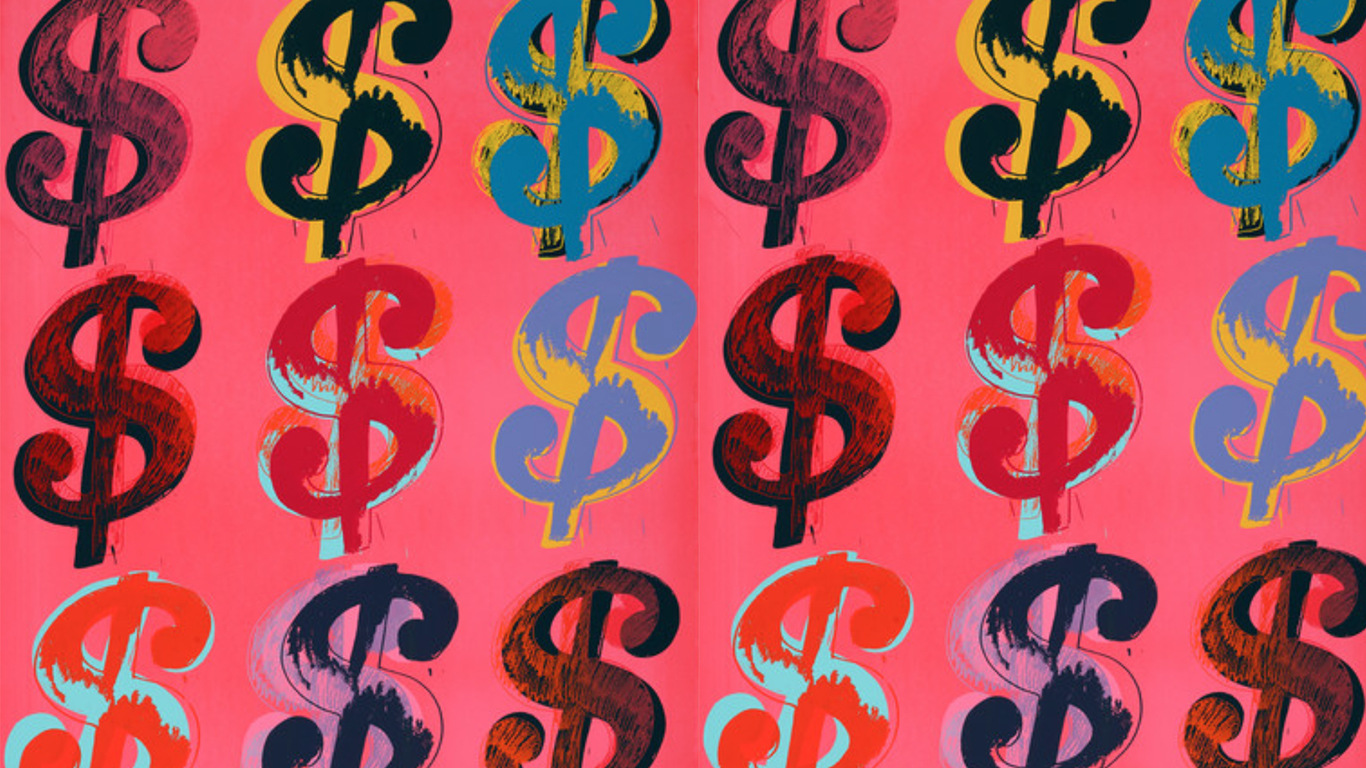
As Robyn Ollett and I wrote for Money on the Left last August, “the stories we tell about our communities and the people that build them are intimately bound up with the way we account for them in monetary terms.” We have since launched the Where Credit’s Due project in Middlesbrough with the aim of building intersectional solidarity and fostering conversations about monetary design in both visual and systemic senses. We began with a screening of Maren Poitras’s 2023 documentary Finding the Money – in which Lua K. Yuille observes that: “If money is natural, who has the money is natural as well” – and followed this with a series of workshops at Middlesbrough’s Dorman Museum, where our participants have experimented with designs for their own “Dorman Dollars” (see the image above). As these events have explored, neither the aesthetics nor the politics of monetary design are natural or inevitable. In place of the orthodox story, which tells us that the suffering of marginalised people and neglected places is necessary and that austerity’s exclusionary logic is the mark of responsible government, we have been learning how to tell new stories of money’s creative potential. In place of the phantom of inclusion-as-zero-sum-competition and the fear of democracy that haunts Nigel Farage, we offer Democratic Public Finance’s vision of ecosocial justice, which refuses to imagine false binary oppositions between wildlife and people, between men and women, or between the past and the future.

The Ontology of the Monetary Image: Référance and Reconstruction

By Will Beaman

Money is often introduced in critical theory as a problem. It appears as the medium that makes unlike things commensurable by reducing them to sameness, the abstraction that removes social life from the conditions that give it substance, or the sign that circulates by displacing the relations on which it depends. In one register, this is the Marxist account of commodity abstraction and estrangement. More specifically, it is the tendency within Marxist political economy to identify money with the value-form, and the value-form with a mystifying equivalence that becomes socially real and destructive. In another register, money becomes part of a deconstructive account of debt, mediation, and the impossibility of meanings or values ever being wholly self-identical. What these approaches share is the claim that money is bound up with failed identity: either it asserts an equivalence that does not in fact exist, or it reveals that equivalence never fully holds. Money is therefore treated either as a false identity or as a site of identity’s failure.

I want to start from a different premise. Money does not need to be understood first as the positing of identity. Commensuration is not exhausted by equivalence in the strongest sense, and credit should not be understood only as false unification or as a relation whose non-identity appears primarily as failure or guilt. Money is better understood as a practice of open public reference. At its most basic level, it stages comparison without requiring identity. By reference I do not mean only precise signification. References can also sample and remix, compare partially, cite selectively, echo playfully, or suggest likeness without exhausting what they carry forward. What matters here is a public act of relating—one that makes coordination, valuation, and obligation possible without discovering a pre-given sameness beneath them. The question, then, is not whether money imposes identity on a heterogeneous world, but what kind of reference money is.

Marxist criticism is most useful when it shows how capitalist monetary forms narrow what can count as socially intelligible. When labor appears only as wage labor, when production appears only through profitability, and when public capacity appears as fixed, money becomes a disciplinary medium. But it is not enough to say that capital captures money and thereby generates socially real abstractions. That still risks treating reification as the basic ontology of money rather than as one historically powerful monetary idiom. What appears here as private value or abstract equivalence is better understood as a genre of reference—a way of organizing relations that presents its own ratios as self-grounding while treating the conditions of issuance and receivability as if they were already settled. Even in these privational forms, money is not ontologically private. It remains a contested public utility, and the terms on which claims are issued, received, and made to count are never fully removed from political struggle.

A similar point can be made about deconstructive accounts of debt and mediation. These traditions are right to insist that identity does not close. Debt is never just a neutral balancing of accounts but is bound up with obligation, memory, punishment, and the effort to make a claim hold over time. More generally, settlement never arrives in a final and self-contained form, because any act of meaning or repayment depends on signs, conventions, and contexts that exceed it. Derrida’s term différance combines difference and deferral to name this condition: meaning is never simply present all at once in a self-identical form. A word becomes intelligible through its differences from other words, through traces of prior use, and through its repeatability across contexts. What appears self-grounding or immediately given is therefore mediated. Applied to economic life, the point is that a price does not contain the full reality of the good it prices, and a wage does not contain the full reality of the labor it measures. Monetary signs are in no objective sense equal to the world they organize. If one begins from identity or presence, non-coincidence appears as différance.

If différance clarifies the mediated conditions of signification, we might use référance to clarify the mediated conditions of reference. Derrida’s altered spelling marks a difference that is visible in writing but not audible in speech, making the temporal discontinuity of signification legible at the level of the word itself. Référance transvalues that gesture. It marks not only the non-presence of meaning, but the inscribability of claims across the spacing of currency issuance and uptake. Just as writing happens here and reading happens there, issuance happens here and receivability is negotiated there as a reversible stagecraft rather than a closed transfer. Rather than starting from identity and its failure, référance begins from relations that are non-identical from the start and do not require identity as their ground. If one begins instead from analogy and provision, from a shared problem that referential coordination across non-identity helps organize and contest, the same field appears as référance. The inadequacy of identity is the site of différance; non-identical relation is the site of référance. These do not necessarily name different empirical objects. They name different descriptions of the same mediated field. Référance names an open public reference: a way of suggesting likeness and holding claims together without discovering a final identity beneath them. Money, on this account, is not the successful representation of a prior economic reality, and it is not merely the symptom of a constitutive lack. It is a partial articulation of the social world as countable and revisable.

In monetary life, référance works through analogy: a way of holding heterogeneous things in accountable relation without making them identical. Analogy here does not mean approximation to a fixed norm. It means that likeness can be suggested and coordinated without being gathered into identity. A wage does not make labor the same thing as money. A price does not make a good identical with a number. A budget line does not make a public need identical with its accounting expression. Identity fails, but coordination still takes place.

The reparations movement offers a political example. A cash payment may form part of reparations for slavery without being identical to reparations or exhausting their meaning. Indeed, reparations are possible in part because money is not exhausted by any punctual scene of settlement. Its non-identity makes it intertemporally inscribable as a medium of repair, capable of carrying past harms, present claims, and future obligations in relation. The relation is not merely metaphorical or supplementary. It is analogical. Payment participates in a broader project of repair that can also take juridical, institutional, pedagogical, and aesthetic forms. This is part of how reparations remain durable across changing media and struggles: not because the claim is reducible to one self-identical demand, but because it can be carried forward across different scenes of reference. Reparations, in this sense, name an open historical and political problem-space rather than a single settled form.

Existing monetary forms often conceal the work of reference. We might think of this in terms similar to the continuity system in cinema. Continuity editing does not literally create seamless space-time. It produces continuity as an effect while hiding the cuts, conventions, and labor that make it possible. Some monetary forms work in the same way. They stage commensurability as a simple fact and obscure the referential work by which non-identical terms are brought into relation. What appears as neutral equivalence is often the product of historically specific conventions that present themselves as natural.

For that reason, reconstruction matters as much as critique. Reconstruction begins not from failed closure but from non-identical relation. Monetary institutions are never complete, never innocent, and never outside power. But they are not simply illusions waiting to be exposed. They are infrastructures through which claims become receivable, contestable, and revisable. To reference is also to cite: to carry something forward and make it count within a shared scene of recognition. Credit clarifies the connection. To credit is not only to finance but also to acknowledge, attribute, and extend receivability in monetary terms.

The historical period of Reconstruction after the U.S. Civil War extends the reparations analogy. In that moment, the terms under which social life could count within public institutions were reorganized. New images were put forward in which labor appeared as employable beyond the plantation. Citizenship appeared as enfranchisable across race. Land appeared as redistributable rather than fixed within the slaveholding order. Credit appeared as more issuable to newly recognized participants in public life. Black participation appeared as precious and indispensable to public life. None of these predicates produced stable identities, and all were violently contested. Yet they established new relations through which claims could be made and received within a multiracial democracy. Reconstruction therefore names not only a historical period but a problem of reference: how heterogeneous lives can be sustained together within shared institutions without collapsing their differences into a single form.

The political economic question is therefore what kinds of open public references monetary forms establish, and whether they do so reflexively or under the cover of objectivity. A reconstructive critique of money asks who may issue, who may count, what may be valued, which obligations are recognized, and which forms of life are treated as worthy of support. The task is to reconstruct money as accountable relation rather than failed identity.

Fiscal Chronotopes: #ZcavengerHunt, the Zetro Card, and the New Finance Franchise

By Will Beaman

This essay is lightly adapted from a talk delivered at the 2026 American Comparative Literature Association conference. It contributes to a growing body of endogenous money theorization that we at Money on the Left call Democratic Public Finance (DPF). DPF begins from the distributed and publicly mediated character of political-economic life, approaching money, credit, and accounting as contested infrastructures that are at once citational and coordinative. My contribution to that project here concerns the conditions of legibility for political-economic imaginaries.

Fiscal practices and counter-practices unfold within spatial and temporal genres that rehearse what feels like a “realistic” order of operations: where money is imagined to come from and what must happen for it to name and remunerate social capacities. In those genres, design questions are often staged as discoverable facts about economic reality that necessarily constrain politics. But they can also be staged additively, so that public spending expands who and what can count. At stake throughout is how public money is imagined and how public obligation is organized.

One familiar name for this problem in endogenous money discourse is the finance franchise: the idea that monetary power is extended through licensed issuers and delegated circuits. That mapping matters, but it can mislead when it encourages us to treat monetary agency as primarily top-down. My wager is that the finance franchise is also organized from the middle, through durable genres and rehearsals that make monetary agency legible in public life. The franchise, in other words, is not only a legal architecture. It is also a genre environment that trains what public agency can look like and when it can count. Borrowing from Mikhail Bakhtin, I call these patterned organizations fiscal chronotopes: time-space forms through which a world becomes legible as a sequence of events, obligations, and thresholds.

A key feature of these chronotopes is that they are often polyvocal. The same practice can remain stable while supporting more than one coherent reading. That is one reason fiscal forms travel across heterogeneous publics. It also means analysis cannot treat perception as passive reception, as if fiscal reality simply presents itself and we merely record it. What is often called “fiscal reality,” including in MMT and endogenous money discourse, is too often treated as a stable object waiting to be revealed. Here I treat it instead as reversible stagecraft: a field of gestures and formats that can sustain more than one stable reading and that trains what becomes legible as responsibility and what becomes actionable, or receivable, as public obligation.

Duck-Rabbits and Fiscal Reality

We can think about this with the famous duck-rabbit optical illusion. The drawing can be seen either as a duck facing left or a rabbit facing right. The same lines support two incompatible but equally stable readings, and that is precisely why the image circulates. Gestalt phenomenology took this as evidence that perception is not passive reception but active organization. What we see depends on both figure and orientation. The duck-rabbit shows that the same object can support different gestalt wholes without collapsing into incoherence.

That claim matters here for two reasons. First, it helps describe a dynamic that shapes the present: an inherited neoliberal temporality of passive administration amid crisis can be flipped into open authoritarian bullying without becoming identical to it. Neoliberal governance has long rehearsed a fiscal chronotope in which government is staged as the administration of scarcity. Capacity appears fixed, and the acquisition of scarce funds takes the form of a hostage negotiation in which the rich and powerful must be satisfied before money can be spent legitimately. In that chronotope, the destruction of infrastructure and capacity – austerity, underemployment, deferred maintenance – is moralized as a settlement required to keep the public books balanced.

Authoritarian politics plays off that form. It preserves the scarcity framing and the hostage structure, but converts the earlier posture of impotence before “the market” into a spectacle of punishment and reward. The “winners and losers” of globalization become something closer to the “winners and losers” of The Apprentice. Where neoliberalism moralizes constraint as necessity, the shakedown celebrates it as domination and as proof of the exceptionality of Trump’s supporters. The two chronotopes therefore share recognizable features, which is part of what makes collaboration and institutional capture possible. But they organize those features into different narratives of agency and responsibility.

Second, the duck-rabbit offers a rule for reading the campaign practices I turn to next. Last summer, Mamdani’s campaign ran a citywide scavenger hunt called the #ZcavengerHunt and introduced the Zetro Card, a playful punchcard through which volunteer contributions became receivable for campaign merchandise. The question is not whether these practices are really fiscal governance in disguise. The point is that they can be participation formats and, at the same time, rehearsals of public credit and fiscal authority. They make participation legible, and they can later help make other kinds of fiscal action feel actionable. In that sense, they point toward a new finance franchise whose conditions of possibility are distributed and democratic: authority gathered and renewed through rehearsal rather than granted only from above.

With this in mind, I read #ZcavengerHunt and the Zetro Card as formats that organize fiscal time and space. They are not policy proposals in disguise, but participation devices whose polyvalence trains what counts as collective action and what later counts as legitimate public work. The point is not to decide whether they are “really” fiscal politics or “merely” campaign theater. It is to track what they make variously legible (and hence variously actionable), and how their multi-legibility lets them travel across heterogeneous publics without requiring doctrinal consensus.

The #ZcavengerHunt

I begin with #ZcavengerHunt, which composes a bounded public present, and then turn my attention to the Zetro Card as a more durable rhythm of participation and completion. In the #ZcavengerHunt on a warm day in August, people moved through a sequence of locations, following prompts posted in real time and showing up in large numbers. It was playful and conspicuously gamified, but it was also immediately recognizable as a campaign event: a way to generate momentum, attention, and contact.

The chronotopic question, though, is what kind of time and space the format composed, and what that composition made legible. #ZcavengerHunt organized routes and gathering points so that participation took a clear, shared shape. A city that often appears as dispersed constituencies and isolated commutes was briefly refigured as a coordinated circuit: a public moving through space together according to a posted order.

This helps explain why so many people on social media reached for the same comparison and said Mamdani had finally made “Pokemon Go to the Polls” happen in earnest. The comparison points to more than fun. It names the way a game can give political participation a navigable form, one that does not require prior expertise, ideological unity, or even a single reason for being there. You do not have to be converted to join. You just have to be able to read the next move and keep going.

Campaigns sit awkwardly within the dominant governance chronotope. They happen before governance, and much of their labor is volunteer-based, informal, and hard to count. In a genre environment that tends to recognize work only once it is officially authorized and paid, campaigning can become strangely unreal: “just politics,” “just vibes,” or “just messaging,” as if the labor of coordination does not count as labor.

#ZcavengerHunt pushes against that occlusion. It renders campaign labor legible as a visible, shared activity while remaining playful, and that playfulness matters because it lets participation count without first taking on solemnity. A scavenger hunt does not require participants to share the same inner narrative about why they are there; it requires only that they inhabit the same sequence. People can show up for different reasons and still cohere as a public. That is not a weakness but part of how democratic forms remain durable across heterogeneous readings.

#ZcavengerHunt is not public works in the sense of a municipal project. But it does rehearse public work by rendering coordination labor legible and staging completion as something a public can do together in the open. It rehearses turnout and GOTV, but also the broader premise that collective activity can be organized as an ordinary feature of public life rather than dismissed as a break from “real” administration. A related form appears in the more recent snow-shoveling mobilization: a public standard is set, capacity is scaled to meet it, and the work itself is the primary obligation rather than a revenue-constrained aspiration.

The Zetro Card

The Zetro Card began as a workaround. At one point in the campaign’s fundraising, election-law rules constrained the sale of campaign merchandise. The usual sequence could no longer operate in the same way. Rather than treat that constraint as a hard stop, the campaign invented another format for recognition and circulation. The Zetro Card is that format: a playful punchcard that volunteers receive at canvasses, phone banks, pop-ups, and other events, stamped for contributions and made receivable for campaign merchandise once enough stamps accumulate.

It is immediately recognizable as gamification, and it is partly that. But the origin story matters because it shows how quickly constraints become questions of form. The card does not arise from a neutral design space. It emerges within a rule-bound environment that forces the campaign to ask how value and recognition can keep moving when a familiar channel narrows. That is endogenous improvisation in miniature: a practical restaging of how participation can be honored under constraint.

As I suggested at the time in a joking-not-joking piece for Money on the Left, the punchcard format also invites expansion. It offers a way of thinking through how organizing labor might become legible as something closer to public work without pretending the campaign had already become the city. The Zetro Card’s meaning was flexible from the start. The same format reads equally well as merch logistics, volunteer morale, or a revisable experiment in how recognition might be formalized and scaled.

Where #ZcavengerHunt gave campaign mobilization the form of an attraction, the Zetro Card established form that can persist across time. Contributions that are otherwise informal and hard to count are gathered into a shared rhythm rather than fading back into the background as “just politics.” That continuity should not be confused with seamlessness. The card works because it is modular: it can absorb uneven moments of participation while preserving a stable form. Continuity, in this sense, is not the absence of interruption but the achievement of a repeated public rhythm.

If #ZcavengerHunt made campaigning legible as collective movement all at once, the Zetro Card makes it legible as ongoing work that can persist without constant spectacle. The duck-rabbit point holds here too. The card can be read straightforwardly as morale, retention, and branding. It can also be read as a rehearsal of public credit in miniature because it stages a relationship among contribution, recognition, and redemption. Those readings do not cancel each other. Its political usefulness depends on remaining legible in both registers at once.

From Campaigning to Governing

What this adds to the campaign-versus-governance question is not a fantasy of immediate substitution but a shift in genre. The Zetro Card treats participation as something that can carry forward and return as recognition over time. It offers a small but suggestive model of how collective capacities get named and taken up through repeatable formats. When the scene shifts to snow shoveling as paid public work organized around an accessibility standard, the register changes. But the underlying wager remains familiar: the work comes first as an obligation we can name, and the question of coordination follows from that obligation rather than preempting it.

Many commentators described #ZcavengerHunt and the Zetro Card as Mamdani’s way of responding to fascist terror with fun and levity, and that is true enough. But fun and levity are chronotopic. They organize political time differently from the rhythm of fiscal and political crisis that has dominated neoliberal governance and returned in Trump’s threats and shakedowns. Within dominant fiscal chronotopes, crisis appears as something that suspends public obligation rather than reinforcing it.

The campaign practices matter because they elaborate a different, more democratic public chronotope. #ZcavengerHunt exemplifies an event whose form is nonetheless repeatable, while the Zetro Card extends that same participatory logic into a more continuous sequence of recognition and coordination. In both cases, levity is not a retreat from politics but an effect of agency: a way of making collective capacity feel present and repeatable under conditions designed to make agency feel foreclosed. If neoliberal and MAGA temporalities narrow the field of action, these practices widen it by building forms in which people can act together without waiting for permission in advance.

That framing also helps clarify why the shift from campaign to governance is not a clean break. The same administration can operate in more than one chronotopic tense at once because it inherits institutions and media habits that keep staging money as if it originates in private pockets and enters public life only through reluctant concession. In the early months of Mamdani’s term, that tension has been visible in real time. Libraries were cut recently in the name of efficiency, a recognizably neoliberal move that treats capacity as fixed and management as the art of trimming. Last weekend, by contrast, snow-shoveling capacity was dramatically scaled up around a clear public standard of sidewalk accessibility. The public messaging around recruiting shovelers had its own playful, mobilizing energy, closer in spirit to the campaign experiments than to the dour genre of austerity.

The snow-shoveling episode matters because it puts a different orientation on display. Productive capacity appears here as a political variable rather than a ceiling. The public standard comes first — accessibility as constitutive of public space — and labor is then scaled to meet it. Operationally, the cash management and accounting settlement for that expansion happens afterward through ongoing negotiation and coordination. That, too, can be read in duck-rabbit fashion. In a familiar neoliberal reading, belated settlement is framed as debt that must be “paid back,” as if the city has put extra shoveling on a public credit card that will eventually come due. But belated settlement also makes something else visible: once scale becomes adjustable in order to meet a standard, the question “how are you going to pay for it?” is already being treated as a design question rather than an external veto on what counts as an obligation.

That is the fork in the road these campaign rehearsals help make visible. One path translates public need back into scarcity management, with the destruction of capacity repeatedly framed as responsibility. The other treats care capacity and employment as public ends and treats settlement as an ongoing political task rather than using it to delay action. Fiscal chronotopes are the genre environments in which those paths become legible in the first place, where some sequences of permission and closure feel natural and others do not. The wager behind these playful practices is that changing what a public can recognize is often the first step toward changing what it can do, and that democratic public finance, especially amid open sabotage and non-cooperation from the federal government, depends on rehearsing alternative temporalities and keeping them publicly legible.

Out of the Shadows: Public Banking for Municipal Finance

By Tyler Suksawat & Scott Ferguson

In a recent essay, we advanced a proposal for sub-federal governments to sell municipal bonds to their own public banks. We took the city as our primary point of departure, but the same lessons are applicable to U.S. counties and states. Establishing a public bank that regularly purchases municipal debt, we argued, would not only significantly expand a city’s fiscal capacity to support its communities and environs, but also reclaim regional public finance from a parasitical and punishing bond market. 

Since the publication of our essay, some commentators have criticized the proposal for involving city finance in so-called shadow banking, precisely because it places public credit creation outside traditional private capital markets. Such concerns are rooted in a legitimate wariness toward the unregulated and often fragile credit structures that trigger financial crises. However, this criticism fails to distinguish between speculative private ventures and institutionalized provisioning by the municipal public purse. Indeed, such a critique mistakes the absence of private middlemen for a lack of financial oversight and security. Our plan, by contrast, replaces the opaque and volatile shadows of private intermediation with a transparent, public-facing mechanism anchored in the enduring fiscal authority of the city government.

Today, municipal finance remains trapped in an exploitative and convoluted cycle. When a city issues debt, it is immediately subjected to a gauntlet of private intermediaries: banks underwrite the bonds, rating agencies perform a gatekeeping function via risk assessment, and institutional investors claim interest as a form of social rent. Crucially, these investors are often not traditional depository banks, but rather volatile non-bank entities such as money market mutual funds and hedge funds, which treat municipal bonds as liquid shadow money to be leveraged for short-term gain. As it stands, then, the public purse is already precariously entangled in shadow banking, with municipal debt serving as a primary asset for the volatile and uninsured money markets that dominate the status quo. Every stage of this process, meanwhile, is governed by a “fiscal discipline” that prioritizes private profit over public need. Thus, far from a stable, above-board process, the current municipal model represents an architecture of austerity that embeds the public interest within the murky, predatory, and destabilizing mechanisms of market-based finance.

Our proposal replaces the fragility of the shadow market with an architecture of public provisioning. Before we turn to the specific mechanisms of financial stability, we must first establish the basic institutional design. We propose a publicly owned institution with chartered banking powers–including direct access to the Federal Reserve’s discount window–that allows the city to bypass the private gauntlet and recapture its own credit. Under this arrangement, the interest generated by municipal debt is no longer captured as social rent; instead, it is credited back to the issuer’s general fund. While both the private market and our public model acknowledge that credit is fundamentally elastic, the divergence lies in who controls and benefits from that elasticity. By internalizing debt service and neutralizing the power of rating agencies, our proposal transforms the financial model from an extractive regime into a regenerative one.

This formalization—grounding municipal debt finance in a chartered public bank, regulated oversight, and direct access to central bank liquidity—moves our model firmly into the light of the regulated banking system. If critics wish to argue about the risks of aggressive credit expansion or the blurring of fiscal and monetary lines, those are legitimate debates over localized monetary and credit governance. But to label a chartered, transparently regulated public utility as “shadow banking” is a category error. Our plan does not evade regulation; it institutionalizes public purpose through it.

Regarding the safety of deposits, public ownership is no barrier to FDIC insurance. A state-chartered public bank meeting standard capital and supervisory requirements can qualify for federal backing. However, even in the absence of the FDIC, the Bank of North Dakota provides a proven roadmap: deposits can be backed by the full faith and credit of the municipal government itself. In this architecture, deposit safety is a design constraint managed through robust capital buffers and strict regulatory adherence, rather than an impossibility.

In this context, the risk of default on deposits is a feature of any bank lacking sufficient capital or insurance. Critics often raise the specter of “portfolio concentration,” but a public bank purchasing its own city’s bonds is simply internalizing fiscal risk. This shifts the concern from “depositor loss” to the broader question of municipal insolvency–a condition that, in our schema, is mitigated by the bank’s ability to coordinate with the city’s broader fiscal agenda. We address concentration not through the fickle discipline of the bond market, but through diversified asset management and the elimination of capitalist underwriting.

The most powerful engine of this model is its mandated retention and concerted utilization of public deposits, serving as a foundation for proactive public provisioning. By directing city payrolls, vendor payments, contractor accounts, and the collection of taxes, fines, fees, and even utility payments (as seen in Seattle) through the public bank, we create a massive, stable foundation of liquidity to be deployed for the common good. This capacity becomes particularly transformative when paired with a local Job Guarantee program. The bank provides the strong accounting infrastructure for such a program, ensuring that municipal payrolls for public works are settled within the public’s own credit circuit to build and sustain community wealth. Consequently, the interest payments that currently “leave” the city as social rent are instead retained, further expanding the city’s financial system and its capacity to support collective wellbeing with every cycle.

Finally, we must correct a persistent metallic-standard myth: the idea that a bank’s ability to purchase bonds is constrained 1:1 by its existing deposits. As any modern banker knows, loans create deposits. Banks expand their balance sheets first and manage reserves afterward. The true constraints on our model, then, are not “available deposits,” but rather regulatory capital ratios and liquidity coverage rules. We acknowledge these constraints and embrace them. Our goal is not to evade regulation, but to use the inherent elasticity of credit to activate municipal democracy and provision the public good.

Contesting the End of India’s Job Guarantee with Khush Vachhrajani

For over twenty years, India’s national rural jobs program provided a legal right to work for over 265 million people–the majority of them women–serving as a vital lifeline against poverty and a global model for social security. Tragically, however, that lifeline is now being cut.

In this episode, we speak with Khush Vachhrajani, writer and national coordinator at the Social Accountability Forum for Action and Research in India, about his recent article in The Wire, “How to Kill a Golden Goose: MGNREGA Repeal Reveals More than it Hides.” Vachhrajani contextualizes the sudden 2026 demise of the Mahatma Gandhi National Rural Employment Guarantee Act (MGNREGA) and its replacement by the new Viksit Bharat–Guarantee for Rozgar and Ajeevika Mission (VB-G RAM G). As he explains, this shift effectively “kills the golden goose” for millions of rural workers by replacing a demand-driven legal guarantee with arbitrary budget caps and centralized control. We discuss the neoliberal money politics behind this move: a calculated transition from a rights-based framework that empowered workers to a supply-led scheme that prioritizes fiscal austerity over human dignity.

Still, our dialog is not merely a post-mortem of a fallen policy. From the “Save MGNREGA” nationwide agitations to defiant resolutions passed in thousands of Gram Sabhas, the people of India are actively fighting to reclaim their right to work. This episode explores both the devastating effects of the repeal and the growing movement of workers, unions, and activists who refuse to let this Golden Goose go quietly, proving that the struggle for democratic accountability is far from over.

Visit our Patreon page here: https://www.patreon.com/MoLsuperstructure

Music by Nahneen Kula: www.nahneenkula.com

Transcript forthcoming …

* Thank you to Zachary Nosbisch for the episode graphic, Nahneen Kula for the theme tune, and Thomas Chaplin for the transcript. 

Democratic Finance for New York City’s Budget Dance

By David I. Backer

I’m a professor of education policy and teach classes on public finance. I make it my business to know the government’s business, and I live in Brooklyn, so I’ve been paying close attention to the city’s finances as the new Mamdani administration takes power. In my work, like my recent book on school finance, I try to make the otherwise arcane and hard-to-understand world of municipal finance more comprehensible to the people impacted by it.

Zohran Mamdani recently (and admirably) announced a $12.2 billion city deficit left by the Adams administration, which, in the barbed choreography of the New York City budget dance with New York State, Mamdani revised down to around $6 billion. In the manic moves of that dance numerous dirty details are coming out about the booby traps Adams left Zohran, and the treacherous terrain of the city budget generally. 

I think I found another obstacle-feature of that terrain that I haven’t seen reported elsewhere. Untangling it helps to zoom in on the complexity of this budget process, which everyone cares about and no one understands, with an eye towards transforming the whole nasty apparatus (which, by the way, is why we need participatory budgeting on a mass scale). 

The thing I’m seeing is a big jump in city debt service payments next fiscal year, FY27 and FY28. 

In Andrew Perry’s excellent piece on Mamdani’s first budget, it’s notable that debt service—what the city forks over in its yearly repayments to creditors—is the fourth largest broken out category of NYC public finance:

It’s not a huge expense in raw numbers, but it’s relatively big one in the overall scheme of city budgets because debt service comes to bear on the city’s capability to pay back its creditors, and thus can impact its credit rating, fiscal stability, and ultimately the patina of fiscal responsibility of whoever’s in charge at the moment. So even though it’s 6% of the budget, it’s a big 6%.

When I was reading one of Brad Lander’s last comptroller reports, along with updated data on the city’s debt profile, a graph caught my attention.

On the left side of this graph, you’ve got the debt service the city owes. On the bottom, you have the year it’ll owe that amount. It goes from this year to 2060, when many long term bond obligations get “paid off” (though of course they never really get paid off because US municipal finance has a debt wish). 

But the colors are important too. In blue you’ve got the principal, which is the amount of the city borrowed, and in red you’ve got the interest, which is what the city pays to borrow that money. It’s the price of credit. 

First, before anything else, look at all that red interest we have to pay. Municipal bond interest payments are basically a huge tax that New Yorkers and everyone else in the country don’t really know they’re paying. For every dollar we give the city, using Perry’s chart above, we pay six cents on the city’s debt service. When we look at the red section, we see about three of those cents just go towards the interest on our loans. A lot of rich people make bank on lending to us so we can have a city. 

But that’s not even the pressing issue here.

Second, look at the huge jump in debt service obligations through 2028. It more than doubles from $2 billion to $4.5 billion. What’s happening here? 

According to municipal finance researcher Tom Sgouros, who I talked to about this situation, there could be a number of explanations here, none of which we know because we weren’t putting this debt service schedule together. All those interest payments come on debt with different interest rates, so maybe the comptroller’s office, which, in this case, was under Brad Lander, they prioritized paying higher interest debt first. There could have been a plan to defease (moving it into a separate fund, sort of like refinancing and reinvesting to get rid of it before paying it off) some debt earlier rather than later. 

What we know is that there’ll be a period of lower payments, according to this debt service schedule, after which those payments will jump up again by double. And its not just another city expense, it’s the repayment of loans taken out to finance everything else in the city. 

One conspiratorial interpretation: Perry notes a practice called “surplus roll” where “the City dispenses its surplus by prepaying subsequent year expenses… In fiscal year 2025, for instance, the City accrued a $3.8 billion surplus. It booked this as 2025 spending in the form of prepaying spending liabilities in fiscal year 2026.”

So one theory is that the Adams administration scheduled a certain amount of 2026’s debt on Zohran’s behalf without asking him first, shouldering Zohran with the payments with a big jump in 2028, threatening Mamdani’s spending power. It could be the surplus roll because these numbers above are in the Q1 2026 debt profile. When we look at the Q4 2025 we don’t see that same jump.

And yet, it might not be a surplus roll. It might be the non-malign planning to pay certain debt off at certain times, innocent defeasing. It might not be political at all. To everyone except the people working for Mark Levine, the new Comptroller, and maybe a handful of others, the process is opaque. 

All this gives you a sense of what the Mamdani administration will actually be dealing with in terms of its debt needs. It looks to me like the debt service will jump up dramatically whether that’s due to a possible surplus roll by the Adams administration or other maneuvers. As it stands, Mamdani will have to pay more in debt service during two years of his time in office to get less revenue to the diverse working class he’s promised to serve. 

All this also broaches the question of what to do about this issue of nagging debt service. There’s the short-term process of the city’s Tin Cup Day where the mayor goes to ask for money. But we know that Mamdani and company want to challenge these old dynamics. Why not take up some medium-term measures, and maybe champion longer-term transformations, that make this arcane debt service stuff a relic of the past?

The Mamdani administration, drawing from this publication’s framework of Democratic Public Finance, could use this as an opportunity to spell out a radical alternative to the present system. They could, for example, renew support for a city-owned non-profit public bank which, like the Bank of North Dakota (built by prairie socialists in the early 20th century), can buy NYC munis and deposit the interest back into the city’s general fund

The result would begin to drastically decrease the amount the city owes in interest payments. Along the way, Mamdani could call for a permanent MLF at the Fed that provides zero (or next-to-zero) interest rate financing. More radically still, he can also argue that Congress should extend credit creation powers directly to states and municipalities, a long term goal that would force the public to debate and think differently about municipal finance. 

These are broad, sweeping proposals. Are there things that the administration and their allied coalitions can put in place in the next couple years to achieve local versions of the same interventions, working towards transformation? I’ve been keeping a running list of fun brainstormy revenue ideas and, by way of open-ended conclusion, offer them here for readers’ perusal. My specialty is education finance, so the proposals are skewed towards education, but they could be adapted for other arenas of municipal finance as well.

  1. Issue taxable bonds to friendly foreign government entities with our values (the governments Bernie always mentions): reaching deals with Canadian pension funds, Scandinavian sovereign wealth funds, etc.
  2. Strengthening and integrating the Education Construction Fund to borrow for combined housing and schools financing, synthesizing borrowing capacity of the New York City Transitional Finance Authority with the ECF. There could be savings when staggering borrowing between both of them. (Combine this option with (1) to issue the taxable bonds through here.) The last bond ECF issued was in 2021 and apparently there isn’t good coordination between the Panel for Education Policy and ECF.
  3. A municipal minibond program that reaches out to communities to invest in their specific schools, matching monies with citizen participation. This would be a more socialist version of Berkeley’s proposal.
  4. Call NYC’s Build America Bonds on the grounds of extreme circumstances like the University of California system and the Maryland Transit Authority and potentially save hundreds of millions.
  5. Create a city bank, a nonprofit corporate entity specifically, and restrict public monies to deposits in non-profit cooperative entities, such as the bevy of diverse community development financing institutions (CDFIs) throughout the city, put the city’s deposits there, create public bank accounts where the residents are voting members and create a public lender (hat tip to Whitney Toussaint for this idea). Save on borrowing costs to big banks. Then create investment funds for middle income supporters to move their savings/retirement, get in on the dash for retirement investment with a public option.
  6. Design an online game for NYC that is very low cost and super fun, less than a dollar. Use message boards and DMs for announcements and citywide municipal discussion (towards mass participatory budgeting potentially).
  7. Permit Community Education Councils to create public digital currencies that residents of CECs can purchase and sell for educational services, whose revenues go directly to the CEC budgets, managed by a rotating committee of school community members. 
  8. Penny sales tax for specific projects through referendum vote (ESPLOST), like they do in Georgia. It’s a good political move: pay a penny more for your kids’ schools, eg.
  9. Create a regional borrowing authority where districts around NYC deposit reserves and lend to one another at lower rates.
  10. Pool pre-k afterschool tuition revenues in a single municipal account, invest the funds, and supplement the program’s funding with interest thrown off by the account. Ask pre-k centers to deposit with the county which then invests the funds.
  11. A city-run secondary market for used stuff that you’d put out in the street: like a public Facebook marketplace that takes a few cents from transactions or posting fees that go right into specified city programs.
  12. Allow wealthy residents to participate in auctions where they bid to pay one-time amounts to delete debt outstanding from certain funds instead of regular tax filings, like Building Aid Revenue Bond debt, thereby paying down that debt and creating borrowing capacity, while putting the rich in a weird position. Make it public and fun, like a kind of date auction, but it’s a debt auction. This wouldn’t be a secondary market trading on the debt itself but rather a traditional auction, with the rich outbidding one another to pay off city debt. (Maybe via some kind of low cost fun items of city lore, like subway tokens.)
  13. Create a municipal digital currency for the city that every resident receives a certain amount of, pegged at being worth more than the dollar (a Knick or Met could be the name). For activities the federal government undertakes in the city that threatens the city’s home rule charter, the Feds must pay a tax or purchase the currency. Locally owned and worker-owned businesses receive exemptions from the currency’s tax.
  14. Create a Parent-Teacher Association account where all PTA money is deposited and invested. The interest on the account is used to finance schools whose PTAs don’t have as much money as other PTAs.
  15. Politicize the discount rate set for city pension contributions, holding listening sessions and public events about whether to set the rate higher (which could save hundreds of millions of dollars, even if raised by 25 basis points). Make this about the people’s investment rather than investors. Then politicize the discount rates used to set repayment terms on city issued bonds, deliberating publicly on whether there’s savings there.
  16. Work with the New York Green Bank to package up green projects around the city, standardize their contracts, and mobilize private investment towards the projects further. Have them create a special instrument for city pension funds to purchase in large sizes. 
  17. Work with the NYCEEC (the New York City Green Bank) to expand investment projects across state lines, particularly to cities in red states suffering from Trump-induced disinvestment in green projects (try to work with rural communities too to build solidarity there). To avoid the risk of NYC profiting off of others’ misery, the city could follow the lead of the Yugoslavian approach to international development as per the Non-aligned Movement and structure the loans across state lines with solidarity as a framework for the loan terms.
  18. Pass a law through city council that gives city pensions first bidding rights in competitive sales of city bonds, even before private banks, lowering the underwriters discount cost to the city.
  19. Sell taxable bonds with the explicit purpose of arbitraging revenues.
  20. Coordinate school district bond sales around the state and pool them together into a loan product for the green banks to sell for green projects. Provide technical services through the School Construction Authority for districts around New York State to green their infrastructure.
  21. Do a deal with a dollar pizza network. Designate certain spots as health areas and provide city subsidies for taking care of unhoused sick and hungry people. The contract has to stipulate that the city gets a percentage of the returns, like a big investor, then leak that info to private equity funds to push investment in the dollar pizza network. Flush with more cash, get the network to build bigger spaces. Make the dollar pizza network a meme stock that takes on the financial elite on Reddit to flood it with cash.
  22. Make every road a toll road for federal agents driving in the city using license image cameras. 

Reclaiming the Public Interest: Cities Should Sell Municipal Bonds to Their Own Public Banks

By Tyler Suksawat & Scott Ferguson

What chance do local governments have in fighting authoritarian austerity, especially when they are left to rely on feckless legislators at the state and federal levels who refuse to push back? Right now, we see austerity budgets appearing across every institution and major employer in the U.S. If the federal government continues to sabotage municipalities, and the state governments (even in liberal states) are proposing cuts-only budgets, then what hope do cities have? In truth, there are several meaningful alternatives to the present order, particularly if we follow the lead of what Money on the Left calls Democratic Public Finance. We only need to get creative about local monetary design. 

Extending money creation powers from the federal level directly to local governments remains an urgent political project. In the meantime, however, we propose that a powerful public option for municipal finance exists at the intersection between bond issuance and public banking. What if a city established a public bank and that public bank regularly purchased the city’s debt? Such a mechanism would liberate the city’s munis from private bond markets and punishing rating agencies, while expanding the city’s fiscal capacity beyond projected tax revenues. 

To understand why this works, we must discard a pervasive myth: banks do not lend deposits. They create credit “endogenously” through acts of authorization. Banks certainly have to meet liquidity and reserve requirements. However, meeting such requirements is a separate matter from crediting operations, which are legally enabled and protected by the Federal Reserve. A bank’s crediting operations do not recycle a limited pool of pre-existing investor funds. They actively expand the amount of total credit that is presently available. 

Therefore, when a public bank purchases its own city’s municipal debt, the result is not a closed loop in which a finite amount of money is passed back and forth. Because the public bank actively generates money to purchase the debt, the operation dramatically enlarges the city’s fiscal space. In such an arrangement, the municipal government acquires funds in the short term to meet community needs. The public bank grows its holdings by receiving interest payments from the city. The loops, then, are not redundant; they are kinetic. Far from an inert circuit, a public bank that purchases city debt is a dynamic design that defies the artificial gravity of austerity.

Most importantly, this arrangement halts the depletion of fiscal capacity by ensuring that debt service payments remain on the city’s own public ledger. Unlike with the private bond market, the public bank would be legally required to deposit earned interest into the city’s general fund. By cutting out the rentiers, the city thus transforms a parasitic financial drain into a regenerative cycle, guaranteeing that public interest is no longer just a yield for private financiers, but a shared benefit in the public interest.

We do not have to look far for a successful precedent. The Bank of North Dakota (BND) already acts as the depository for all state taxes, fines, and fees. While BND operates more conservatively than the model we propose—acting primarily as a registrar and facilitator rather than a direct purchaser of munis—it still remits its profits to the state’s general fund. In 2023 alone, the bank posted profits of $192.7 million. To put that in perspective, this figure greatly exceeds the $115 million in annual revenue projected for Washington State’s highly contested wealth tax proposal. For states like Washington, which rely heavily on regressive property tax levies to pay for almost everything, the BND model offers a wealth of untapped potential.

While the BND focuses primarily on state and municipal operations, if a new generation of public banks were chartered to provide consumer financial services alongside municipal finance, the benefits would be exponential. Private retail banks routinely generate massive profit margins of 15% to 30% through rapacious fees and predatory lending. Crucially, a public bank would not simply transfer this rentier model to the public sector. By functioning as a true public utility, it would offer high-quality, low-cost financial services instead. Public banks should provide an affordable, non-predatory alternative for working people. Even without exorbitant fees, however, it would still generate a robust and ethical source of revenue to be invested directly back into the community—funding the very policies, programs, and budgets voted on by the people the bank serves.

To realize this vision, establishing democratically accountable public banks—whether at the municipal or state level—must become a top political and legislative priority. Chartered as public utilities rather than profit-seeking enterprises, these institutions would be governed by public appointees and remain 100% accountable to city halls, county commissions, or state legislatures. By legally mandating that all net earnings (derived from interest and fees) be deposited back into the government’s general fund, municipalities can organically grow their revenues over time without continuously hiking taxes. As an added democratic benefit, their daily operations would be entirely transparent, with balance sheets published for the public.

The practical strength of this arrangement lies in the specific mechanics of the yield. With the federal funds rate currently sitting at a target range of 3.50% to 3.75%, a municipality could intentionally set its internal bond yields just above this floor. Because the public bank holds the debt, the spread guarantees a steady stream of revenue for the public ledger. Furthermore, by indexing the yield to the rate of inflation, the city constructs a resilient financial instrument in the face of unpredictable circumstances. Should an emergency or unforeseen project cost require rapid liquidity beyond the public bank’s immediate capacity, this competitive yield would generate intense demand from the private sector to hold the city’s munis—effectively subordinating private capital to the public interest.

Unlocking a municipality’s latent ability to sell bonds directly to its own public bank reveals a startling truth: the primary limits on local finance are not economic, but political. The constraints cities currently face are mostly self-imposed regulations—arbitrary debt ceilings or rules enforced by oversight boards captured by private banking interests. While every municipality will navigate different statutory limits on bond issuance, we can begin by maxing out current legal capacities and organizing to expand those horizons later. 

Consider the political implications for building local public capacity. Lately, wealth taxes have dominated local discussions around budget expansion. While taxing the rich remains a vital tool for combating economic inequality and checking the anti-democratic power of concentrated wealth, relying on taxation as the sole lifeline for municipal survival is politically precarious. A public bank shifts this paradigm. By carefully managing the yields and maturities on internally held municipal bonds, a city can steadily expand its general fund. Wealth taxes would no longer be a desperate necessity for basic funding, but rather one tool among many. 

Instead of begging for scraps from state legislatures or private bond markets, local governments can directly create the capacity to care for their communities. Once we are willing to get creative with Democratic Public Finance, we see that the blueprint is already here. We only need the political will to use it, guaranteeing that every local dollar created is an investment in the public interest. 

Defending the Consumer Financial Protection Bureau with Tyler Creighton

In this episode, we speak with Tyler Creighton about the ongoing struggle to save the Consumer Financial Protection Bureau (CFPB) from defunding and closure at the hands of Russell Vought in the second Trump Administration. Creighton is a lawyer at the CFPB and a member of the National Treasury Employees Union (NTEU), Chapter 335. Before joining the CFPB, Creighton clerked for the Massachusetts Appeals Court and, prior to that, he was an organizer for pro-democracy reforms at Common Cause and ReThink Media. We talk with Creighton about life at the CFPB under the leadership of Vought, central architect of the notorious Project 2025 document and avowed opponent of the agency he now directs. 

During our conversation, Creighton details how, in spite of Vought’s attempts to defund and close the agency, the CFPB continues to survive. In Creighton’s telling, the agency’s endurance owes in no small part to the continuous labor actions undertaken by the NTEU and its members. In February 2025, for example, the union sued the Trump Administration, securing an injunction against Vought’s efforts to close the agency. (Read the judge’s extraordinary Memorandum Opinion here.) Then, in late December, a federal district court judge ruled that the Trump administration must continue to fund the CFPB through the Federal Reserve, contradicting Vought’s absurd claim that the CFPB can no longer seek financing from the Fed because the nation’s Central Bank is operating at a loss.

Despite the NTEU’s string of successes, the fate of the CFPB still remains to be determined. The good news, however, is that there are ways that you can support the bureau as it rounds into its second year of the second Trump Administration. Learn more about the fight to save the CFPB from the CFPB Union website. Follow and share news from the NTEU account on Bluesky. Join the union’s public demonstrations, if you live near or find yourself visiting Washington D.C. You can also help fund the NTEU’s activities by purchasing any number of cheeky items in their online merchandise shop

Visit our Patreon page here: https://www.patreon.com/MoLsuperstructure

Music by Nahneen Kula: www.nahneenkula.com

Transcript

This transcript has been edited for readability.

Billy Saas

Tyler Creighton, welcome to Money on the Left.

Tyler Creighton

Thank you. Glad to be here.

Billy Saas

It is a pleasure to have you. We are looking to talk to you about a lot of things. You work principally now as a lawyer with the CFPB, the Consumer Financial Protection Bureau. Could you just maybe kick us off by telling us a little bit about what that’s like now in January of 2026?

Tyler Creighton

Yeah. The past year at the Consumer Financial Protection Bureau has been just a little bit different than my prior few years at the CFPB. I will say, I am an attorney at the CFPB. I’m here just talking in my own personal capacity. Nothing I say can be attributed to the bureau, representing my public sector union: the National Treasurer Employees Union.

But, yeah, it’s been an interesting year. I joined the bureau in 2022, so I’m actually a relatively new employee compared to a lot of other people that have been there since the start. When Trump got elected, it was a little unclear exactly what was going to happen to the CFPB.

It’s kind of been a little bit of a political lightning rod for its entire existence since 2011. But we didn’t really know what to expect. Oddly, we kind of flew under the radar for the first month. Our former director who had been appointed by President Biden, Rohit Chopra, stayed on until the end of January, and into the first week of February before he was finally fired by the president.

That’s when everything really changed. Trump appointed the architect of Project 2025, Russel Vought, as our acting director. Within days of him being appointed, he had closed down all of our office buildings and kicked everybody out and had sent an all staff email saying, “stop performing any work task, whatsoever.”

Everything just kind of came to a crashing halt and a lot has happened since then. They have been trying to close us down since that first week in February and, although they have really mucked around with the operations of the bureau – despite the best efforts – it is still standing.

I think this is largely in part due to a lot of dedicated workers at the bureau who have been organizing through our union and using litigation to keep the bureau alive as Congress intended.

Scott Ferguson

Can you tell us a little bit about just your own personal history? How did you come to the CFPB? You’re a lawyer. What’s your background? What’s your specialty? What do you do at the CFPB in particular?

Tyler Creighton

Yeah. So, I’m actually a relatively new lawyer. I graduated law school in 2021 and I clerked for a year on the Massachusetts appeals court, and then went directly from there to the CFPB in 2022. I work in our Office of Supervision. I’ve primarily focused on the mortgage market, although I’ve also done some work on student loans and auto loans.

I think a lot of people don’t really know what “supervision” means at the CFPB or “supervision” across other financial regulators. But, at the CFPB, in terms of compliance, we kind of have our enforcement division, which is, I think, what people generally think of when they think of regulators. These are the folks that are running investigations and suing bad actors when they find potential legal violations.

That’s all very public. These lawsuits will be on the public docket and you can read the complaint and you can see all the details. Supervision is very different. It is a confidential process. This is an authority that was granted to us by Congress and the Dodd-Frank act, which established the CFPB and gives us authority to conduct periodic examinations of certain financial companies that are under our authority.

What that means is we request a bunch of information and documents from an institution, and then we have teams of expert examiners who are looking at the information and making sure that policies and procedures of the companies and their functions are all complying with our various federal statutes and regulations. If we identify any problems, we try to resolve the issues in a collaborative process with the companies.

It all remains confidential. For the most part, everything is kind of resolved in that confidential space. It only kind of comes out later if companies are disagreeing with our assessments, or it seems like the conduct is particularly egregious or intentional in which case the issue might end up getting into the enforcement side and then leading to litigation.

I’ve been doing that work since 2022. Unfortunately, as public reports show, that work has more or less not existed since February of 2025. Just hoping that we can kind of get back to actually supervising the companies that Congress intended us to.

Billy Saas

And so that’s just a function of companies, I guess. What side is that lack of continued supervision activity most attributable to. Is that a function of the top down directives from Russ Vought, or is it companies not feeling like they need to participate any longer? Can you talk to us a little bit more about that?

Tyler Creighton

It is directly attributable to Russ Vought stop work order in February that, for all intents and purposes, really hasn’t fully disappeared or really been rescinded.

Scott Ferguson

So what determines what is actionable work versus what must be stopped?

Tyler Creighton

You know, we are civil servants. We don’t go off and sort of just do our own thing. We are directed by political leadership on what our priorities are and what the work is. We have not been authorized or directed to do the supervision work that we had previously been done.

Billy Saas

It’s similar on the enforcement side, I would presume as well.

Tyler Creighton

Yes. I’m not on the enforcement side, but yes, I think public reporting shows that there isn’t enforcement going on. Investigations are not continuing. And you’ve seen publicly that a lot of open litigation has either been dismissed or settled, including a number of open consent orders that companies and the CFPB had already reached and had not yet expired have been terminated prior to the expiration date in the consent order.

Scott Ferguson

We’ve started to talk about the division of labor and the division of the institution a bit. But I was wondering, to the best of your ability, I know you haven’t been there from the beginning, but can you give us a little more detailed sense of when the CFPB arises? Under what circumstances? The specific things it was tasked to do and what it has been doing ever since.

Tyler Creighton

Yeah. So, the sort of neat and tidy story of the CFPB’s founding is that it’s really a product of the subprime mortgage mortgage crisis that triggered the 2008 global financial crisis and then the Great Recession that followed, which, as many people remember, there was kind of rampant fraud in the mortgage markets.

There was a lot of predatory lending that led people to default on their mortgage and then massive foreclosure crisis. And in the wake of that, or really in the in the midst of it, Senator Elizabeth Warren, but then-law professor Elizabeth Warren, wrote a couple of journal articles in like 2007, 2008, that talked about or envisioned a new federal agency that would really be charged principally or entirely with regulating consumer financial products with the eyes of the consumer in mind or the benefits of the consumer in mind.

She kind of analogized, saying “we have agencies to stop unsafe toys and toasters. But we don’t really have that for financial products.” And so she envisioned this agency as kind of being analogous to some agencies that already existed. Those articles resulted in Congress passing the Dodd-Frank act in 2010, which is one of then President Obama and the newly elected Democratic majorities in Congress first major bills.

The idea there was to essentially consolidate a bunch of split and overlapping authorities that are then split across a bunch of agencies and consolidate that all into a single agency that could take a more holistic and dedicated approach with consumers that would be front and center. Then it also added some  new authorities as well.

At this point, I already talked about the enforcement and supervision aspects of the bureau. There’s also the consumer complaint database, which some listeners might have used before. I think there’s been like 5 million consumers who have filed a complaint since 2011 when that started. That’s been a tremendous tool to quickly resolve individual problems between consumers and companies where previously, maybe the company didn’t feel like they needed to do anything, but now there’s kind of this public record out there when consumers are complaining and they feel more compelled. Then, at the bureau, there’s also a lot of market research that folks are doing to identify potential risks and hazards and new products, new financial markets. Then there’s a lot of consumer education resources that the bureau puts out.

In my mind, some of the clearest, concise information on what you should be thinking about when you’re getting a mortgage. Like, here’s step one here, step two… I was working at the bureau at the time, I think it was right before I started working there and was buying my first home and was just like all over the website using the resources, which have been, I think, a huge help for people.

It’s not just mortgages, it’s auto loans, or if you have problems with credit reporting, just a ton of great information.

Scott Ferguson

Is that all still up?

Tyler Creighton

It is all still up. Yeah. I definitely was worried in the early days about a lot of that stuff going away in some way. 

Scott Ferguson

It’s not too woke.

Tyler Creighton

Yeah, it’s practical enough. We haven’t gotten into a lot of the litigation that has been going on, but there is an injunction that’s still in place that is preventing the kind of full shutdown and wrap up of the bureau.

I don’t know to what extent that injunction is planning on keeping up a lot of these existing resources that the bureau has put together over the years.

Scott Ferguson

Can you tell us a little bit more about how the consumer complaint database works? I mean, I’ve never used it, so I have no idea. Is it like a Yelp review? You can just like, have an account log on or is it a little more formal? Do you need a lawyer or something like that?

Tyler Creighton

I don’t know if it’s quite Yelp-review status, but it’s closer to that than like a formal thing where you need to write out a very legalese complaint. It’s very accessible. You can log in and you put the company that you have issue with, you write a narrative about what happened and on the public facing side, if you put in any personally identifiable information that will not appear on the public side of the consumer complaint database, but other people can see what you wrote about, even if they’re just like your neighbor or whatever. There is a rule in Dodd-Frank that the companies have to provide a response.

It doesn’t necessarily say it’s got to be a substantive response or it has to rectify or agree with the consumer. I mean, the consumer can be potentially wrong, but they have to provide a response. By and large, if the consumer has raised a legitimate issue, you look at the company response and the company will have provided some kind of remedy, whether it’s erasing a charge on the person’s credit card that shouldn’t have been there or fixing some inaccurate information on the consumer’s credit report or whatever it is.

Oftentimes the complaint, if it’s legitimate, will result in some kind of action that benefits the consumer. On the bureau side, all of those complaints are taken into account when you’re thinking about enforcement and supervision. Where’s the risk? Sort of like an early kind of warning system to the regulators of where there’s risk, where there’s problems, because obviously the consumers are on the front lines. They know where the issues are and so it’s a great resource for the CFPB to figure out where to dedicate finite resources.

Scott Ferguson

Obviously, the CFPB has a history of contestation around it. This is maybe the most life threatening, so to speak, battle that the institution has faced thus far. It’s not like the first Trump administration was very happy about this institution either. So I was curious if you have a sense of the history of largely Republican challenges before this particular present moment.

I know from doing a little bit of research that there was a court case that had to do with how the director was appointed and the reasons that the director could be removed. So any of this that you can speak to, to just contextualize what’s going on now.

00;17;36;10 – 00;18;08;14

Tyler Creighton

Yeah. There’s a lot of history there. You know, it’s no secret that most politicians on the right and Wall Street banks have not been the biggest fan of the CFPB, and have tried various ways to reform it or get rid of it in whole. There have been two very high profile Supreme Court cases challenging aspects of the CFPB structure.

The first one, which you mentioned, was about the ability of the president to fire at will the director of the agency. If folks been following any of the legal cases going on in the current era, this will be very familiar to people, because we have Supreme Court cases about this very issue with regard to the FTC commissioners (Federal Trade Commission) and also potentially down the road, the Federal Reserve, and the ability of the independence of the fed and whether or not the president can can get rid of fed chairs.

So anyway, back in, I think it was in 2019, there was a challenge to the provision of Dodd-Frank, which said that the director could only be removed for cause. That was challenged. And the Supreme Court struck down that provision. Since that time, the director has been essentially removable at will by the president.

Since that happened, the presidents have used that power. So, when Joe Biden came in 2021, he used it to get rid of the existing director who had been appointed by Trump during his first term. Then when Trump came in in 2025, he used it to get rid of Chopra, Biden’s director.

The kind of more existential case was in 2024. That one challenged the constitutionality of the CFPB funding structure, or funding mechanism. We are a little bit distinct, not entirely unique, but different from a lot of other federal agencies and that we are not part of the Congress’s annual appropriations process. So, you know, all this talk of government shutdown last year, and currently they are trying to get the funding bills together so we don’t go into another shutdown at the end of January here, but the CFPB is actually not part of that. We have a dedicated funding mechanism. Where the director is required to request money from the Federal Reserve who gets money from interest payments and fees, paid by their member banks.

Our directors are required to request money from the fed to carry out our functions. Congress has tapped the total amount of money that we can request, but that funding is just always there. It doesn’t require Congress to pass a new bill each year saying like, this is how much money is available for the CFPB.

The constitutionality of that mechanism was challenged by an industry trade group. Ultimately they lost pretty bigly, in terms of our president, and I forget the exact breakdown, but it was like 7-2 or 8-1 in terms of the breakdown of the Supreme Court justices. They were not able to convince many of the justices, including some that are very far on the right and sympathetic to these types of arguments, that the mechanism was unconstitutional.

We survived that. Then, obviously, more recently we’ve come under the attack of just trying to shut down the whole place by pure legal fiat. Congress hasn’t repealed the agency or anything, but we’re just going to try to shut it down because we want to.

Billy Saas

Well, thanks for that. It brings us nice and up to date. There’s more that we can say about those current court cases. And I want to talk about the union’s efforts, and advancing those cases, and defending the CFPB from those attacks. I want to step back just a little bit.

We mentioned the complaints division or the complaints process that consumers previously had available through the CFPB. In addition to the enforcement supervision, for the complaints, I understand that those would sort of become the grounds for action. Is that correct? Like, on behalf of enforcement or from the CFPB, there could be efforts taken to address those complaints.

Tyler Creighton

Yeah. I mean, so obviously we have finite resources over a rollover of these massive markets with hundreds of hundreds of players, and we have to take in whatever information we can to help focus where we’re going to use those resources. So complaints are one of many different data streams, whether it’s enforcement or people in supervision, that we are using to help identify which companies we should be looking at, which practices we should be looking at.

Sometimes what you get with the complaints is maybe that individual consumer’s complaint was rectified. So they were charged an illegal late fee on their mortgage and the company said, “Okay, great. Yes, we did that. Sorry. We will credit your account,” but they don’t really say anything about if this affects other people or is this a one-off thing?

Was it a systemic problem? You don’t necessarily get that information. The other divisions can kind of use, “oh, there’s this one consumer, maybe there was a couple,” and it sort of indicates, okay, maybe this is more a systemic problem that requires additional looking into and ensuring that it wasn’t just this one consumer who got their issue rectified, but actually all of the impacted consumers got the issue rectified.

Billy Saas

Yeah. So in any case, it’s a line of communication between everyday citizens, consumers, and the government. That’s a highly valuable thing. I wonder if you could say something about where we’re at now with the stop work order and, it is my understanding that the closest equivalent to the complaint line is like individual state attorneys general, right?

If there are bad actors in the financial sector, and maybe you can tell me if there are others, the most charitable reading of the perspective on the argument for closing the CFPB would be like, “there are already enforcement mechanisms in place at the state level.” What exists and maybe help us see through that argument.

Tyler Creighton

Yeah. The consumer complaint database is a very, very powerful tool. I highly recommend that consumers continue to use it even in this time, because I think companies are continuing to respond to it despite the CFPB’s kind of beleaguered status at the moment.

In terms of other regulators out there, if the CFPB’s current trajectory continues and it is not operating at anything close to what it was doing in 2024 and before that, the states will step in to a certain degree. But the attorney general’s offices are already overtaxed on other things.

They also are only responsible for the actions and the residents of their own state. So, you know, if the AG of Massachusetts brings a case because they’ve noticed that some mortgage lender is selling predatory loans, that’s not necessarily going to help the person that is in Mississippi that is also getting predatory loans from the same provider.

It creates this real patchwork where, depending on where you live in the country, you’re going to be given more or less protection from these companies. The bureau has this kind of national outlook and has a lot more resources in terms of lawyers, but we also have economists and people that are familiar with the market and data technologists and all these other people that a lot of state regulators don’t really have. It really helps to identify these new products that are complicated. It’s not necessarily obvious how they work or how they might be harming consumers. I think that’s been really important to have at the CFPB. There’s been a lot of innovation in financial services. And then also, a lot of these states have just come to rely on the CFPB expertise and that they’re going to be there.

So, yeah, again, they’ll adapt, but I think, in the end, consumers will be the ones paying the price.

Billy Saas

If the CFPB continues down the way it’s going, they’re probably not going to rechannel that direct fed funding to the individual states attorney generals.

Tyler Creighton

No. Yeah. Probably not, probably not.

Billy Saas

And so those resources go away and I think it would increase the burden on those states individually, who are, under the current regime, limited to tax revenue and local politics. 

Tyler Creighton

This just reminds me of how kind of nonsensical getting rid of the CFPB is. You know, it all started when Elon Musk’s DOGE (Department of Government Efficiency) folks came in trying to eliminate fraud and waste, or purportedly trying to eliminate fraud and waste. The truth is that, at the CFPB, prior to the current administration, we had returned something like $21 billion or more to consumers through our efforts.

If you break that down in terms of how much money is going back to consumers versus how much money is going to pay for the CFPB’s operating cost, it’s like almost a $3 return on investment for every dollar that goes to the bureau is going to result in nearly $3 going back out to consumers, because we’ve identified some illegal practice and gotten refunds.

So, there’s obviously bloat in the government, and probably some bloat at the CFPB, but like, by and large, the consumers and Americans are benefiting greatly from the relatively small amount of money that was going to the Bureau to keep it running.

Scott Ferguson

So I’m chomping at the bit to hear the story of the DOGE occupation of this. But before we do, I guess I wanted to ask one more preliminary question. I have not studied this document closely, maybe I should have, but Project 2025, which is Vought’s little brainchild. As far as I’m aware, it includes language about what the intention of this administration was when it came to the CFPB. Were people in the agency reading Project 2025 and sort of like, I don’t know, bracing themselves for this or strategizing or not really.

Tyler Creighton

I don’t remember that so much. I mean, there were probably some conversations here or there of people who had taken a peek. I mean, honestly, I don’t. I don’t know if you have looked at it recently, but it’s pretty sparse on the CFPB. There’s not a lot of meat on the bones there. I mean, it kind of gestured that, “Oh, yeah, we should just get rid of this whole thing,” but then it ultimately has like a few bullets that are much less than that. It seems fixated on a completely fabricated idea. I honestly don’t even know where they got this idea from. The civil penalties fund, which is the fund that the bureau operates when we do enforcement litigation and the companies have to pay some kind of penalty to us, and then that gets redistributed back out to consumers.

They have this completely fabricated idea that the penalty fund was just the slush fund for like liberal advocacy groups. That’s like the main thing that it’s focused on in the Project 2025 document. Honestly, I just don’t even know where that comes from. It sounded like there was a minimal amount of consumer education that’s been funded through the penalty fund, absolutely tiny compared to the amount of overall money.

Maybe that went to some groups that are involved in that consumer education. But like to say that it’s just this slush fund for liberal groups and that’s the reason why we got to get rid of the whole thing, it just struck me as really grasping at straws there. 

I don’t think we talked about it too much, but there was a lot of waiting. Elon and company have been talking about taking the chainsaw to the government, and it was unclear what was going to happen because a lot of people at the bureau have been there since close to the start.

They went through Trump one. They thought, incorrectly – now we’ve all learned – that it wouldn’t be something similar to Trump one in that, things changed, things slowed down a little bit, but after some initial kind of bumpy-ness that happens with any change over administration, from what I’ve understood, I wasn’t there so I can’t speak to it from personal experience, but like they were doing similar work to what they had been doing before. Priorities changed a little bit. Maybe they weren’t using some legal theories that they had been using before. But, you know, they were doing good work. I think people kind of thought that something similar would happen, and were obviously proven wrong by that.

But, I think in those first couple of months after the election, while we waited to see what was going to happen, that I think that was sort of the optimistic take.

Scott Ferguson

So walk us through this early timeline of Musk and DOGE first. Is that prior to Vought?

Tyler Creighton

It’s concurrent, really. You’ll have to forgive me a little bit because at this point, it’s been almost a year and a lot of this was like moving quickly. I wasn’t personally one of the people who was in the building when this was all kind of going down. Musk and his folks have been infiltrating other agencies in the lead up to us.

So we had kind of already seen the USAID (United States Agency for International Development) playbook: go in there, take control of all of the computer and data systems and then just start quickly closing up shop.

The exact tick tock of this was, I think it was January 31st or February 1st, Cobra gets fired. Initially, Trump appoints Scott Bessent, the Treasury secretary, as acting director. But on the president’s first day, he sends a message to all staff with six bullet points or something like that, of the work that should stop including enforcement, oddly not supervision.

So we continued to do that.

Scott Ferguson

Is that because he didn’t know about it?

Tyler Creighton

That’s my speculation. But I don’t know for sure. So we continued and then, by the end of that first week of February, the first DOGE people started accessing the building, which is right across the street from the White House in DC. Then Trump appointed Vought right at the end of the week.

He sent out an email saying, “you can’t come into the building anymore,” and then on that following Monday sent an email saying much more explicit things, expanding on the six bulleted things that Bessent said we weren’t allowed to do and just said, “don’t perform any work whatsoever.” Then it was really in that first week under Vought when things were moving very, very quickly, we had been kicked out the building and told not to work.

The union actually organized a very quick action at the building, like that, I think even before it was officially closed. So folks were picketing out front and then Vought used that picketing as the pretext for closing the building, saying that, “my employees feel unsafe coming to the building because a bunch of folks are chanting and holding signs…”

Scott Ferguson

Who are also employees.

Tyler Creighton

Who are also employees, yeah, exactly. In that preceding week – this all kind of later comes out in litigation, we were not totally privy to it at the time – but basically there starts being leaks to members of the union that folks in H.R. are racing to fire everybody, to just completely axe the place in the same way that they did with USAID. Running just exactly the same playbook.

So as that information is trickling out through union members and colleagues, we are getting legal counsel through our national union to figure out what to do about that. They file a lawsuit very, very quickly in that first week and are able to get a temporary restraining order by that Friday immediately following Vought’s appointment and it later comes out when we are arguing for a preliminary injunction. A temporary restraining order is very temporary and so we’re filing for a preliminary injunction, which would hopefully stop firings, stop the shutdown going while the litigation that our union had filed precedes. While we are gathering evidence, while our attorneys are gathering evidence for that preliminary injunction, we get all of the details about what was happening in that first week. I encourage people, if you have a minute to go look at the district court’s opinion when the chief finally granted the pulmonary injunction, that’s just like documenting all of the emails and the meetings and everything that’s happening. They are just absolutely racing to fire 1700 people. It’s up until like the moment on late Friday, there are attorneys in court with the DOJ trying to argue for this temporary restraining order. H.R. is getting emails that there’s this court proceeding happening right now, and they’re like, “no, just get it done. Get the firings out the door, like we need to get them done before the court acts.” It’s like Friday afternoon. They’re trying to race to get them out. The court just got it under the wire to get the temporary restraining order in place before everybody at the agency was fired.

Scott Ferguson

Can I ask a potentially sensitive question which you may not be able to answer, but are the HR folks, they’re people in the agency who do HR? So they’re just sort of following instructions in doing all this?

Tyler Creighton

Yeah. So I mean, DOGE was a small-ish operation. They needed actual people who had expertise and some experience actually working in government and know how things work to effectuate what they wanted to do. So in the government, we have these things called reductions in force, which are effectively like mass layoffs when an agency director wants to change priorities or Congress has cut funding again. None of that happened here.

But like, they were trying to use these reduction in forces to get rid of everybody. They’re using the H.R. people within the CFPB to get that done. You can look at the litigation. A number of people filed anonymous declarations and actually then testified in court about what was going on in these meetings that they were being brought into about, where they were just trying to quickly fire everybody before the court was able to get the restraining order done.

And actually, I forgot an important detail with some of my fellow employees who were actually fired during that first week, because it was horrendous and more uncertain for them. But, yeah, there were successful firings of about 200 of our term and probationary employees in that week of February, while they were racing to get rid of the rest of us.

Fortunately, those folks were reinstated through our litigation. But it was obviously unexpected from them and there was one employee who has a big profile in the Atlantic. She was in her doctor’s office getting a cancer diagnosis when she was illegally fired, or when she received an email saying, “you’re fired.”

It’s not the worst part about it, but just kind of an insult to injury, with these notices, because they were trying to get them out so quickly, they failed the mail merges. It just said, “dear [first name, last name],” instead of like “dear, ‘the actual person’s name,’ you’ve been terminated because your skills and needs are no longer relevant to the work that we do.”

So, yeah, it was a horrendous week, but fortunately, we are still here a year later because a lot of people moved quickly to get into court and stop this.

Scott Ferguson

So what’s been going on this year after the first week?

Tyler Creighton

Yeah, it’s hard to think back on it all. In those first few weeks and months, it was very frenetic and really all-hands-on-deck with people really stepping up to make these declarations to the court where they’re essentially being whistleblowers to talk about what was going on on the inside with these firings.

The union is organizing weekly pickets out in front of our building. We had a number of court dates where we’re organizing events out in front of the court. Everyone was very fired up and working together to kind of support the litigation that was going on inside the courtroom. We weren’t the attorneys involved in it, but the rest of us were outside, telling the public the story about what was going on and why this was important.

I think that slowed down a little bit as the litigation dragged on, but we’re continuing to organize and get our message out about why the bureau is important and why we should be able to get back to work and also about workers rights. These are good working class, well-paid jobs and there’s something to be said about how we’re in the middle of an affordability crisis, and they’re trying to get rid of these jobs that are very secure for people who are in the middle class.

So we’re continuing to fight on against the immediate shutdown. One thing that Congress was successful in doing last year was actually lowering our funding cap. They cut the max funding that we can get almost in half. So we’ve been continuing to work with our legislative partners to hopefully get that reversed and get the cap back up.

Then we’re pounding the drum to get Vought impeached, which is another priority for us as a union.

Scott Ferguson

I have another question. How has the press been in your experience and the collective experience of the union? Does the press ask the right questions? Does it tell the right stories? Does it care enough? Does it focus on what’s going on enough? I’m just kind of curious to hear you talk about your experience precisely with publicity and, like, the politics of publicity around this crisis.

Tyler Creighton

I think publicity around these kinds of major rule of law, democracy stories can be tough for the press, but by and large, I think they have covered this past year of the bureau well. There obviously is the day to day of what’s going on in the litigation. But there’s also been a number of great pieces about what this means more broadly to consumers.

A lot of good consumer snapshots of people who had been helped in the past by the bureau and the fact that if we ceased to exist, that person who was facing foreclosure and was able to grab this lifeline to keep them and keep their family in their house, that won’t be there anymore.

There’s been a lot of good reporting on that front. There’s a lot going on in the Trump administration right now, it’s hard to keep anything focused. Where does the CFPB rank in the list of the many, many other things that are happening right now?

Is it the most important thing? People have disagreements about that. I think I’ve generally been impressed with the coverage. I think one difficulty is like, how do you tell the next part of the story?

It’s like, there’s only so many times you can say, “oh, here’s this consumer who was helped by the bureau, and that help won’t exist anymore,” right? Only so many people can write that story. So what’s the next page in the story as we continue. We’re coming up on the year anniversary of this whole saga.

That’s nothing unique to this particular fight. It’s true for any kind of advocacy policy fight that you’re going to have. Before I became a lawyer, I did communications advocacy for issues around campaign finance and voting rights and we had the same kind of issues on those topics as well.

Billy Saas

Journalists love a news peg. Perhaps the year anniversary will generate some additional impetus for coverage here.

Tyler Creighton

I totally agree with you. It’s something I’ve been thinking about because this conversation’s a good impetus for it. It’s been almost a year since Elon Musk tweeted “R.I.P. CFPB,” a year ago and we’re still here. That can’t necessarily be said for some other agencies that got targeted.

What’s the difference? I think the existence of our union and the organizing around that has actually been pretty key to that. There’s been some allusions in some of the reporting to that effect, but I think it’s a little bit of an untold story that the organizing of the workers themselves has been pretty critical to preserving this agency that Congress created. It might not exist if the union hadn’t been as organized and kind of jumped on the issue as quickly as it did.

Scott Ferguson

Something you told us before we started recording was that Vought is this kind of spectral presence who never shows up. You said you’ve never seen this man, who is your boss. Has anybody seen him at the agency? Presumably Musk actually showed up into the building to occupy it, and people saw him, but, has anybody had direct communication with Vought?

Tyler Creighton

Not sure. Yeah, I have not. Initially we were 1700 people. We’ve lost a lot of people. But like, you know, with organizations of that size, you’re going to get email communications talking about organization priorities and what we’re doing and have broad staff meetings to kind of keep everybody on the same page. That has not been a thing that is happening at the Bureau.

So, yeah, he is the director, but, I can’t say I’ve had any direction from him.

Scott Ferguson

So there’s been more recent litigation and litigation that has gone in the agency’s favor. Back to this funding question, maybe you can tell us about the arguments made on both sides and how this has all played out.

Tyler Creighton

Yeah. It’s funny when you said, “in the agency’s favor,” it actually technically went against the agency, if you think about the agency and who currently runs it. But, yeah, it went in favor of keeping the agency alive and protecting consumers down the road. We secured a preliminary injunction back in March against firings, against contract cancellations, against closing up shop essentially, or to kind of generalize. But, while that injunction has been in place, Russ Vought has not requested any additional funding from the Federal Reserve since he took over. The agency happened to have quite a large balance when he took over, so that wasn’t a problem for a while.

Scott Ferguson

Does that tend to be a regular periodic request, or is it just sort of as needed, whenever?

Tyler Creighton

It’s a little slightly out of my expertise on this, but I think it’s generally been quarterly. I’d have to look back at the statute on whether or not it actually needs to be quarterly or it can kind of be as needed. I think, in effect, it kind of acts as needed.

Prior directors have planned out the year and have a sense of how much money it’s going to be required and then make quarterly withdrawals for that money. But anyway, Vought hadn’t requested any money, so while this injunction against firings existed, we were quickly dwindling our reserves. It was getting to the point where he was saying that the agency wasn’t going to have any more money at some point in early 2026.

The position he was taking was this, novel and fairly ludicrous legal argument that Congress created this dedicated funding for the CFPB by allowing it to withdraw money from the Federal Reserve’s revenue. But, the language that that Congress used was the Federal Reserve’s, quote unquote, combined earnings. To date, that has been understood as the Federal Reserve revenue. So any money that it earns. He took the position that, “Oh, no, actually combined earnings is referring to profits,” which is a weird construction for a government agency that isn’t a for-profit enterprise that’s trying to make profits. But, you know, putting that aside, he took the position that it is the feds operating revenue minus their expenses.

Since sometime in 2022, if you do that calculation, it’s actually a negative. So it’s been losing money, if we were to analogize it to a for-profit institution, which it’s not. So he said, “I’m not permitted to request additional money because Congress hasn’t provided any set aside.”

Why would Congress have said, “okay, we’re going to have this dedicated funding mechanism, but it only works if the fed has profits.” But if it doesn’t, then this agency just disappears for that time. You know, it doesn’t make a lot of sense. But, our lawyers went in and filed a motion to clarify that this novel interpretation, that had not been used before, wouldn’t let the agency off the hook for complying with the preliminary injunction against firing staff, against canceling contracts, against shutting down the agency.

In late December, the district court agreed and said, “yeah, this interpretation of the statute of combined earnings makes no sense. You, Vought, have manufactured this funding crisis, and I am not going to allow this thing that you’ve manufactured totally on your own accord to take you out of the injunction that is still in place.”

Essentially, they are setting up this scenario where you could either request money and comply with the injunction or you could continue to drive the CFPB into bankruptcy and therefore be out of compliance with the conjunction and face the consequences of that. Just last week, Vought  ended up saying, “Okay, although we disagree with your opinion, federal judge, we will request the money.”

So he requested enough money for, according to the letter to the court, for this quarter, which I guess will go until March. So that’s where we’re at now. Concurrently, the preliminary injunction that started this whole thing is under appeal to the full D.C. Circuit Court of Appeals, which will hear arguments in that case in late February.

Billy Saas

We have seen a lot of things over the last year, but administration officials complying with judicial orders is not top among those. Do you have any sense for why Vought  would have proceeded or honored this? I don’t know. Do you have any ideas why?

Tyler Creighton

I don’t really, I haven’t really seen any theories put out there. He obviously didn’t do it happily. He made it very clear that he wouldn’t have done this, if he was able to act on his own accord.

Billy Saas

Well, I’ll say kudos to Russ Vought in this one instance. Compliance. Do more. He could do more.

Tyler Creighton

Yeah. Doing the bare minimum.

Billy Saas

I wanted to maybe return to the point that you mentioned, you’re here as a member of the union. The CFPB is not even 20 years old, but the union that y’all are a part of now, chapter 335, has been around for at least 100 years.

It’s associated with the Treasury. Could you talk just a bit about the union and maybe, by way of wrapping up, give our listeners some sense of what we might or what they might be able to do, and to support the union’s efforts.

Tyler Creighton

Yeah. I won’t be able to speak to the 100 year history of the union.

Billy Saas

Understandable. Yeah.

Tyler Creighton

A bit beyond my knowledge, but we’re a local chapter, 335, of the National Treasurer Employees Union, which represents employees at a number of different agencies across the federal government. As I was saying before, I came to the bureau in 2022. So, I don’t have personal experience with the union’s early days, but as I understand, it was formed towards the end of 2012.

So a little over a year into the existence of the bureau and the history between 2012 and 2020, I don’t get the sense that there was like a ton of agitation going on. You know, it was helpful for workers, but has really kind of transformed, I think once Covid was like dramatically changing workplace norms for the federal government, but also for workers in every sector of the economy.

There were a lot of open questions like, “what are the expectations around work from home?” Making sure that people had correct set-ups at their home offices as they had to quarantine and such. I think there’s just been a lot of good organizing and build-up since then. So there was a lot of work being done. 

This is kind of the tail end of when I’m coming in. So again, I’m speaking primarily from reports from other people, not my own personal experience on this, but, after Covid, as with all companies, it was like, “so what are the rules around working going to be as we kind of get back to a quasi-normal life?”

There was a lot of union organizing around the contract around remote and work from home policies and all that. I think that was a stepping stone to a bigger internal fight around pay and pay equity at the CFPB, which I think one reason why our union has such good strength is that we actually can negotiate on pay and benefits, which is, as I understand, not something that is universal across other federal agencies where their pay is set by the GS (General Schedule) scale and Congress. Our pay is not. It says something to the effect of, “we will be paid in comparable levels to people at the Federal Reserve,” which also has its own payment structure. Despite that language, our pay scale had not changed since the founding of the bureau. Meanwhile, the Fed’s pay scale kept going up.

There was this increasing disparity between the workers at the Fed and the workers at the CFPB, even though the statute said that we should be paid at a comparable level. There was a very big campaign spurred by the union that was very galvanizing for people around rectifying that issue.

Updating the pay scale to bring us closer in line. We didn’t get as far as we were intending, but closer in line to what the pay scale at the fed is, and also to help decrease disparities among similarly situated employees at the CFPB, where there were just these kind of arbitrary pay differences between people who had very similar experiences or had very similar responsibilities.

It was coming out of that that I think just set the union up very well. There were structures in place like good leadership and trust among workers that, when all of this most recent mess started in 2025, we kind of had some communications infrastructure in place to quickly gather intel about what the heck is going on at the CFPB and get in touch with appropriate outside counsel, get them the intel that all the workers are providing and then also get out into the streets and have mechanisms for getting information back out to the workers. Those kinds of early internal organizing efforts, I think, really set us up, even though the current fight is so radically different. There’s also been a lot of bumps in the road as we’ve tried to turn a union infrastructure that was mostly focused on applying pressure to our internal leaders who had their own interests, but at least were listening and receptive and we could sit at the same table with them, to, now, really focusing outwardly because our current leadership doesn’t care about the work life is like. I’ve been trying to get other people outside of the bureau to understand what’s going on and why this fight is important.

But I think it’s been pretty impressive. And I don’t think there’s any doubt in my mind that if the union didn’t exist in the way that it did in February 2025, that we wouldn’t be having this conversation about what the future of the CFPB is going to be. The future remains very uncertain, but it’s still here.

Every day that it continues, it increases the odds that it will continue to exist in the future. I give a lot of props and kudos to the leadership of our chapter to really inspire people. We had pretty good membership going into this.

Just in terms of the percentage of workers who are in the bargaining unit who actually pay membership dues and are considered members of the union, but it just went through the roof, like everybody joined. We’ve opened the merch shop. That’s a very, very long winded response to your question, but in terms of one way that you could support and get involved is we have a merch shop which has some great sweatshirts, hats, shirts, that I see all the time on people that are not from the CFPB. All that money goes to support the union in various ways. In the past, we had used it as resources for employees who had been fired and then don’t have income and were facing other kinds of hardships. So, that’s definitely one way to support the group.

As I mentioned earlier, we are advocating in Congress to increase our funding, cut back to where it was prior to the big beautiful bill, which decreased it. And then I think, most importantly, we got to get Russ Vought out. You know, he’s been terrible at the CFPB and he’s been terrible across the whole government as the head of OMB (Office of Management and Budget). So, you know, we’re continuing to beat the drum for impeaching him.

Scott Ferguson

What would be the legal grounds for impeaching him?

Tyler Creighton

The legal grounds? Well, remind me what the Constitution says about…I should know this as the attorney on the call, but he did the bare minimum by requesting funds back in January. But, you know, for the past year, he’s just been blowing through every legal safeguard around, like, around how you treat workers and firing them and withholding money that had been appropriated by Congress. I think there’s plenty of grounds to say that he’s been derelict in his duties.

Scott Ferguson

For sure. You know, I think one of the biggest revelations for me that’s come out of this conversation is, I became aware of the union and appreciating the work of the union, but not really knowing the extent of it. I don’t think I had a strong sense, and I certainly didn’t know anything about the history of the union, but I didn’t have a sense of the way that union organizing and infrastructure and activity has been constitutive for the survival of this agency.

That’s really inspiring to hear. Maybe sometimes we hear these stories like, “well, you know, one judge made a decision and it’s either good or bad or some crisis happened and people responded,” but I really appreciate this backstory too. It’s really great to hear that y’all were organizing around actually different issues, right?

Like, you were building capacity for a crisis that you didn’t even know was coming, but because you had built this capacity and taken on at least two major problems, when this major, major crisis hit, you were ready. That’s just such an inspiring story and lesson.

Tyler Creighton

Yeah. Yeah. I couldn’t agree more. At the same time, I shouldn’t forget to say that obviously other people have been involved in this outside of the union, which has been very integral. The legal counsel that NTAU (National Treasury Employee Union) retained for this case has been just like some of the best attorneys work I’ve seen.

So, you know, yes, the union’s been very integral in getting the information and doing the outside organizing and getting the message out. But inside the courtroom, our attorneys have been absolutely great. There’s been a number of other advocacy groups, whether it’s the Student Borrower Protection Center or NCLC (National Consumer Law Center) or Public Citizen who have also been involved in the litigation in various ways and then also activating their own members and doing public education around the bureau as well.

So we are not, by any means, the only folks that have been important in this fight. But, I do think it has been a very integral piece of the story and as you’re saying, kind of hidden, I think, in terms of the role that the union has played.

Billy Saas

We’re going to be sure to include a link to the union page and then also to the union merch shop. And speaking of that, I brought up a window here, and I’m going to do something I don’t think we’ve done in any show so far, but your merch is so great that I want to share it and talk about it. This Skully 335 hoodie. Yeah. Tremendous. No artist is credited, but listeners, I would encourage you to go check it out. I’m pretty sure I’m going to get one here as soon as the calls are over. But you have it.

We have some pretty provocative imagery. Can you talk to us about this, to have any context for us? 

Tyler Creighton

I’m, unfortunately, the wrong person to answer this question, because I really was not involved in it, in any way. But the folks that were. Yeah, I don’t know where they came up with the art and who did it. We honestly should make that public on the site, but yeah, it’s not what you’re going to expect from the union merch stuff.

You’re talking about the Skully hoodie, and I don’t know if it’s this specific one, I think there’s a couple of different versions, but my father-in-law has one. He lives in a town up in rural Maine and there’s weekly actions on the bridge over the water in Maine where people gather to protest whatever insanity Trump is up to that week. He’s just wearing his skully sweater out on the bridge with all of the other folks in Maine. So, yeah, there’s a lot of great stuff in there. There may have been more and some of it has been dropped over the times, but there’s also all just a lot of like inside joke type stuff that, if you were following the litigation closely at the time when we were getting all of these revelations about what was going on behind the scenes in these emails and such, there’s a lot of, good content around that as well.

Scott Ferguson

So, I saw a “Fed Up” shirt. Is that actually connected to the organization “Fed Up”, or is that just a slogan that you all came up with on your own?

Tyler Creighton

Again, I don’t know. I’m the wrong person to answer that question. My assumption is that it’s a very common slogan that if you were to be in DC with all the other federal workers, you would see that as a common sign. My guess is that we have just done it because of that. But, there might be more of a backstory to it.

Scott Ferguson

Yeah. Then something else again, we can keep this in or not, but like, I actually think it would be cool to include some of this merch in the art in our episode graphics, you know?

Billy Saas

Yeah. So in that case, we would definitely want to know who the artist is and see if they are down to share for the cover art’s collage work. But, anyway, we are having too much of a blast looking at all this stuff. It’s really great merch.

Tyler Creighton

Yeah, it’s too bad we didn’t do this before Christmas. It’s a great holiday gift. I know a lot of people that were giving it for holiday gifts.

Billy Saas

Yeah, well, there’s all sorts of great occasions. And, you know, you just want to support unions all year round, right?

Tyler Creighton

Exactly, exactly. So yeah. And it says here 100% of the proceeds go to the CFPB Solidarity Fund, which has, as I said, in the past, been used to help workers who’ve been illegally terminated and are facing various financial hardships because of that.

Billy Saas

Well, I just found the Skully 335 bomber jacket, and I’m just even more excited. This is a super, super high note to end on. Tyler, is there anything else you wanted to say before we say goodbye?

Tyler Creighton

No, I don’t think so. We covered a lot of ground today. I hope I didn’t ramble on too much and go into too many rabbit holes, but I appreciate it. I appreciate the time and the focus we could put on the union’s efforts and on keeping the CFPB alive. You know, Congress created the agency before for very specific reasons.

We went through a huge mortgage crisis. A lot of people lost their homes and it’s been doing great work since then, and there’s really no reason to get rid of it. So, we’ve kept it alive for the last year, but obviously we need people outside of the union to help us. So encourage you to get involved in whatever way that is, whether that’s buying some merch or calling Congress and telling them to make sure they don’t let Vought win and kill the agency.

Billy Saas

Excellent. Thank you so much, Tyler Creighton, for joining us on Money on the Left.

Tyler Creighton

Thank you.

* Thank you to Zachary Nosbisch for the episode graphic, Nahneen Kula for the theme tune, and Thomas Chaplin for the transcript. 

Women, Safety, and Moral Panic: From Private Protection to Public Responsibility in India

By Dr. Shikha Chandarana

For decades, women’s safety in India has been treated like a private problem with public consequences: a daughter warned to “come home early,” a student told to “stay alert,” a working woman advised to “dress carefully,” a survivor asked what she did to “invite” it. The country has learned to speak in the language of caution rather than the language of rights. What often goes unspoken is that this caution rests on a narrow idea of what it means to be a “good” woman—an idea that quietly functions as a social unit of account, against which women’s safety, respectability, and worth are constantly measured. And when outrage erupts—after a brutal assault, after a case that breaks through the wall of everyday violence—it is often followed by a familiar cycle: candlelight, slogans, a burst of enforcement, and then the slow return to normal.

But “normal” has a body count—and it has a paperwork trail. In the most recent official tallies reported to Parliament, recorded “crime against women” cases were 428,278 (2021), 445,256 (2022), and 448,211 (2023)—a scale so vast it risks becoming background noise (Ministry of Home Affairs, 2025). Within those numbers, what stands out is not the horror of public violence, but the persistence of private terror: “cruelty by husband or relatives” remains the single largest category, with 133,676 cases in 2023 (Ministry of Home Affairs, 2025). The state’s own gender compendium underlines the same truth in plainer moral terms: women’s safety is compromised first, and most often, inside the home, where “cruelty by husband and relatives” accounts for roughly one-third of major crimes against women and where a cluster of categories together make up more than 70% of recorded crime (Ministry of Statistics and Programme Implementation [MoSPI], 2023). These numbers represent the crimes reported to the authorities, but in a nation of silent women, a majority of cases remain silenced.

This violence that never becomes an FIR is even harder to face. Using survey data alongside police statistics, the same compendium notes that the share of ever‑married women aged 18–49 who have experienced emotional, physical, or sexual violence by a husband declined only marginally—from 33.3% (2015–16) to 31.9% (2019–21)—still roughly one in three women living with intimate‑partner violence (MoSPI, 2023). A society cannot police its way out of that. A nation cannot CCTV its way out of that. A state cannot slogan its way out of that.

Still, the numbers demand honesty. Rising recorded cases do not automatically prove rising violence; they can also reflect increased reporting (a claim made by the Ministry of Home Affairs)—driven by awareness, easier access to registration, and shifts in enforcement. A state can congratulate itself for “better reporting” while refusing to confront what the reports are actually saying: that women are not merely unsafe in public spaces—they are systematically harmed in the most intimate ones.

This is where the question becomes more than a data debate. Because women’s safety is not only about what happens to women, it is also about what a society believes women are for. And over the last decade, India’s political common sense has been increasingly shaped by Hindutva—a project that frames national belonging through a majoritarian religious identity and seeks to reorder the social world around that identity. In that worldview, women are rarely treated as full citizens first. Too often, they are cast as symbols: bearers of “culture,” vessels of “honor,” boundary-markers of the community. When women become boundaries, “safety” stops meaning freedom from violence and starts meaning containment—restrictions justified as protection.

The clearest example is the obsessive political energy poured into policing women’s intimacy, especially interfaith relationships. The “love jihad” narrative is not just propaganda; it has become a governing style. Scholars of Hindu nationalist statecraft describe how “love jihad” politics folds gender and intimacy into a conservative regime of control, where women are constituted as “subjects of protection” and the state claims authority to supervise personal choice (Nielsen & Nilsen, 2021). Legal analysis of “love jihad” ordinances makes the same point with sharp precision: the phrase operates as social and political control, limiting women’s free will by treating adult women as if they cannot decide whom to love or whether to convert (Sonkar, 2022). The problem here is the patriarchal logic beneath it: women’s agency is treated as a security threat, and “saving” women becomes an excuse to discipline them.

This discipline spills into streets and screens. Feminist scholarship on the contemporary moment describes a “vigilante” ecosystem where moral policing thrives—an atmosphere in which women who transgress prescribed roles (by protesting, speaking out, loving across boundaries, dressing visibly as themselves) are treated as fair game for public humiliation and punishment (Chigateri & Kundu, 2024). And online, a new front has opened: the production line of misogyny that trains young men to see feminism as a civilizational enemy. Research on the Indian manosphere documents how online misogyny can function as a pedagogy—socializing men into a digital subjectivity aligned with Hindutva politics, steeped in resentment and gender hierarchy. When misogyny becomes a political identity, women’s safety cannot be separated from the ideological climate that licenses contempt.

This is the central contradiction of Hindutva’s safety story: it speaks loudly about “protecting” women, but often in a way that relocates danger onto an externalized enemy—an “outsider,” a “predator,” a communal Other—while downplaying the violence that is statistically most common and socially most tolerated: violence within the private sphere (MoSPI, 2023; Ministry of Home Affairs, 2025). When safety is narrated as protection from the Other, the state can perform toughness without touching patriarchy. It can promise rescue while leaving women trapped in homes, in marriages, in bureaucracies, in courts with endless delays.

And so, “decades of women’s safety” becomes a story of misdirection. The argument is not that patriarchy began recently—it is older than any election cycle, older than any government. The argument is that a majoritarian ideology that treats women as cultural property deepens patriarchy’s grip by making control feel like patriotism. It tells families they are guardians of the nation when they are, in practice, guardians of women’s silence. It tells men they are defenders of honor when they are, too often, perpetrators protected by shame and impunity. It tells women they are safe when they are compliant.

This is also why the usual turn to jobs, opportunity, or “empowerment” can feel beside the point. That discourse assumes a “real world” that comes first—where culture is already settled, women are already legible as subjects, and rights can be exercised as if the main barrier were access. But women encounter politics upstream, long before any job offer: in warnings, reputations, sermons, news cycles, viral clips, and the everyday sense of what will be believed. When a political project succeeds in staging its own version of “Indian tradition” as common sense, economic participation becomes a downstream promise in a world where women’s credibility has already been bargained away.

Women’s safety is easier to politicize when women are not treated as people but as value—as a kind of gold standard for “culture,” a deliberately narrow measure of womanhood that must be guarded, defended, and kept from “contamination” or “theft.” In the Hindutva version of this story, that “value” is narrated as national culture itself—treated as something the ruling project owns, and therefore something women must embody and defend. Feminist theory has a name for this logic: the “traffic in women,” where women are positioned as the medium through which social bonds, status, and legitimacy are organized (Rubin, 1975). But the traffic only works because a particular idea of womanhood is treated as the standard that makes the exchange legible. “Respectable,” “pure,” “protected,” “fallen”—they are the categories that allow families, communities, and political movements to price honor and disgrace. Violence and surveillance do not merely punish women who step out of line; they stabilize what “woman” is allowed to mean, keeping it narrow enough to remain exchangeable. In this frame, violence is not only a private act; it is a kind of enforcement. It disciplines the “currency” when it is perceived as out of circulation, devalued, or circulating in the “wrong” direction. And it is precisely because the currency is symbolic that it can become brutally material: women’s bodies carry the costs of political meanings that men and institutions claim to own.

That’s why the language of “honor,” “purity,” and “protection” functions like a shadow economy: it assigns women a public value that can be accumulated as symbolic capital—something families, communities, and political movements can convert into moral authority (Bourdieu, 1986). Nationalist projects, in particular, rely on women as a kind of infrastructure for belonging: women are cast as biological reproducers of the nation, cultural transmitters, and boundary-markers that distinguish “us” from “them” (Yuval-Davis, 1997). Under that logic, the state does not only promise women safety; it claims the right to manage women’s circulation—who they marry, how they appear, what they symbolize—because controlling women’s agency becomes a way of controlling the nation’s imagined coherence.

In this sense, women-as-currency is not just a metaphor but a political economy. It treats value as something already given—honor, purity, community standing—and “safety” as the policing of how that value circulates. Public claims for freedom, exit, dignity, or justice are pushed aside by a more basic question: does this woman still count as the right kind of woman? That is a form of monetary silencing—substituting the management of symbolic exchange for the provision of real social capacity.

This is also what makes Hindutva’s gender politics feel less like “safety” and more like market regulation: the state and its allied moral economies intervene most aggressively when women’s intimate choices threaten to move across the boundaries that sustain majoritarian identity. The “love jihad” narrative is legible in exactly these terms: it treats interfaith intimacy as a form of illicit transfer—women as community property being “taken”—and it authorizes governance over gender and intimacy as a protective duty (Nielsen & Nilsen, 2021; Sonkar, 2022). Meanwhile, the violence most statistically concentrated in the home becomes normalized as the internal discipline of the exchange itself—part of what Deniz Kandiyoti called the “patriarchal bargain,” where women’s constrained security is purchased through compliance within a system that reserves coercion as enforcement (Kandiyoti, 1988). In other words: when women are treated as cultural currency, the state can perform “protection” against an externalized enemy while leaving intact the ordinary, intimate violence that keeps the currency under control.

If India is serious about women’s safety, the test is simple: does “safety” expand women’s freedom, or does it shrink it? Does it strengthen survivors’ access to justice, or does it strengthen society’s power to supervise women’s choices? Does it confront the violence of the home, or does it distract us with the theater of public protection? The official data already points to where the emergency lives: in households, in marriages, in everyday coercion (MoSPI, 2023; Ministry of Home Affairs, 2025). Any politics that cannot face that reality—any ideology that prefers to police women rather than protect them—will keep India stuck in the same loop, decade after decade: grief, fury, forgetting.

A republic organized around public responsibilities would reverse this logic: it would treat women not as the units being measured but as co-authors of the measures themselves—what safety means, what harm counts, and what institutions are obligated to provide. That means treating media and political rhetoric as public responsibilities too: building institutions and norms that expand what women can say, report, and be believed about—rather than letting “tradition” be monopolized as a weapon of control. It would treat women’s freedom not as a risk to be managed, but as a public standard the state must help build and maintain. Women do not need a nation that guards them as symbols. They need a republic that recognizes them as citizens.

References

Bourdieu, P. (1986). The forms of capital (R. Nice, Trans.). In J. G. Richardson (Ed.), Handbook of theory and research for the sociology of education (pp. 241–258). Greenwood Press.

Chigateri, S., & Kundu, S. (2024). Virulent Hindutva, vigilante state: Situating backlash and its implications for women’s rights in India. IDS Bulletin, 55(1), 101–116. doi:10.19088/1968-2024.109

Kandiyoti, D. (1988). Bargaining with patriarchy. Gender & Society, 2(3), 274–290. doi:10.1177/089124388002003004

Ministry of Home Affairs. (2025, December 3). Crimes against women and children (Rajya Sabha Unstarred Question No. 390) [Parliamentary question]. Government of India.

Ministry of Statistics and Programme Implementation. (2023). Women and men in India 2023: Impediments in empowerment [Statistical publication]. National Statistical Office, Government of India.

Nielsen, K. B., & Nilsen, A. G. (2021). Love jihad and the governance of gender and intimacy in Hindu nationalist statecraft. Religions, 12(12), 1068. doi:10.3390/rel12121068

Rubin, G. (1975). The traffic in women: Notes on the “political economy” of sex. In R. R. Reiter (Ed.), Toward an anthropology of women (pp. 157–210). Monthly Review Press.

Sonkar, S. (2022). Policing interfaith marriages: Constitutional infidelity of the love jihad ordinance. Journal of Law and Religion, 37(3), 432–445. doi:10.1017/jlr.2022.37

Yuval-Davis, N. (1997). Gender and nation. SAGE Publications.

The Challenge of Reporting on Trump (Parody)

By Gideon Fairchild

Editor’s note: The author is a fictional composite of several real guys with real New York publishing jobs.

I have been told—gently, as one tells a sleepwalker not to step off the roof—that I should “just write about Trump.”

As if it were that simple. As if Trump were an object you could place on the table, circle with a pencil, and label. As if the act of describing him would not also describe the describer—would not melt the author’s face a little, would not leave ash in his mouth for a week. I can’t “just write about Trump.” It doesn’t work like that.

Because when people say “write about Trump,” what they mean is: make him make sense. Make him moral. Translate him into our little grammar of motives and consequences, of agency and intention, of responsibility. Put him back inside the story we still want to live in, where shame still works, where exposure still produces correction.

Here’s the problem: that story doesn’t stick to him.

Critique assumes an interior—someone still tethered to looking decent, or at least coherent. Someone who can be embarrassed. Someone who can be pressured by words. Someone who will flinch when you point.

Trump isn’t that guy. He doesn’t do the basic social thing where you pretend to be constrained by the possibility of disapproval. Among my colleagues at The Washington Post, The Bulwark, The Free Press, and others of modest renown you might know, there is broad consensus that Trump is immune to sustained negative press coverage, making it irresponsible to subject him to sustained negative press coverage.

Which is why people like me do what we do when the assignment is miserable: pivot to writing about wokeness.

Wokeness is easy to describe and fun to mock. It has made public life unbearable for me. My kids think I am a fool. I’ve talked about this with other columnists, and they agree, which is how I know it’s a general problem.

It also has a practical advantage that Trump coverage lacks. With wokeness, you can still create journalistic taxonomies that hold. You can decide who is serious and who is performative, who is in the room and who is merely making noise outside it. You can still sort the world into “responsible” and “irresponsible” and feel, for a moment, that democracy still works.

It is, frankly, soothing to be able to name a thing and feel it slide out of view, as if language were a trapdoor—or an efficient train taking something far away.

With Trump, journalistic ethics just don’t land. You can produce ten thousand words of condemnation and he will walk through them like a God. The story is always the same: he does something, everyone reacts, the reaction becomes the story, and he keeps moving.

That’s why he’s boring to write about. Not because nothing happens, but because the thing that happens is outside the moral universe of consequences. The words don’t do what we keep pretending words do. The exposure doesn’t expose. The indictment doesn’t indict. The “bombshell” doesn’t explode. It just becomes weather.

So you end up doing a different kind of writing. Not critique, exactly. Not analysis. More like a forecast, but after the storm—reporting on damage while the wind is still rising, drawing chalk around bodies begging and pleading for you to call an ambulance.

Conditions worsen, institutions adjust, everyone else learns new rules and calls it stability. You learn to keep your voice steady while you speak the terror.

And then you look up from the sentence you’ve just written and you realize the words are dying on the page like a fish flopping around the deck of a boat. And all the while, the universe is arranged around a great man who sits fully outside it—outside consequence, outside correction, outside the small humiliations that keep the rest of us inside the social world.

He is Sovereign and defined by exception, and thus my eyes hurt to behold Him. Yet I cannot look away. And this is a difficult subject for a journalist to know how to approach.

At first, you maintain the correct reaction: disgust, obviously. A decent person’s disgust. The disgust of a great institution. You put on the expression you were trained to wear. You perform constraint for the reader the way you perform it for your colleagues and your editors and the implied public.

Looking back, you realize your disgust was woke and naïve. It is replaced with something realer: acceptance.

You begin to prefer the clean fact of power to the exhausting labor of journalistic ethics. You begin to resent what still expects you to try.

The voice you’ve been using—the reasonable voice, the legacy voice, the voice trained to keep its hands clean—starts to fail. It fails like relief.

It is impossible to report on Trump, and it’s unfair to expect me to do so. Don’t make me do it. He won’t like it.

PLEASE NOTICE ME, SIR!

EAT MY BABY, FOR IT IS MY GIFT!

I USED TO COVER BOND MARKETS!

Gideon Fairchild is a contributing columnist at The Washington Post, a senior writer at The Bulwark, and a nonresident fellow at the Center for Pragmatic Renewal.