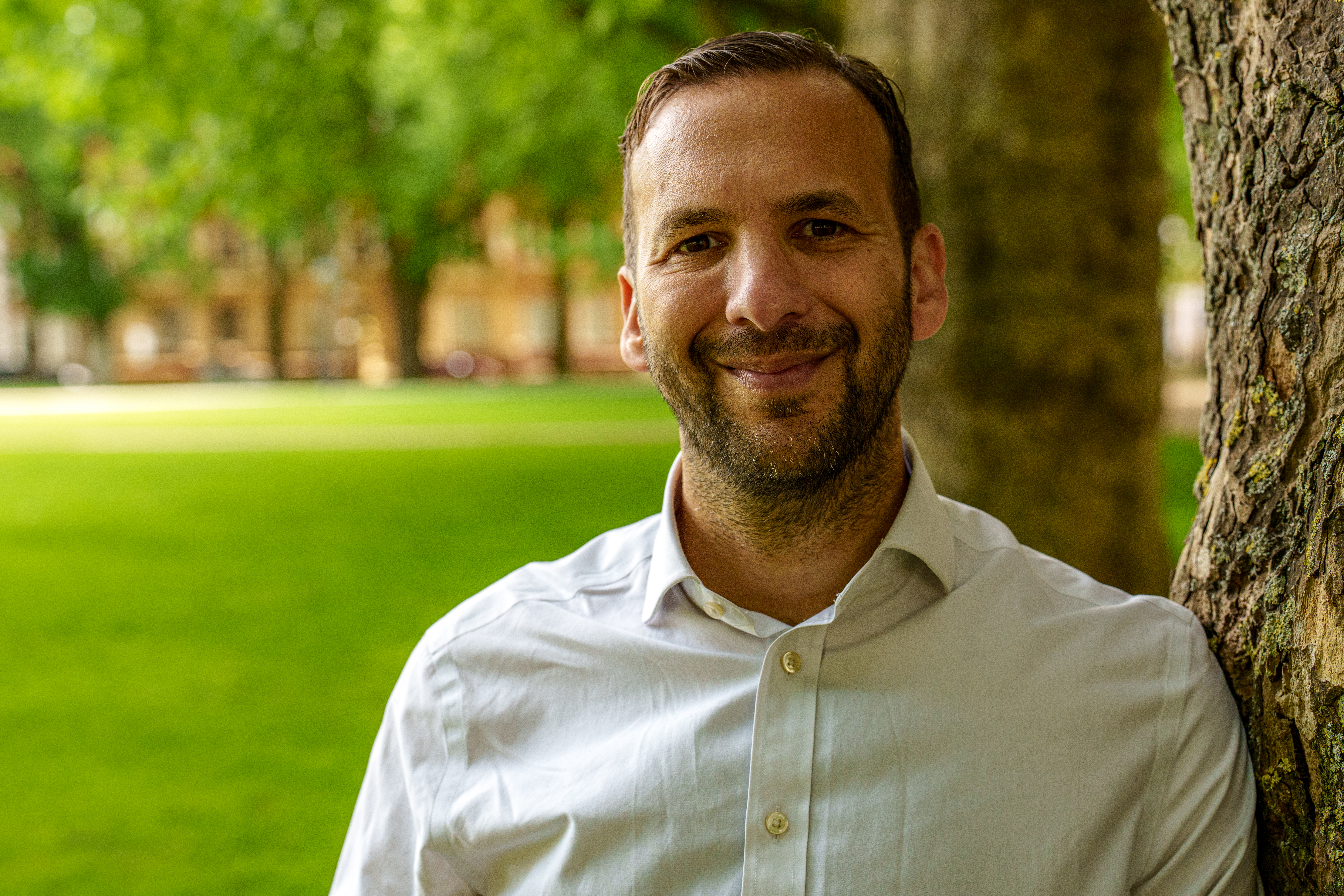
by Rob Hawkes
The Green Party of England and Wales is attracting new members in unprecedented numbers and achieving polling percentages that would have seemed impossible a year ago. However, tensions are building behind the scenes over the party’s economic programme. On December 12, 2025, just over 3 months since Zack Polanski’s election as party leader – the event responsible for the Greens’ surging popularity – Bloomberg reported on the impending launch of a new economic think tank named Verdant, a move motivated by the need to “convince voters” that the Green Party “can produce credible economic policy,” and described elsewhere as an effort to rein in Polanski’s radical economic vision. As Aaron Teater recently observed in the New Statesman, Polanski’s economic arguments sound “a lot like Modern Monetary Theory (MMT).” For some, this is reason enough to celebrate Verdant as a necessary effort to dissuade the Green leader from further upsetting the infinitely wise protectors of all things good (otherwise known as bond traders). Other voices on the Marxist left of the Green Party dismiss MMT as a distraction from the task of challenging the widening inequalities and imbalances of class power in our society. Beyond these disagreements, a new framework we in the Money on the Left collective call Democratic Public Finance (DPF) stands ready to defend, recast, and extend the fresh economic thinking that continues to gather new supporters to Polanski’s “Bold Politics”. DPF takes us beyond questions such as “do we have enough fiscal space to fund green energy or to solve the crisis in higher education?” Instead, it asks: How can we empower local governments and universities to prioritise ecosocial justice and sustainability by redesigning money creation, underscoring their roles as allocators of public credit?
It is hardly surprising that Polanski faces resistance both within and beyond his own party; it has been clear from the start of his leadership that he rejects the narrow terms of the economic debate that have dominated British politics for over four decades (and have patently failed to deliver widespread and sustainable prosperity). On the day he was elected leader in September, Polanski appeared on the BBC’s Newsnight programme and it was quickly suggested that his party’s spending plans might “frighten” the financial markets “to death” (continuing a long-held journalistic tradition of imagining City financiers as a collection of Scooby-Doos reacting to fancy-dress monsters, not a self-interested group exerting anti-democratic pressure on politicians). In response, Polanski spoke of the need to “destroy this myth that a national economy is anything like a household budget” and added that “this idea that we need to balance the books… has come from decades of Tory and Labour politicians that have been pushing an austerity narrative.” In the course of the interview, he went on to assert: “We don’t need to borrow, we don’t need to tax and spend. We need to spend and tax,” deliberately evoking MMT’s understanding of public spending, whereby money issuance by the state logically precedes revenue (indeed, the word revenue comes from the French verb meaning “to return,” so taxation is in this sense less a case of “return to sender” than of “return to spender”).
Outside the bubble of mainstream political and economic discourse, then, it is well-established among heterodox economists, including MMT scholars, that the UK government spends through acts of public money creation and, therefore, that finding the money to fund public services is not the issue the vast majority of politicians, journalists, and their audiences imagine it to be. Margaret Thatcher’s infamous inversion of reality, “There is no such thing as public money; there is only taxpayers’ money,” could not be further from the truth. To anyone still steeped in the Thatcherite dogma that continues to impose false limits on the political debate and on democratic possibility in the UK, however, Polanski has been speaking a different language. Indeed, his election as Green Party leader may present the first genuine challenge to the economic orthodoxy from a major UK politician since Thatcher’s 1980s. Nevertheless, achieving the Green Party’s vision of a fair, democratic, inclusive, and sustainable society will require us to move beyond the talking points around debt and inflation according to which MMT is regularly pigeonholed by UK commentators such as Richard Murphy, and which fail to ask more searching questions about who creates money and for what purposes. Now is the time to bring Democratic Public Finance (DPF), which, as we explain here, “builds on MMT’s insights but pushes further,” to the forefront of the debate in the UK. This approach “redefines politics as the process of coordinating our abundant human and material resources within ecological limits, rather than exploitative competition for scarce funds” and reclaims “money as a contestable form of collective organization”.
On Newsnight, Polanski affirmed that “the idea that we need to worry about what the markets do… is just a fundamental inaccuracy at the very beginning of this conversation… I think we need to have a really nuanced conversation in this country about the national economy that breaks through some of these old myths.” The right-wing press has, of course, been quick to dismiss the Green leader’s “fantasy economics,” and the self-styled sensible centrist Rory Stewart recently professed to being “horrified beyond belief” by his economic views. Amidst this noise, we cannot afford to squander the opportunity to have the nuanced conversation about economics that Polanski calls for. However, public discussions of MMT frequently overlook the much deeper stakes that its arguments reveal, stakes that must now move to the front and centre of the struggle for a sustainable future. Indeed, against the backdrop of soaring inequality and the undeniable threat of climate catastrophe, influential voices within the Greens are now curiously aligned with those to the party’s right who wish to see its project fail altogether. Both groups seek to uphold the economic orthodoxy’s view of money as necessarily scarce, private, and thus irretrievably exclusionary. Meanwhile, DPF emphasises that the ecological and social justice that the Green Party exists to strive towards cannot be founded on this failed monetary logic.
The orthodoxy, which we name Neoliberal Public Finance (NPF), treats money as a thing that we either have or don’t have, of which there is a finite “supply,” and which we can run out of if we are not careful. This puts money – and the processes and rules under which it is created, determining where and to whom it is allocated and how and when it is receivable – beyond the reach of political and democratic design. Why can commercial banks legally create money but not local councils or NHS trusts? Why can’t credit be extended to support essential green infrastructure while ecologically destructive profiteering gets the green light? Why do we account for public services as if they were burdensome costs and not the shared assets they are? Why can’t local experiments with currency creation help to connect capacities and needs where they are most urgent? How can continuing on a pathway to ecosystem collapse be deemed “affordable,” while measures to avert climate breakdown are framed as frivolous luxuries? And how did we ever come to regard the concept of “budget responsibility” as compatible with a society where children go hungry while billionaire wealth rises by £35 million each day?
Grace Blakeley, a vocal supporter of Zack Polanski’s leadership, concedes that MMT “largely describes the operation of fiscal and monetary policy correctly” but regards its insights as merely technocratic and thus irrelevant to the task of building “a democratic, popular movement, aimed at supporting people to take back control over their lives”. Meanwhile, Teater’s defence of Polanski’s MMT-inspired public statements emphasises once again that “taxpayers don’t fund the government; the government funds the taxpayers,” but then falls back on the notion that “maintaining market confidence” is a priority and suggests that this can and should be achieved by pursuing economic growth. Both Blakeley and Teater articulate something important about MMT and its relationship to Polanski’s economic vision, but both remain a crucial step away from DPF’s recognition of monetary design as itself a site of democratic struggle, where power is continually exerted and resisted, and where the fight for our most pressing ecological and social causes can and must be fought. In other words, Teater is right to frame fiscal policy as a question of mobilising resources just as Blakeley is right to view it as “a site of class struggle.” However, Teater relies on MMT’s language of monetary sovereignty, to which Polanski has himself occasionally appealed. For DPF, this limits all questions of democratic participation in the money system to the level of national government spending and shuts down the broader possibilities that a truly nuanced conversation about monetary design and its potential to advance ecosocial justice can open up. DPF shows us that the stifling of discussion about how money creation happens and how it could work differently serves the powerful just as well as the concept of “retail therapy,” or the myth of taxpayer money. As we affirm: “Money cannot be something we need to hoard to create a livable future. And it certainly cannot be scarce unless we make it so. Money is, instead, the world-making act of crediting those actors who construct the future.”
The Green Party already has a policy platform that chimes with the DPF approach, albeit in ways that are not yet fully or consciously vocalised. In its 2024 general election manifesto, for example, the party called for “the setting up of regional mutual banks to drive investment in decarbonisation and local economic sustainability by supporting investment in SMEs and community-owned enterprises and cooperatives.” Similarly, we argue for the creation of public banks that can extend credit to support communal and ecological needs (such as retrofitting housing, for instance), reframing such credit issuance in more responsible terms as grant-making as opposed to profiteering lending. The party also calls for public ownership of essential infrastructure such as transportation, water, and sustainable energy, as well as the extension of local democratic decision-making over issues such as housing and rent and the abolition of university tuition fees. As the Greens’ recent letter to the Chancellor of the Exchequer Rachel Reeves puts it: “It is a political choice to keep people in poverty whilst billionaire and multimillionaire wealth grows larger.” DPF helps us to see all of these matters not as questions involving the redistribution of a finite pool of monetary tokens, but as matters of systemic design that have been absent from our public debates and hidden from democratic scrutiny for decades. It is time to put money creation, monetary design, and democratic public finance at the centre of the conversation about how we collectively create and fund a livable future for all.
Before we complain that any political agenda might “frighten” the financial markets, we need to recognise that all markets are politically and legally constituted in the first place and that ceding power over our democracy to bond traders is a choice, not a necessity. Zack Polanski is right to highlight that the “need to balance the books” has provided successive governments with the apparently “credible” smokescreen for an austerity programme that has only driven ecological and social injustice, enriching the already wealthy while destroying our communities and the planet we call home. DPF helps us to see that “the books” are themselves part of a system we have designed and can design differently if we choose. As 2025 draws to a close, we should all be “horrified beyond belief,” but not by Polanski’s calls to think differently about “the markets”. What ought to “frighten” us all “to death” is the status quo. With Democratic Public Finance at the heart of a new, bold, green economic vision, Zack Polanski can deliver on his promise to bring hope back into British politics.

[…] Rob Hawkes’ argument for Democratic Public Finance clarifies what is at stake. The point is not to replace democratic struggle with institutional fine-tuning, but to recognize that monetary and fiscal arrangements are already designed and continuously redesigned—typically in ways insulated from scrutiny. As Hawkes puts it, orthodoxy places money beyond the reach of democratic design, even though “the books” belong to a system we have designed and can design differently. The wager is that institutional design must be treated as a site of democratic struggle rather than as the technocrats’ backstage. […]