Billy Saas and Scott Ferguson are joined by Will Beaman to discuss Money on the Left’s framework for what we call “Democratic Public Finance” (DPF). According to this paradigm, money is public credit, a capacious tool for mobilizing everyone’s capacities to meet our needs and build a desirable future. DPF redefines politics as the process of coordinating our abundant human and material resources within ecological limits, rather than as an austere and exploitative competition for scarce funds. With this, Money on the Left not only opens fresh horizons for left politics, but also directly challenges the fiscal sabotage routinely carried out by liberals, conservatives and the authoritarian right.
In conceptualizing DPF, Money on the Left builds on insights from Modern Monetary Theory (MMT); but we also push beyond MMT’s delimitation of public money creation to the alleged sovereignty of the nation-state. Contrary to conventional accounts of MMT, we insist that money is a public, contested, and inexhaustible institution that must be politicized and redesigned across all levels of governance.
During our discussion, our cohosts outline the approach to DPF presented in our recent long-form publication, “Democratic Public Finance: A Radical Vision for Mamdani’s New York City.” Along the way, we tease out key insights from myriad other contemporary works, which variously leverage DPF to challenge the second Trump administration’s authoritarian radicalization of neoliberal economics. Such texts include co-authored pieces such as “Blue Bonds: A Fiscal Strategy for Overcoming Trump 2.0,” “How the Zetro Card can Save New York City (Really),” and “It’s Time for Complimentary Currencies,” as well as writings by Will Beaman like “How to New York Times Proof Mamdani’s Playbook,” “Blue Bonds: Duck or Rabbit?,” and “The Case for Fiscal Insurgency.”
The conversation highlights the originality and urgency of Money on the Left’s core ideas for Democratic Public Finance. Since the discussion only scratches the surface of our writings, however, we encourage listeners to consult the linked publications above for a comprehensive engagement with DPF.
Visit our Patreon page here: https://www.patreon.com/MoLsuperstructure
Music by Nahneen Kula: www.nahneenkula.com
Transcript
This transcript has been edited for readability.
Scott Ferguson
Welcome everybody. I am Scott Ferguson and I am here with my co-host Billy Sass. Say hi, Billy.
Billy Saas
Hi, Billy.
Scott Ferguson
Nice. And our guest co-host today, Money on the Left’s own, Will Beaman.
Will Beaman
Hi, guys. How are you doing?
Scott Ferguson
As good as we can be, as good as we can be. So, we are convening today’s discussion primarily to update our listeners who maybe aren’t as online as the rest of us and maybe are not as aware of some of our publication work that we’ve been doing largely during the second Trump administration. We’ve been writing a lot. Will, in particular, has been writing a lot, and really pushing the boundaries of our paradigm and its stakes and its consequences.
We want to talk about some of these publications. I think, centrally, what we want to do — and I think it’s important to begin with — is discuss our rather lengthy new work that we published, titled “Democratic Public Finance A Radical Vision for Mamdani’s New York City.” After unpacking and situating this text, or maybe along the way, we can take detours. We can talk about some of the other writings that have surrounded this work or preceded this work.
To get us going, I’ll start by saying that Money on the Left has been developing, what I would say is, a unique but dependent paradigm, a way of approaching political economy from the point of view of certain foundational premises that we, as many people know, borrow from Modern Monetary Theory, as well as certain legal theories of money that often go under the heading of a constitutional approach to money, which was spearheaded by Christine Desan, who we’ve interviewed on this podcast in the past. I think a lot of people think of us as the MMT podcast or an MMT podcast. I think there actually is a podcast called the MMT podcast.
Will Beaman
Yeah, we don’t want to get sued.
Scott Ferguson
Yeah, yeah. We’re not that one.
Billy Saas
Would they sue us?
Scott Ferguson
I don’t know. I think we’re friends. Anyway, even though we draw on these other paradigms in many ways in solidarity with them, and we might consider ourselves as being part of them, we also have developed our own approach. It felt like there are certain kinds of assumptions and other limitations in these paradigms that we feel don’t go far enough. So, we come in peace. We’ve tried to expand, to speculate, to draw out further conclusions, to iron out certain contradictions in these other paradigms and essentially, we’ve been working on our own formulation. We all have been doing so separately and in collaboration in things like peer reviewed articles and blog posts and interviews and podcasts and all kinds of media.
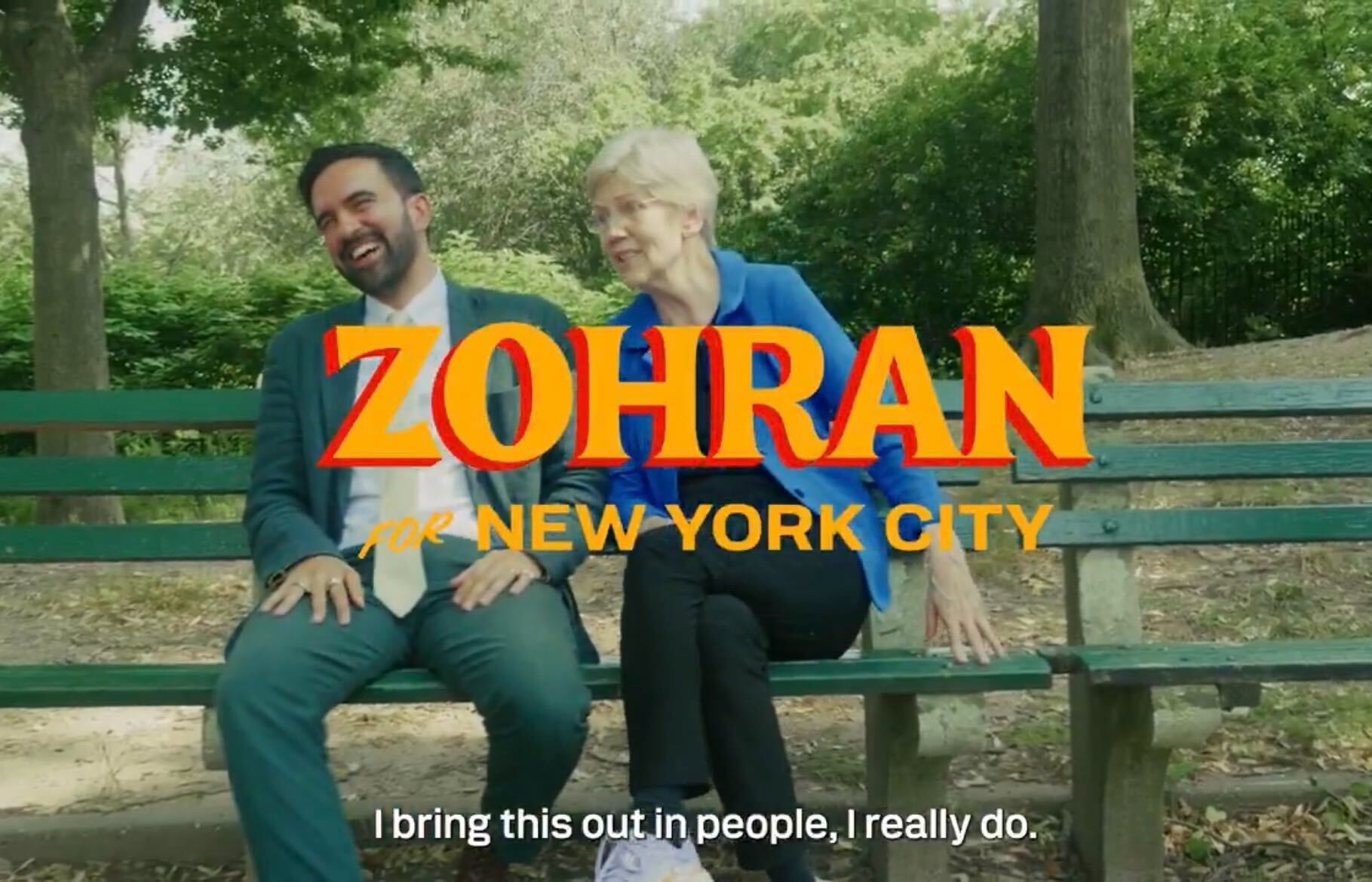
But, I’d say that we don’t really have a user-friendly long form statement that just lays out the basic assumptions and our document that was published on October 10th of 2025, “Democratic Public Finance: A Radical Vision for Mamdani’s New York City” does precisely that. On the one hand, it is a strategic document that’s aimed at this particular moment, at a threshold moment where we think and we hope that Zoran Mamdani becomes the mayor of New York City.
He is still a candidate, but we wrote this document in such a way that it would be addressed to Mamdani’s mayorship. So, we’re framing this in terms of a very exciting candidacy, a very exciting moment when a democratic socialist is hopefully and probably going to be elected to this office and thinking about what he can do to help fulfill his own promises that he’s making to the city, especially when it comes to fiscal policy. But it’s a double document because it also serves as a State of the Union address for us and just laying this paradigm that we’ve been working on for years and years and years. With that in mind, where do we want to start?
Will Beaman
Well, I think maybe one place to start would be a kind of a familiar distinction that MMTers are all too familiar with, which is between Modern Monetary Theory and the neoclassical paradigm. In this document, we mobilize and extend that distinction to problems and logics of governance.
There are two poles, or co-present impulses that animate and inform governance that we name, neoliberal public finance (NPF) and democratic public finance (DPF). Part of the strategy of this document is trying to not just tease out the limitations of neoliberal public finance and the possibilities of democratic public finance, but to expand both in such a way that they can speak to and be located in rhetorics that the Mamdani campaign has variously used. One thing that we talk about in this document a lot as part of the frame is, no, Mamdani is not going out there saying “money is a boundless public utility and the idea that we need to raise taxes in order to do things is bullshit.” There are nevertheless surpluses of possibility and opportunity in a lot of the framings that he does. In a lot of ways, the DPF and NPF framing is a little bit of a code that we try to use to decode the present.
We could say some things about the nature of the kinds of recommendations that we make with this democratic public financing framework. There’s no greater lesson in the past than realizing you’ve stumbled into fascism. This is not a new insight. It is a constantly expanding and accreting insight that neoliberalism got us here. But there are certain ways that the moves and the playbook of the Trump administration via the shakedowns of public institutions, the withholding of funds — whether that’s illegally impounding them or threatening to do so, which has a similar effect — or it is stalling and slow walking government.
As we record this the Trump administration is withholding Supplemental Nutrition Assistance Program (SNAP) food provisioning as a means to try to pressure Democrats to stop the shutdown. All of these moves are part of a playbook of authoritarian consolidation, certainly. But the building blocks of this playbook are in some ways thoroughly neoliberal. We’ve been acculturated already into a kind of learned helplessness in the face of whatever comes down the pipe economically and so neoliberal governance or neoliberalism is already recast governance as the administration of difficult choices and austerity.
The acquisition of funds has been used for quite some time in order to manufacture crises of electability. We hear this happening in The New York Times with Mamdani. Things like, “You know, it’s good. But what if he can’t? What if he can’t convince Albany to tax the rich,” and all these kinds of things that are staging the acquisition of funds as a train that’s coming towards us. But with Trump, the mask has slipped. What we’re seeing is that the Trump administration is hijacking and choreographing with the governing habits and conventional wisdom of neoliberal public finance as a paradigm. While it’s sort of an exhausted question of, “are we still under neoliberalism or is this fascism?” but part of what I think comes out of this is that there are neoliberal habits of thought that are being enlisted by fascism. Rather than a vocal answer of whether this is fascism or whether this is neoliberalism, it’s the dynamic between them that matters. For that reason, we see all kinds of opportunities for other logics that this document tries to open up and explore.
Scott Ferguson
I think this is a great moment to kind of step back and talk about one of the fundamental premises and differences of, what I would call, our paradigm in relationship to, let’s say, the standard articulation of Modern Monetary Theory. We know that Modern Monetary Theory has opened up all kinds of possibilities in our thinking in the collective imagination. It’s been widely popularized, obviously. At the present moment, it is not ascendant because it has been largely blamed for the so-called inflation that we’ve been experiencing, which, of course, is a reading we would utterly reject. But despite these openings there are certain tensions and even contradictions within the original paradigm, which, I just want to say, the original paradigm of MMT is not even stable.
If you’re reading Warren Mosler’s version, it’s going to look different than Stephanie Kelton’s version, which is going to look different than Bill Mitchell’s version, and so on and so on. It’s not to say that there is one absolutely airtight MMT 101 paradigm, but nevertheless, part of that MMT 101 paradigm is a commitment to a notion of sovereignty and, what they call, monetary sovereignty. What this does is relegate the power of money creation to a singular entity, at least within a given political domain that is usually called the government or the state. I think it had more historical purchase when MMT was being developed and being popularized under the Obama administration, for example, when most of the fights were happening at the federal level, and there were questions of bailouts for the financial sector. “What are we going to do with Main Street? Are we going to do the same for Main Street as we’re doing for Wall Street?” The answer was no.
The way that the monetary sovereignty framework was articulated made sense. The political climate at the time made it easy to ignore or to not see the limitations of that framework. I’m not saying that one couldn’t or shouldn’t have found the problems with the framework before, but I do think that the political situation has forced us into thinking further. The limitations of the framework are precisely its need to relegate monetary creation powers and the possibilities of democratizing money creation to only one entity, the state at the federal level or at the highest level.
What ends up happening in MMT 101 discourse is that everybody else, all other institutions are treated as money users. Money users have to just recycle the finite funds that the government has made available. Not only does this disempower a politics of monetary creation at all other levels, both sub federal and supra federal, like internationally, not only does it incapacitate monetary politics at all those other levels, but there’s also kind of a contradiction within MMT in order to maintain this notion of monetary sovereignty.
I’ll just try to quickly spell it out for the Modern Monetary Theory 101 paradigm, which comes out of the post Keynesian school in part, is the assumption that money is endogenous, which means it is created in the form of credit and debt out of thin air, but not just by anybody, but by powerful institutions that proceed from the public sector.
These powers are delegated out to the private sector. So, banks create credit out of thin air because they’re empowered by the state to do so. The state does so because it holds the power to do so. So, there’s this commitment to the idea that all money is endogenous. It’s all created out of thin air by institutions with the power to do so.
Great. But then if that’s the assumption, if that’s the truth, then why suddenly turn around and say “No, no, no, no, no. It’s only the federal government that can do this,” even though you, on the other page of your text, have told us that everybody does this, and you’ve certainly said this about private banks. I think what we’ve been up to is actually ironing out some of the contradictions in most articulations of MMT 101 and saying, “no, let’s take endogenous money seriously.” If it’s really endogenous all the time and it’s never finite value circulating, or it’s never an expression of the commodity form. If it’s always institutional endogenous money, then that means that money is not relegated to the function of sovereignty.
This is not to say that money isn’t a function of power. Of course it is. This is not to say that there aren’t degrees and qualities of monetary creation powers. Of course there are. But let’s stop disempowering all these other levels of governance, all these other institutions that not only could be creating money, but I would argue, they are. I would argue that states and municipalities in the United States, when they spend they are creating money. When they tax, they are taxing and buttressing the taxation power of the whole system of the dollar. They’re not mere recyclers of a finite thing. That doesn’t ever happen according to our point of view.
From that fundamental tweak and ironing out of this tension or contradiction in MMT 101, it opens up all of these possibilities for us, not just for monetary politics or monetary design in a kind of narrow sense of political economy, but also in terms of analysis of history, of political fights, of coalition building, of coalition breaking, of enduring questions and critical theory, whether that’s about aesthetics or any number of questions.
For us, we agree that money is publicly founded, it’s institutional and it’s endogenous. Let’s take that seriously and stop constraining money under the sole authority of sovereignty. In doing so, suddenly we have this wide-open field of possibilities and a wide-open field of possibilities that we would argue are vital and critical for combating authoritarianism and fascism in the United States and around the world.
Will Beaman
That’s really well said. I would add, we’re certainly not denying the importance of grappling and contending with power and authority, but in a lot of ways, what we’re arguing for is to not take power at its word as to who participates in it and who doesn’t and where agency is located and where agency is not located. When you set up these really hard binaries between who has agency and who doesn’t under “XYZ” objective conditions, and the idea of sovereignty is the epitome of this because it means exception. Exception from an overall lack of agency. The one who acts rather than the one who receives.That’s going to come back in this discussion, I think, because one of our re-framings of MMT is taking seriously reception as a point of agency too and the typical MMT story of fiscal circuits of money being spent into existence and then taxed not as functions of sovereign power, but as choreographies of issuance and reception that unfold along a lot of different contested institutions.
But just to tie this back to this critique of neoliberal public finance and the way that it establishes or to use a more phallic sovereignty metaphor, erects certain nodes or choke points or key events at which the left or liberals or the left liberal coalition has an opportunity or a window to provision society. However, it turns on whether or not we get the taxpayer to say yes or, whether or not the economy as it’s construed as a sublime external force says yes. This is not unique to MMT either. On the Superstructure podcast years ago, we were critiquing debates that were happening in the early 2020s about which theory of change is correct, as if there’s a single answer. As if change doesn’t unfold through multiple theories. Likewise, I think that the MMT’s insistence that we have this empowering mapping of where power is located and “look, at the places where it is located, it can take care of everyone.”
Nevertheless, we end up bringing back in this sort of logic of deferring possibility to the outcome of a rigged game, basically. It didn’t feel as much like a rigged game when it was 2021 and Biden seems to be a decent president compared to what I think many in the Sanders and Warren camps were expecting. But to your point, Scott, in this moment, deferral is really not an option. We also see political evidence all around us that there’s a massive appetite for politics that does not defer to some moment after the midterms or after 2028.
Billy Saas
Well, there’s something there to say about that. While it’s very exciting to consider this alongside the great success and momentum of the Mamdani campaign, there’s a certain extent of the deferral of possibility that we can also locate and attach to an electoral politics. We’re waiting for accommodation of these views by candidates and eventually people who hold office confronted, almost inevitably — and we hope not this time — by a kind of rhetoric of pragmatism and the inevitability of shedding possibility through the process of lawmaking and presiding and what democratic public finance also enables us to do is to look at those smaller scale avowedly non sovereign. There is no, or typically not, an army or an armed force behind the creation and circulation of complementary currencies within communities and so helping us at the same time as we encourage and continue to participate in a our own kind of realist way with electoral politics, we also look at and get excited about smaller scale interventions from the bottom up.
That is, I think, ultimately what small “d” democrats, people who believe in democratic politics and governance, where we can almost immediately locate our agency and opportunities for participation. So, at the same time as there’s a kind of narrowing function of neoliberal public finance, everything leads to the decision of the sovereign. The sovereign is never going to accommodate, never really going to give grace, or maybe rarely and in limited form. Democratic public finance gives us a much broader path with many more forks and possibilities.
Scott Ferguson
That’s right, that’s right. I’m going to read a little bit of the intro. This isn’t the exact beginning of the text, but just to give a flavor of the text, and we will obviously provide links in the show notes for all of our listeners who haven’t been tracking our website, but largely interface with us through their ears. Here it goes:
“This document argues that building a just future requires shifting from the reigning ideology of Neoliberal Public Finance (NPF) to Democratic Public Finance (DPF). NPF constrains democratic possibilities by perpetuating the idea that money is always private, uncontrollable, and scarce. If money is scarce, so too are housing or jobs. NPF seems natural and almost unassailable, both as law and as a mode of framing collective life. It underwrites the neoliberal habit of acquiescence, which trains politicians and publics to treat fiscal sabotage as an impersonal event to be managed, not contested.
DPF, by contrast, asserts that money is an unlimited and disputable public good which can always be reorganized to serve people and the environment.”
And recall here that’s “reorganize,” not finding the money to spend for your big-ticket items.
“For DPF, money is an inexhaustible institution, involving an always ongoing and deeply public process through which societies mobilize their capacities and create their future. Imagine a city where public banks extend zero-interest credit to retrofit housing, or where a Job Guarantee program is financed through democratic credit issuance. This is the vision of DPF: not scarcity, but capacity; not limits, but collective potential.”
So that’s a nice and relatively coherent and powerful articulation of this contrast that we’re setting up. The document goes on to talk about the ways that we break up different aspects of democratic public finance as an alternative to neoliberal public finance and those four — what we call — strategic areas. Of course, they’re all connected. Just for the sake of writing, conceptualizing, and talking about politicizing, we name these four strategic areas. One more thing I’ll say is that each area is, at least from a conventional point of view, potentially more challenging than the next.
Now, ideological conditions could shift in what counts as the most challenging. But at the present moment, we conceive of these being ranked in order of the easiest to pursue to the hardest to pursue. So, number one is “Reframing Debt Issuance and Taxation” according to the paradigm of democratic public finance. So, all that’s doing is pointing out that these tools that everybody knows about, nobody’s arguing about whether New York City or Minneapolis, or a small county in Nevada, taxes or issues debt. They all do it. It’s a question of what it means and what are the politics surrounding it and what really are questions of responsibility and risk around these instruments. Our argument would be: that needs to be rethought and reframed.
The second category is “Mobilizing People Differently: Public Sector Expansion, the Public School System, and the Multiplicity of Credits.” This is where we talk about how monetary credits across scales of different degrees of receivability, capacity, and power are always being used in all kinds of ways to mobilize people. This is the case for airline miles. This is the case for Starbucks gift cards. This is the case for municipal fiscal policy. It’s happening all the time. But we’re suggesting that the public sector needs to get creative about the way that it actually designs systems of accreditation or of crediting that may not entirely be about high powered dollars, but nevertheless have strong, democratic, supportive, caring capacities that can work in tandem with fights over the spending, but more specifically, design and creation of high powered dollars.
Then we have category three: “Creating Public Banking and Payments Infrastructure.” We, at Money on the Left, clearly have investments in a major public banking initiative and legislation at the federal level, and also democratizing our payment system as well at the federal level. But you don’t have to just do it at the federal level. You can do it at the state level. You can also do it at the city level and at the municipal level. We’re moving into even more active, high-power dollar design, with category three.
Category four is arguably the most challenging and that is actually: “Challenging the Deep Structure of Neoliberal Finance in Municipal, State & Federal Law.” This is us, in a way, taking our advance on MMT to the maximal level. So, I would say most of the time, MMT 101 discourse tends to take the design of the current system more or less for granted and sometimes this comes out in tropes that have been questioned within the MMT 101 movement. But there are framings like, “oh, we’re just describing what exists. We’re not saying we need a new system. We’re just telling you how it works, and you can use this system if you know how it works, you can use it for other purposes and you can do nice things with it.” Whereas we want to say, “no, no, no, there are design trajectories and constraints that are built into the system that should not be there.”
The Constitution of the United States should not forbid sub-federal entities from creating money. That’s anti-democratic. It’s especially anti-democratic because the same federal legal structure allows for private institutions to create private credit all over these municipalities. Right? So, you’re licensing and enabling private creditors, you’re disabling public creditors. I would also say that that language in the Constitution is false, because I would say that public institutions at the federal level do actually circulate credit. They do that all the time in all kinds of different forms. So even though you might say, “oh, well, it’s against the law for a state to issue credit or to create money,” I would say they do it all the time. This is a controversial claim, but nevertheless, I think this is our position.
This fourth section is really about getting at those deep legal structures and saying those are social constructs. They were social constructs that were constructed out of struggles for power. If the left wants to really, really, really revolutionize the system and create conditions of possibility that are going to allow for genuine democracy and collective caretaking and contestation, you have to go after these deep legal structures. So, that’s the four areas. I don’t know if you all want to start with one and move toward four. Where do we want to go from here?
Billy Saas
Maybe we can move into discussion of each of them through reference to Will’s prolific article and commentary. Maybe we could pivot to that.
Will Beaman
So, I will say that because everything that we do is a collective project. All of this that we’re talking about in this document has been showing up in what I’ve been writing and, to some extent, vice versa. That’s just how collectivity works. But I would say that my madness at the beginning of the summer started with being, honestly, hypnotized by the rhetoric and communication and sophisticated aesthetic forms of the Mamdani campaign.
One of the first pieces that I wrote this summer about that, “How to New York Times-proof the Mamdani Campaign,” was, in a lot of ways, taking up the theme in the first section: capacity being where we should focus our analysis rather than on the amount of dollars that are located here and there and need to be gathered. That, of course, is very MMT 101. If you have the real resources you can afford it and money is just a unit of account. But I think there are ways of describing capacity as a process of humanization that are less developed but present everywhere. This is something that I think the Mamdani campaign does really, really well.
In that particular piece, I talked about an ad that he did after he won the Democratic primary, where he sort of broke down all of the different demographic cultural, geographic, you name it, components of his victory. In doing so, he was able to not just — refute is not even the right word because it was so much more profound than that — reframe Beltway pundit conversation about the conventional horizons of possibility for this or that kind of politics with this or that group of voters or voters in general, but also getting away from that very macro and reductive caricature of what is politically possible and what is considered fringe to voters as a bloc.
This video that Mamdani did basically answered in a different way how he paid for it. How did he pay for the win? This opened up another theme that I was sort of thinking about and exploring this summer, which is that, a campaign sits in a sort of a liminal space that it often occupies in our own kind of mapping of things. It’s outside of politics. Right? It’s the stuff that happens before you’re in power, so it doesn’t really count. It also is largely volunteer work. It’s off the books. It’s not part of the economy either and yet it’s a massive logistical operation with a history and with capacities. A successful campaign does what successful fiscal authority does, which is creatively reread public capacities. I drew an analogy in that piece between the way that he was talking about and breaking down the various public capacities that paid for his win. What if this was extended to how he spoke about fiscal policy through governance? This is something that, to a certain extent, we can see traces of what both he and, frankly, lots of politicians are doing already.
We want to affirm that and highlight it and connect it to a project of giving that kind of rhetoric it’s due in fiscal terms. Something that I have not yet been able to write about, because I’m now fighting for my life and my doctoral program, is a lot of his videos since then. This is drawing on my past experiences in Scott’s Film and Media Studies MA program. I’ve been hypnotized in a very similar way by how he uses the close up in this series that he’s been doing, where he tells stories of famous New Yorkers and he tells them in close up, and they often are individuals who, in this or that way, are marginalized. But the close up, as we, in film studies, know from a long tradition of writing about the humanizing qualities of the close up and of photography, has this ability to cut through preconceived reductive notions that we have about people. The close up confers dignity as well as opacity and mystery and complexity on to individuals and onto people who we otherwise think of as individuals, or we think of them as part of a group or whatever.
In an interdependent world, there are so many things that we can say about ourselves and about others. There’s this tradition in our cinema of using the close up to open up complexity rather than close it. In light of this kind of conversation about real capacity, I thought, this visual language that he’s using is light years ahead of the kinds of rhetoric that we’re used to hearing and participating in about how many hard-working Americans there are in this country. The kind of nascent or underdeveloped ways of talking about economic capacity and, in this way also, I think, because we do come from a humanities tradition, there is a skepticism that we have about enlisting people as parts of a top-down notion of capacity. It’s something we have been in group therapy for several years. Saying, “well, you’re an economic asset,” as if to reduce.
In so much of Mamdani rhetoric, by focusing in the visual language of the eye contact and the close up and the storytelling and the way that he tells another person’s story, both you and that person, because the direct address in these close ups is ambiguous, he does so as the government or as a public representative. Talk about transcending the confessional mode. To me it has been opening up a world of thinking about all the different ways that we already humanize people in visual and aesthetic and rhetorical forms and how tragically disconnected that often is from the language that we use to talk about what we can do as a city. Or what we can do as a society and a culture in ways that interface directly with fiscal politics? That’s one throughline that shows up also in this document that we all collectively worked on, which says basically, it’s the capacity that you need to pay attention to.
We already build the city every day. We don’t need a permission slip from somebody who sees themselves in mutually exclusive terms as the taxpayer, or the benevolent billionaire who will create jobs, but only if you’re not rude. We don’t need to route our own self-understanding through those dehumanizing prisms and chokepoints.
A big part of the first section that’s really important to me is identifying within Mamdani’s own rhetoric both ways that he’s already talking about capacity that shift the conversation away intuitively from “how are you going to pay for it?” because once you’ve done an entire campaign talking about all the ways that something is physically and materially and socially, culturally, etc. possible to do, then for “how you pay for it?” to come in at the 11th hour reads as more transparently sabotage than it does in the kind of current neoliberal mode of politics where we take it for granted that “how you pay for it monetarily” is basically a proxy for how you pay for it materially, because all material things have to be paid for, therefore, paying for something monetarily is basically just another way of saying, “can we do this?” And the answer then is always “no,” because Albany says no.
Scott Ferguson
Another part of what you’re talking about that I find to be so powerful, and it is something that is in Mamdani’s rhetoric and with even further amplification and connecting it to fiscal politics, can be just so vital, is really revaluing people. In this case, in New York City, people that are currently — under the neoliberal order and the fascist neoliberal order — seen as liabilities, as drains on the system as they drain away our tax dollars by using their SNAP benefits. Instead, seeing our community members who might be struggling with employment or who might be struggling with finding a secure home, revaluing them as assets that are not being utilized. Seeing them as qualitatively rich, interesting community members that we’re just abandoning and we’re failing to value.
To be honest, I would say that’s even latent in MMT 101 as well. I think the way that Mamdani is using his communication strategies, his rhetoric and his policy framings is pushing us more in that direction. Now, I want to leave to another related topic in which I would say, at least on the face of it, it’s less of an analogy to money, but it’s Mamdani getting closer and closer to money. Now, I don’t think any of us think that “there’s money in itself and then there’s other things that are not money.” You know, we understand that sort of everything is money. Nevertheless, right over the summer and into the fall, Mamdani has been using certain proto or just straight up monetary designs in order to mobilize people. One of them is something called the Zetro card. Does somebody want to unpack the Zetro card and what he’s been doing with the Zetro card?
Will Beaman
Sure. We wrote another piece at some point in the past few weeks about that, which was sort of a tongue in cheek, a serious / not serious / but actually serious piece saying that the Zetro card could be scaled up and used to save New York City.
And what is the Zetro card? It began early in the campaign. It’s a very playful punch card that is obviously a pun on the Metro card, but with Z for Zoran, and this is a kind of an interesting detail of it. It emerged as a way for the campaign to sell merch beyond their legal allowance to do so. What this was was if you participate in canvasses and phone banks and whatever, the Zetro credits are issued and you can trade those in for posters and and merchandise, and it’s such a great example of what we’ve been calling a duck rabbit problem, named after the famous optical illusion from like 100 years ago. It is that image where you look and ask if it is a duck or is it a rabbit? It depends on which you see first, but after you see one, you probably are then going to see the other and then you can see both. It’s such a great figure for this paradigm, where, on the one hand, this is a punch card and this is just moving posters. Who cares? It’s playful and it’s fun. But on the other hand, it does have all the elements of the entire thing that we’re pitching already in miniature, right? Right down to the fact that it began as a creative workaround to legal limits.
Also, I think it exploits, in a good way, the category error that something being part of a campaign does for people, where you hear, “Well, it’s not real though, so why would we even scrutinize this?” That cuts both ways, right? Like, we had a lot of people saying like, “dude, I’m pretty sure it’s just a punch card,” and fair enough. It is just a punch card. And yet it also is not right. You see the punch card, rabbit or you see the endogenous money duck.
Scott Ferguson
And, dude, those fed notes are just like pieces of paper.
Will Beaman
Yeah. It’s all just bitcoin. What we actually have is a fiscal circuit. That is, credit being issued and redeemed in order to provision work and mobilize capacity. What we talked about in that piece is we sort of mocked up what it might look like to continue the Zetro card as a campaign practice after the campaign is over.
This draws on legibilities like the Bernie Sanders campaign, which talked about campaigning as something that you do year-round. AOC talks about this as well. One of the reasons that she always performs so well in her district despite being probably the most caricatured and villainized politician in the country, is they never let up on the infrastructure of communication and engagement with their constituents, including but also beyond, of course, all the ways that you would help your constituents during your day job when you’re a politician. But they also never stopped canvassing. They never stopped campaigning. I would argue there is precedent for that. But we thought through what some sort of micro steps could be that are still in the realm of being playful. To be clear, fiscal policy should be playful.
How can we be playful until we pull the wool out from over their eyes? I could very easily imagine a lot of the organizations that make up the Mamdani coalition accepting Zetro credits in exchange for part or full payments of membership dues, of ways to deepen participation in an organization to get opportunities for speaking time at meetings, to gain access to certain leadership positions.
All of these, of course, raise all kinds of ethical dilemmas to work through, but these are the same ethical dilemmas that already exist in organizations, which is — it’s sort of is the classic problem — when you say that there’s that there’s no hierarchy, you leave it up to all the implicit hierarchies in the world to decide who gets access to what.
Who you know and who you have good credit with becomes a way of controlling and gatekeeping one’s way of relating to opportunity within an organization. This is similar to employment. We thought initially of some first steps that the Zetro card could take in coalition with partnering institutions.
One could also imagine worker-owned co-ops and restaurants and DSA bars that are frequented and run by members accepting these on a particular day and then that turns into a full-time thing and so on. But what’s really kind of interesting in thinking about this is that it can scale and it can keep scaling in very kind of non-linear and cascading and unpredictable ways, because if this were to become a very popular thing, one could imagine co-ops and unions and organization chapters and other campaigns, even, accepting Zetro credits and maybe issuing their own credits, which then can be accepted by the same organizations that accept Zetro credits. Right. Then all of this can eventually interface with the kind of longer-term legal changes and transformations that we’re trying to loosen the always loose and imperfect distinction between what is the official and the unofficial currency, because they’re predicated on a falsehood.
What does it mean to issue money versus just issue credit? What is a harmless gaming currency and what is shadow banking? All these things that are malleable, but that we’re used to thinking of their malleability as being a function of the fact that it’s the rich and the powerful who promote these things. The Zetro card is an ongoing campaign technology. I hope that it continues after the campaign ends, but it also is just an interesting kind of pedagogical thought experiment for thinking through and living and embodying this way of seeing fiscal policy.
It also is just so emblematic of Mamdani’s whole style, which is to introduce playfulness and games. We can talk about the famous scavenger hunt that he did in New York City as well. But these games that provision a campaign, they provision participation and nurture capacity and keep people limbered up and ready to get out to vote and ready to volunteer and keep those keep that muscle memory fresh.
Scott Ferguson
I think another thing that the Zetro card participates in and opens up is, what MMT discourse gets called, the hierarchy of money. The fact is that the campaign used higher power dollar credits, which they got through donations to pay vendors to make the merch. Then they’re redeeming the Zetro card credits by giving people this merch, but that merch wasn’t free. I think the lessons here are multiple. One is, for us, there’s no such thing as autonomous money. There’s no autonomy at the level of the so-called sovereign. There’s no autonomy at the level of a community currency or a Zetro card. It’s interdependence all the way up and down. So, get rid of the dream of autonomy, it doesn’t work.
Two, its lower-level credit is always participating in higher level credit and vice versa. Higher level just means more receivability, more, what we call liquidity, wider receivability and with that comes power. With that comes capacitation. But still the lower forms of credit are not nothing. I think we want to get past this idea that, “oh, well, at the end of the day, you know, what matters is real dollars, buy the merch and all this fuzzy, silly credit that’s being issued and redeemed to this Zetro card is a bunch of hot air, right?” Or it’s not really real, when in fact, no, that’s actually how the dollar system works all the time. It plays out through this interdependent hierarchy and those so-called lower-level orders are qualitatively different. But I would say they are just as important. They’re just as important. I mean, this was really noticeable in the 18th and 19th century when you had different banks issuing their own liabilities.
Then you would have all of these complicated payment schedules and redeemability. There would be charts that tell that the Bank of X’s notes are only worth this much when you go into that state. It was a total mess. But you had a sense that without your local bank that creates the credits, you’re fucked, right? Like those lower-level credits that might not be quite as stable are still your lifeblood. Coming back to all the activity that the Zetro card mobilizes in one of the most important cities on the planet, it is tremendous. So that lower-level credit is deeply, deeply meaningful. It’s political. It can be democratized. You can be creative with it, but not in a way that pretends that it’s somehow autonomous or that you don’t have to deal with those higher-level credit issues at the same time.
Will Beaman
That’s fantastic. One other thing that I would add before we move on is, I think that whether it’s the Zetro card or the scavenger hunt that Zoran did over the summer, I think we make a mistake if we make the sovereignty mistake. If we attribute these just to the charisma of Mamdani, or just to how infectious his smile is and all of that. In order for a smile to be infectious, we have to want to smile. It demonstrates that there is a deep capacity that that I suspect has a history of in politics that, for fiscal politics, politics of participation and circuits of coordinated activity in the public interest that are not on the rhythm of taxpayer funding showdowns and the impoundments of funds and what did Donald Trump say and how are the markets going to react to it? All that kind of stuff.
I think in a lot of ways, what Mamdani is recognizing is that there is an already existing desire for somebody to charismatically convene people to have fun. Something else that I’ve been writing about in the context of brat summer with the Kamala Harris campaign and Dark Brandon before that, the caricature of Biden, is that the coalition will come up with charisma for you even if you don’t have it. There are genres, and camp is a big one for moments when there’s a big gap between who the politician is and who you want them to be. There are genres that are rehearsed and practiced and that are activated again and again that signal and extend the charisma and the authority to convene people to politicians on the condition that they don’t suck. On the condition that they don’t betray the coalition. I think that this is what differentiates Mamdani, obviously, from Harris and Biden.
I think that Harris and Biden saw their star power as somehow a reflection on themselves, rather than as a long-cultivated expression and desire on the part of voters for a Dark Brandon or for a brat figure, or for any of these figures. So, I think that, were Mamdani to take this all for granted and pivot to the center, my hunch is that people would stop showing up for the scavenger hunts. I think that this provides an alternative framework in very rough, hand-wavy terms, to get at what I think sovereignty is always trying to get at, which is this authority as differentiation, as seeming ability to convene people. But if we misread that as power from outside society ordering society around, then we take for granted all the ongoing coordination and cooperation and fantasy and desire on the part of people that makes authority work. When we think in these terms, then we can see Trump’s fiscal politics as an extension of his whole persona, which is something that the far right has been rehearsing since Obama, or earlier than Obama. This desire for a sovereign for a Dirty Harry-type figure who’s going to be lawless and ruthless and hypocritical and all of that means, basically, that you’re going to be protected as a follower from being held accountable because you too are unaccountable.
That’s a certain form of governance and of authority, or a currency, if you will. But it’s not the only one. It’s actually really important to be attentive to it as a genre rather than as the new political world that we’re living in where everybody needs to copy Trump, which is, I think, how Gavin Newsom, for example, has read this moment. When we see these moments of a star just seemingly emerging out of nowhere as something more like a franchise that has been rehearsed from the bottom up or maybe we would say from the middle out, to be granted with conditions, or without conditions in the case of Trump, although I bet if Trump started to respect other people, the franchise would shut him down. There are even still conditions there too, right?
Scott Ferguson
Right. We should say just outright, his unaccountability is a collective project. It’s not coming from an autonomous place of absolute power that everybody just bends the knee to. It’s that there is a whole infrastructure of people and organizations who carry out that unaccountability collectively, because that’s what they want to happen. Right? It’s the same structure, but it’s just used for evil.
Will Beaman
In the context of a little experiment, like the scavenger hunt or the Zetro card or looking at a campaign and turnout as being like a miniature fiscal event or a miniature employment event, we can maybe think, or we can rethink a lot of the sovereignty-derived insights of MMT, like the finance franchise being an extension of sovereign power to banks from the fiscal authority.
If we see the fiscal authority itself not as a sovereign in itself, but as a collective public project, then we are able to see genres and forms of franchise as collective public projects as well. I think that that’s just another bridge that sort of allows us to do an end run around this whole thing and connect these seemingly nonpolitical or superfluous or silly campaign techniques before so-called power has been taken to governance and authority.
Billy Saas
I wanted to add that I think what the Trump constituency that was ready to realize the franchise was responding to is that he’s willing to hang out with them for extended periods of time and just shoot the bull for hours and hours at these campaigns. Maybe we can round out the conversation by coming to two of the more recent Vertical pieces, one of which very helpfully categorizes or names within the realm of democratic public finance what the Mamdani campaign is up to and what other campaigns and what other constituencies can aspire to, which is fiscal insurgency. This is a phrase that I like quite a lot and that captures and describes what we’ve been talking about. So, I wonder if we can talk a little bit about fiscal insurgency as a kind of broad framework within a framework. Maybe we can close out with a more recent piece on “The Paradox of Political Thrift” and maybe, not to game out Mamdani’s chances, but we can take stock of the scene and note all of the idiosyncrasies and exciting developments we can notice here in the end of October 2025.
Will Beaman
Yeah, absolutely. So that one is my term, but it expresses a lot of the same things that we are expressing in the DPF and NPF concepts in the “Mam-document” that we’ve been circulating. Listener, I want you to know that both of my co-hosts laughed, but they’re on mute.
Scott Ferguson
I’ve unmuted so I can guffaw audibly.
*laughs*
Will Beaman
Okay. Thank you. These [laughs] are my back pay. I’m playing with the idea of insurgency and occupation here. I mean, I’m not really playing with it. I’m obviously thinking about it for very reasonable reasons. Typically, we think of an insurgency as sort of a military term, and we often lose sight of what makes insurgent campaigns successful, whether they’re peaceful or not. To be absolutely clear, we are peaceful. We come in peace in all ways. It is a recognition that you have to be embedded in society, and you have to look to and lean upon infrastructures that already exist.
I think that what we have been articulating in the “Mam-document” and also in a lot of these other Vertical pieces and in this conversation, is that agency is actually all around us. If we take the neoliberals or the fascists at their word, that agency is over there, not over here — wherever “here” may be — then we end up being duped by a rigged playbook. So, in a context where Trump is threatening to impound funds or when the state of New York and Albany was, in a liberal idiom, threatening to withhold funds for Mamdani’s plans, it changes the entire dynamic of that situation. One could model and conduct and enact fiscal agency without routing it through these rigged choke points. Fiscal insurgency is my name for that. It’s ultimately a historical phenomenon that we see in places where, for political or for economic reasons too, like in the Great Depression, if credit is not available to employ people to keep patterned payments that stabilize social obligations moving, in those contexts, if all that dries up, people still need that and the fact that credit is endogenous comes out in all kinds of ways.
The Greenback, during the Civil War, was issued when private banks were unable and unwilling to finance the union’s survival and tax dollars were not enough, the Army was mobilized, and the war effort was mobilized with these things called Greenbacks. World War Two, we had a bond drive. In the Great Depression, we have all kinds of, so-called, low-level currencies that emerged as municipal notes. Before that, in the 19th century, banknotes were all over the place, some of them on a very crypto-style imaginary, being these entrepreneurial institutions on the literal frontier of American imperialism out West. There was a free banking movement. You also had lots of credit experiments and rhetorics of talking about money that were grappling with ethics and grappling with interdependence and grappling with real problems of liquidity being absent.
Fiscal insurgency is – and I’ll just I’ll quote from this from this piece here:
“Fiscal insurgency is not isolation. It is not about retreating into localism or walling off states from the national economy. It is about building protective circuits of credit that keep democratic life functioning even when sabotage is staged from above. Insulation means refusing to let billionaires or authoritarian actors dictate the terms of survival.”
I also think that this contrasts very sharply with Gavin Newsom. He’s a very mixed bag, and ultimately, a lot of the wavering on transphobia and on civil rights is disqualifying full stop, but Gavin Newsom has sort of become an early emblem of Democratic local electeds creatively resisting the Trump administration.
Pushing back on Trump’s redistricting is obviously good, but there is, I think, an overall vibe of countering Trump’s illegality with the same until he backs down. “We’re going to fight fire with fire identically.” A lot of the rhetoric that’s been coming out of Newsom’s office and among his boosters is throwing around ideas like “if we stop funding the federal government in order to teach the red states a lesson,” or proposing different versions of what they call a “soft secession.” As an aside, it’s mind boggling to me that you can talk about soft secession and not make as many waves as when you talk about creating credit. I should say ruffles as many feathers. I wish you could create waves talking about creating credit.
I think that this framework of fiscal insurgency refuses zero sum logics and doesn’t try to counteract them by saying, “well, actually, it’s the Trump administration who represents the welfare queens of society, which is all of the places in Appalachia and Mississippi who are voting for Trump, but if it weren’t for the taxpayers in California, they wouldn’t have jobs or health care.” The other thing that the idea of insurgency is sort of trying to answer is that — and this goes back to the scavenger hunt — it is possible to claim continuity and stability as a form of resistance. I think that the left’s playbook often, especially owing to a lot of inheritances from the Marxist tradition and the labor movement and all of that, has a very mixed legacy of both. I want to differentiate between instances that I think are not always differentiated between. There’s strikes and striking and the withholding of labor.
To be clear, I love a strike and support a strike. But there are also instances where workers have staged takeovers of factories, and they’ve done various things to keep the world running rather than stop it. I would want to trouble this binary between keeping the world running and stopping it anyway. Right now, we’re in the middle of a government shutdown that’s absolutely necessary in order to put pressure on the incentive structure of the Republican Party and the political infrastructure that supports it. There’s all kinds of reasons why strikes are incredibly effective in doing that, but when you import that logic to money and you think about, “well, our only tool in the toolkit must be to stop paying taxes, which fund all spending and bring everything to a halt,” you’re playing into the Trump playbook, which is showdowns. These are showdowns predicated on money being finite. I see opportunities and openings for a rhetoric of fiscal insurgency in the improvisations and coordinated efforts of blue state governors, but I also see neoliberal public finance present too.
That is my idea with the fiscal insurgency and maybe, Scott, if you want to tie that back to the Mamdani document before we go on to the other Vertical piece, I don’t want that to fall by the wayside.
Scott Ferguson
Yeah, I think that one of the things that this brings to mind is the multiple time horizons that we have in mind in structuring the “Mam-document,” which I’m just going to constantly say for eternity.
Will Beaman
The term is going to be in the show notes.
Scott Ferguson
Yeah. So, on the one hand, we offer strategies for immediate needs. In terms of legibility, those are the lowest hanging fruit, which would start with just reframing the function of taxation. There’s a massive tax the rich campaign in New York City, right now, and we support it. Every billionaire is a policy failure that remains true. Tax the hell out of them. In the short term, that is going to, as we can put it in a technical sense, increase your dollar balances, New York City. You can spend those high-powered dollars to build municipal grocery stores and make fast, free, and easily accessible buses and more.
In terms of bond issuance, we have something we haven’t talked about yet. Early on in this year, we were trying to think of immediate, legible fiscal strategies for resisting the Trump administration and resisting what was at that point, largely illegal impoundments that were cutting federal financing for vital services and institutions that help people live and work and have homes and eat and have health care. So, we proposed a bond drive to save democracy, and we called it and still are calling it blue bonds. A blue bonds bond drive. Blue for democratically controlled states because we associate the Democratic Party with the color blue. So, we’re calling them blue bonds for that reason.
Those are immediate strategies for getting high powered dollars into action to help people now. But we also have longer time horizons and more long-term strategies. One is challenging these fundamental laws, balanced budget amendments in state constitutions. When it comes to New York City, the so-called fiscal crisis of 1975, was one of the watersheds that ushers in the neoliberal era. It came along with a lot of new constrictive neoliberal fiscal laws about how much debt the city can issue in the future. All kinds of rules about budgeting to rein it in and keep it under control. Those rules were created by humans. They can be recreated by humans; they can be restructured by humans. But those are long term fights. They’re not going to be immediately legible to the public. But if you have a movement that is legible around, say, a Mamdani administration, then you imagine a way in which those long-term fights get introduced and become more and more exciting and more and more legible.
But there’s other long-term horizons that aren’t just about resistance but are about provisioning. This gets us back to area two, mobilizing people differently through creating credit at the sub federal level. We’ve been talking a lot about this at the level of the campaign, at the level of organizations. I love that you just passingly mentioned DSA bars that will create and redeem these credits, but we also have long term vital institutions in the city and everywhere else, quite frankly, that we can be reorganizing and thinking in terms of endogenous credit making. The big example that we give in the “Mam-document” is using the public school system.
So, the public school system is, in multiple senses, an accrediting institution. Students earn credits by going to school and by completing their schoolwork and by becoming educated. The schools themselves are a credit. They’re given credit to operate as schools by accrediting agencies that are themselves accredited by the government to be able to make those accrediting gestures in the first place.
There’s a whole hierarchy of crediting here, and you don’t need to build them from scratch. They’re already here. What happens if you start thinking more in terms of a public service economy and thinking about an end aim being something like a Green New Deal that has a public service component and a job guarantee at the heart of it.
So why not start in kindergarten? Why not start in first grade, second grade and start to do little baby steps here? Literally almost. Babies are almost literally baby steps toward public service. It’s not just a matter of providing institutional credit that isn’t dollars, but institutional credit for service labor. That’s going to benefit the school; benefit the society around the school, the neighborhoods around the school. It’s not just a matter of doing that, but it’s also a matter of being creative along the way. I love this, and this was not me. I didn’t come up with this. It was another member of our organization.
I love this example so much. So, the idea that we propose is this: you start a program where grade schoolers are helping to clean up their classrooms and their hallways. Right? And you know what? They already do this in Japan, and they probably do this in some places in the United States. But it’s not as routinized as it is in Japan. I’ve seen it with my own eyes. It’s incredible. Maybe the younger kids mostly take care of the immediate classroom and the hallways. But maybe the older kids are going off campus. They’re maintaining and beautifying the environment around their campus.
It doesn’t have to be just that. It can be any number of public service activities. I mean, it could be fun things. The sky’s the limit, right? But you’re providing various kinds of credit and that could be just your participation grade. It gets factored in your participation grade. Or it could be something more major, like, “here’s a certificate for a year’s worth of public service.” It could be any number of ways of accrediting and this such a cool idea as a specific idea, but as a model, it’s to me amazing.
So, if you’re having kids doing, let’s say, what might count as janitorial work, right? Well, then what’s going on with the janitorial staff on campus? Well, the janitorial staff are the experts. They know what cleaning products work on which surfaces. You might think Windex is a good idea, but actually this other scrub is a good idea and use this kind of rag because this other kind of rag isn’t going to work. They have expertise. Why don’t we enlist the janitorial staff as pedagogues, as teachers who can teach, who can teach and help supervise and orchestrate this kind of work. The next part we do with a nod to the Mamdani campaign which is promising to reclassify preschool teachers as teachers that will give them the dignity of a certain status with certain kinds of benefits. I don’t know the ins and outs of it; I just know the basic move that they’re trying to make. What if, as part of this reorganization of crediting public service work, we change the designation and give a new kind of credit to janitorial staff? Now the janitorial staff are teachers and maybe the culinary staff, like the people who work in the cafeteria, maybe they get to be pedagogues, too and they’re teaching. They’re teaching cooking and place setting and cleaning up after everybody dines. What does that do? That can raise the pay, that can create certain kinds of tenure benefits for janitorial and cooking staff.
Suddenly you’re conferring new kinds of dignity, new kinds of credit in an institution that’s already enduring and powerful that a lot of people in society really, really value. They value the fact that they have these public schools, which are free, and they can trust to send their children to even though we’re in the midst of them being increasingly defunded, etc.
So, what would it mean to build up a scenario like that? To be transvaluing the people who participate along the way and essentially recreating the class structure that’s built into our public school system at the present. Then we can start thinking about, “if we’re taxing, we’re issuing bonds, and what if we’re creating a public banking system and opening up our higher power dollar balances at the same time.” If we’re working on that horizon at the same time, then we could start talking about a job guarantee at the level of the city.
So maybe that starts out of the school system, as there’s a teen unemployment crisis around the country right now, and there’s definitely one in New York City that they’re very aware of. What if you start a pilot job guarantee for whoever qualifies as the most vulnerable of teens in New York City? You start there.
You see how it goes. Maybe there’s a path to post-graduation employment. Maybe that path is subsidized. Maybe it’s in the public sector. Maybe it’s with nonprofits, with the public sector, supplementing the salaries for a certain amount of time or in perpetuity for these jobs. Then from there, maybe you expand it to all teens, whatever it is, 16- to 18-year-olds, or whatever we want to decide it’s going to be. 16- to 18-year-olds in New York City are guaranteed a public job.
Then from there you start piloting, opening it up to more and more people and then once you’re really rolling, it becomes a citywide job guarantee organized toward the goals of social justice, inclusion, community building and green sustainability. To me, and I’m saying this because I didn’t write this part of the document, that is such a powerful vision of not just what’s possible, like in a particular sector, but for what’s possible in general.
I think what we were talking about before with the Zetro card and coalition credits is equally a part of this project. But I do think that the education model might speak or might light up imaginations for certain people precisely because these feel like long existing stable institutions can support it, without having to build it from the ground up. Not that I’m opposed to building from the ground up either.
Will Beaman
I’m salivating listening to that. That’s amazing. It occurs to me that this also resonates in a really interesting way with a theme of this campaign and the very contested discourse which is another institutional logic of carcerality and the way that a lot of how Mamdani has framed his reforms to the police state is in terms of, “well, police fight violent crime, they’re not they shouldn’t be social workers. That’s not fair to expect of them.” Of course, we should say that there’s tons of really important work and thinking and activism around creeping carceral logics that are present within the school system. So I don’t want to oppose them as institutions that are lived in, but the vision of schooling that you are referring to as one that views pedagogy in such a broad way that it enfolds a lot of work that people do as also being pedagogical work, sits alongside this other discourse that we’ve been having, which is how the solution to everything is to arrest people and put them in prisons. It’s interesting because I think this is another case where there’s sort of subtle discourse already happening about classification, which of course ties back to our earlier conversation about valuing assets and the dignity that attention to some of the pedagogy that everybody in a school setting is participating in, which is often subsumed or erased by this fraught and racialized imaginary of care work that is invisible, “but I don’t know who’s around my kids” and all of that kind of stuff. This is, to me, a different way of conceiving care as pedagogy, I love it. I’m all about it.
Scott Ferguson
We should probably also say something about, strategic area three of the document: “Creating Public Alternatives to Commercial Banking and Payments.” We are supporters of the public banking movement. We’ve been outspoken supporters at the federal level. Of The Public Banking Act. This kind of politics of public banking should be taken to the state or municipal level.
We’re not alone in this. There’s a whole public banking movement that also is interested in this as well. Connected to this is also developing a public payment system, what has been dubbed like a public Venmo. We’re really following a friend of the show, Robert Hockett, Cornell law professor who has worked with various politicians at the state level in New York and has written legislation that has not passed yet but has been proposed several times. So, we’re really piggybacking on Hackett’s work and all the supporters of Hackett’s work to create public banking and to create these public payment systems. In the research that we did, it seems like even though this was all proposed at the state level. By the way, Mamdani has, as an official, supported those. This is not news to Mamdani.
Will Beaman
The horizon of it might be news, the horizon that we want to do and how it leads to a complementary currency and all of that.
Scott Ferguson
Yeah, exactly. In our research, it seems like there’s a possibility in which you don’t have to get Albany fully on board for the full bill for establishing a New York state public banking system. You would only need Albany to add an amendment to a specific clause in state law, which essentially bars corporations from acting as banks and the amendment would just be, you know, “except for New York City’s public bank.” It would just exempt it. That still would be a fight. If you had the “tax the rich” energy behind that fight, then that fight might be winnable. What happens when you have a public bank?
Well suddenly you can bank all the unbanked people. You can push the private industries that are currently serving and exploiting those people, like the payday lending industry and the credit card industry, who are taking these vulnerable people who don’t have money and don’t have banking resources, and charging them through the nose with high interest rates that they cannot afford.
To have a public bank, you can immediately include people who have been excluded. You can also create a whole system of public investment that is predicated on low or no interest loans, and we’d have to look into the legality of all this. The major requirements for the loans are primarily to realize specific qualitative social and ecological goals. If you realize those goals, then you can continue to get low or no interest loans from the public bank. So you can democratize and socialize investment in that way while pushing out exploitative, private financial firms. Then the payments system side of this also has been developed as a legal framework by Robert Hockett, again at the state level.
If you’re pursuing a public bank at the level of New York City, you then will have the legal framework that opens up the possibility of creating a payment system as well. It can be digital. It can work through an app. Our colleague, Rowan Gray, is really interested in something that’s called e cash. This allows for digital payments to work with the kind of anonymity and privacy protection that traditional paper note and middle coin cash does. You can experiment in all kinds of different ways with this.
It doesn’t have to just look like a Venmo app. I mean, that could be one interface, but it could be any number of things. This puts pressure on credit card companies. I actually think — to speak slightly like a Marxist — I actually think that this would be extremely attractive to the petty bourgeoisie, you know, mom and pop bodega owner.
Will Beaman
I was just going to say, as we’re recording, there was a really fun, cool speech that he gave with an organization representing bodegas.
Scott Ferguson
People who run businesses in the city who are not major corporations. They are sacked with transaction fees left and right by Visa, Mastercard, etc., etc. and they hate it. My late father in law, he didn’t live in New York City, he lived in a small town in Iowa, but he had a small shop. He was a shoe repairman and sold clothing as well. He hated the credit card companies. No, he was no progressive or radical or anything, but I could totally see him going like, “oh, wow. Yeah, I can just have an electronic payment system in my store, and I don’t have to pay more for it or charge customers more for it. Sign me up.” This is just the tip of the iceberg. I mean, there’s so much that you can do and there’s so much that can be changed and so much collective fiscal capacity that could be unlocked if we pursue a citywide public banking and payment system.
Billy Saas
That’s excellent. I think it’s a good place to leave it.
Will Beaman
Thank you so much.
Billy Saas
Listeners, you can check out all of this stuff we’ve been talking about on Money on the Left dot org and also on Monthly Review Online.
* Thank you to Robert Rusch for the episode graphic, Nahneen Kula for the theme tune, and Thomas Chaplin for the transcript.